Short Implants Versus Bone Grafting: What the Randomized Trials Found When They Compared Them
For years the answer to thin bone was to build more bone. The trials that finally compared that with simply using a shorter implant did not come out the way most surgeons expected.


Written and medically reviewed by Dr. Sam Jain, DMD, MS, and Dr. Arpana Gupta, DDS, MDS
Published
The problem that a short implant solves
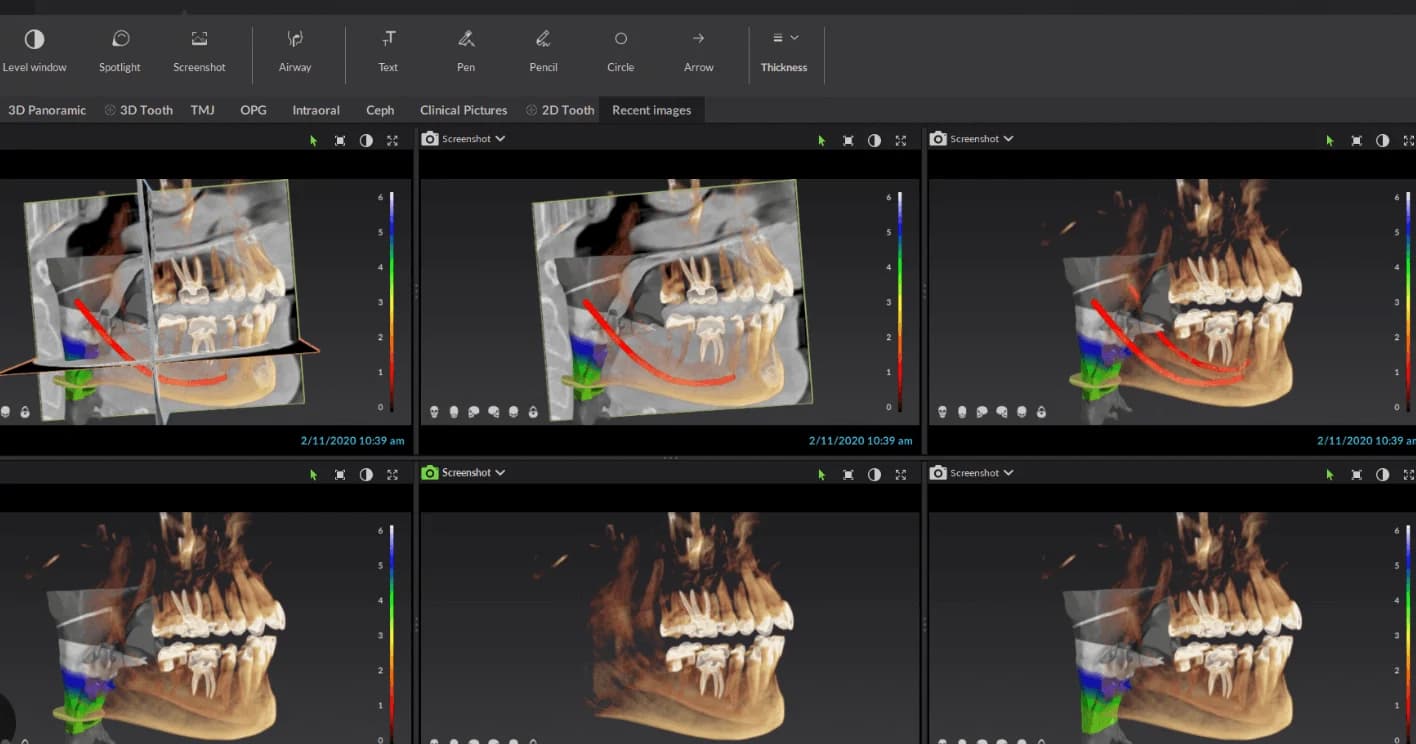
Behind the premolars the jaw runs out of height. In the upper jaw the sinus descends toward the ridge as the years pass without teeth; in the lower jaw the nerve canal sits closer to the crest than most patients imagine. Both leave a surgeon with five, six or seven millimeters of bone where a conventional implant needs ten. For most of the field's history the answer was to build the bone first — a sinus lift above, a vertical graft below — and place a standard-length implant into it months later. The alternative, a short implant that fits the bone as it is, was regarded as a compromise, on the reasonable engineering assumption that less implant in bone meant less support.
That assumption was tested, and it is worth being precise about what was tested. A short implant in this literature usually means 8 mm or less, and an extra-short one 6 mm or less. The comparison that matters is not short against long in the same bone; it is short in native bone against long in grafted bone, because that is the choice a patient actually faces. Several groups ran that comparison as randomized trials in the 2010s, and the reviews that pooled them are the basis of everything below.
Nisand and Renouard's 2014 review in Periodontology 2000 framed the shift before the five-year data were in. From 32 case series, 14 reviews and three randomized trials, they concluded that short implants could support single and multiple fixed restorations in resorbed back jaws even with unfavorable crown-to-implant ratios, that they made treatment possible for patients unable to undergo complex surgery for medical, anatomical or financial reasons, and that they reduced morbidity, cost and treatment time. Their phrase for it was stress-minimizing surgery: an approach that lets the surgeon concentrate on placing the implant in the right three-dimensional position rather than on manufacturing bone to place it in.
The upper jaw: short implants against sinus lifts
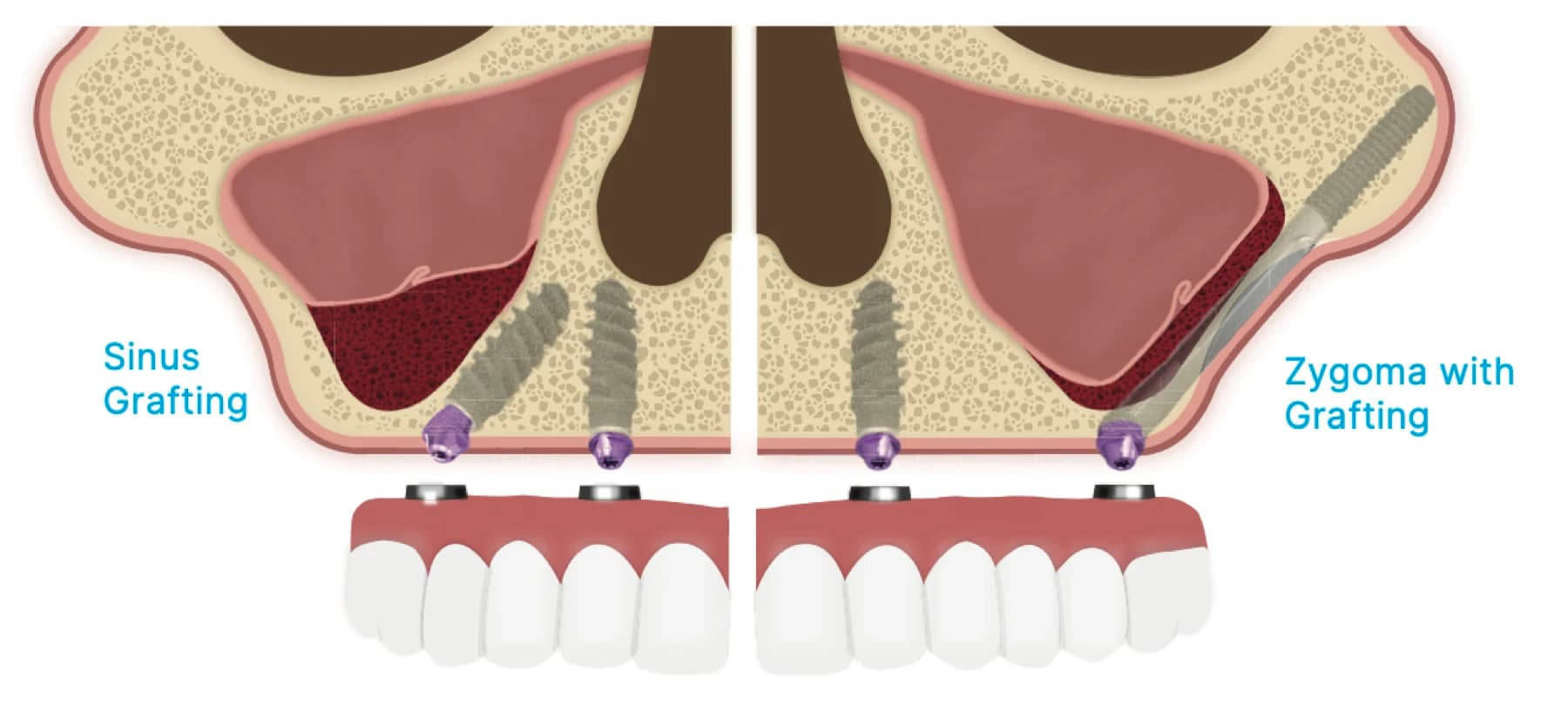
Thoma's 2015 systematic review for the European Association for Osseointegration pooled eight randomized trials comparing implants of 8 mm or less with longer implants placed into a grafted sinus. In the five studies with longer follow-up, sixteen to eighteen months, longer implants in the augmented sinus survived at 99.5% and short implants at 99.0%. In the three shorter studies, at eight to nine months, the figures were 100% and 98.2%. No meaningful difference. What did differ was everything around the survival figure: complications were almost three times as frequent with the sinus-lift group, mostly membrane perforations during surgery, and patient-reported outcomes, morbidity, surgical time and cost all favored the short implant. The authors' conclusion was that, given equal survival and lower burden, shorter implants may represent the preferred alternative — with the honest note that every trial was performed by surgeons in specialized centers.
Felice's group in Bologna, with Esposito, has run the longest of those trials. Their five-year report, published in 2019, randomized fifteen patients with bilateral atrophic upper jaws — four to six millimeters of bone below the sinus — and fifteen with bilateral atrophic lower jaws to receive, on one side, one to three 5-mm implants and, on the other, at least 10-mm implants in grafted bone, using a lateral-window sinus lift above and interpositional bone blocks below. Five years after loading, implant and prosthesis failures did not differ significantly between the sides. Marginal bone loss, however, did: in the upper jaw patients had lost 1.31 mm around short implants and 1.79 mm around long ones, and in the lower jaw 1.72 mm against 2.10 mm. Both differences were statistically significant and both favored the shorter implant.
The lesson I take from the sinus data is not that grafting is wrong — sinus lifts remain a well-documented procedure with implant survival of their own, as the graft-materials review sets out. It is that the graft is no longer the default. When a 6-mm or 8-mm implant can be placed in the bone that exists, with the right diameter and the right splinting, the evidence says the patient gets the same survival, less surgery, fewer complications and, over five years, slightly more bone around the implant.
The lower jaw: short implants against vertical grafts
Vertical augmentation of the lower jaw is the more demanding procedure, and the evidence against routinely doing it is older. The 2009 Cochrane review of bone-augmentation techniques by Esposito and colleagues could perform only one meta-analysis, and it was this comparison: two trials of vertical augmentation with long implants against short implants without augmentation. The augmented group had more implant failures — an odds ratio of 5.74, of borderline significance — and significantly more complications, at an odds ratio of 4.97. That was fifteen years ago, on two trials, and it should have prompted more caution than it did.
The 2019 systematic review by the same group of randomized trials with five years of function pooled four trials, originally 135 patients, comparing 5-mm to 6.6-mm implants with longer implants in lower jaws vertically augmented with interpositional blocks of bone substitute. Two findings stand out before the survival figures. Twelve of the augmentation procedures — 14% — failed to produce enough height for the planned implant length, so a longer implant could not be placed in one in seven of the very cases that had chosen grafting to obtain one. And 21% of patients had dropped out by five years. Among those who remained, prosthesis and implant failures were the same in both groups, but patients in the grafted group were more than four times as likely to have experienced a complication, with a risk ratio of 4.72, and lost more marginal bone. The authors called for larger trials and longer follow-up, and in the meantime described the short implant as the preferable option.
Lemos' 2016 meta-analysis widened the comparison to all short-versus-standard implants in the posterior jaws, whether or not grafting was involved, pooling thirteen studies, 1,269 patients and 2,631 implants. Survival, marginal bone loss, complications and prosthesis failures did not differ significantly overall. But the review added a qualification that the grafting trials tend to underplay: implants shorter than 8 mm — the 4-to-7-mm range — carried a greater risk of failure than standard implants and should, in their words, be used with caution. Short is safe; extra-short needs more justification.
Extra-short implants: the six-millimeter question
The 6-mm implant is where the enthusiasm and the evidence part company, so it deserves its own examination. Srinivasan's 2014 meta-analysis of twelve studies and 690 micro-rough 6-mm implants from one manufacturer found an early cumulative survival of 93.7%, with 94.7% in the upper jaw and 98.6% in the lower, and observed that failures were predominantly early — 76% of them — which is consistent with a short implant having less margin for a poor start. Ravidà's 2019 systematic review of nineteen studies and 910 implants of 6 mm or less found a mean five-year survival of 94.1%, split 90% in the upper jaw and 96% in the lower, with maximum bone loss of 0.53 mm and fewer prosthetic complications and failures when the implants were splinted together than when they stood alone.
The same group's meta-analysis of eighteen randomized trials, comparing 793 extra-short implants with 820 implants of 10 mm or more, found no difference in survival at one and three years, and less marginal bone loss, fewer biological complications, shorter surgery and lower cost for the extra-short group — a finding that held whether or not the long implants had needed grafting. But they closed with the qualification that recurs across this literature: the long-term effectiveness of extra-short implants remains to be studied. Three years is not long enough to know how a 6-mm implant behaves in its second decade.
The 2018 ITI consensus, reported by Jung, put the two sides in one sentence. Short implants of 6 mm or less showed survival ranging from 86.7% to 100% against 95% to 100% for standard implants over one to five years, with a higher variability and a risk ratio for failure of 1.24 that did not reach statistical significance. The consensus concluded that they are a valid option in reduced bone height to avoid the morbidity of augmentation, and that they reveal a higher variability and lower predictability in survival. Both halves are true, and the second is the reason I splint them, choose the widest diameter the ridge allows, and reserve a single unsplinted 6-mm implant for the cases where nothing else will fit.
How I decide, and what I tell the patient
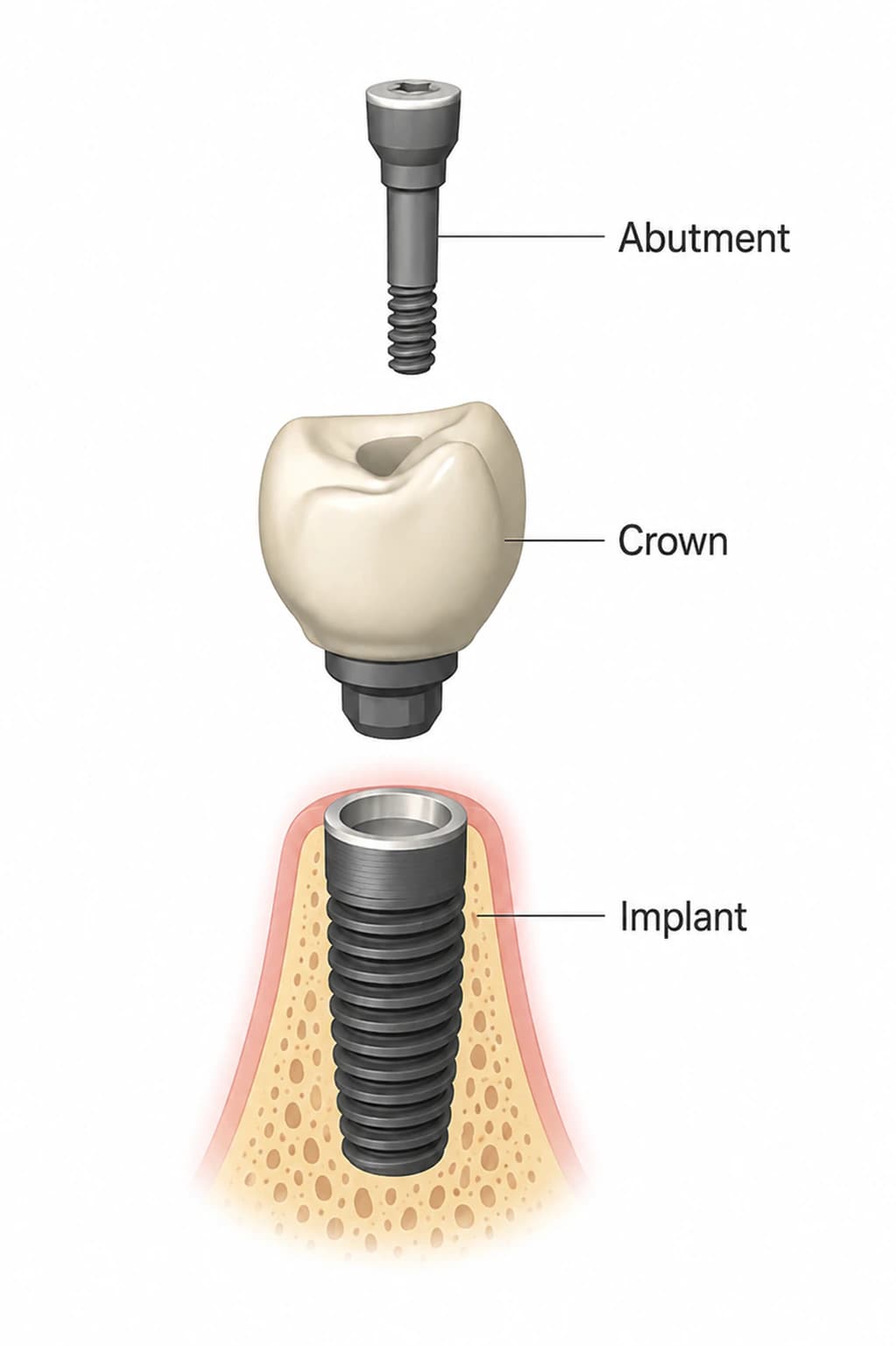
The decision starts on the 3D scan, with three measurements: the height of bone above the nerve or below the sinus, the width of the ridge, and the density of what is there. If the height allows an 8-mm implant of good diameter, the trials say the graft adds surgery without adding survival, and I say so. If the height allows only a 6-mm implant, the conversation is more careful: an extra-short implant in the lower jaw, splinted to a neighbour, has strong five-year data; a single extra-short implant in soft upper-jaw bone is the weakest configuration in the literature, and here a graft or a different approach may genuinely serve the patient better.
Two things in the trials are easy to overlook and matter to patients. The first is that grafting does not always deliver: in the mandibular trials, one in seven vertical grafts fell short of the height needed. A patient who chooses the graft to get the long implant may still end up with the short one, after an extra surgery and months of healing. The second is what the extra procedure costs the patient personally — surgical time, swelling, the risk of membrane perforation in the sinus, donor-site pain if the bone was harvested — which every review that measured it found to favor the short implant. When I present both options with their numbers, most patients choose less surgery, and the evidence lets me support that choice rather than talk them out of it.
There are cases where the graft remains the right call. A young patient with a single missing molar and decades of function ahead, a very thin ridge that needs width regardless of height, a site where a short implant would leave a crown so tall that the bite mechanics become unfavorable — in each of those the augmentation is not a reflex but a decision, and it is made with the graft-materials evidence in view. What the trials have retired is the idea that building bone is automatically the more thorough thing to do. The bone-grafting page explains what the procedure involves when it is chosen.
What remains open
The follow-up in these trials is five years at most, and short implants need ten. A 6-mm implant that has lost 0.5 mm of bone at five years has a smaller reserve than a 12-mm implant that has lost the same, and whether that becomes a problem in the second decade is the question none of the current reviews can answer. Sample sizes are small — the Bologna trials enrolled thirty patients each — and dropouts of a fifth over five years make the survival comparisons less certain than their p-values imply.
The next generation of trials should compare extra-short implants with the newer minimally invasive alternatives, such as transcrestal sinus elevation with an 8-mm implant, rather than only with the full lateral-window graft, and should record patient-reported outcomes as primary endpoints rather than afterthoughts. And the crown-to-implant ratio question — whether a tall crown on a short implant overloads it in a bruxing patient — deserves a properly controlled study, because it is the objection most often raised against short implants and the one with the least direct evidence either way. Until then, the trials say what they say: in the back of the jaw, a short implant in native bone is as likely to survive as a long implant in grafted bone, and it gets there with less.
Written and medically reviewed by Dr. Sam Jain, DMD, MS, and Dr. Arpana Gupta, DDS, MDS, who own this practice. Reviewed
This article is patient education, reviewed by Dr. Sam Jain, DMD, MS, and Dr. Arpana Gupta, DDS, MDS, and is not a substitute for an exam. Treatment recommendations are made only after an in-person consultation and 3D imaging.