Clinical Case: Can This Site Be Made Suitable for an Implant?
Almost every site can be made to work — the real questions are how much bone is there, what it's made of, and what it takes to prepare it. Here's how a surgeon reads that.
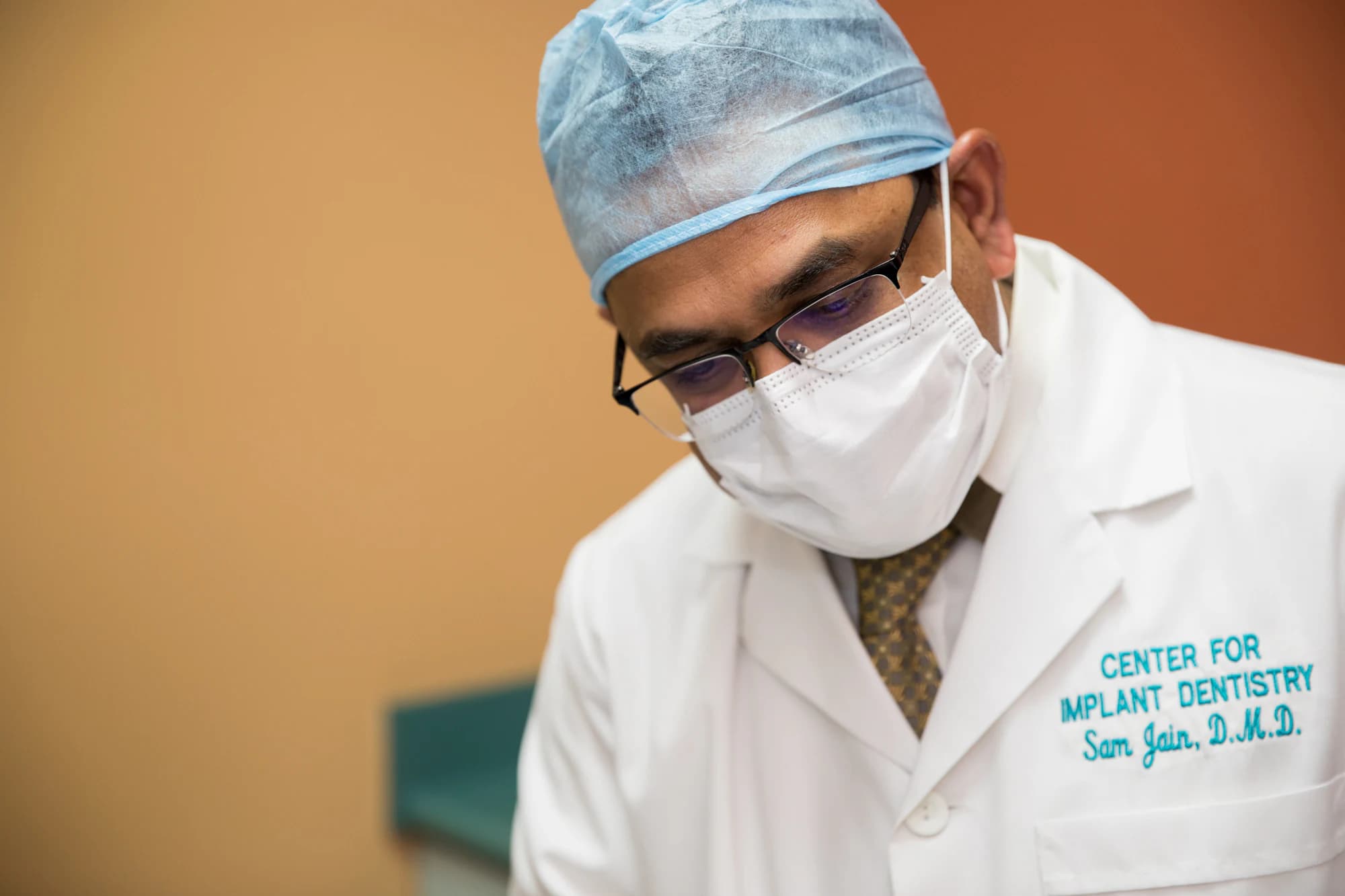

Written and medically reviewed by Dr. Sam Jain, DMD, MS, and Dr. Arpana Gupta, DDS, MDS
Published · Updated
The Short Answer: Usually Yes — But "How" Is the Whole Case
If you've been told a spot in your jaw might not hold an implant, start here: most sites can be made suitable. The question a surgeon is actually asking isn't "implant or no implant" — it's what the site has now, what it's missing, and what it takes to close that gap safely. Sometimes the answer is nothing at all; the bone is fine and we place the implant that day. Sometimes it's a graft, a sinus lift, or a different implant design. Rarely is the honest answer "never."
The reason the marketing version of this question — "am I a candidate?" — is too blunt is that candidacy isn't a yes/no stamp on your whole mouth. It's site by site. You can have one spot with generous, dense bone right next to one that lost width after a tooth came out years ago. So when Dr. Sam Jain looks at a scan, he's grading each site on its own terms rather than passing or failing you as a patient. If you want the broader picture of what rules people in or out, our candidacy page covers it — but the site-level read below is where the real decision happens.
What Actually Gets Measured: Width, Height, Density, Distance
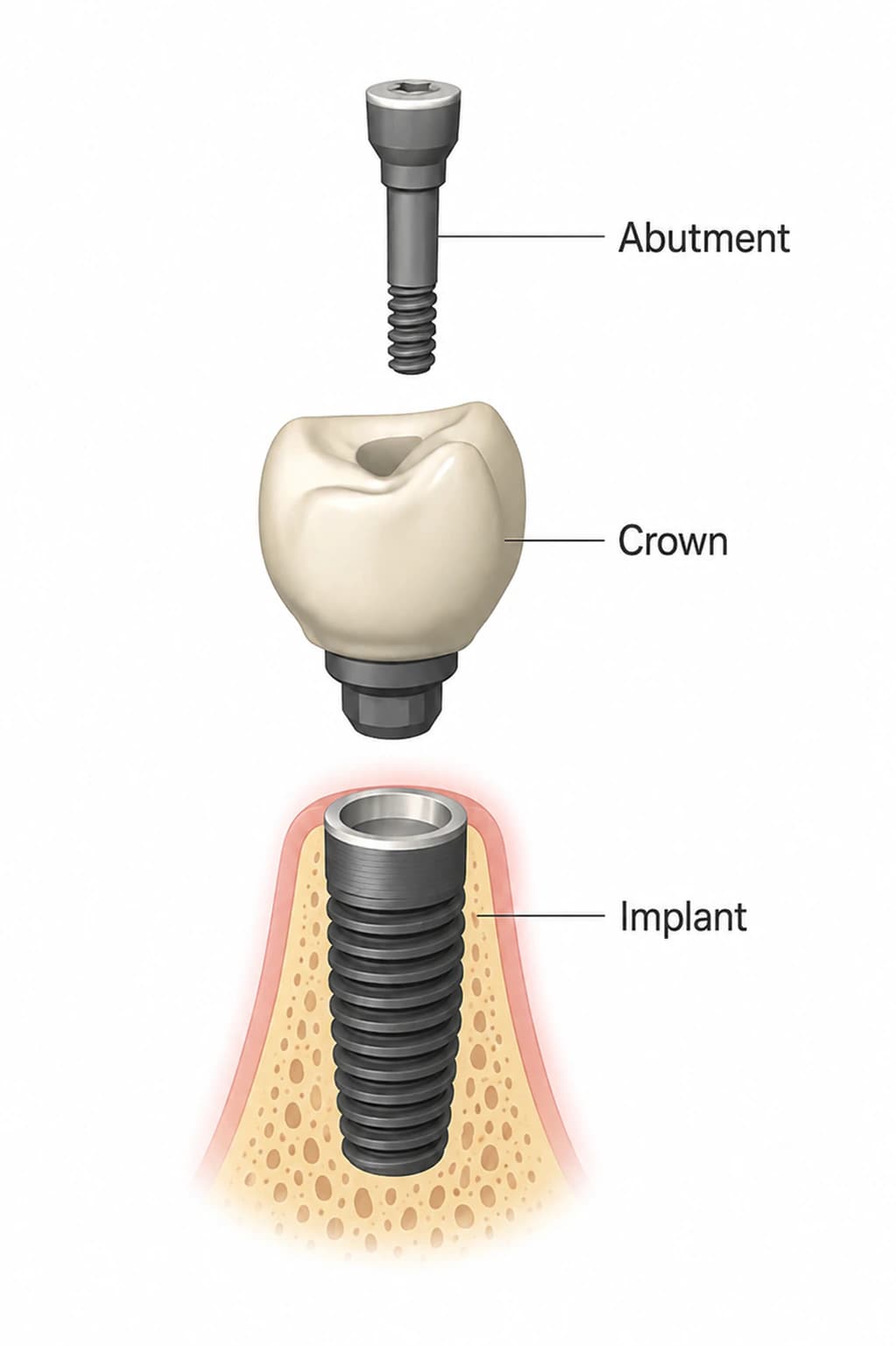
A site assessment comes down to four numbers, and a free 3D CBCT scan gives all of them in three dimensions — something a flat X-ray simply can't. First, width: an implant needs bone on both the cheek and tongue sides of it, so we generally want enough ridge to leave roughly 1 to 2 mm of bone wrapping the implant. For a standard-diameter implant that usually means a ridge somewhere around 6 mm wide or more; thinner than that and we're either choosing a narrower implant or widening the ridge first. Second, height: there needs to be enough vertical bone to seat an implant of useful length, ideally around 10 mm, while keeping a safe margin from the structures below.
That margin is the third and most important number — distance to vital anatomy. In the lower jaw, the inferior alveolar nerve runs through the bone, and a surgeon plans to stay a couple of millimeters clear of it, because that nerve controls sensation in your lip and chin. In the upper back jaw, the sinus floor sets the ceiling. Guided surgery is how those margins stop being a guess: we plan the exact implant position on the scan, then place it through a surgical guide using systems like X-Guide and Navident EVO, so the drill follows the plan instead of freehand feel.
The fourth factor is one people rarely hear about: bone density, or what the bone is made of. Surgeons grade it roughly from dense cortical bone (great grip, the kind you find at the front of the lower jaw) to soft, spongy bone (common in the upper back jaw). Dense bone gives an implant firm initial hold — what we call primary stability — while soft bone needs a gentler, adapted technique to get the same secure fit. This is exactly the kind of nuance Dr. Jain's background sharpens: he holds an MS in mechanical engineering alongside his dental degree, so he reads a site partly as a structural problem — how force will travel through that bone into that implant — not just an anatomical one.
When a Site Needs Work: Grafting, Sinus Lifts, and the No-Bone Cases
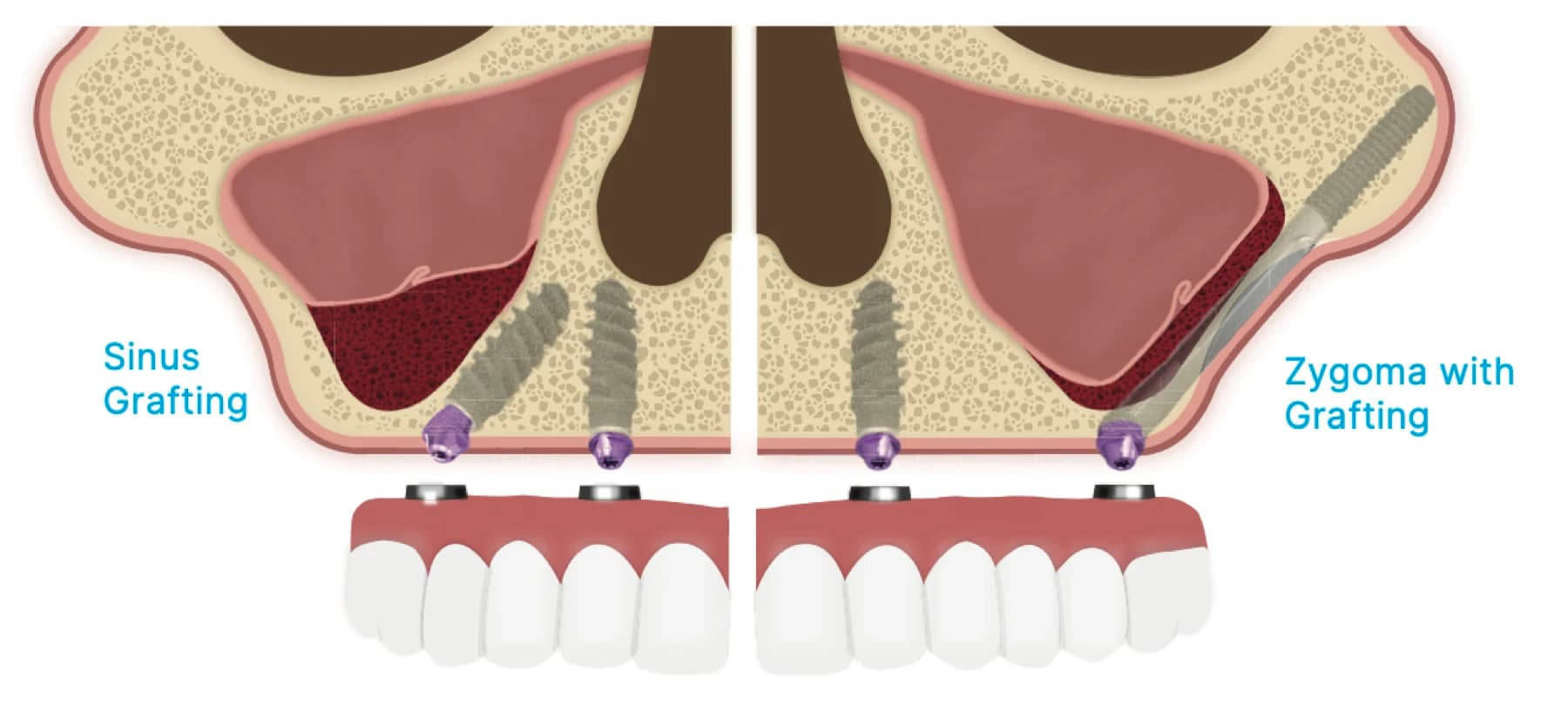
If a site falls short, the fix is matched to what's missing. A ridge that's too thin or too short is usually built up with bone grafting, which adds volume and then heals into your own bone over a few months. When the shortfall is in the upper back jaw and the sinus has dropped low, a sinus lift gently raises the sinus floor to create the height an implant needs — and in the right cases the graft and the implant can happen in the same visit. The point is that a "difficult site" is usually a solvable engineering problem, not a dead end.
The hardest version is the upper jaw with almost no usable bone — the classic "you don't have enough bone for implants" verdict some patients collect from other offices. Even here there's often a path that skips months of grafting: zygomatic implants, which anchor in the dense cheekbone above the missing bone rather than the jaw itself. These are demanding cases that many general offices refer out or decline; Dr. Jain places them in-house, which is a large part of why patients told "no" elsewhere end up with fixed teeth here. We also routinely rescue failed implants placed at other practices, which often starts with re-assessing why that site failed in the first place.
Timing matters too. When a failing tooth is coming out, the moment right after extraction can be the best time to place an implant — the socket is fresh and the bone hasn't yet shrunk from disuse. That's the idea behind extraction with immediate implant placement: remove the tooth and set the implant in one appointment where the site allows it, which preserves bone and cuts down the overall timeline. Whether a given site qualifies for that is, again, a scan-and-plan decision.
Why the Same Team Doing Everything Changes the Assessment
Here's something that quietly shapes how honestly a site gets evaluated: who has to live with the result. At many centers, one person plans, a traveling surgeon places, and someone else restores — so no single person owns whether that site was truly ready. Dr. Sam Jain and his wife, Dr. Arpana Gupta — both ICOI Masters — personally plan, place, and restore every case at our center, with no fly-in surgeons. When the same hands that read your scan also seat your final tooth, there's every incentive to get the site preparation right, not just cleared.
Because the imaging, guided-surgery technology, IV sedation, and an in-house CAD/CAM zirconia mill all sit under one roof, the whole plan — from measuring the site to milling the final tooth — stays in one building. That's what lets us deliver final, custom-milled teeth in roughly 24 hours for qualifying single or multiple implants, or about 72 hours for a full arch, instead of six to eight months in temporaries. For heavier bites and generous bone, Dr. Jain even developed the All-on-8 Robust protocol, which spreads full-arch load across more supports — the same load-first thinking he brings to a single tricky site.
None of this is decided from a blog post, including this one. A real site assessment happens with your own 3D scan on the screen, and both the consultation and the scan are free — about a $499 value — so you can find out exactly what your site needs before committing to anything. If cost is on your mind, the implant cost page breaks down what actually moves the number, and financing through options like Cherry and CareCredit is available.
Written and medically reviewed by Dr. Sam Jain, DMD, MS, and Dr. Arpana Gupta, DDS, MDS, who own this practice.
This article is patient education, reviewed by Dr. Sam Jain, DMD, MS, and Dr. Arpana Gupta, DDS, MDS, and is not a substitute for an exam. Treatment recommendations are made only after an in-person consultation and 3D imaging.