Can Dental Implants Change the Shape of Your Face? What Bone, Teeth and Lip Support Actually Do
People who have worn dentures for years often notice the lower face has changed: thinner lips, a shorter distance from nose to chin, deeper lines at the corners of the mouth. Implants are often described as the cure. The honest answer is more useful than the marketing one, because it tells you which part of the change implants address and which part depends on how the new teeth are designed.


Written and medically reviewed by Dr. Sam Jain, DMD, MS, and Dr. Arpana Gupta, DDS, MDS
Published
What actually changes in the face after tooth loss
Three things change, and they happen for different reasons. The first is bone. The part of the jaw that held the teeth resorbs once they are gone, in height and width, while the deeper body of the jaw stays relatively stable; a classic study of 300 skulls found that this pattern is predictable in both jaws. The second is the height of the bite. As the ridges shrink and dentures wear, the jaws close further together, which shortens the lower third of the face. The third is lip support. The lips rest on the front teeth and the bone behind them, and when both move backward, the lips thin and fold inward.
Aging adds its own changes to the skin and soft tissues that have nothing to do with teeth. That matters when setting expectations: new teeth can restore support that was lost with the teeth, but they cannot reverse the rest of facial aging.
What implants do for the bone
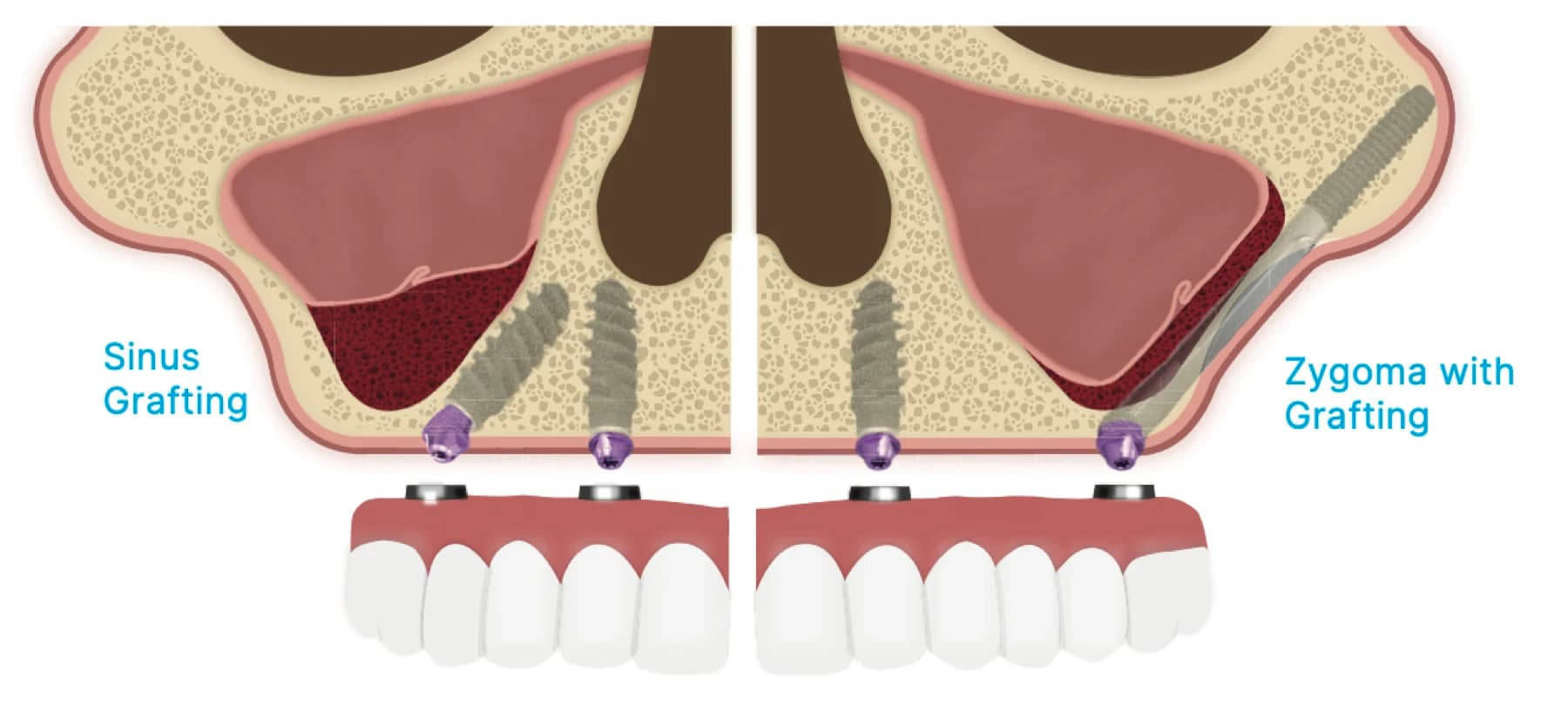
Implants load the bone they sit in, and loaded bone is kept. The evidence for this is clearest in the lower jaw. In a five-year study, the back of the lower jaw lost 1.63 mm of height under conventional dentures, compared with 0.69 mm in patients whose lower denture was held by two implants. In 82 patients with implant-retained lower dentures followed for an average of 10.5 years, the loss was 0.5 mm. And in 60 patients with fixed bridges on five or six lower implants, bone height behind the last implant actually increased, from 7.25 mm to 8.18 mm over four years.
So implants help preserve the jawbone, particularly compared with a denture resting on the gums. What they do not do is regrow bone that has already been lost. A face that has changed over twenty years of denture wear will not be restored by the implants themselves; any visible improvement comes from what is built on top of them.
The teeth and their position shape the profile
The part of the face people notice, the lips, the corners of the mouth and the length of the lower face, is supported by the position of the new teeth, the height of the bite and any pink material that replaces lost gum and bone. That is why two patients with identical implants can look quite different afterward.
A 2024 study measured this with 3D facial scans in 50 patients before and after fixed full-arch teeth on implants in the upper jaw. After treatment, the height of the upper lip and the visible red part of the lip increased, the lip moved forward relative to the nose and chin, and the angle between nose and lip decreased — changes that read as a fuller upper lip. The skin portion of the upper lip did not lengthen. The size of the changes depended mainly on age and on the soft tissues before treatment: older patients and those with the most collapsed lips saw the most noticeable improvement in fullness.
That is the reason the teeth are designed before surgery. Tooth length, how far forward the front teeth sit, the height of the bite and how much tooth shows when you talk are decided before surgery. For patients who still have teeth, our smile design process adds tooth-colored composite to them so you can wear the planned smile, and see its effect on your lips, for days before anything is removed; the final arch is then milled in our own lab to reproduce the design you approved.
Fixed teeth or a snap-in denture: the lip support question
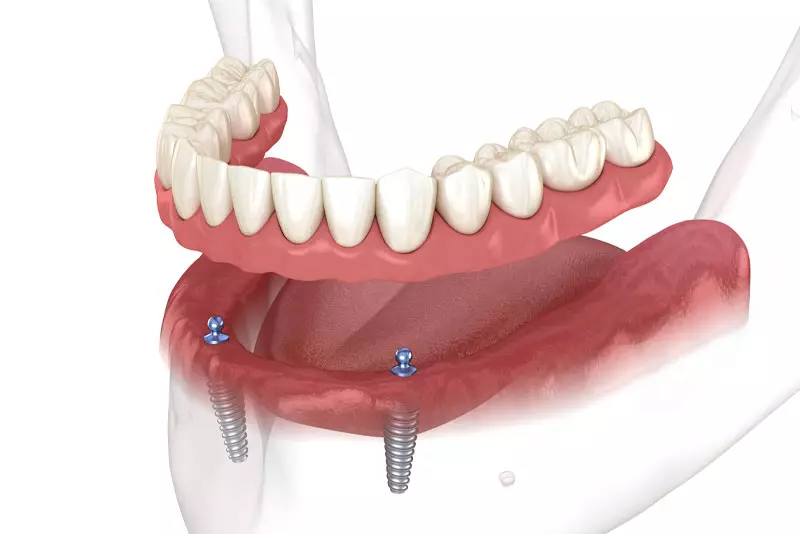
When a lot of bone has been lost, the choice between fixed teeth and a removable denture on implants affects the face as well as daily life. A removable implant denture can have a full pink flange that sits forward under the lip and replaces a large volume of missing bone. A fixed bridge has to leave space for cleaning underneath, so there is a limit to how much lip support it can add without becoming difficult to keep clean.
This was tested directly in a small crossover trial in which 13 patients wore a fixed upper bridge on implants and a removable upper overdenture on implants, each for two months. Patients rated the removable overdenture significantly higher for general satisfaction, ease of cleaning and speech, and nine of the thirteen chose to keep it. That study is small and used designs from two decades ago, and many patients strongly prefer teeth that never come out. But it is a useful reminder that fixed is not automatically the better-looking answer when bone loss is severe. Our snap-in denture page compares the two in daily life.
Can implants improve a sunken appearance?
Often, yes, when the sunken look comes from lost teeth, lost bite height and lost lip support, because those are things a well-designed set of teeth can restore. The improvement usually shows in the lips, the corners of the mouth and the distance between nose and chin. It is less likely to change deep cheek hollows, skin laxity or lines that come from aging rather than from the teeth.
There is also a limit in the other direction. Teeth made too long, or pushed too far forward to fill the lips, can look artificial and can affect speech and comfort. The aim is the support the face had when the teeth were healthy, not the most volume possible. Wearing the planned smile, and photographs of your face at rest and smiling, are how that line is drawn before anything is made.
One missing tooth, and the long view
For a single missing tooth, the effects are mainly local: the ridge where the tooth was shrinks, and neighboring teeth can drift, as our page on why replacing a missing tooth matters explains. An implant placed at the right time helps keep that local ridge, which matters most for front teeth, where the gum line shows. Our front tooth implant article covers that in detail.
For people who have lost many or all teeth, the long view is where implants earn their reputation. The earlier they replace a denture resting on the gums, the more bone remains to be preserved. If you are wondering what implants could change for your face, the most useful first step is a consultation with photographs and a 3D scan, so the conversation is about your bone and your lips rather than an average. The consultation and scan are free.
Written and medically reviewed by Dr. Sam Jain, DMD, MS, and Dr. Arpana Gupta, DDS, MDS, who own this practice. Reviewed
This article is patient education, reviewed by Dr. Sam Jain, DMD, MS, and Dr. Arpana Gupta, DDS, MDS, and is not a substitute for an exam. Treatment recommendations are made only after an in-person consultation and 3D imaging.