Can You Get Dental Implants After Dentures?
Yes, almost always — even after decades in dentures. The real question isn't whether you can switch, but how much bone you have left, and what your surgeon does about it.

Written and medically reviewed by Dr. Sam Jain, DMD, MS, and Dr. Arpana Gupta, DDS, MDS
Published · Updated
Yes — and Denture Wearers Are Often Ideal Candidates
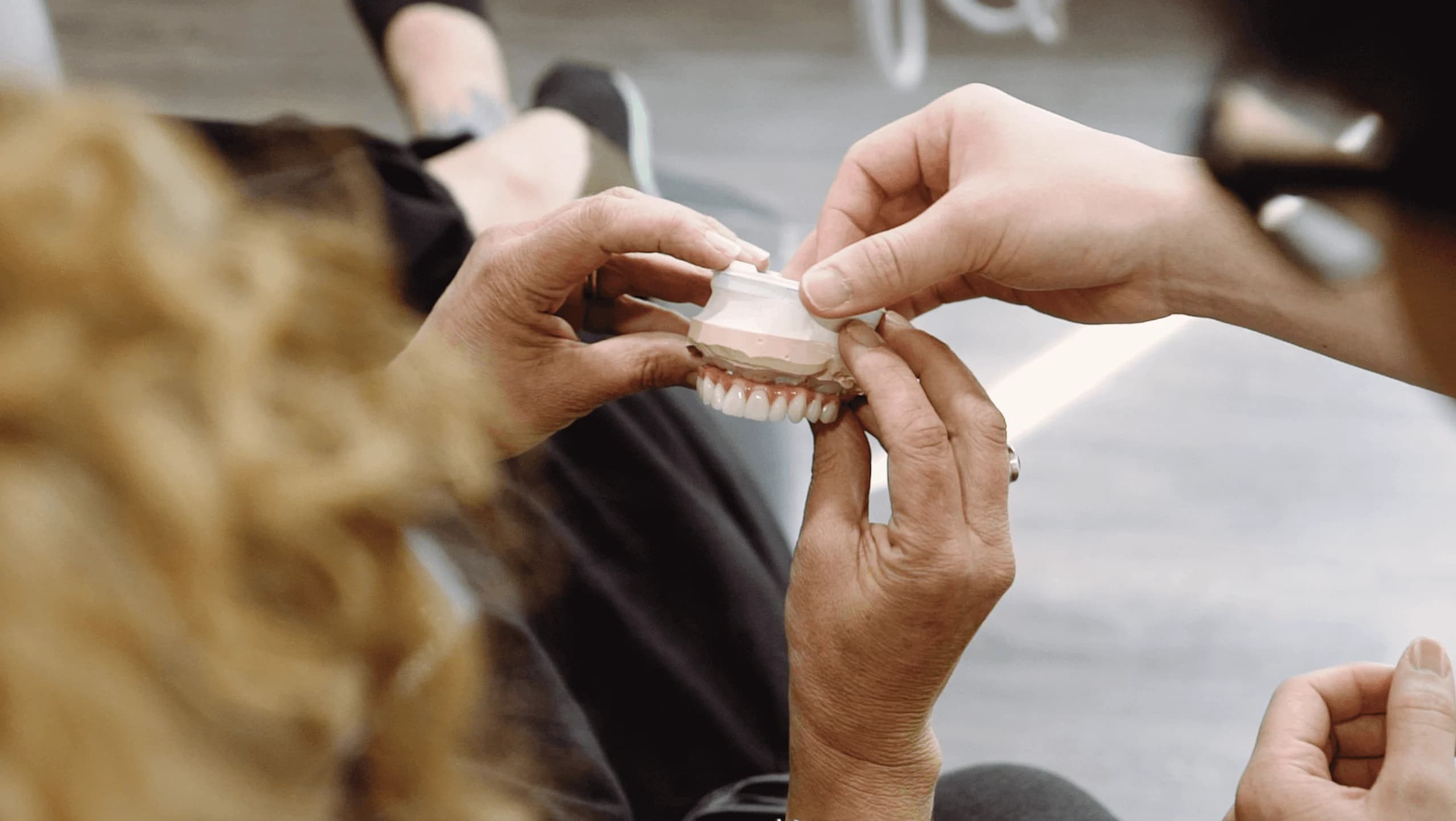
If you've worn dentures for years and you're tired of the adhesive, the slipping, and the foods you've quietly given up, here's the plain answer: yes, you can almost certainly switch to implants. Wearing a denture doesn't disqualify you — in fact, most long-term denture wearers make excellent implant candidates, because they already know exactly what they want fixed. The one thing years of denture wear does change is your jawbone, and that's the part worth understanding before you sit in a consultation.
A denture rests on your gums. It doesn't connect to the bone underneath, and bone that isn't being used slowly shrinks — a process called resorption. Clinical research shows the jaw can lose up to about 25% of its width in the first year after teeth are removed, and it keeps thinning gradually after that. So the honest framing isn't "can I qualify?" It's "how much bone do I have left, and what's the plan for it?" That's a question your surgeon answers with a scan, not a guess.
The reassuring part: even a jaw that's thinned considerably over ten or twenty years usually has a path to fixed teeth. Sometimes that path is straightforward. Sometimes it involves rebuilding a little bone first, or reaching for anchorage in places most offices don't. Either way, the door is rarely closed.
Why Long-Term Denture Wear Changes the Bone Conversation
This is the one place the switch from dentures differs from replacing a single failing tooth. Someone losing a tooth today has most of their bone intact. Someone who's been in a full denture since their forties has had years of that jaw shrinking with nothing to stimulate it — which is also why old dentures start to feel loose and why the lower plate seems to "float" more than it used to. That loosening you've been living with is the bone story, told from the outside.
None of this means implants are off the table. It means the workup matters more. A free 3D CBCT scan measures your bone in three dimensions — height, width, and density — so the plan is built from your actual anatomy instead of a flat X-ray or an educated guess. Plenty of people who were told elsewhere that they "don't have enough bone" turn out to have options once someone actually measures it and knows how to use angled placement. Our candidacy page walks through what genuinely rules people in and out, and it's a shorter list than most expect.
It's also worth saying: switching sooner tends to be easier than switching later, because the bone keeps thinning the whole time you wear the denture. If you're already thinking about it, that's a reason to get scanned — not to rush a decision, but to know where you actually stand today.
What Happens When the Bone Has Thinned — Grafting, Sinus Lifts, and Zygomatic Implants
If your scan shows solid bone, you may go straight to implant placement, and the switch is simpler than you'd think. When the bone has thinned, there are three well-proven ways to build or bypass it — and the right one depends on where the loss is and how severe it is.
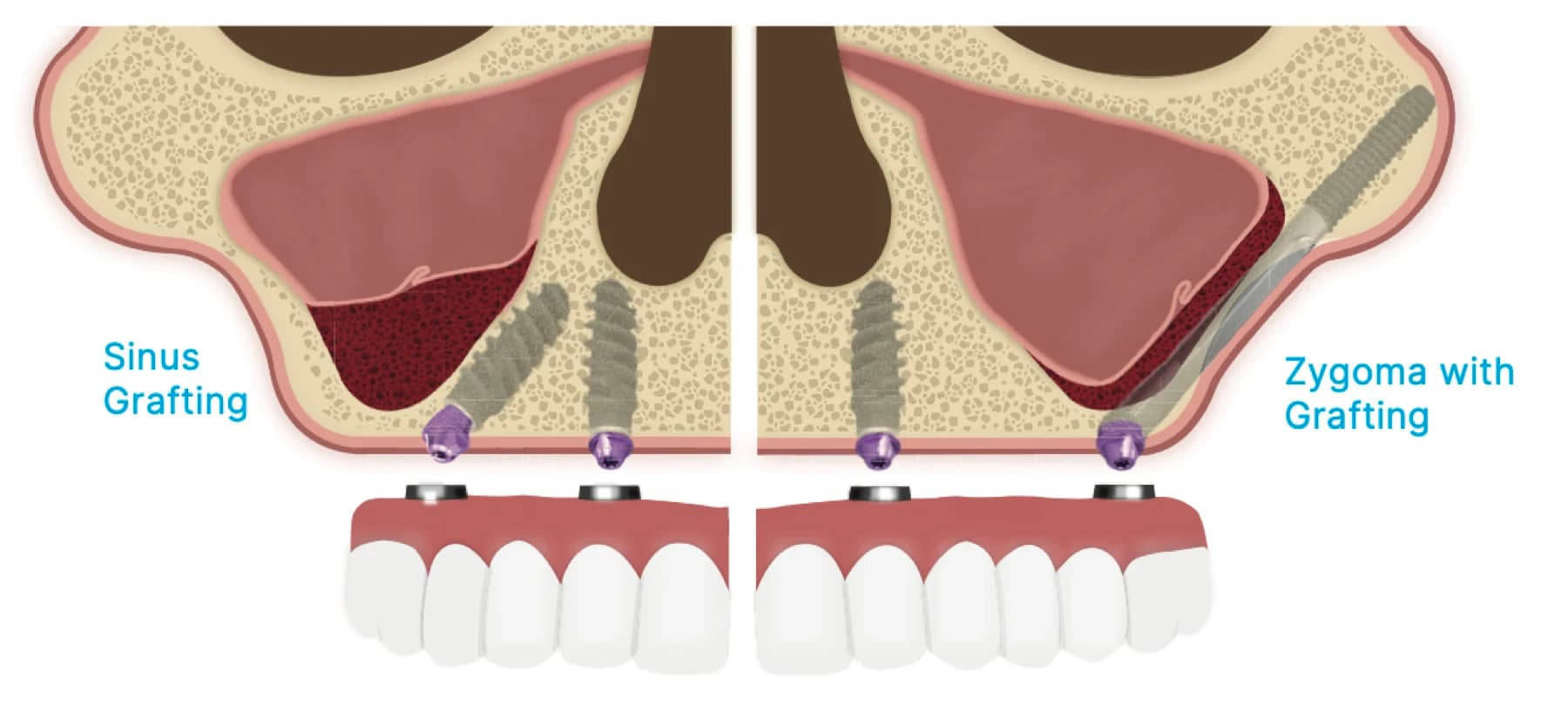
For moderate loss, bone grafting rebuilds volume where implants need to go, and in the upper back jaw a sinus lift creates room by gently raising the sinus floor. These add a step and some healing time, but they turn a thin ridge into one that can hold implants for decades. For the hardest cases — an upper jaw so resorbed after years of denture wear that grafting alone won't do it — there's a solution most general offices simply can't offer: zygomatic implants that anchor in the dense cheekbone above the sinus, skipping the graft-and-wait entirely. This is precisely the "I was told I have no bone" scenario, and it's one of the cases this practice takes on rather than turns away.
The point isn't that you'll definitely need one of these — many denture wearers don't. It's that a lack of bone almost never means a lack of options. What you want is a surgeon who can look at your scan and tell you which of these paths, if any, your particular jaw calls for. If you're still weighing the whole trade-off, our implants vs. dentures comparison lays out the day-to-day differences honestly.
From Denture to Fixed Teeth: What the Switch Actually Looks Like
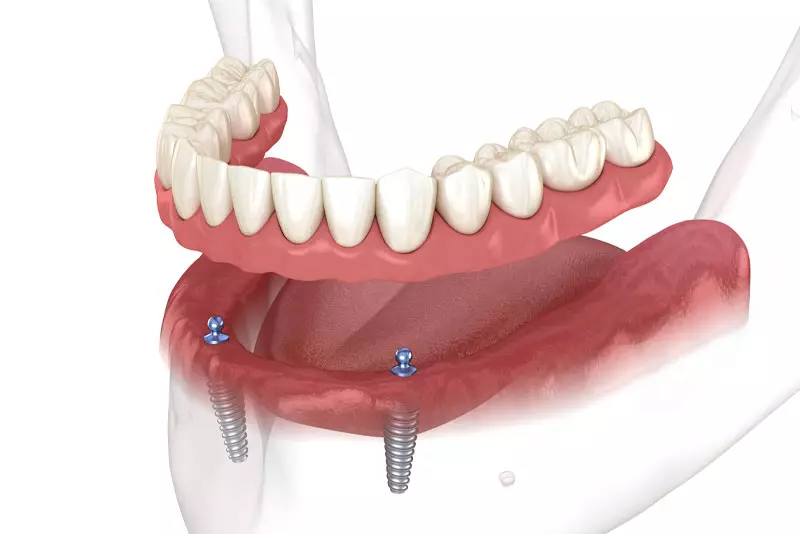
For most people replacing a full denture, the destination is a fixed, non-removable arch on implants — often All-on-4, sometimes more supports for a heavier bite, like the All-on-8 Robust protocol Dr. Sam Jain developed. Instead of a plate that comes out at night, you get teeth that are screwed to implants and stay put. You don't soak them in a cup, they don't cover the roof of your mouth, and they let you eat foods a denture makes miserable. If you're only missing several teeth rather than a full arch, multiple implants may be the better fit — your scan settles it.
The surgical day is usually a single visit under IV sedation: if any teeth remain they come out, implants go in, and a fixed set of teeth is attached — frequently the same day. What sets the timeline apart here is what you leave with. At many centers, that same-day arch is temporary acrylic you wear for six to eight months while implants fuse. Because planning, surgery, and an in-house CAD/CAM zirconia mill all sit under one roof, this practice can deliver final, custom-milled teeth in about 72 hours for a full arch. You can see that workflow on the same-day dental implants page.
On cost and on who does the work — the two things that matter most. All-on-4 is one fixed, all-included fee per arch; any other plan's cost depends on your case and comes as an itemized written quote after the free scan, most patients finance it, and the practice is in-network with many PPO plans; the cost page breaks down what moves your number. And the same two surgeons — Dr. Sam Jain and Dr. Arpana Gupta, a married team of ICOI Masters — personally plan, place, and restore every case. No fly-in surgeon hands your bite off to someone else, and rescuing failed implants placed elsewhere is part of what they do. The switch from dentures starts with a free consultation and 3D scan, a $499 value, where you'll see your own bone on the screen and get a straight answer.
Written and medically reviewed by Dr. Sam Jain, DMD, MS, and Dr. Arpana Gupta, DDS, MDS, who own this practice.
This article is patient education, reviewed by Dr. Sam Jain, DMD, MS, and Dr. Arpana Gupta, DDS, MDS, and is not a substitute for an exam. Treatment recommendations are made only after an in-person consultation and 3D imaging.