Why Dental Implants Cost What They Do — and How Keeping Everything Under One Roof Brings the Price Down
An implant fee is mostly time, skill, parts and a lab — and, at many practices, the cost of moving one patient between several businesses. Here is where the money goes, which parts of the price are necessary, and which ones a practice can remove without touching the quality of care.
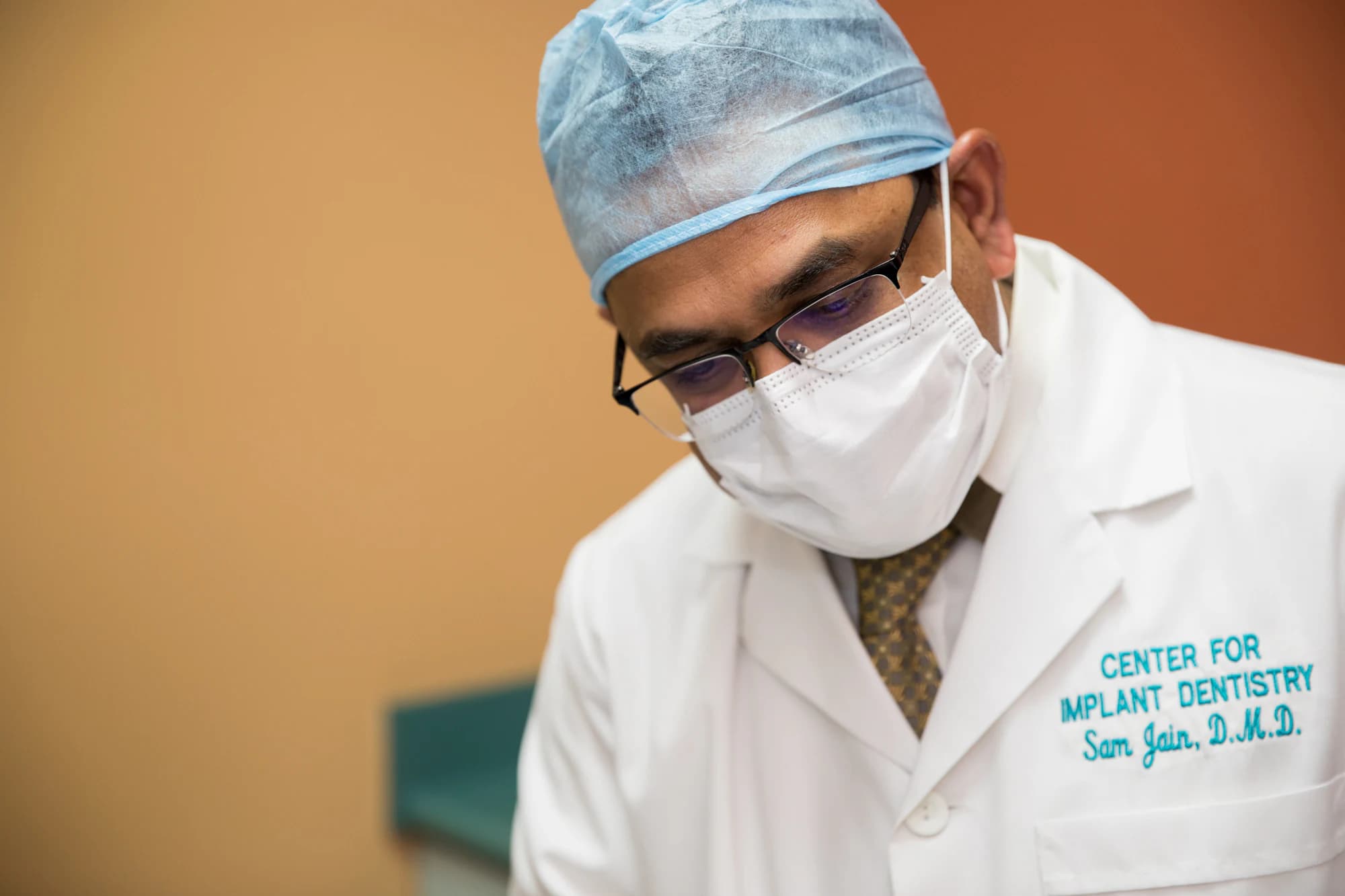

Written and medically reviewed by Dr. Sam Jain, DMD, MS, and Dr. Arpana Gupta, DDS, MDS
Published
In this article
- 1What an implant fee actually pays for
- 2The cost of passing a patient from business to business
- 3What the research shows about digital, in-house workflows
- 4What one roof removes in our practice
- 5What should never be cut to make an implant cheaper
- 6Insurance and financing, realistically
- 7How to compare two implant quotes line by line
What an implant fee actually pays for
Across California, a single implant with its crown is commonly quoted somewhere between $3,500 and $7,500, and a fixed full arch between $20,000 and $35,000 per jaw, with premium zirconia arches in the Bay Area sometimes quoted higher still. Those are market ranges we observe, not our fee schedule; beyond one fixed, all-included per-arch fee for All-on-4, the practice does not publish its own fees, because an honest number depends on your anatomy and is given in writing after a 3D scan. The spread is wide because the same words — “one implant” or “a full arch” — can describe very different amounts of work.
Underneath any quote are the same ingredients. There is diagnosis: an examination, a 3D CBCT scan, and planning time. There is surgery: the surgeon's time and training, a sterile surgical setup, and often an extraction or bone graft first. There are parts: the implant itself, the abutment that connects it to the tooth, and the screws and components that go between them. There is the tooth: designed and manufactured by a lab, in a material that ranges from acrylic to monolithic zirconia. There may be sedation, temporary teeth while you heal, and a series of follow-up visits. The dentist's rent, staff, equipment, insurance and sterilization sit behind all of it.
None of those are optional in a well-done case, and a quote that seems to leave one out usually has not eliminated it — it has moved it to a later bill or a lower standard. That is worth remembering before comparing any two numbers, including ours.
The cost of passing a patient from business to business
At many practices, an implant case is not delivered by one team. A general dentist diagnoses and refers. A surgeon at another office places the implant. A separate anesthesia provider may be booked for sedation. Impressions are shipped to an outside laboratory, which designs and manufactures the tooth and ships it back. If the fit or shade is wrong, it goes back again. The restoring dentist then fits it and handles follow-up, and problems with the surgery go back to the surgeon.
That arrangement can produce excellent care, and many patients are treated that way successfully. But every business in the chain carries its own overhead and its own margin, and every hand-off adds appointments, shipping time, coordination and the chance that information is lost between people who never see the patient together. The patient pays for each of those layers, whether or not they appear as separate lines on the bill. When patients ask us why implant fees differ so much between offices, this is a large part of the answer: some practices are pricing one team's work, and some are pricing the work of four businesses.
What the research shows about digital, in-house workflows
The efficiency of keeping the steps together is not just an argument; it has been measured. In a 2015 crossover study by Joda and Brägger, twenty patients each received two implant crowns, one made through a digital workflow with a custom abutment and CAD/CAM-milled zirconia, and one through the conventional pathway with a stock abutment and a porcelain-fused-to-metal crown. Direct treatment costs were significantly lower for the digital workflow, laboratory costs fell from about 1,246 to 942 Swiss francs, and the overall cost reduction was 18%.
A follow-up randomized trial by the same group compared a completely digital workflow with a partly digital one for single implant crowns. Total production time, clinical plus laboratory, was 75.3 minutes for the fully digital crowns against 156.6 minutes for the comparison, with laboratory time cut from 132.5 to 54.5 minutes, and the authors reported more than 30% lower overall treatment costs. These were small trials of single crowns in a Swiss university setting, so the exact percentages should not be transplanted onto a full-arch case in California. The direction, though, is consistent: fewer physical steps and fewer transfers between people cost less time and less money.
The long view matters too. A literature review of the health economics of implants found single implants to be cost-effective against a traditional three-unit bridge, and found implants for a toothless jaw to cost more at the start but to be cost-effective over the long term. A ten-year economic model reached a similar conclusion: a single implant cost slightly more than a bridge up front but had a 10.4% higher survival rate over the period.
What one roof removes in our practice
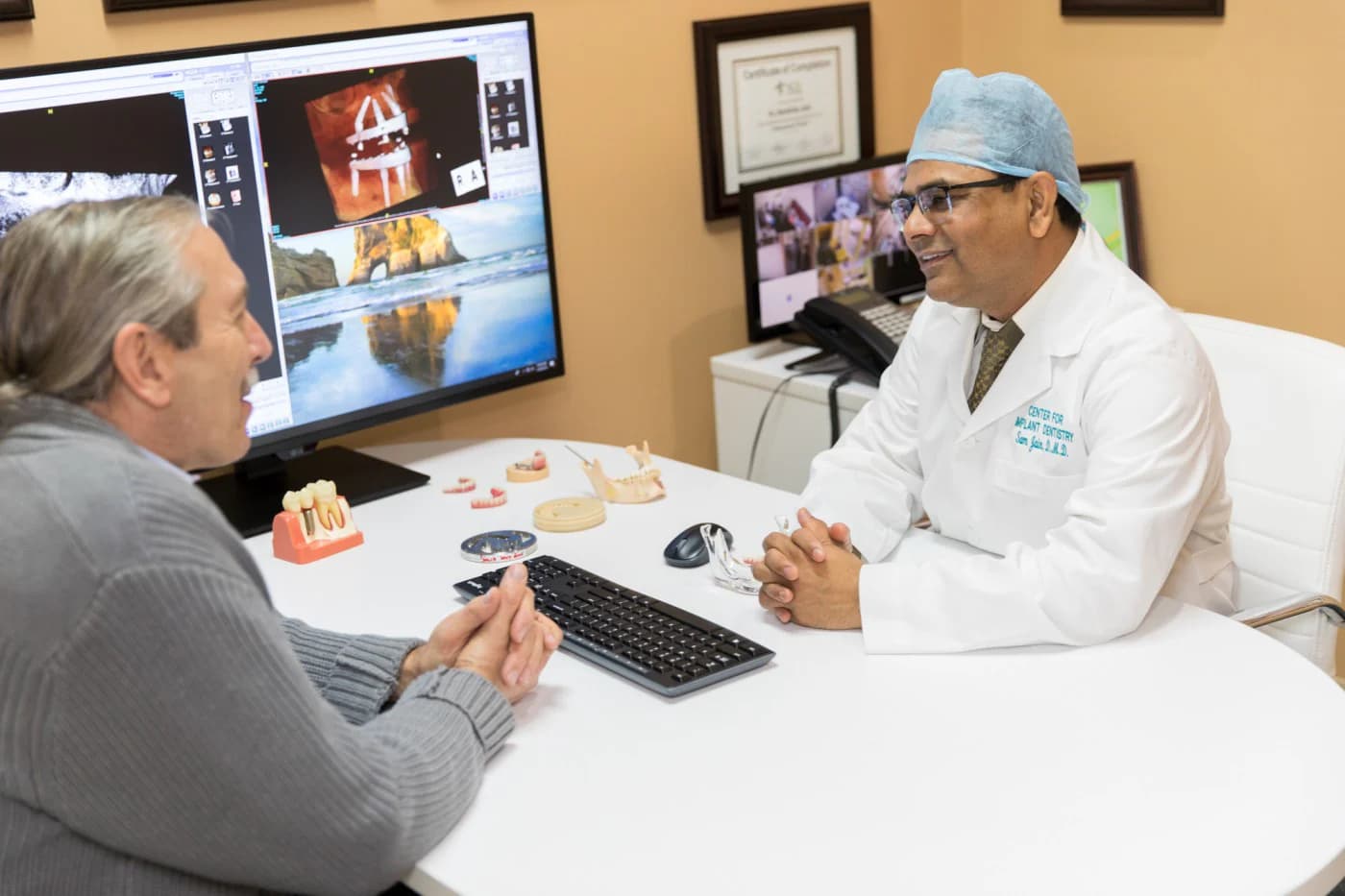
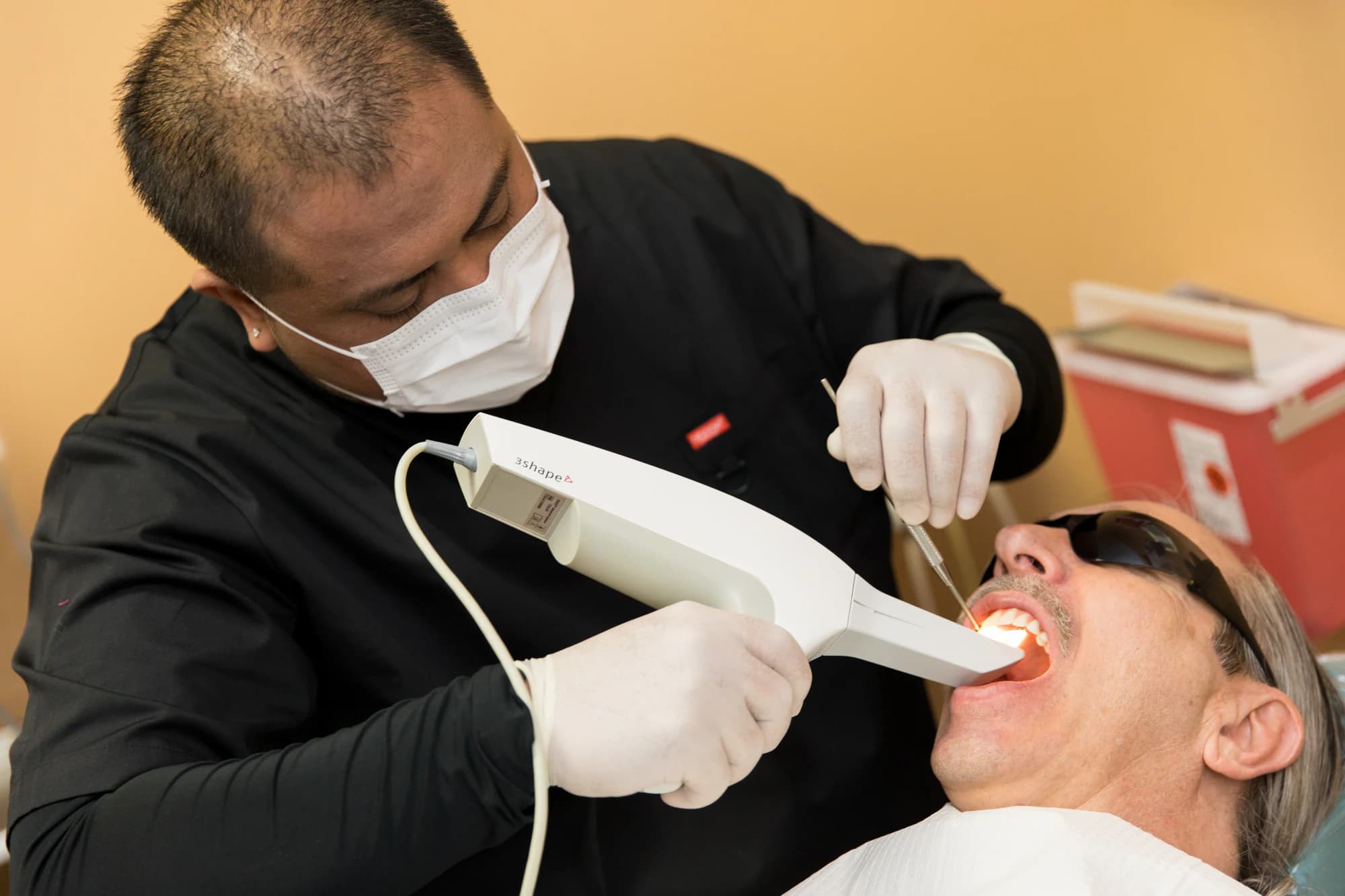
We built the practice so that as few of those layers as possible exist. The two owner-doctors, Dr. Sam Jain and Dr. Arpana Gupta, examine you, plan the case, place the implants, deliver the teeth and see you for follow-up. There is no referral chain to pay for and no visiting surgeon's fee. Both doctors hold California moderate sedation permits and give IV sedation themselves, so there is no separate anesthesia service booked for the day. The 3D CBCT scan is taken in the office, and the consultation and scan are given at no charge — our regular $499 fee for the consultation and scan together is waived for everyone.
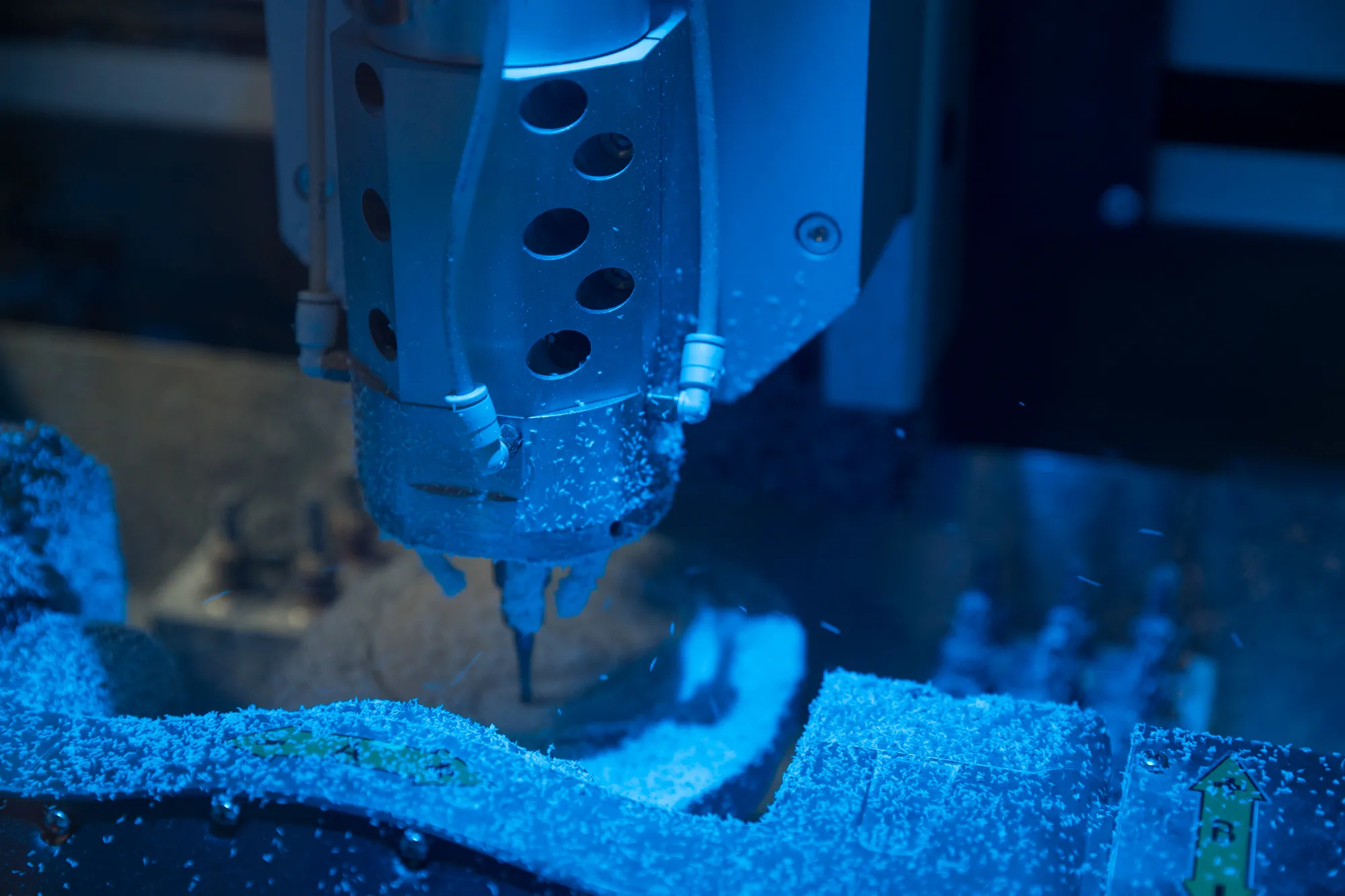
The largest single difference is the lab. Our teeth are designed and milled in the practice, on our own CNC milling machines, by a team that includes a lab engineer, Andy Jain, who holds a master's degree in mechanical engineering. There is no outside lab invoice inside your quote, no shipping, and no waiting for a remake to come back in the mail. When a shade, contact or bite needs adjusting, it is done down the hall, often the same day. That closed loop is also what makes final teeth possible in about 24 hours for many qualifying single- and multiple-implant cases, and final custom-milled full-arch teeth in about 72 hours.
Two policies follow from the same thinking. On a full arch we place as many implants as your bone and bite need — often six to eight, the basis of the All-on-8 Robust protocol. The fixed, all-included All-on-4 fee is for a four-implant arch; when your arch needs six or eight, the written quote shows the fee for that number before anything is scheduled, so the engineering decision is one you can check. And your quote is itemized in writing before anything starts, with every separately billed service on its own line. You can see what moves the number on our cost page, and the full reasoning behind our pricing is on our affordable dental implants page.
What should never be cut to make an implant cheaper
Removing hand-offs is a legitimate way to lower cost. Removing care is not, and the difference is not always visible in a quote. The things we would never trade for a lower price are the ones that decide whether a case lasts: a 3D scan and a plan made from it, the number of implants the bite actually needs, identified implant systems with long-term published data and parts that can be sourced years later, a restoration material suited to the forces in your mouth, sterile surgical protocol, and a maintenance schedule after the teeth are delivered.
The reason is arithmetic as much as principle. The most expensive event in implant dentistry is a case that has to be done twice, because the second attempt often involves removing failed implants, rebuilding lost bone and making new teeth. Repairing that kind of case is a regular part of our week. It is also why a very low quote deserves a closer reading rather than a quick yes — our article on dental implant regrets explains the pattern we see most often.
Insurance and financing, realistically
Dental insurance helps, but it rarely covers much of an implant case. Most PPO plans cap annual benefits at roughly $1,000 to $2,000. In CareQuest Institute's 2025 State of Oral Health Equity survey, 46% of adults who reached their plan's annual maximum said it kept them from seeking further treatment. We check your benefits, file the claims, and, where it genuinely helps, plan treatment across benefit years — our page on implants and insurance explains how.
Most patients with larger cases spread the cost instead: about 92% of our full-arch patients use financing. We work with four lenders — Cherry, CareCredit, Proceed Finance and Happen Bank — because each approves a different credit profile, and prequalifying is a soft check that does not affect your credit score. The details are on our financing page. Financing is a tool for fitting a complete, well-planned case into a budget; it should never be the reason a plan is made smaller than it needs to be.
How to compare two implant quotes line by line
Put the quotes side by side and ask the same questions of each. How many implants, and which implant system? Is the abutment included, and is it stock or custom? What is the final tooth or arch made of, and is it screw-retained? Are the extractions, grafting, sinus lift, sedation, temporary teeth and follow-up visits included or billed separately — and if separately, for how much? Who places the implants, who makes the teeth, and where? What happens, in writing, if an implant does not integrate?
A quote that answers all of those plainly is comparable. One that does not is not yet a price. If it helps, bring any written quote to a second-opinion consultation; we will read it with you, line by line, and show you what each version includes. The consultation and 3D scan are free, and you can schedule it here.
Written and medically reviewed by Dr. Sam Jain, DMD, MS, and Dr. Arpana Gupta, DDS, MDS, who own this practice. Reviewed
This article is patient education, reviewed by Dr. Sam Jain, DMD, MS, and Dr. Arpana Gupta, DDS, MDS, and is not a substitute for an exam. Treatment recommendations are made only after an in-person consultation and 3D imaging.