Dental Implant Regrets: What Patients Wish They Had Known, and How to Avoid Each One
Most people who get dental implants are glad they did. The ones who are not usually regret a decision, not the implant — and almost every one of those decisions can be made differently before treatment starts.


Written and medically reviewed by Dr. Sam Jain, DMD, MS, and Dr. Arpana Gupta, DDS, MDS
Published

In this article
- 1What regret actually looks like
- 2Regret 1: choosing on the lowest number
- 3Regret 2: not knowing that the teeth on top age differently from the implant
- 4Regret 3: food trapping beside a new implant crown
- 5Regret 4: expectations about how the teeth look, sound and feel
- 6Regret 5: underestimating the maintenance
- 7Regret 6: waiting too long — or moving too fast
- 8Regret 7: not asking who does each part
- 9A checklist to use before you commit
What regret actually looks like
People search for dental implant regrets for a good reason: it is a large decision, it involves surgery, and it costs real money. It is worth saying first what the research shows. Patient satisfaction after implant treatment is generally high; a 2022 systematic review of eleven studies and 693 patients treated with full-arch All-on-4 style prostheses found high satisfaction and oral-health-related quality of life. What the research almost never measures is regret itself. A review of patient-reported outcomes in implant research found that most studies asked about satisfaction or preference, few assessed patients before treatment, and methods were not standardized.
So this is not a list of statistics about regret, because that literature barely exists. It is a list of the regrets we hear — most often in second-opinion visits from patients treated elsewhere, sometimes from our own patients — paired with what the published evidence says about the problem underneath each one. A large share of our week is spent on second opinions and on fixing implants that failed, and the pattern is consistent: people rarely regret having an implant. They regret how the decision was made.

Regret 1: choosing on the lowest number
The most common regret we hear is some version of “the quote was so much lower, and now I understand why.” A low implant price is not automatically a problem. A low price that hides what is missing is. The savings in a bargain case tend to come from three places a patient cannot see: fewer implants than the bite needs, components nobody can identify later, and no one accountable after the final payment. The first shows up as a fractured prosthesis or an overloaded implant, the second when a screw loosens and no one can source the part, and the third the first time something goes wrong.
Comparing quotes properly means comparing what they include. Ask each office the same questions in writing: how many implants, which implant system, who places them, who makes the teeth and from what material, whether the extraction, grafting, sedation, temporary teeth and follow-up visits are included, and what happens if an implant does not integrate. If you already have a quote, our second-opinion service reads it with you line by line. We explain in detail why implant fees vary so much in a separate article.
Regret 2: not knowing that the teeth on top age differently from the implant
Patients are often told implants last a lifetime, and the titanium in the bone frequently does. The crown or bridge on top is a separate, working part, and it has a shorter service life. In a systematic review of single implant crowns, implants survived at 95.2% at ten years while the crowns on them survived at 89.4%. For implant-supported bridges, a companion review found only 66.4% of patients free of any complication at five years, most often chipped veneering material, loosened screws or lost retention.
Full-arch teeth show this most clearly. A systematic review of fixed full-arch prostheses followed for at least five years found that just 29.3% of prostheses were free of complications at five years and 8.6% at ten. The most common problem was chipping or fracture of the veneering material, reported in 33.3% of prostheses at five years and 66.6% at ten. Those studies largely followed older designs in which porcelain or acrylic teeth were layered over a metal frame.
None of that is a reason to avoid implants. It is a reason to ask how the teeth are made and how they will be maintained. Our premium full-arch teeth are milled in our own lab from monolithic zirconia — a single solid block with no layered porcelain to chip off — and we prefer screw-retained designs that can be removed and repaired rather than cut off. Because the digital design stays on file, a worn or damaged arch can be re-milled down the hall rather than rebuilt from scratch. A realistic plan budgets for maintenance; an unrealistic one pretends it will never be needed.
Regret 3: food trapping beside a new implant crown
One of the least discussed complaints is food packing between an implant crown and the natural tooth next to it. It is surprisingly common. A study of 174 single-implant crowns found an open contact with the neighboring tooth in 52.8% of them, most often on the side toward the front of the mouth, and 40% of the affected patients had noticed it and the food impaction that came with it. A later review of the literature reported open contacts in 18–66% of upper and 37–54% of lower implant restorations, sometimes within three months of the crown being placed.
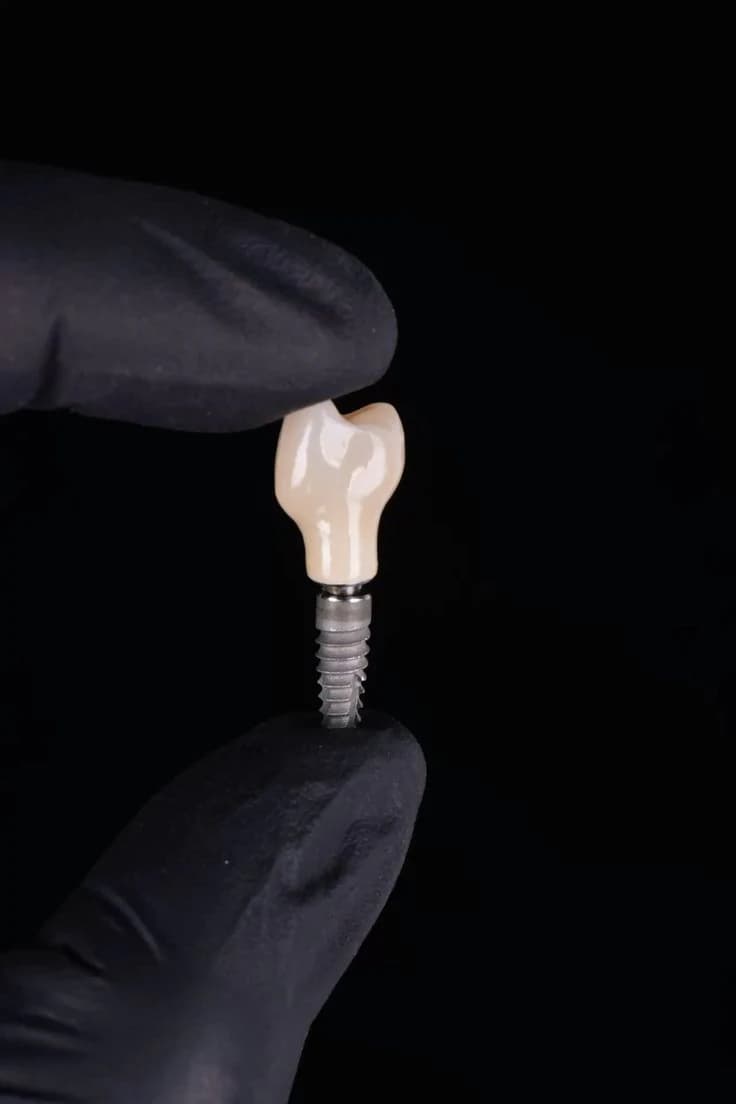
The causes are mostly biological rather than a mistake in the crown: an implant does not move, but natural teeth continue to drift slowly throughout life, and the gap opens between them. The practical answers are periodic checks of the contact, screw-retained crowns that can be removed and adjusted, and in some patients a night guard or retainer that limits drift. When a contact opens on a screw-retained crown, the usual fix is to remove the crown, rebuild the contact in our lab and reseat it — typically a short visit rather than a new tooth.
Regret 4: expectations about how the teeth look, sound and feel
Some regret has nothing to do with complications and everything to do with expectations. In a study comparing what patients expected from implant crowns and bridges with how satisfied they were afterward, expectations were higher than satisfaction, and the gap was significant for esthetics in bridge patients. The same study found that how patients rated the clinician's conduct was related to how satisfied they were. That fits what we see in practice: an honest explanation before treatment shapes how the result is experienced afterward.
Three expectation gaps come up most often. The first is appearance in the front of the mouth: after an implant is placed immediately into a fresh extraction site in the front of the upper jaw, the gum at the front of the implant receded by more than 1 mm in a median of 26% of sites across the studies in one systematic review, compared with none in the smaller number of early-placement studies. That is why front teeth need careful timing and soft-tissue planning. The second is speech after full-arch treatment: a small study of patients given immediately loaded full-arch teeth found that speech adapted normally over three to six months, but those months are real, and new teeth can change certain sounds at first. The third is feel — a fixed arch is not identical to natural teeth, and a good plan says so.
For full-arch cases we design the teeth before surgery with smile design and, where appropriate, a trial set you can see and assess, so the shape, length and lip support are agreed in advance rather than discovered afterward.
Regret 5: underestimating the maintenance
The regret that costs the most bone is treating implants as maintenance-free. Inflammation around implants is common: a systematic review of epidemiological studies estimated average prevalence at 43% for peri-implant mucositis, the reversible gum-level form, and 22% for peri-implantitis, which involves bone loss. A 2022 meta-analysis put peri-implantitis at 19.5% of patients. Our research review on peri-implantitis covers the causes in depth.
Maintenance changes those numbers substantially. In a five-year study of patients who already had mucositis, peri-implantitis developed in 43.9% of those without regular preventive maintenance and 18.0% of those who kept it up. A meta-analysis of maintenance trials concluded that implant treatment should not end at placement and restoration, and suggested recall at least every five to six months, tailored to risk. Two other avoidable causes deserve a mention. Excess cement left under a cemented crown was found in 81% of cases of peri-implant disease in one endoscopic study, which is one reason screw-retained restorations are preferred. And heavy grinding roughly doubles the odds of implant failure, according to a 2024 meta-analysis — so a night guard is protection, not an upsell, as we explain in our article on grinding and implants.
Regret 6: waiting too long — or moving too fast
Two opposite timing regrets come up. The first is waiting years after a tooth is lost. Bone does not wait with you: re-entry studies measured 29–63% horizontal and 11–22% vertical loss of the ridge within about six months of an extraction. A case that would have been a straightforward implant can become an implant with a graft, or a sinus lift, and the cost and healing time grow with it.
The second is the opposite: pressure to have everything done immediately when the bone is not ready. Same-day implants and same-day teeth are genuinely good options in the right mouth, but they depend on the implant being firmly held at insertion. When the bone cannot provide that, forcing an immediate result is how an otherwise routine case becomes a failure. A plan should tell you what will decide whether immediate loading happens, and what the fallback is if it does not — our research review on immediate loading sets out the evidence.
Regret 7: not asking who does each part
Many patients learn only on surgery day, or afterward, that the person who planned their case is not the person placing the implants, and that neither is the person making the teeth. Each hand-off is a place where information can be lost. Experience also matters in a measurable way: a 2017 meta-analysis found that when experience was defined by the number of implants a surgeon had placed, implants placed by surgeons with 50 or fewer failed at more than twice the odds (odds ratio 2.18) — a finding drawn from two retrospective studies, but a consistent one.
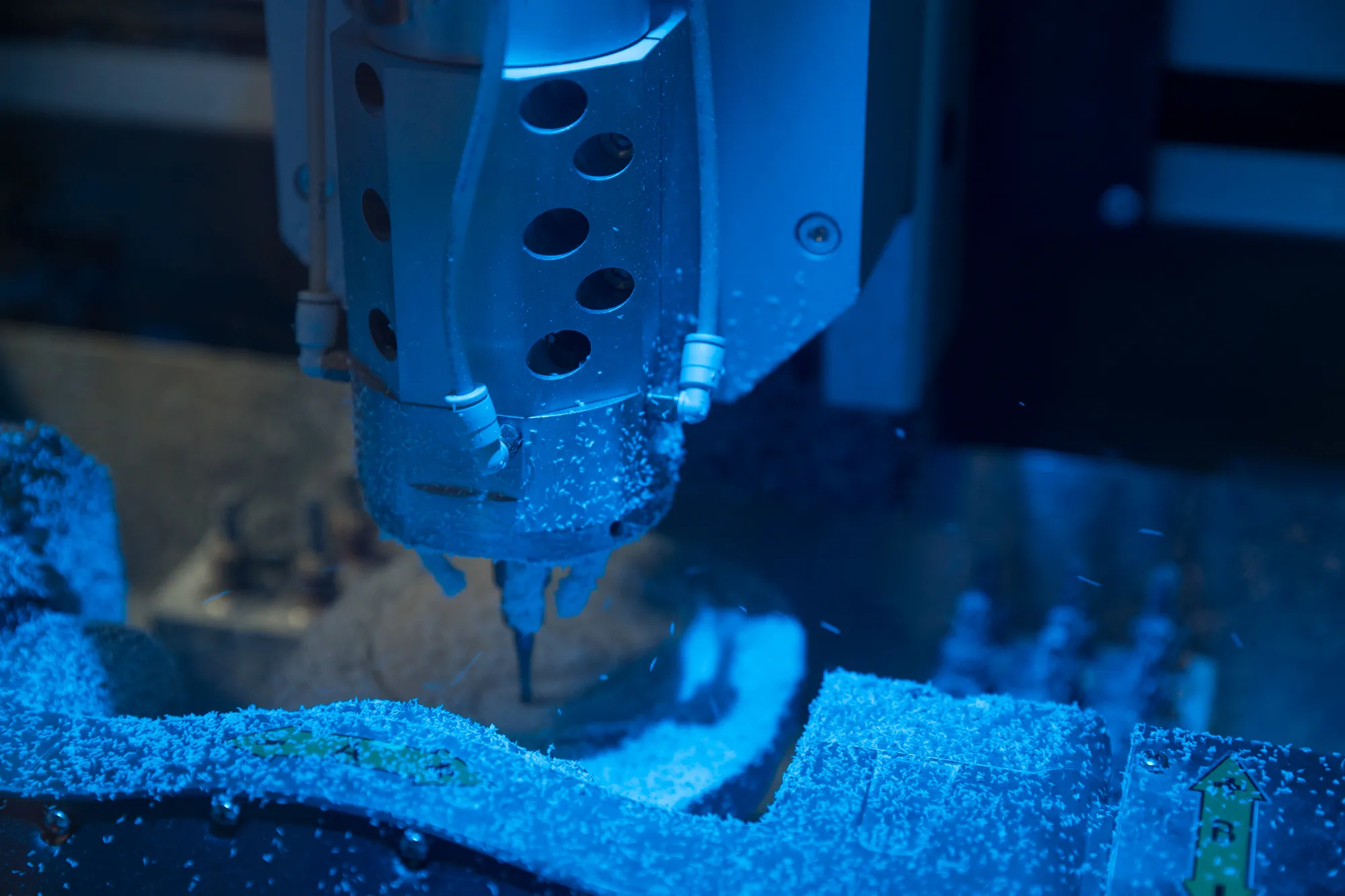
In our practice the same two owner-doctors, Dr. Sam Jain and Dr. Arpana Gupta, plan, place and restore every case, give sedation themselves, and see their patients for follow-up in the practice they have run together since 2008; the teeth are designed and milled in our own lab. That is not the only way to deliver good implant care, but whoever you choose, you should know by name who is responsible for each step and who you will call in a year.
A checklist to use before you commit
Before agreeing to treatment anywhere, including with us, it is worth having written answers to a short list. Did the dentist review a 3D CBCT scan with you and explain what it shows? Does the written plan name the number of implants, the implant system, the materials of the final teeth and every separately billed service? Were alternatives explained, including not having implants — which is sometimes the right answer, as we discuss in when dental implants are not the answer? Who places the implants, who makes the teeth, and who handles problems later?
Then ask the questions that reveal how an office thinks about failure. What happens if an implant does not integrate? What maintenance schedule do they recommend, and what does it cost? For full-arch treatment, will you see and approve the design of the teeth before surgery? Are the restorations screw-retained? A practice that answers these plainly before treatment is the kind that will still answer the phone after it. If you would like a second set of eyes on a plan you have already been given, you can schedule a consultation and bring it with you.
Written and medically reviewed by Dr. Sam Jain, DMD, MS, and Dr. Arpana Gupta, DDS, MDS, who own this practice. Reviewed
This article is patient education, reviewed by Dr. Sam Jain, DMD, MS, and Dr. Arpana Gupta, DDS, MDS, and is not a substitute for an exam. Treatment recommendations are made only after an in-person consultation and 3D imaging.