How Much Does a Single Tooth Implant Cost? (2026 Bay Area Guide)
One missing tooth, one honest number. What a single implant includes, what quietly moves the price, and where financing lands — with real market figures to compare against.
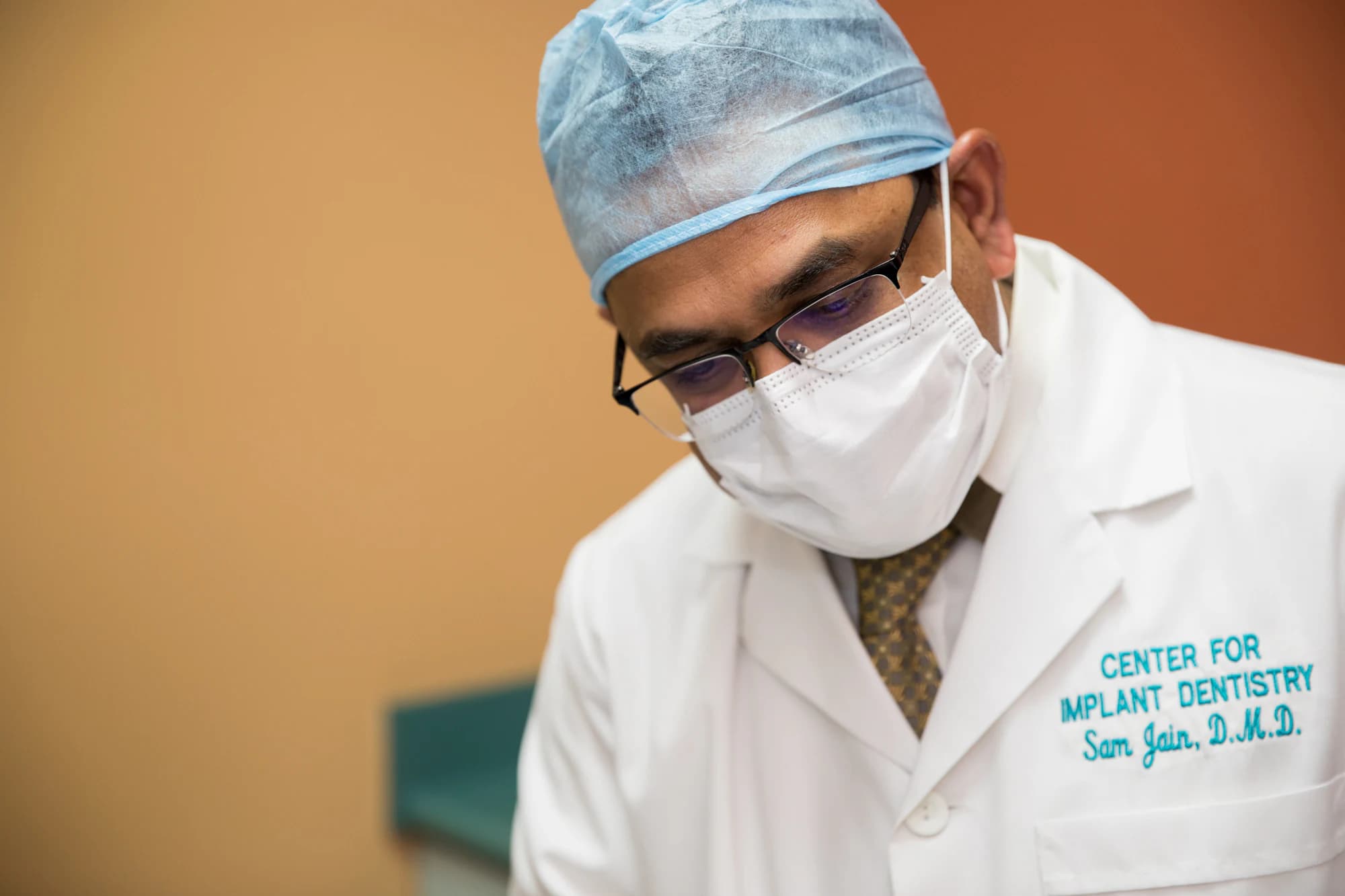

Written and medically reviewed by Dr. Sam Jain, DMD, MS, and Dr. Arpana Gupta, DDS, MDS
Published

The real number for one tooth
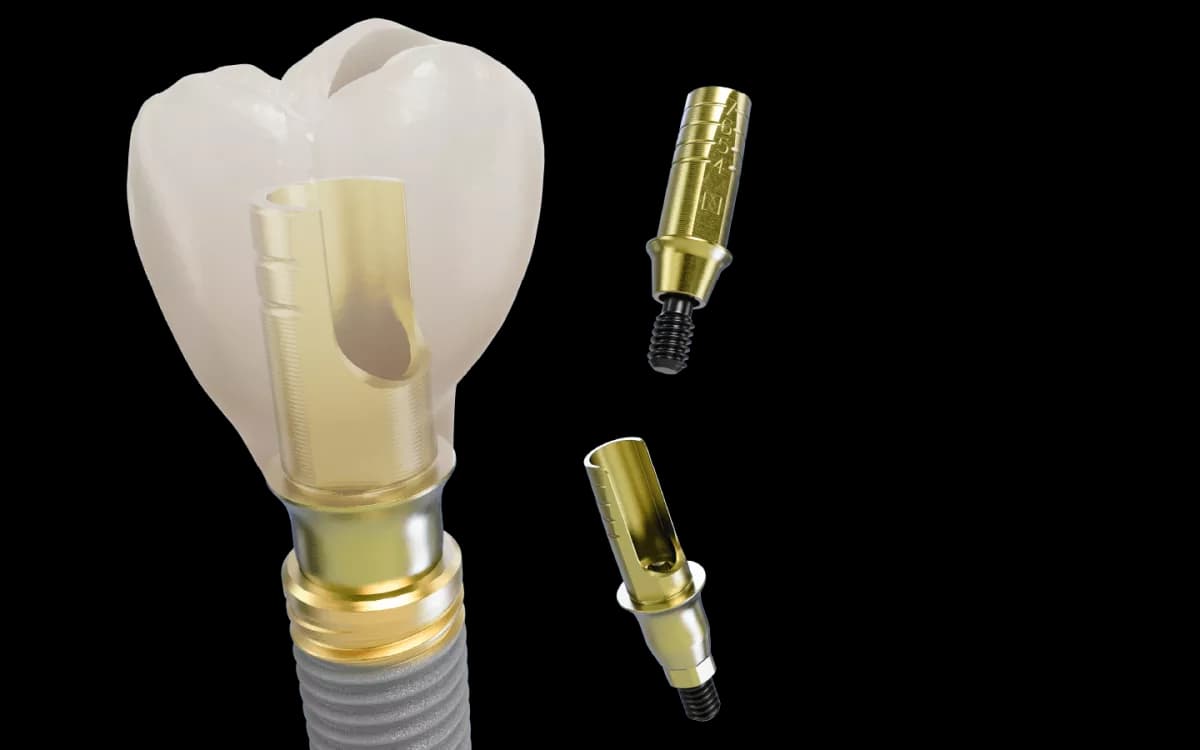
Across California, a complete single-tooth implant — the titanium post, the abutment that connects to it, and the custom crown on top — is commonly quoted between roughly $3,500 and $7,500. That spread is wide because 'an implant' can mean very different things on different invoices, which we'll get to. Every figure here is an observed market range, not a quote; your final number depends on your anatomy — the tooth's position, the bone under it, and any prep work it needs — which is why at our Fremont and San Francisco offices your price is itemized in writing after a free 3D scan.
It helps to know what you're buying. A single implant replaces one tooth from the root up, without grinding down the healthy teeth on either side the way a traditional bridge does — which is a big part of why it tends to be the better long-term value even when a bridge quotes lower today. You can see how it fits against the alternatives on our implants vs. bridges page, and the full price breakdown on our Fremont cost page.
What's actually included — and what's quietly extra
Most single-tooth sticker shock is a scope problem: the number you saw covered less than the number you got. A teaser price sometimes covers the implant post alone, with the abutment, the crown, the 3D scan, and any temporary each arriving later as separate line items. Another office quotes the finished, chewable tooth. Both said 'implant.' Until you see an itemized plan, you genuinely cannot compare the two — which is why the first question to ask any office is simply: what exactly is in this number?
The other quiet variable is the work that sometimes has to happen first. If the old tooth still needs removing, that's an extraction. If the site has lost bone, a graft may be needed before an implant can hold. Neither is a hidden fee when it's disclosed up front — but it's the difference between a straightforward quote and a higher one, and it's exactly what a 3D scan reveals before anyone quotes you. Our scan and consultation are free precisely so that number is real, not a guess.
Why one quote is $3,500 and another is $7,000 for 'the same tooth'
Beyond scope, the biggest driver is structure. An office that mails its crown work to an outside commercial lab pays that lab's margin, and it lands in your bill. A practice that owns its CAD/CAM lab and employs its surgeons removes that layer — same implant brands, same FDA-cleared materials, fewer middlemen. That's the main reason equally good clinical work can carry very different invoices, and it's why we can start lower without cutting a corner on your care.
Location matters too. Bay Area dentistry runs above the California average, which runs above the national one — rent, wages, and lab costs here run among the country's highest, and most practices pass them through — a quote 15–20% above the Central Valley is ordinary for one tooth. But the premium tracks each practice's cost structure, and one that mills its own crown and answers to no outside lab can sit below the regional norm even here.
Insurance and financing for a single implant
Most PPO dental plans treat implants as a major procedure and cap annual benefits around $1,000–$2,000 — real help against a single tooth, even if it rarely covers the whole thing. We work with all PPO plans, verify your exact benefits in writing, and handle the claim paperwork. We currently can't accept Medicaid, Medi-Cal, Medicare, or HMO (DMO) plans for implants, but financing covers many patients in those situations.
For the balance, a single implant is one of the most manageable procedures to finance, with monthly payments that depend on term and credit. We compare offers from four trusted lenders (Proceed Finance, Cherry, Happen Bank (formerly LendingClub), and CareCredit) to find the lowest payment for your situation, and prequalifying takes minutes with no impact on your credit score. The details live on our financing page.
How to get your real number in one visit
You shouldn't have to pay to find out what your tooth will cost. The free consultation includes a 3D CBCT scan that shows the bone at the site, whether an extraction or graft is needed, and exactly which restoration suits your bite — and from that the doctor gives you an itemized price in writing, no pressure, no teaser. Because the surgery and the lab that mills your crown share one roof, many qualifying single-implant patients even receive their permanent crown in as little as 24 hours rather than waiting weeks.
If you've been quoted elsewhere, bring it to the free consultation — we're glad to read it with you line by line, and if the other office's plan is sound, we'll say exactly that. The point of a free scan and an itemized written quote is the same: to replace a vague fear about cost with an actual answer. The first visit is free.
Written and medically reviewed by Dr. Sam Jain, DMD, MS, and Dr. Arpana Gupta, DDS, MDS, who own this practice.
This article is patient education, reviewed by Dr. Sam Jain, DMD, MS, and Dr. Arpana Gupta, DDS, MDS, and is not a substitute for an exam. Treatment recommendations are made only after an in-person consultation and 3D imaging.