Zygomatic Dental Implant Cost — Fixed Teeth Without Grafting (2026)
For patients told they have 'no bone' for upper implants, zygomatic implants are often the fixed-teeth answer — and, counterintuitively, sometimes the more economical path than months of grafting.
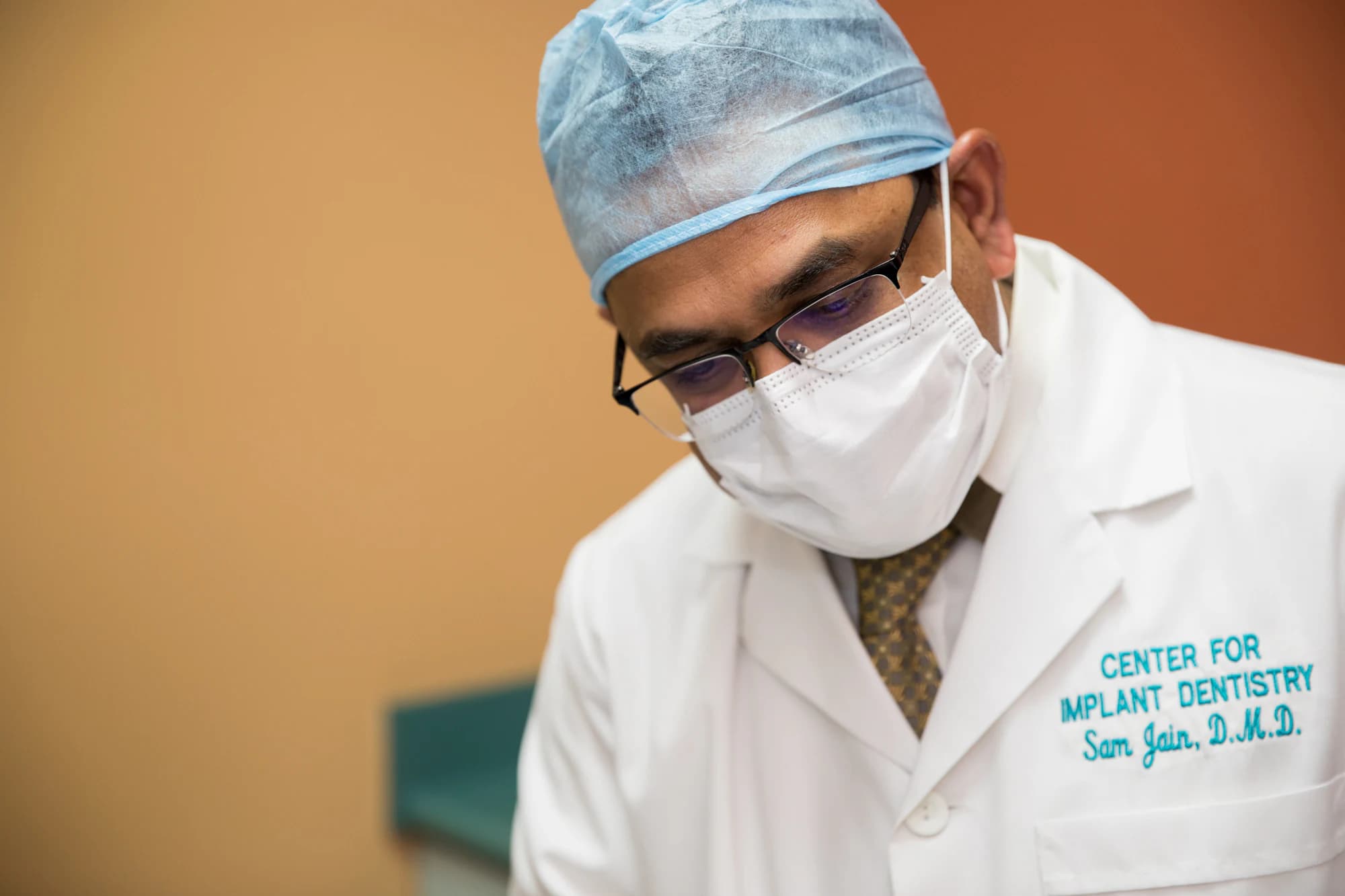

Written and medically reviewed by Dr. Sam Jain, DMD, MS, and Dr. Arpana Gupta, DDS, MDS
Published
What zygomatic implants are — and who they're for
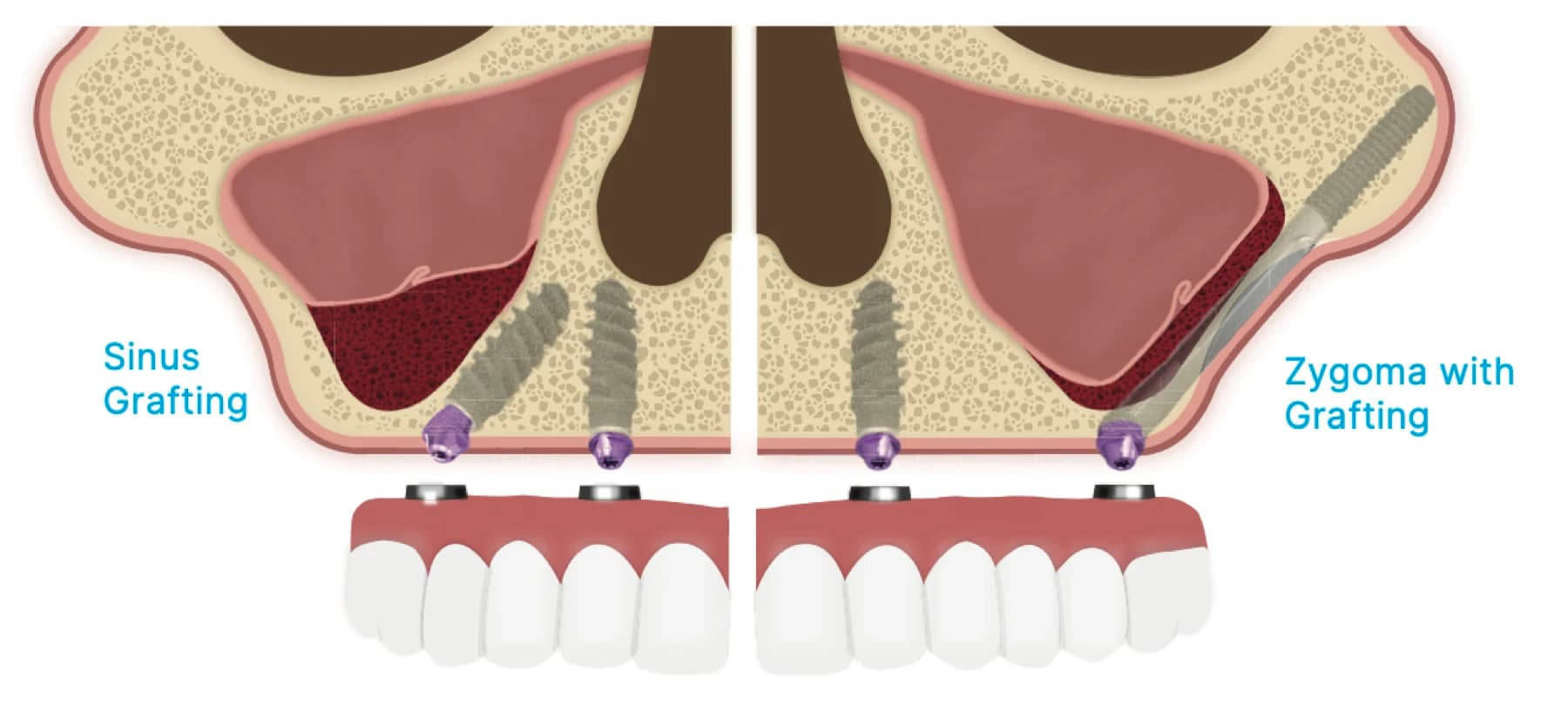
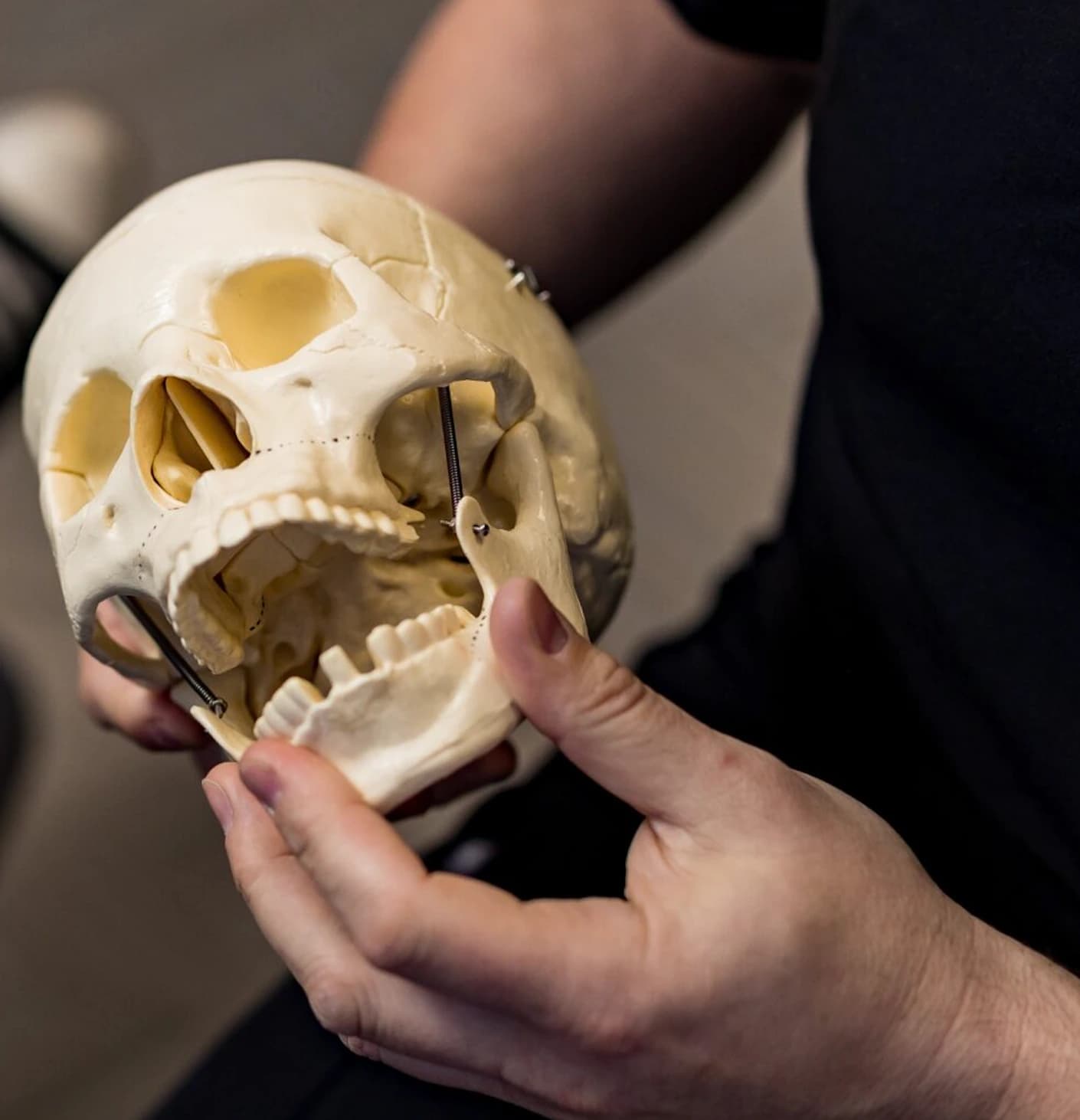
When the upper jaw has lost too much bone to hold ordinary implants — from long-term denture wear, gum disease, or failed prior work — most offices reach for months of bone grafting and sinus lifts, or simply say no. Zygomatic implants take a different route: they're longer implants anchored into the dense zygoma (the cheekbone) instead of the depleted jawbone, giving a full upper arch of fixed teeth a solid foundation without rebuilding the jaw first. Our zygomatic implants page walks through the surgery in detail.
This is specialized surgery, not an everyday procedure — it's for severe upper-jaw bone loss, and it's exactly the kind of case we're known for taking on after patients were turned away elsewhere. If you've been told you're 'not a candidate' for upper implants, that's often the beginning of the zygomatic conversation, not the end of the road.
Why the total cost can surprise you — in both directions
Zygomatic cases price higher per arch than a routine full-arch, because they require advanced surgical skill, longer specialized implants, and usually sedation — it's more engineering, and the quote reflects that. Taken in isolation, that number can look daunting. But the honest comparison isn't zygomatic-versus-nothing; it's zygomatic-versus-the-alternative, and that's where the math shifts.
The graft-first alternative stacks up its own costs over time: multiple grafting and sinus-lift procedures, the materials for each, many months of healing, and the implants and arch still to come at the end. Add it all together and the traditional path can approach or exceed a zygomatic case — while taking a year or more longer to reach fixed teeth. Zygomatic implants often deliver a fixed arch in a single, coordinated treatment, which is why 'the expensive option' sometimes turns out to be the more economical one overall.
What goes into a zygomatic quote
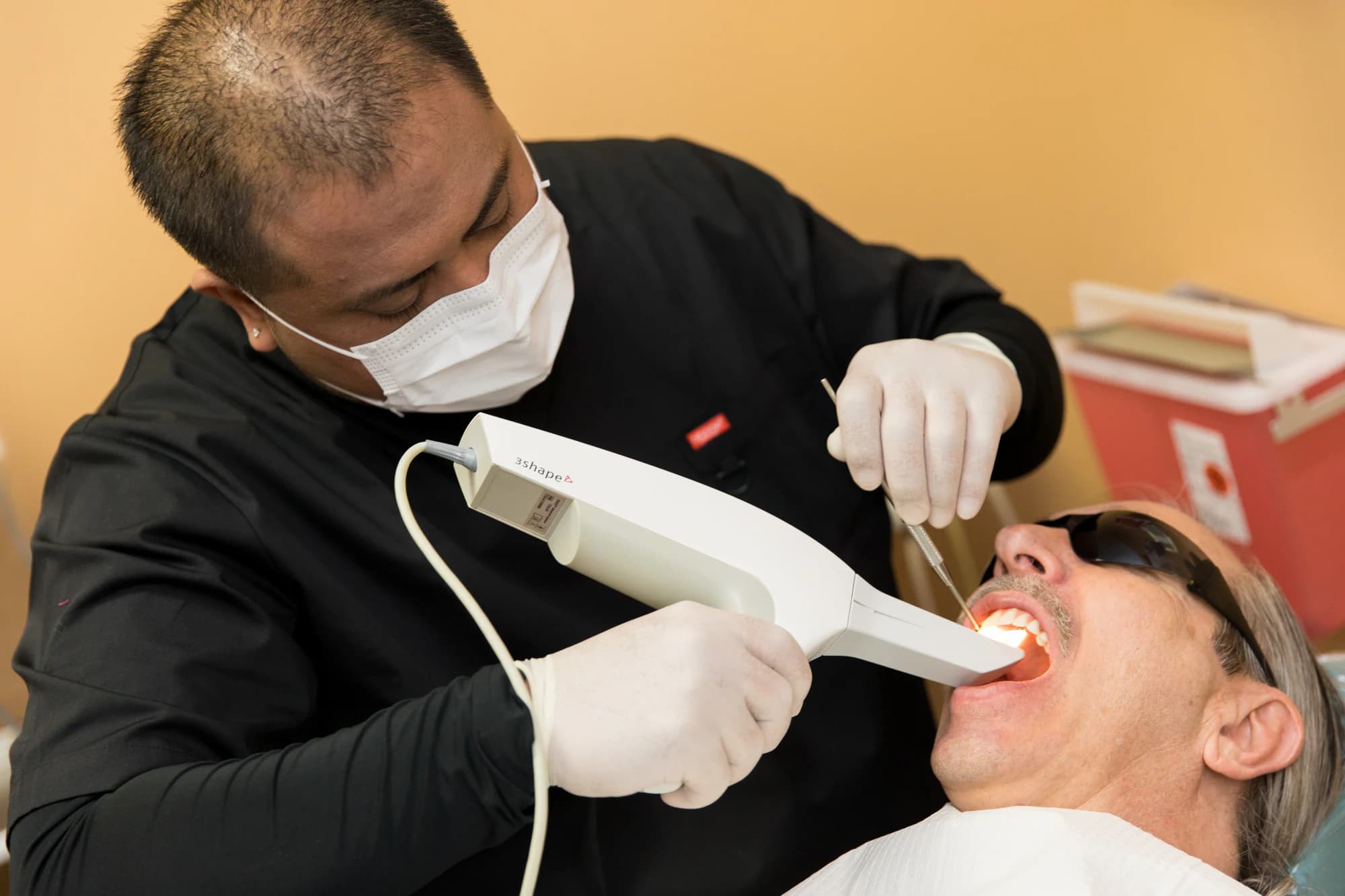
A proper zygomatic plan is itemized like any other: the 3D CBCT scan that maps your remaining bone and the zygomatic anatomy, the surgery itself, sedation supervised by ACLS-certified doctors, the fixed teeth you leave with, and the final custom-milled arch from our in-house lab. Because surgery and the lab share one roof, there's no outside-lab markup layered on top of an already-specialized procedure.
The variables that move a zygomatic number are how many zygomatic versus standard implants your anatomy calls for, whether one arch or both are being treated, and your sedation plan. What doesn't move it here: fly-in surgeon fees. As with every case, the free scan is what turns those variables into a real, written number instead of an estimate over the phone.
Insurance, financing, and second opinions
Insurance behaves the same way it does for any implant work: most PPO plans cap annual benefits around $1,000–$2,000 and treat implants as a major procedure, so they help partially rather than fully — we verify your benefits in writing and file the claim. We can't accept Medicaid, Medi-Cal, Medicare, or HMO (DMO) plans for implants. For the balance, we compare four lenders (Proceed Finance, Cherry, Happen Bank (formerly LendingClub), and CareCredit) to find a workable monthly payment, and prequalifying doesn't affect your credit.
Because zygomatic surgery is specialized, a second opinion is especially worth getting if you've been quoted for extensive grafting elsewhere — sometimes the zygomatic route reaches the same fixed result faster and for a comparable total. Bring your scan or quote; we'll review it honestly. Details are on our financing page, and the consultation and CBCT scan are free.
The bottom line on value
Zygomatic implants aren't the cheapest line item in implant dentistry, and it would be dishonest to pretend otherwise. But for the specific patient they're meant for — severe upper-jaw bone loss, often after being told 'no' elsewhere — they're frequently the fastest and, over the whole treatment, the most economical way to fixed, permanent teeth. The alternative isn't a cheaper implant; it's a year of grafting that may cost as much and still needs the implants afterward.
The only way to know which path fits your anatomy — and what each would actually cost you — is a scan and an honest plan. That's what the free consultation is for: to tell you whether you need zygomatic implants at all, and if so, what the real, itemized number is. Many people who arrive expecting bad news leave with a concrete way forward.
Written and medically reviewed by Dr. Sam Jain, DMD, MS, and Dr. Arpana Gupta, DDS, MDS, who own this practice.
This article is patient education, reviewed by Dr. Sam Jain, DMD, MS, and Dr. Arpana Gupta, DDS, MDS, and is not a substitute for an exam. Treatment recommendations are made only after an in-person consultation and 3D imaging.