What Is All-on-4? How the Four-Implant Technique Works
Four implants, one fixed set of teeth, no plastic plate covering the roof of your mouth — here's how All-on-4 actually works, and where it fits.
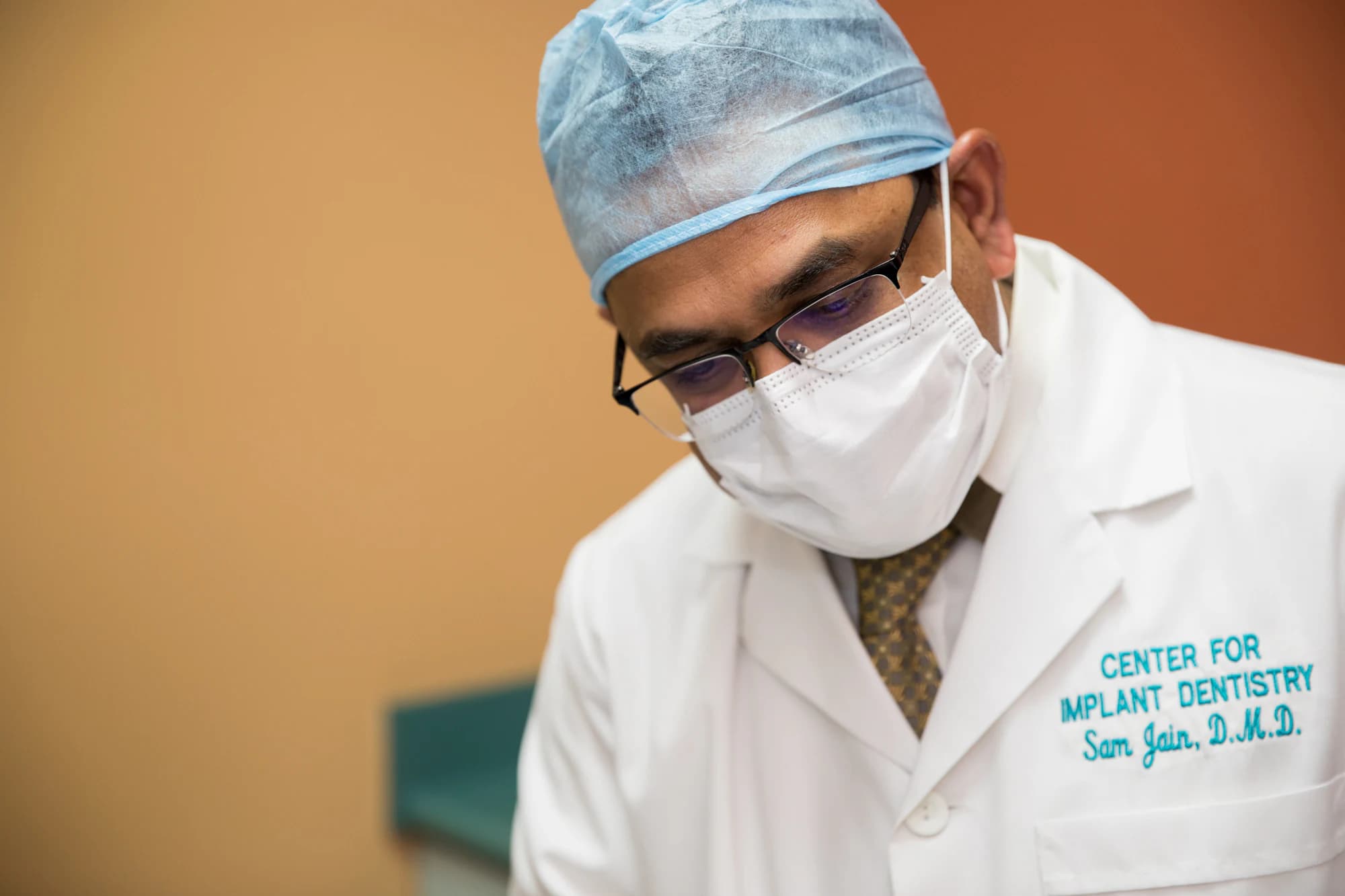

Written and medically reviewed by Dr. Sam Jain, DMD, MS, and Dr. Arpana Gupta, DDS, MDS
Published · Updated

What All-on-4 Dental Implants Actually Are
All-on-4 is a way to replace a full arch of teeth — an entire upper or lower jaw — using just four dental implants that carry one fixed bridge of new teeth. The teeth are screwed onto the implants, not glued or clipped, so nothing comes out at night. You brush them like real teeth. For most patients this is the closest thing to getting a natural set of teeth back after tooth loss or failing dentures.
The technique goes back to 1998, when Portuguese surgeon Dr. Paulo Malo, working with Nobel Biocare, showed you don't need eight or ten implants per jaw to hold a full set of teeth. The trick is geometry: two implants go in straight at the front of the jaw, and two go in tilted at an angle (up to about 45 degrees) toward the back. Angling those back implants lets them reach denser, more available bone and spreads the four supports farther apart across the arch — which is exactly what a full bridge needs to stay stable.
That angled placement is the reason the number is four and not more. It's not a budget compromise; it's an engineering solution. A wider spread between your front and back implants means the bite force is shared better and the bridge flexes less. Dr. Sam Jain, who holds an MS in mechanical engineering alongside his dental degree, plans every case around that load geometry rather than a one-size template.
How the Procedure Works, Start to Finish
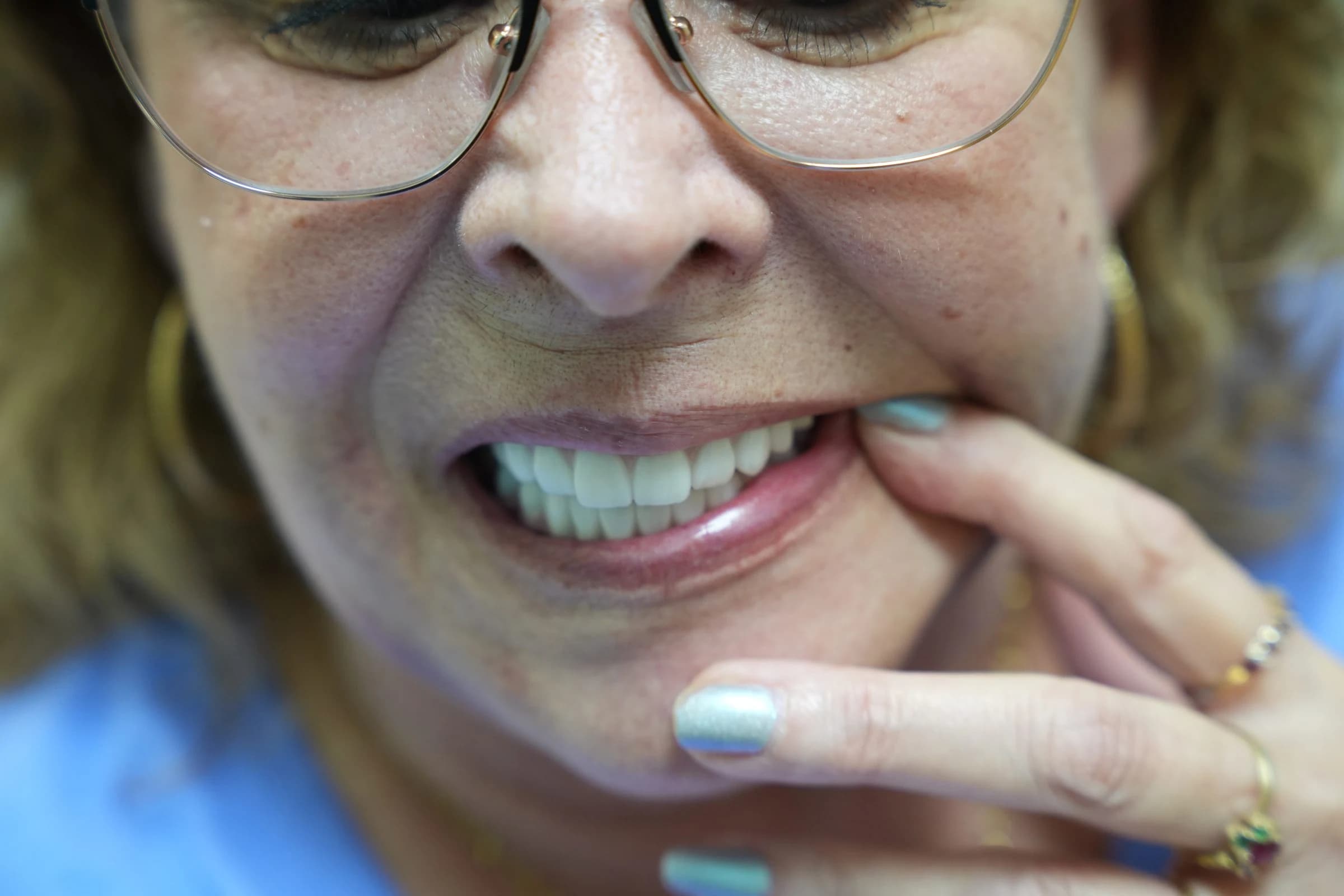
A full-arch case usually happens in one surgical visit. Any remaining failing teeth are removed, the four implants are placed, and a fixed set of teeth is attached to them — often the same day. That same-day set is why people call this "teeth in a day." You typically walk out with a working, non-removable arch instead of going home toothless while things heal.
The part patients don't always hear about is what comes after. At many centers, that first same-day arch is a temporary acrylic set you wear for six to eight months while the implants fuse to bone, and the permanent teeth come later. We do it differently. Because planning, surgery, IV sedation, and a CAD/CAM zirconia mill all sit under one roof — run by our own engineer, Andy Jain — we can deliver final, custom-milled teeth in about 72 hours for a full arch, not half a year of provisional plastic. You can see the full same-day workflow on our same-day dental implants page.
One detail that matters: the surgeons who plan your case are the ones who place the implants and the ones who make your teeth. Dr. Sam Jain and Dr. Arpana Gupta — a married team of ICOI Masters — handle it themselves. There are no fly-in surgeons who place implants and leave someone else to sort out the bite. If you want to understand who does the work, our why choose us page lays it out.
Who's a Good Candidate — and Who Isn't
All-on-4 is built for people missing most or all of the teeth in an arch, or heading there — loose teeth, failing bridgework, or dentures they're tired of. Because the angled implants often reach usable bone without adding it, many patients who were told they "don't have enough bone for implants" turn out to be candidates after a proper 3D scan. That's a common and pleasant surprise. Your surgeon confirms it by measuring your actual bone on a CBCT, not by guessing from an X-ray.
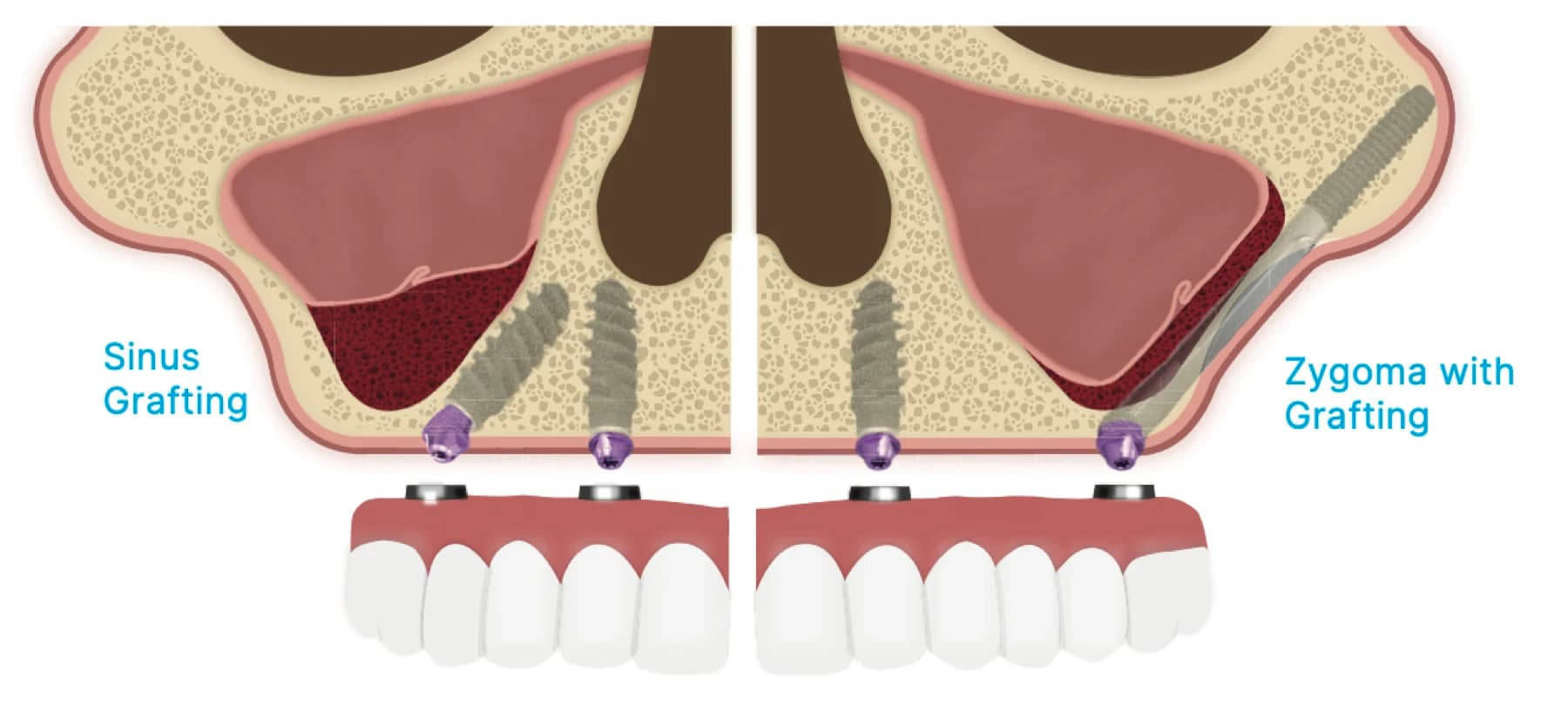
It isn't automatic for everyone. Very severe bone loss — especially in the upper jaw near the sinuses — can mean four standard implants won't find enough anchorage. In those cases the answer isn't "you can't have fixed teeth"; it's a different plan, like zygomatic implants that anchor into the cheekbone, a sinus lift, or targeted bone grafting. Uncontrolled diabetes, active gum infection, and heavy smoking also affect healing and are worth an honest conversation up front. Our candidacy page walks through the specifics.
For some jaws, especially where the bite is heavy or the bone is generous, we may recommend more than four implants for a sturdier foundation — the All-on-8 Robust protocol Dr. Jain developed. The right number is the number your particular arch needs. A free consultation with a 3D CBCT scan (a $499 value) is how that gets decided.
The Honest Pros and Cons
The advantages are real. You get fixed, non-removable teeth that don't cover the roof of your mouth, so taste and speech feel normal. You can eat foods that dentures make miserable. The implants stimulate the jawbone the way roots do, which slows the bone shrinkage that leaves long-term denture wearers with a sunken look. Long-term implant survival runs high — studies commonly cite around 95% over ten years — though your own numbers depend on bite, hygiene, and health, and your doctor will give you a realistic picture. Compared with replacing teeth one implant at a time, four implants for a whole arch is also usually more affordable; see our dental implant cost breakdown.
The trade-offs deserve equal airtime. It's surgery, and it's a bigger commitment than a denture you can buy and leave in a drawer. There's real cost — full-arch treatment is a five-figure investment at most offices, and roughly 92% of our full-arch patients finance it through options like Cherry or CareCredit. A fixed bridge on four implants is cleaned differently than natural teeth, with a water flosser under the bridge, and it does need maintenance. And because everything rides on four supports, precise planning and placement matter more, not less — which is the whole argument for having experienced surgeons who take the hard cases and who rescue failed implants placed elsewhere. If you're weighing this against a removable option, our implants vs. dentures comparison is a good next read.
Written and medically reviewed by Dr. Sam Jain, DMD, MS, and Dr. Arpana Gupta, DDS, MDS, who own this practice.
This article is patient education, reviewed by Dr. Sam Jain, DMD, MS, and Dr. Arpana Gupta, DDS, MDS, and is not a substitute for an exam. Treatment recommendations are made only after an in-person consultation and 3D imaging.