Saving Your Teeth or Full-Mouth Implants: How to Decide When Gum Disease Has Loosened Your Teeth
When gum disease has loosened several teeth, two very different futures are on offer: treat and keep what can be kept, or replace the teeth with implants. Both can be right. The long-term evidence is more even than many people are told, and the one step that cannot be reversed is extraction — so the decision deserves care.

Written and medically reviewed by Dr. Sam Jain, DMD, MS, and Dr. Arpana Gupta, DDS, MDS
Published
In this article
- 1A decision you can only make one way
- 2How long do teeth treated for gum disease last?
- 3Do implants do better over the long term?
- 4When keeping the teeth stops making sense
- 5The paths in between
- 6Periodontitis does not stay behind when the teeth leave
- 7If the answer is full-arch implants
- 8How we help people make this decision
A decision you can only make one way
A tooth can be extracted at any time. It cannot be un-extracted. A systematic review of long-term tooth and implant survival made exactly this point: even when a tooth is compromised and needs treatment to be kept, extraction is definitive and irreversible, and implant treatment can require additional surgery with its own risks. That asymmetry is the right starting point for anyone whose teeth have been loosened by periodontitis.
It is also true that keeping every tooth at any cost can be the wrong choice. Teeth that are painful, drifting and failing one by one can cost years of repeated treatment, infections and bite collapse, and leave less bone for implants later. The goal is not to favor teeth or implants, but to match each tooth's realistic future to the treatment that gives the patient the most reliable result.
How long do teeth treated for gum disease last?
Better than most people expect, when treatment is followed by regular maintenance. A systematic review of 13 long-term studies followed 41,404 teeth that remained after active periodontal treatment; 3,919 were lost during maintenance of five years or more. Tooth loss due to periodontal reasons ranged from 1.5% to 9.8% across studies, and between 36% and 88.5% of patients lost no teeth at all. Older age, smoking and a poor initial prognosis for the tooth predicted loss.
An updated review in 2021, covering 33 studies, put it more simply: on average, patients in long-term periodontal maintenance lost about one tooth every ten years, and the majority lost none. Those numbers describe patients who completed treatment and kept attending maintenance — the same condition that implants depend on.
Do implants do better over the long term?
Not clearly. The 2013 systematic review included only studies with at least 15 years of follow-up. Tooth loss in the studies of teeth ranged from 3.6% to 13.4%; implant loss in the studies of implants ranged from 0% to 33%. The authors concluded that implant survival does not exceed that of compromised but adequately treated and maintained teeth, and that the decision to extract should be made cautiously.
Implants in people with a history of periodontitis also carry their own risk. In a ten-year study, implant survival was 96.6% in periodontally healthy patients but 90% in patients treated for severe periodontitis, and additional antibiotic or surgical treatment was needed in 47.2% of cases in that group over the decade. The authors warned that multiple preventive extractions based on the assumption that implants perform better than teeth should be approached with extreme caution. A 2024 review of cost-effectiveness reached a parallel conclusion: placing and maintaining implants was more costly than properly treating and maintaining periodontally compromised teeth.
When keeping the teeth stops making sense
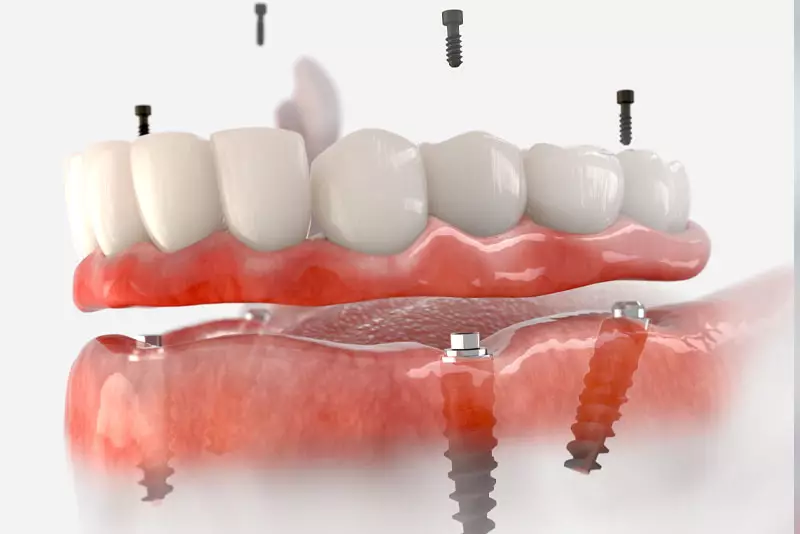
None of that means every loose tooth should be saved. The European Federation of Periodontology's guideline for the most advanced stage of periodontitis describes what separates it from earlier stages: teeth flaring and drifting, and the bite collapsing. At that stage, treatment has to rebuild function as well as control disease, and the guideline lists tooth-supported and implant-supported fixed or removable prostheses among the options.
Individual teeth are usually considered hopeless when so much supporting bone is gone that they cannot be stabilized, when they keep forming abscesses despite treatment, when they are fractured or decayed below a restorable level, or when they are so mobile that they cannot anchor a bridge. When most of the teeth in an arch fall into that category, saving the two or three that remain may not produce a mouth that chews well, and a planned transition to a full-arch restoration can be the more reliable path. Fixed full-arch implant teeth have well-documented outcomes: in Paulo Maló's All-on-4 study in the lower jaw, 99.2% of bridges were still in service at up to ten years, and a systematic review of full-arch patients reported high satisfaction and oral health–related quality of life.
The paths in between
The choice is rarely all or nothing. Strategically important teeth — often the canines and the teeth with the best bone — can be kept and treated while hopeless teeth nearby are replaced with an implant bridge. Loose teeth can sometimes be splinted together, and drifted teeth can sometimes be moved back with orthodontics once the disease is controlled; both appear among the stage IV guideline's options. Teeth with a guarded prognosis can be kept for now while the plan allows for their replacement later, without closing off the implant option.
What matters is that the plan is built tooth by tooth from a proper periodontal examination and a 3D scan of the bone, and that it states the expected future of each tooth rather than a general preference for keeping or replacing.
Periodontitis does not stay behind when the teeth leave
One of the most important things to understand before choosing implants is that the susceptibility that caused the gum disease remains. Periodontitis is associated with a higher risk of peri-implantitis, the equivalent disease around implants, and patients with a periodontitis history who skipped maintenance lost more implants in the ten-year study. Implants are not an escape from the maintenance that periodontal patients need; they change what is maintained. Our article on implants after gum disease explains that risk and how it is managed.
If the answer is full-arch implants
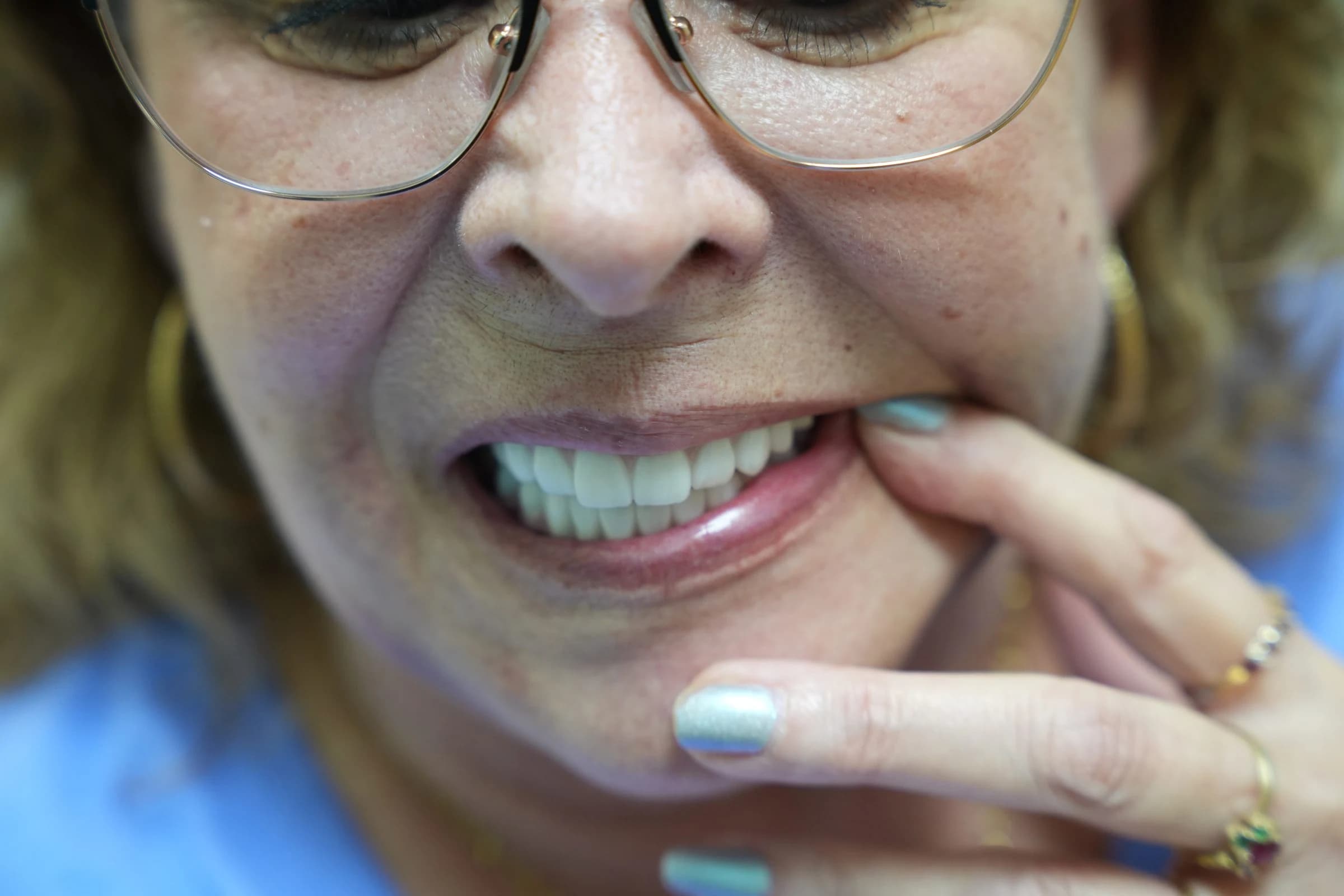
When most teeth in an arch cannot be kept, the transition can often be made without a period of having no teeth. For qualifying patients, the remaining teeth are removed, the implants placed and fixed temporary teeth attached on the same day, with any infected tissue cleaned out and bone grafted where needed. Our full-arch patients typically receive their final custom-milled teeth in about 72 hours. Our article on full-arch surgery day, hour by hour describes what that day is like, and our All-on-4 page explains the treatment.
Whether a full arch uses four, six or more implants depends on the bone that periodontitis left behind and on the bite, and we place the number the case needs. Where the upper jaw has very little usable bone left, zygomatic implants are an option that avoids long grafting delays.
How we help people make this decision
Because our practice is limited to implant dentistry, patients sometimes assume we will always recommend implants. We try hard to prove otherwise. At a free consultation, a 3D CBCT scan and examination show the bone around each tooth, and we explain which teeth have a reasonable future, which do not, and why. When keeping teeth is the better plan, we say so and describe what that plan involves. In that case, periodontal care for the natural teeth comes from the patient's own dentist or a periodontist. The article on when implants are not the answer describes how that part of the work is approached.
When implants are the better plan, you receive the options — partial or full-arch, fixed or removable, number of implants, materials — with their realistic outcomes and costs in writing. If you already have a plan from elsewhere that recommends removing all your teeth, we are glad to give a second opinion on it. You can book a consultation here.
Written and medically reviewed by Dr. Sam Jain, DMD, MS, and Dr. Arpana Gupta, DDS, MDS, who own this practice. Reviewed
This article is patient education, reviewed by Dr. Sam Jain, DMD, MS, and Dr. Arpana Gupta, DDS, MDS, and is not a substitute for an exam. Treatment recommendations are made only after an in-person consultation and 3D imaging.