Your Full-Arch Surgery Day, Hour by Hour
The scariest part of full-arch surgery is usually the blank space where the details should be. So here's the whole day, start to finish — what happens, roughly when, and how you'll feel at each step.
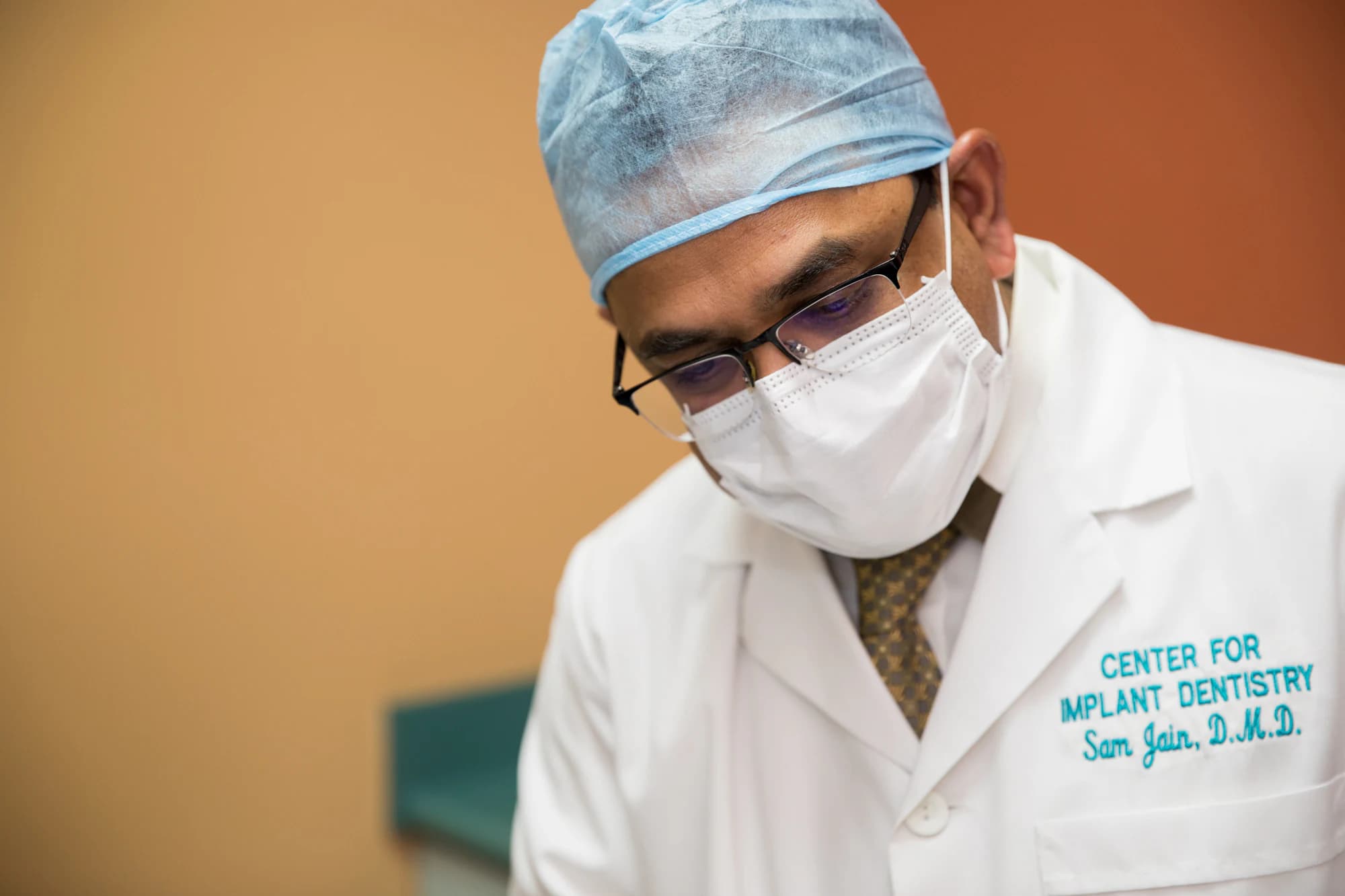

Written and medically reviewed by Dr. Sam Jain, DMD, MS, and Dr. Arpana Gupta, DDS, MDS
Published
Why nothing about this day is improvised
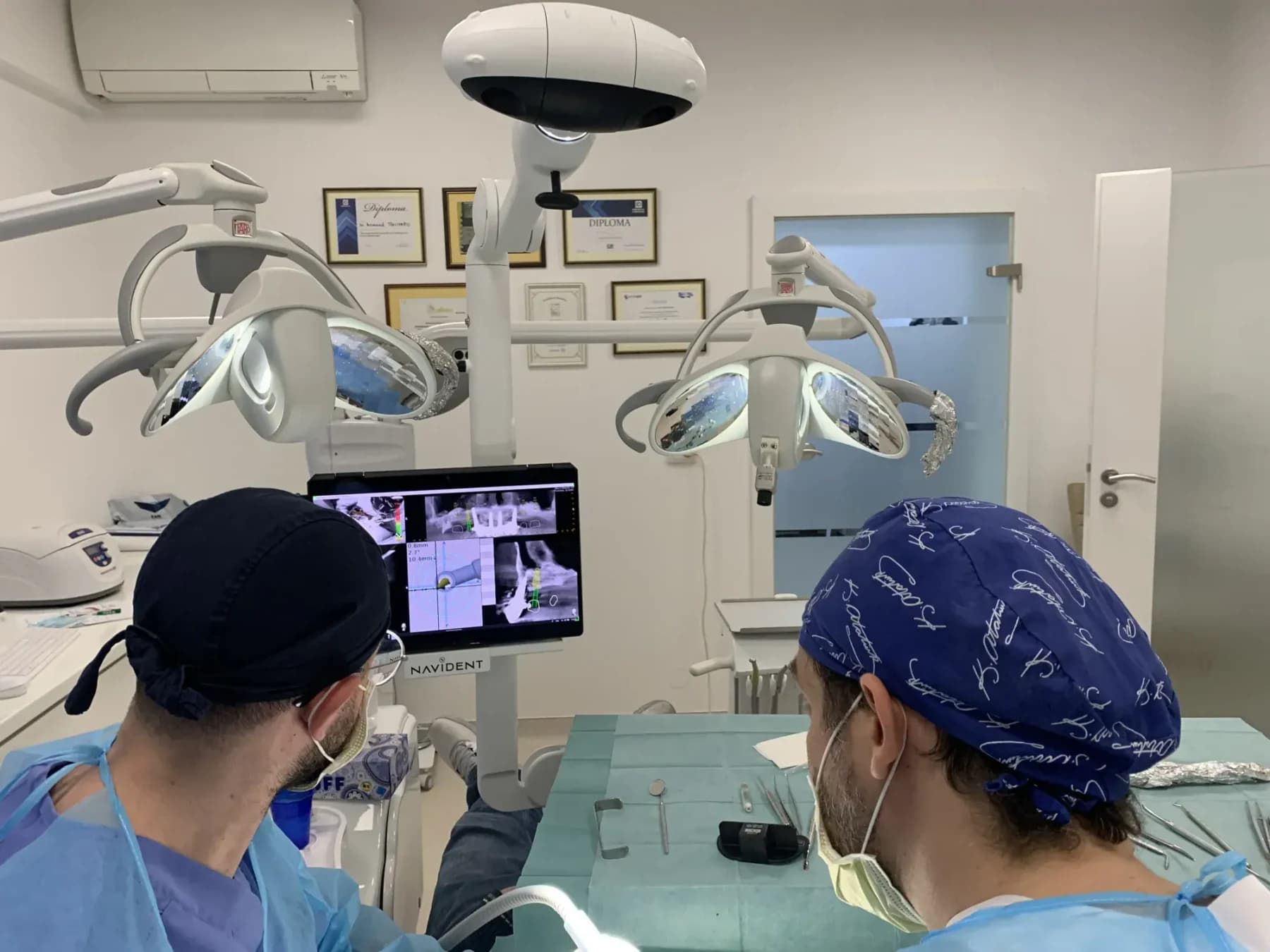
By the time you arrive for surgery, the hard thinking is already done. Your free consultation captured a 3D CBCT scan of your jaw; the doctors planned every implant position against your actual bone, nerves, and sinuses; and your written plan told you exactly what today includes. Surgery day is the execution of a finished engineering plan — not a day of decisions.
That's worth knowing because the fear of this day is usually fear of the unknown. What follows is the rhythm of a typical full-arch surgery day at our Fremont center. Your own schedule may differ — anatomy, sedation choice, and case complexity all move the clock, and your doctor walks you through your specific timeline before you commit to anything. Every timing below is a typical pattern, not a stopwatch promise.
Morning: arrival, sedation, and going under comfortably
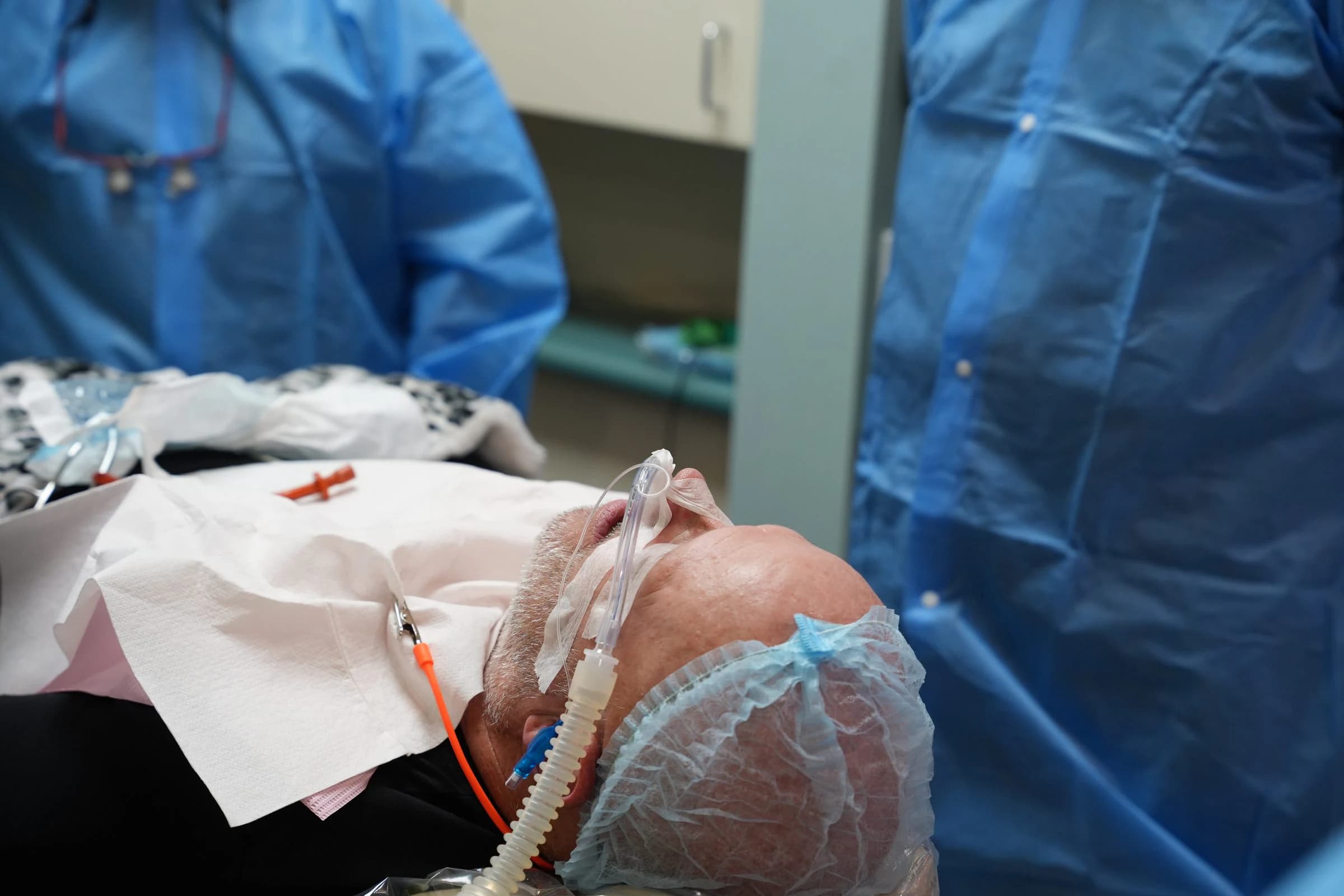
You arrive in the morning, usually having followed simple pre-surgery instructions about eating and medications that we give you in advance. If you've chosen IV sedation — most full-arch patients do — it's administered and supervised by ACLS-certified doctors, and for most people the next thing they meaningfully register is being told it's done. Oral sedation and local-only options exist too; the choice was made with your doctor beforehand, not sprung on you today.
One logistics item that matters this morning: your driver. Sedated patients can't drive themselves home, so a family member or friend brings you and takes you back. If anxiety is a big part of your story, say so again at check-in — pacing the morning around a nervous patient is normal here, not an inconvenience. Our sedation page covers the options in detail.
In the chair: extractions, guided placement, and the implant count
With you comfortable, the surgical work happens in one continuous session: any failing teeth are removed, and your implants are placed using dynamic navigation — X-Guide™ and Navident EVO — which tracks the surgery against your 3D plan in real time, millimeter by millimeter. This is the part that sounds longest and, for you, is usually the shortest-feeling stretch of the day: under IV sedation, hours pass without registering.
How many implants go in depends on what your bone told us on the scan — often six to eight per arch under our All-on-8 Robust protocol. The fixed, all-included All-on-4 fee is for a four-implant arch; an arch that needs six or eight is quoted in writing. The count was decided at the planning stage; today simply delivers it.
Waking up: fixed teeth the same day, then home
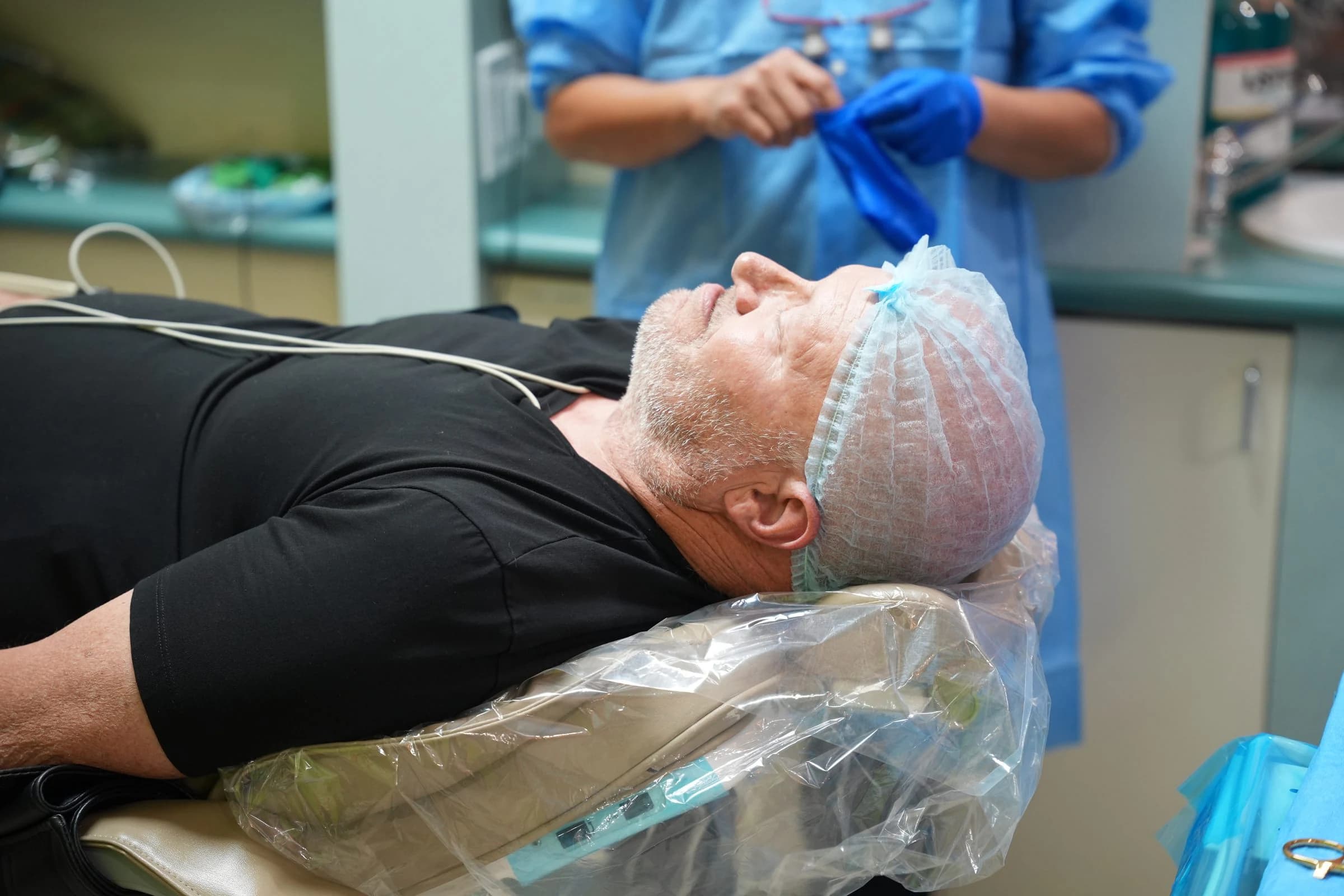
Here's the part most patients don't quite believe until it happens: you leave the same day with solid, fixed teeth attached to your new implants — not an empty healing period, not a removable plate. You'll get your post-surgery instructions (also written down, because nobody remembers instructions an hour after sedation), any prescriptions, and then your driver takes you home for the easiest possible version of the evening: rest, fluids, and the soft-food routine your instructions describe.
Expect the first days to be manageable rather than dramatic — soreness and swelling typically peak around day two or three and then fade, and most patients handle it with the medications we send them home with. The full day-by-day recovery detail lives in our post-op instructions, and anything that doesn't feel right gets a phone call to us, not a wait-and-see.
The next 72 hours: your final teeth, milled a few steps away
While you rest, your case moves to the room most implant offices don't have: our own on-site CAD/CAM lab, where your final custom teeth are designed and milled — no shipping to an outside facility, no weeks of waiting on someone else's queue. For typical full-arch cases the final custom-milled teeth follow in about 72 hours, checked for fit and bite before they ever leave the building. When anatomy argues for a longer provisional phase, your doctor says so and explains why — the timeline belongs to your case, not a slogan.
From there, the pattern is follow-ups with the same doctors who operated — not a different provider each visit — while your implants quietly finish fusing with the bone under teeth you're already using. If you're still at the research stage, the full All-on-4 guide covers candidacy and costs, and the whole journey starts the same way every case here does: a free consultation with a 3D scan, and a written plan you can take home.
Written and medically reviewed by Dr. Sam Jain, DMD, MS, and Dr. Arpana Gupta, DDS, MDS, who own this practice.
This article is patient education, reviewed by Dr. Sam Jain, DMD, MS, and Dr. Arpana Gupta, DDS, MDS, and is not a substitute for an exam. Treatment recommendations are made only after an in-person consultation and 3D imaging.