Dental Implants After Gum Disease: Who Can Get Them, Why the Risk Is Higher, and What Keeps Implants Healthy
Gum disease is one of the most common reasons people lose teeth, and one of the most common reasons they ask about implants. A history of periodontitis does not rule implants out — but it changes the order of treatment, the risk, and how much the maintenance afterwards matters.


Written and medically reviewed by Dr. Sam Jain, DMD, MS, and Dr. Arpana Gupta, DDS, MDS
Published

In this article
- 1The short answer: yes, but not while the disease is active
- 2Gum disease and peri-implantitis: related, not identical
- 3What the studies show about implants in people with a periodontitis history
- 4Bone lost to gum disease, and what it means for placing implants
- 5Can gum disease cause an implant to fail?
- 6Before implants: getting the gums stable
- 7Keep the teeth, or replace them?
- 8Keeping implants healthy when you have had periodontitis
- 9How we plan implants for someone with a gum disease history
The short answer: yes, but not while the disease is active
Most people who have lost teeth to periodontitis can have implants. What they should not have is implants placed into a mouth where the disease is still active. The bacteria and inflammation that destroyed the bone around the teeth do not distinguish between a tooth and an implant, and an implant placed in the middle of active disease starts life in exactly the environment that causes peri-implantitis.
The European Federation of Periodontology's clinical practice guideline for the most advanced stage of periodontitis sets out the sequence: a thorough diagnosis first, periodontal treatment to bring the disease under control, re-evaluation, and only then the rebuilding of lost teeth — with implant-supported bridges and dentures among the options — followed by long-term supportive care. Being a candidate, in other words, is usually a matter of timing. Our candidacy page lists active gum disease among the conditions that are treated and stabilized first, and then implants follow.
Gum disease and peri-implantitis: related, not identical
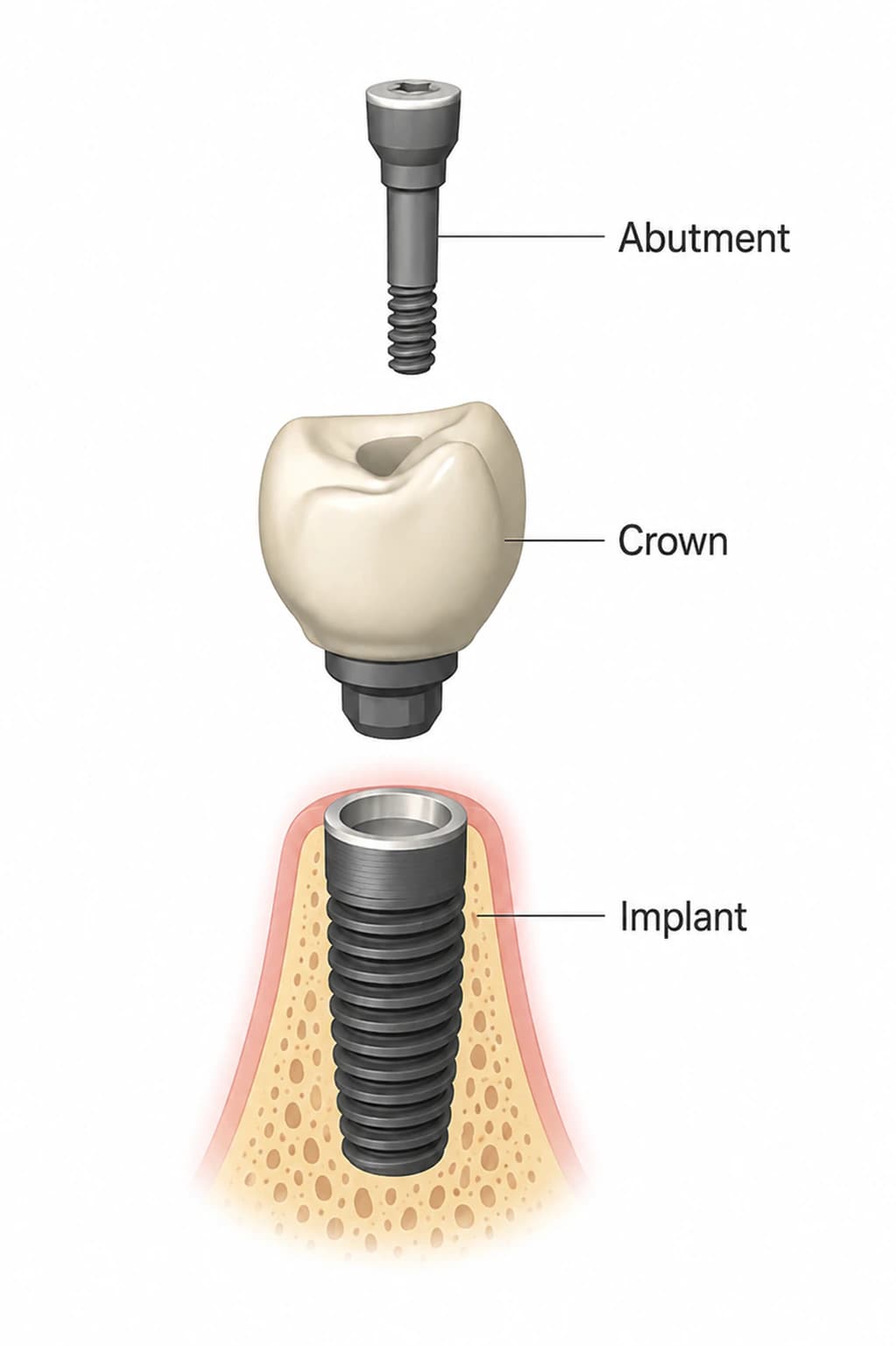
Periodontitis is a bacterial inflammatory disease that destroys the attachment and bone around natural teeth. Peri-implantitis is its counterpart around implants: inflammation of the tissues around an implant with progressive loss of the supporting bone. Both are driven by bacterial biofilm, and people who are susceptible to one appear more susceptible to the other.
They are not the same disease in a different location, though. An implant has no periodontal ligament, the fibrous attachment that anchors a tooth, and the tissue seal around it is different. When volunteers with both teeth and implants stopped cleaning for three weeks, inflammation developed around both — but more strongly around the implants. And peri-implantitis, once it starts, tends to progress in a non-linear, accelerating pattern: a nine-year follow-up study found that most cases began within the first three years of an implant being in function. An implant is not immune to gum disease. It has its own version, and it can move faster.
Patients sometimes hear that implants are the answer to gum disease because "implants can't get gum disease." That is not accurate, and for someone whose teeth were lost to periodontitis it is a dangerous idea to take into the next twenty years.
What the studies show about implants in people with a periodontitis history
The risk is higher, and it is also manageable. A 2015 meta-analysis found that patients with periodontitis had a higher risk of losing implants, with a risk ratio of 1.69, and moderate evidence that they had more peri-implantitis and more bone loss around implants. A 2018 meta-analysis of 19 observational studies estimated a 2.29-fold higher risk of peri-implantitis in patients with periodontitis, though that association was not statistically significant when only cohort studies were analyzed, and the authors cautioned about differences between studies.
The most useful long-term data come from a ten-year study in which 112 patients were grouped by their periodontal history before receiving implants, all after their gum disease had been treated. Implant survival was 96.6% in periodontally healthy patients, 92.8% in those with a history of moderate periodontitis and 90% in those with severe periodontitis. Sites with 3 mm or more of bone loss were found in 4.7%, 11.2% and 15.1% of the three groups. Additional antibiotic or surgical treatment was needed in 10.7% of cases in the healthy group, 27% in the moderate group and 47.2% in the severe group. And patients with a periodontitis history who did not keep up with supportive maintenance lost more implants.
Read plainly: nine in ten implants in patients with a history of severe gum disease were still in place ten years later. They were also more likely to need extra care along the way, and the ones who stayed in a maintenance program did better. That is the realistic picture to plan around.
Bone lost to gum disease, and what it means for placing implants
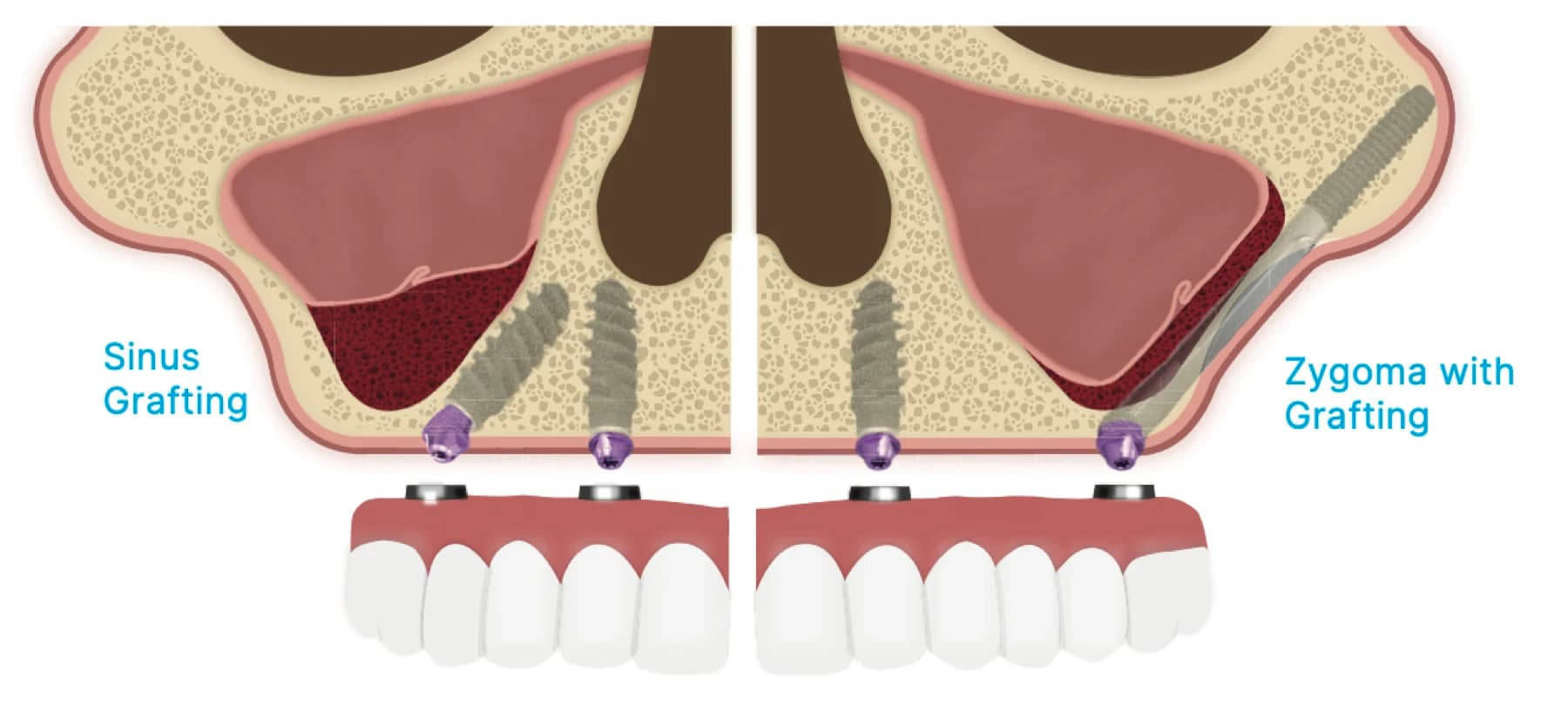
Periodontitis removes bone before a tooth is ever extracted. By the time a loose tooth is taken out, the socket may already be missing one or more walls, and the ridge then continues to shrink as it does after any extraction; in studies of healing sockets, ridge width fell by 29% to 63% within six to seven months. For some patients, gum disease has left enough bone in the right places. For others, the implant plan has to account for what is missing.
That does not mean implants are off the table. Depending on where the bone is gone, the options include grafting to rebuild the site, a sinus lift in the upper back jaw, shorter implants, implants angled into the remaining bone in a full-arch design, and, when the upper jaw has little usable bone left, zygomatic implants anchored in the cheekbone. A 3D CBCT scan shows which of these each site allows, and our bone grafting page explains how lost bone is rebuilt.
Can gum disease cause an implant to fail?
It can contribute. A history of periodontitis is associated with more implant loss and more peri-implantitis, as the studies above show, and the main mechanism is the same biofilm-driven inflammation that damaged the teeth. Smoking and poorly controlled diabetes add to that risk, and each deserves attention before surgery; our articles on smoking and vaping and on diabetes and implants go through the evidence.
What reduces it is equally clear. The European Federation of Periodontology's 2023 guideline on peri-implant diseases states that prevention begins when implants are planned and continues through a structured supportive-care program with periodic checks once the teeth are in function. For a patient with a periodontitis history, that program is not an optional extra. It is part of the treatment.
Before implants: getting the gums stable
If some natural teeth are staying, the periodontitis around them needs to be treated and brought under control before implants are placed. That usually means deep cleaning below the gumline, sometimes periodontal surgery, and a home-care routine that actually reaches the areas that were diseased. Because this practice is limited to implant dentistry, periodontal care for natural teeth is provided by your general dentist or a periodontist, and the implant stage is timed to begin once the gums are stable.
Other steps happen in parallel: stopping smoking, bringing blood sugar under control if you have diabetes, and deciding which teeth can realistically be kept. Teeth with advanced bone loss and mobility that cannot be stabilized are sometimes better removed as part of the plan, with grafting at the time of extraction to protect the site.
Keep the teeth, or replace them?
This is where honesty matters most. The ten-year study cited above ended with a caution worth quoting in substance: the idea of extracting multiple teeth preventively on the assumption that implants will perform better than treated natural teeth should be approached with extreme caution. Periodontally treated teeth that are well maintained can last many years, and implants in the same mouth carry their own risk.
At the other end, a mouth with most teeth loose, drifting and painful despite treatment is often better served by a planned transition to implants than by years of losing teeth one at a time. The decision is made tooth by tooth, on the scan and the periodontal findings, not on a general preference for implants. Our article on when implants are not the answer describes how we approach cases where keeping teeth is the right call.
Keeping implants healthy when you have had periodontitis
The factor patients control most is maintenance. In the ten-year study, patients with a periodontitis history who did not adhere to supportive therapy had higher implant failure rates. A meta-analysis of maintenance studies suggested recall visits about every five to six months, and in a five-year study of patients who already had inflamed tissues around implants, peri-implantitis developed in 43.9% of those without preventive maintenance compared with 18.0% of those who had it.
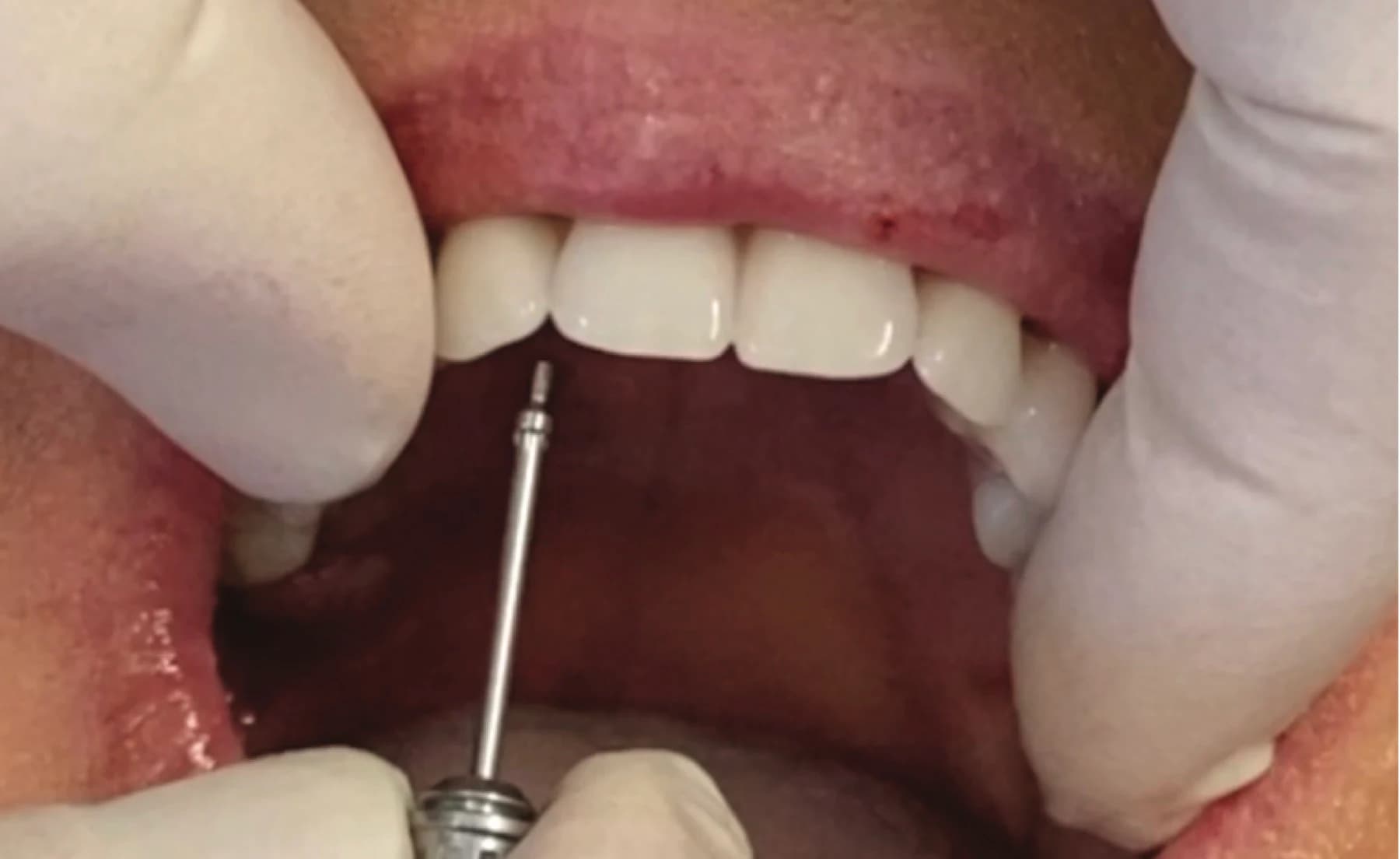
Design helps too. Screw-retained restorations that can be removed for cleaning and inspection, contours that let a brush and water flosser reach the implant, and a bite that does not overload the implants all make maintenance more effective. We maintain the implants we place for life, with the same two doctors seeing you at those visits; your general dentist or periodontist continues to care for any natural teeth.
How we plan implants for someone with a gum disease history
At a free consultation, a 3D CBCT scan shows the bone that periodontitis left behind and the anatomy around it. We look at the state of the remaining teeth and gums, ask about smoking and health conditions, and, if active disease is present, explain what needs to be treated first and coordinate with the dentist or periodontist who will treat it. You leave with a plan in writing that shows the sequence, the options for each site — including keeping teeth where that is reasonable — and the costs.
Dr. Sam Jain and Dr. Arpana Gupta place and restore the implants themselves, carry out any grafting in-house, and design restorations with cleaning in mind. For patients who have lost teeth to gum disease, that plan always ends with the maintenance schedule, because that is what the evidence says keeps implants healthy. You can book a consultation here.
Written and medically reviewed by Dr. Sam Jain, DMD, MS, and Dr. Arpana Gupta, DDS, MDS, who own this practice. Reviewed
This article is patient education, reviewed by Dr. Sam Jain, DMD, MS, and Dr. Arpana Gupta, DDS, MDS, and is not a substitute for an exam. Treatment recommendations are made only after an in-person consultation and 3D imaging.