How to Evaluate an Implant Dentist for a Complex Case: Bone Loss, Failed Implants and Full-Arch Rebuilds
A straightforward implant can be done well by many dentists. A complex case narrows the field quickly — and the questions that separate the right team from the wrong one are specific, answerable, and worth asking before anyone schedules surgery.
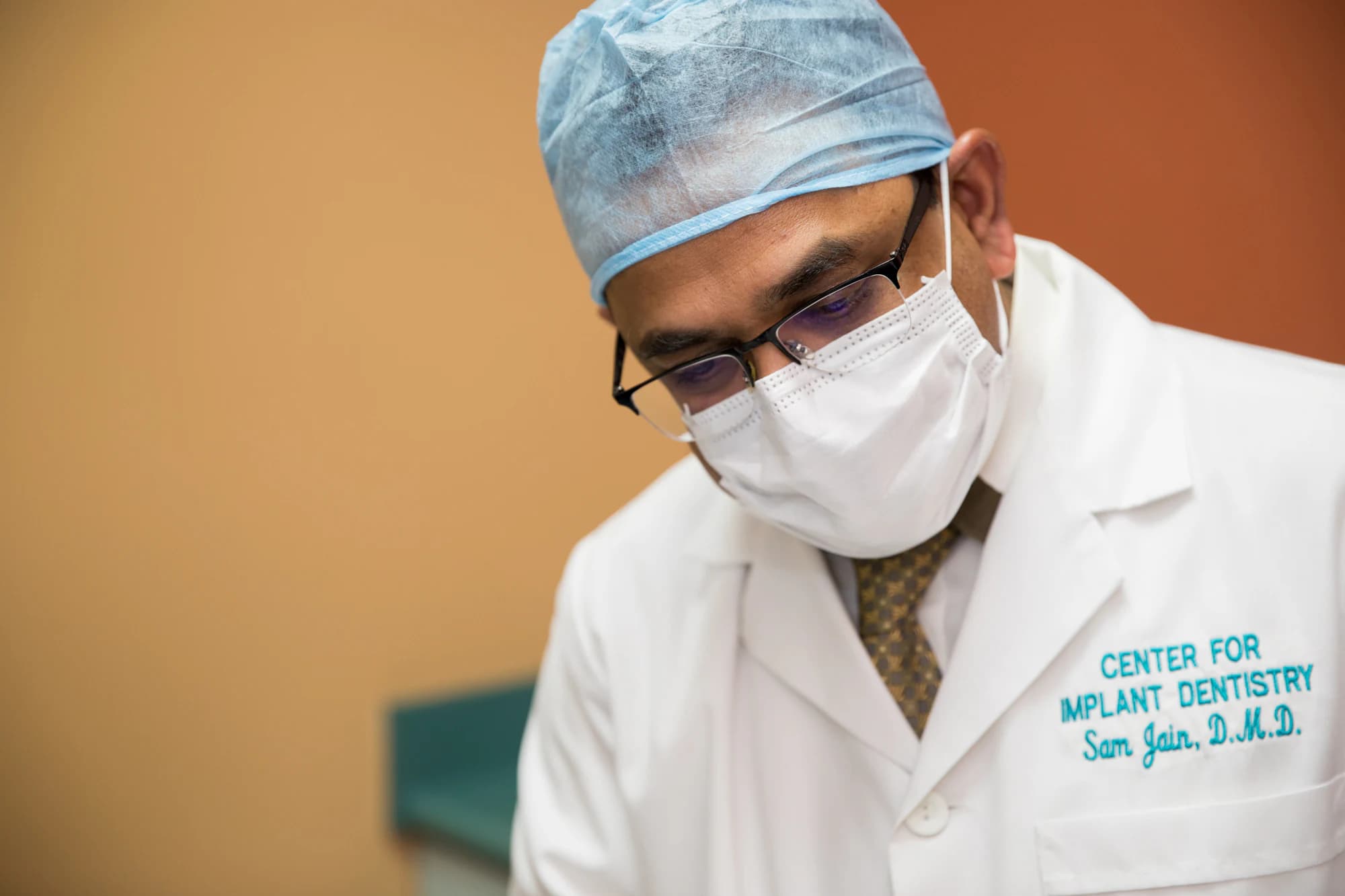

Written and medically reviewed by Dr. Sam Jain, DMD, MS, and Dr. Arpana Gupta, DDS, MDS
Published
In this article
- 1What makes an implant case complex
- 2Diagnosis first: what a proper work-up includes
- 3Credentials: what they mean, and how to verify them
- 4Experience you can actually measure
- 5Can they do every step, or will your case be handed off?
- 6Technology that changes the result, and technology that is marketing
- 7Ask about failure; the answers tell you the most
- 8Red flags worth walking away from
- 9What a second opinion should give you
What makes an implant case complex
Implant dentistry has a formal way of describing difficulty. The International Team for Implantology's SAC classification sorts cases as Straightforward, Advanced or Complex, assessing surgical and restorative risk separately, across single teeth, short and extended spans, removable cases, and toothless upper and lower jaws. The point of the system is not a label for its own sake; it is to identify the risks in a case before treatment and make sure the treatment team is matched to them.
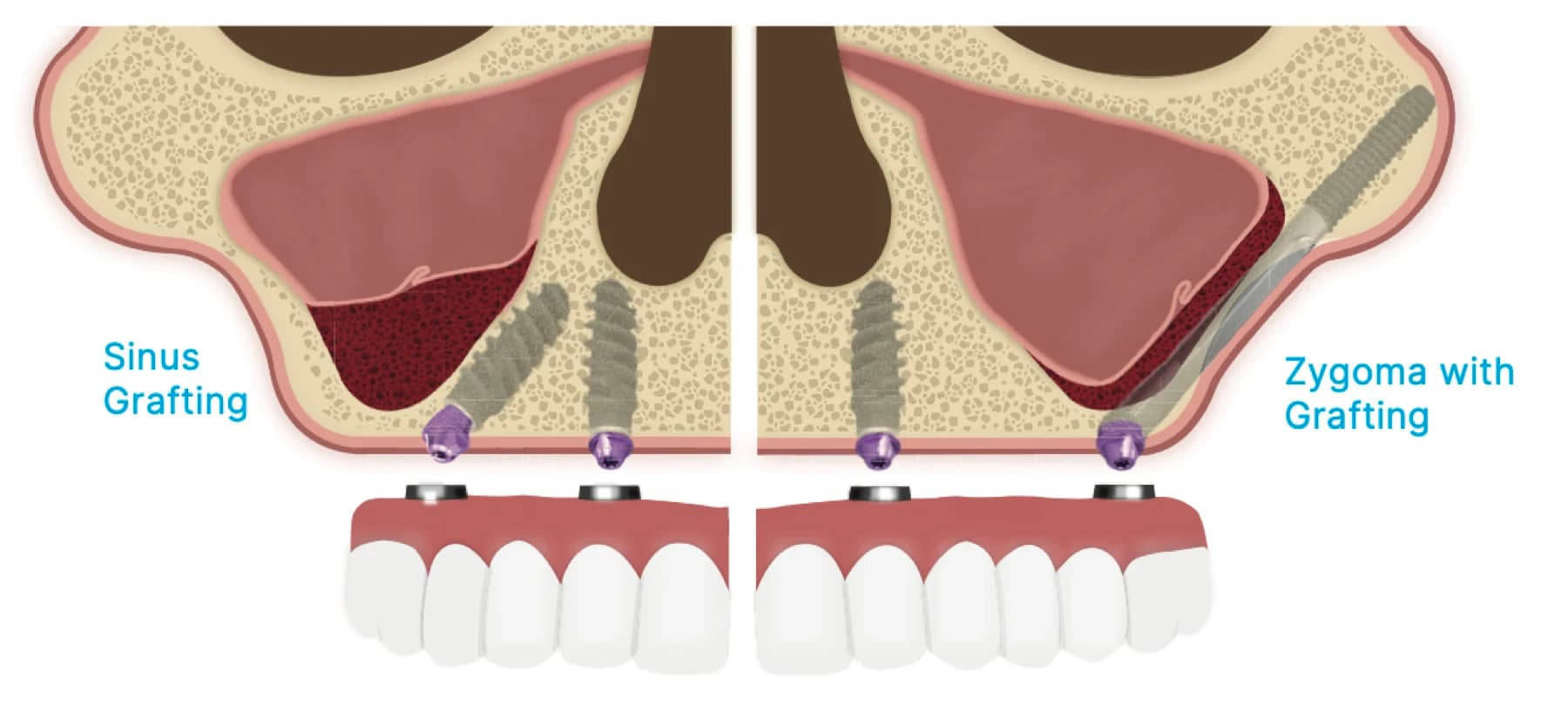
In everyday terms, a case usually becomes complex for one or more of a handful of reasons. There is too little bone — an upper jaw under a low sinus, a lower jaw thinned over the nerve, or a whole arch resorbed after years of dentures. There has already been a failure — an implant that did not integrate, a graft that did not hold, a bridge that keeps breaking. The front teeth are involved, where gum levels and bone thickness decide how the result looks. The medical history is involved: diabetes, bone-density medications, radiation to the head and neck, blood thinners, heavy smoking. The bite is involved, with grinding or very high forces. Or the plan is a full arch, often with teeth fixed on the day of surgery.
If any of those apply to you, the evaluation below is worth doing carefully. None of them is a reason to assume implants are impossible; they are reasons to be treated by a team that plans for them.
Diagnosis first: what a proper work-up includes
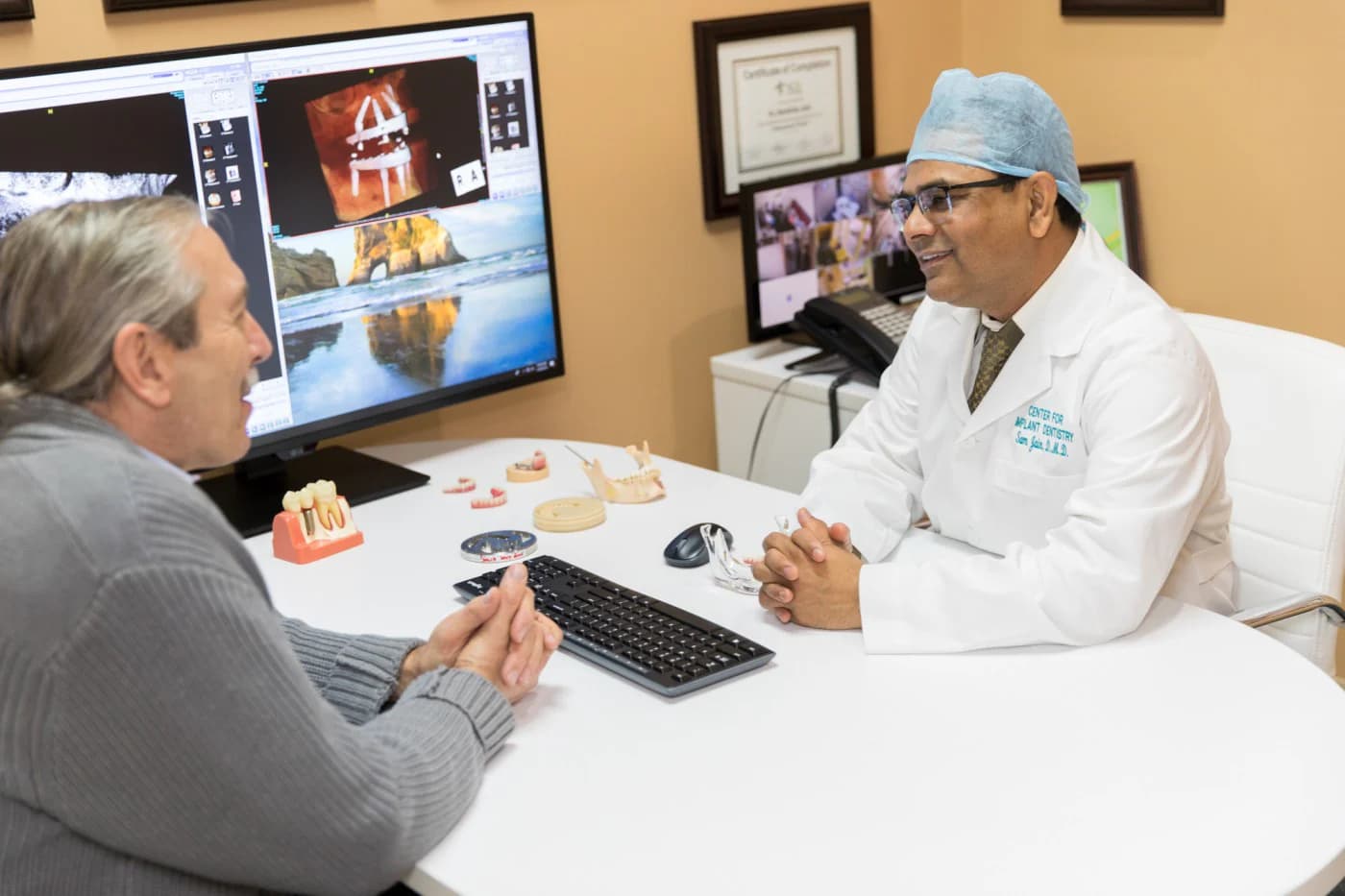
The first test of a dentist is the work-up, because a complex case cannot be planned from a flat X-ray. The American Academy of Oral and Maxillofacial Radiology recommends cross-sectional imaging for every implant site and names cone beam CT as the method of choice; a systematic review of CBCT guidelines lists its uses from mapping anatomy and planning grafts to computer-guided surgery and evaluating complications. For a complex case, you should be shown the scan and have it explained: where the bone is, where the nerves and sinuses are, what the measurements mean, and which options they rule in or out.
The work-up should also include a full medical history with a clear plan for anything that needs your physician's input, photographs and scans of your teeth and bite, and an assessment of how you grind or clench. And it should be restoration-driven — planned from where the final teeth need to be, backward to where the implants should go — rather than from where bone happens to be easiest to drill. For full-arch cases, that often means designing the teeth before the surgery is scheduled.
The result should be a written plan that names the number and type of implants, any grafting or sinus work, the sedation, the temporary and final teeth and their materials, and the fees for each — plus the alternatives, including choices that do not involve implants. A dentist who can only describe one option for a complex case has either not looked hard or does not offer the others, and either is worth knowing.
Credentials: what they mean, and how to verify them
Start with the license, which takes about a minute to check. Every dentist practicing in California is listed on the Department of Consumer Affairs license search at search.dca.ca.gov, with license status and any disciplinary history. Sedation is separately regulated: IV sedation at moderate depth requires a Dental Board of California moderate sedation permit, and deep sedation or general anesthesia requires a general anesthesia permit, so ask which permit the person sedating you holds.
Then understand what titles mean. The National Commission on Recognition of Dental Specialties and Certifying Boards recognizes twelve dental specialties, including oral and maxillofacial surgery, periodontics and prosthodontics, each of which requires an accredited residency. Implant dentistry is not one of the twelve. Implants are placed by oral surgeons, periodontists, prosthodontists and general dentists with advanced implant training, and good and poor results come from all of those groups. Implant-focused organizations such as the International Congress of Oral Implantologists and the American Academy of Implant Dentistry award credentials based on education, examinations and documented cases; they are meaningful, and like any credential they are worth verifying rather than assuming.
We publish our own credentials in the same spirit. Both of our owner-doctors are licensed California general dentists — Dr. Sam Jain, license #50472, and Dr. Arpana Gupta, #50467 — with Mastership in the International Congress of Oral Implantologists, California moderate sedation permits, and practice limited to implant dentistry since 2008. The license, NPI and permit numbers, and the steps to check each one, are on our verified credentials page, and our article on whether an implant dentist is a recognized specialty explains the distinction in more detail.
Experience you can actually measure
Experience matters, and the research gives a hint about how to ask about it. A 2017 meta-analysis found that when experience was defined by specialty title alone, it did not significantly change implant failure rates. When it was defined by the number of implants placed, implants placed by surgeons with 50 or fewer failed at more than twice the odds of those placed by more experienced surgeons — an odds ratio of 2.18 across two retrospective studies. The evidence base is small, but the lesson is practical: ask about volume in the specific procedure you need, not just about titles.
So ask directly. How many full arches, sinus lifts, zygomatic implants or revisions of failed implants does the team do in a typical month or year? Who, by name, will do yours? What complications have they seen in that procedure, and how were they handled? May you see photographs of similar cases, with the patients' consent and the required disclosures? For reference, our practice completes about 20 to 24 full arches a month on average, and rescuing implants and grafts that failed elsewhere is a regular part of our work — we say that so you have a benchmark for the kind of answer to expect, from us or anyone else.
Can they do every step, or will your case be handed off?
Complex cases often need several procedures: extractions, bone grafting, a sinus lift, implant placement, sometimes zygomatic implants, sedation, temporary teeth, final teeth, and a maintenance program. Many excellent practices refer some of those steps elsewhere. That can work well, but it matters for you in two ways. Every hand-off adds scheduling and the chance that information is lost between people who never examine you together. And it limits what can happen in the operating room: if a site planned for an immediate implant turns out too soft, a team that can graft, change the implant or delay the teeth in the same appointment can adapt, while a team that cannot must stop.
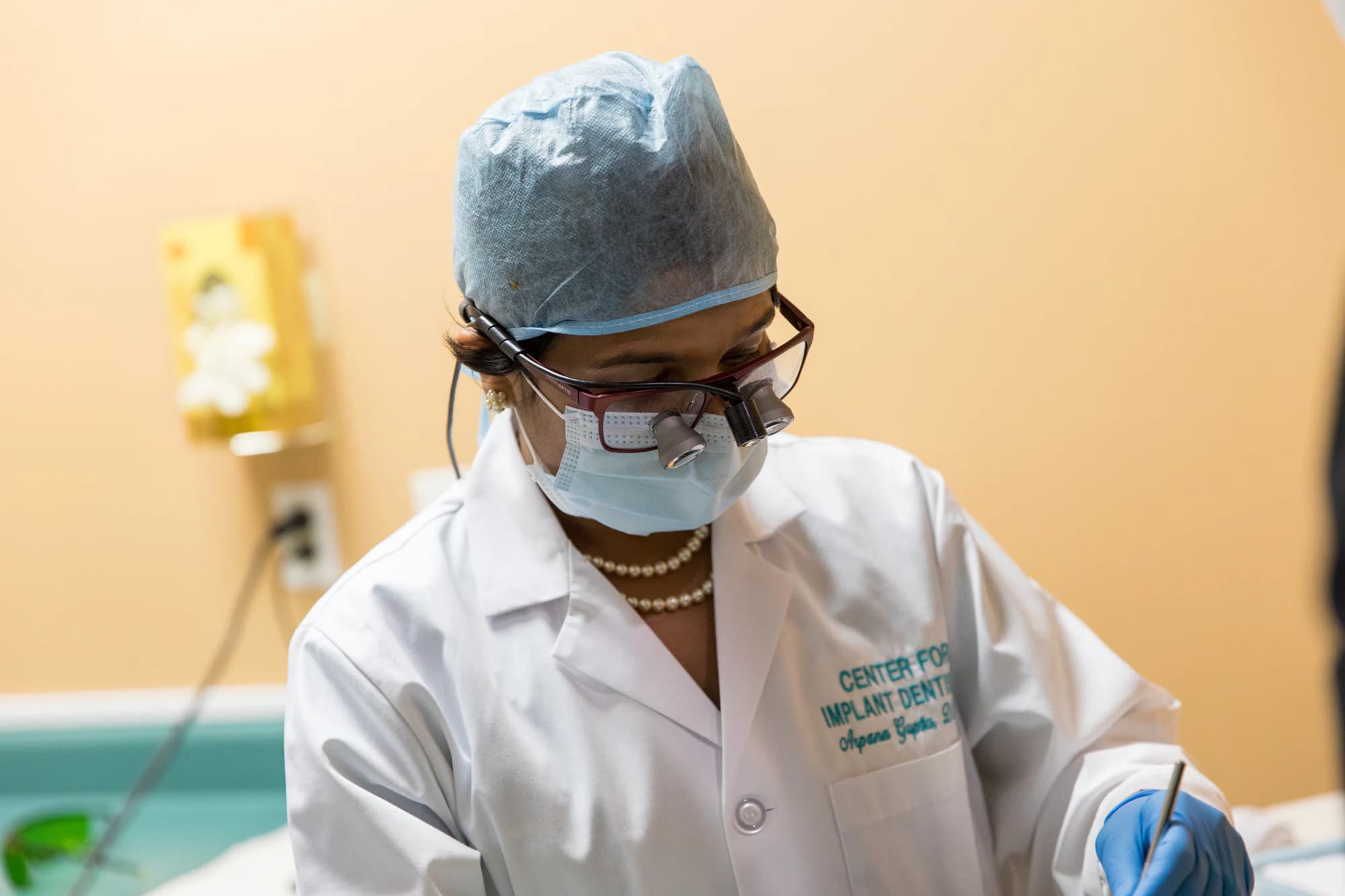
In our practice the same two doctors plan the case, give the sedation, perform the grafting, sinus lifts and zygomatic surgery, place the implants and deliver the teeth, which are designed and milled in our own lab. That is one way to reduce hand-offs, not the only way. Whatever the structure, ask who is responsible for each step, who makes the decision if the plan has to change during surgery, and who you will call when something needs attention a year later.
Technology that changes the result, and technology that is marketing
Some technology genuinely changes what can be done safely in a complex case. Dynamic navigation tracks the drill against your CBCT scan during surgery; a 2021 meta-analysis of clinical studies reported average deviations of about 1.0 mm at the entry point and 3.7 degrees in angle, significantly more accurate than freehand placement — while still recommending a 2 mm safety margin around nerves and other structures. Our doctors use X-Guide and Navident EVO navigation, and our research review on guided and navigated surgery explains what those numbers mean. An in-house lab changes how quickly teeth can be adjusted and remade. A CBCT scan changes everything upstream.
Other technology is mostly a name on a brochure. The useful question is always the same: what does this change in my case — the accuracy of placement near a nerve, the number of surgeries, the time without teeth, the ability to repair the result? If the answer is vague, the technology is probably not the reason to choose a practice.
Ask about failure; the answers tell you the most
A team that is comfortable with complex cases is comfortable talking about what goes wrong. Implant loss is not rare at the patient level: in a Swedish study of more than 2,700 randomly selected implant patients treated by over 800 clinicians, 7.6% of patients had lost at least one implant over nine years. A review of the reasons for failure lists low insertion torque in implants loaded early, inexperienced surgeons, the upper jaw and the back of either jaw, heavy smoking, soft bone, small bone volume and shorter implants among the associated factors. Heavy grinding roughly doubles the odds of failure in a 2024 meta-analysis.
So ask what the plan does about the risks in your case, what happens if an implant does not integrate, what is covered in writing and for how long, and what the maintenance program looks like — including how often you will be seen. A plan for a complex case that assumes nothing will go wrong is not a plan. Our own terms are set out on our implant warranty page, and our guide for when an implant has already failed describes how rescue cases are approached.
Red flags worth walking away from
Some warning signs apply to any implant case and matter even more in a complex one. A firm price given before a 3D scan has been taken. One protocol offered to everyone regardless of bone, bite or history. Language that promises a result, or says a case has no risk. Pressure to decide the same day, or a discount that expires before you can get a second opinion. A plan that cannot say who will place the implants, who will make the teeth, or what they are made of. A medical history that is skimmed rather than discussed. No mention of maintenance.
The absence of those signs does not ensure a good outcome — no dentist can promise one — but their presence is a reliable reason to pause. A good team will welcome the pause, and will not be offended by a second opinion.
What a second opinion should give you
If you already have a plan for a complex case, a second opinion is worth more than a second quote. Bring your CBCT scan if you have one, the written plan and the fee breakdown. A useful second opinion will tell you whether the diagnosis matches what the scan shows, whether the proposed number and position of implants make sense for your bone and bite, whether there are reasonable alternatives, and what each line of the quote includes.
We provide that as part of a free consultation with a new 3D scan when one is needed, and we will say so plainly if the plan you already have is a good one. Our second-opinion page explains what to bring, and you can schedule a consultation here.
Written and medically reviewed by Dr. Sam Jain, DMD, MS, and Dr. Arpana Gupta, DDS, MDS, who own this practice. Reviewed
This article is patient education, reviewed by Dr. Sam Jain, DMD, MS, and Dr. Arpana Gupta, DDS, MDS, and is not a substitute for an exam. Treatment recommendations are made only after an in-person consultation and 3D imaging.