My Dental Implant Failed — What Now? A Calm Guide to Fixing It
A failing implant feels like a catastrophe. It usually isn't. Here's what 'failure' actually means, why it happens, and the realistic paths back to a stable, fixed smile.

Written and medically reviewed by Dr. Sam Jain, DMD, MS, and Dr. Arpana Gupta, DDS, MDS
Published

First, don't panic — and don't just take antibiotics and wait
A loose, sore, or inflamed implant is unsettling, but it is rarely an emergency and almost always a solvable problem. The single most useful thing you can do is get it looked at properly rather than riding out a course of antibiotics and hoping. Antibiotics can quiet an infection briefly, but if there's an underlying cause — and there usually is — the trouble comes back once the pills run out. The goal is to find the cause, not just mute the symptom.
It also helps to know that implants are among the most predictable procedures in dentistry, with long-term implant survival commonly reported around 95% at ten years. Failure is the exception, not the rule, and when it happens it typically has a specific, identifiable reason. That's good news: a specific cause means a specific fix. Our complications and second-opinion page covers how we approach a worrying implant, whether or not we placed it.
Why implants fail — early vs. late
Failures split neatly into two groups, and the timing tells you a lot. Early failure, in the first weeks or months, usually means the implant didn't fuse with the bone — osseointegration didn't take hold. Causes include too much load too soon, limited bone at placement, an infection during healing, or smoking, which meaningfully raises the risk. Late failure, years down the line, is most often peri-implantitis: a gum-and-bone infection around a previously stable implant, driven by bacteria and sometimes by leftover cement, an ill-fitting crown, or missed maintenance.
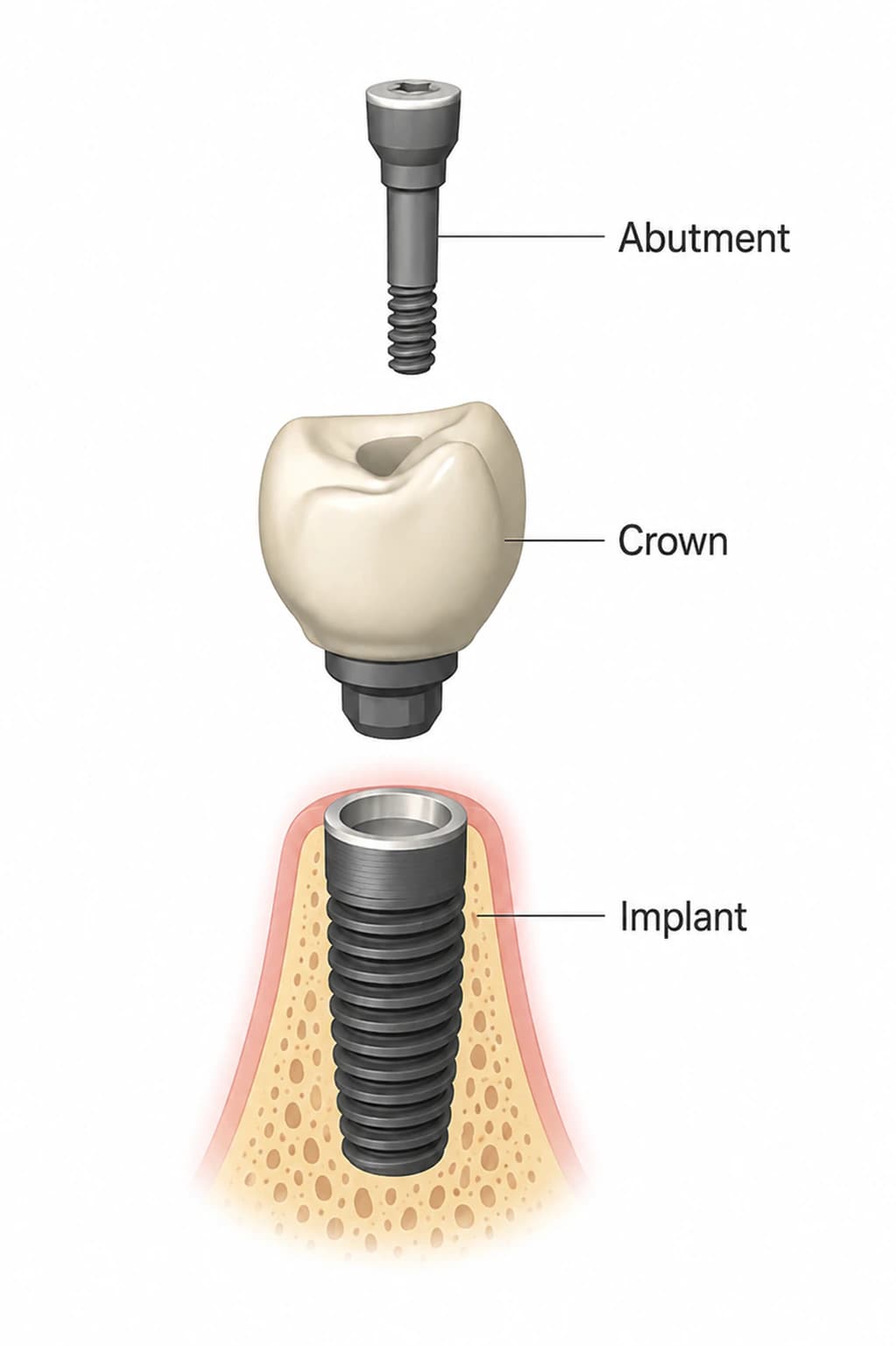
Sometimes what feels like implant failure isn't the implant at all. A loose crown, a fractured or loosened abutment screw, or an abscess on a neighboring natural tooth can all masquerade as 'my implant is failing' — and those are far simpler to fix than the fear suggests. This is exactly why a proper diagnosis with a 3D scan matters before anyone talks about removal: the label 'failed implant' covers several very different problems.
What can be saved, and what needs replacing
The most reassuring part is how often the implant itself is fine. If the problem is a loose screw, a worn or ill-fitting crown, or cement trapped under the restoration, the fix can be as straightforward as cleaning it out and swapping a component — the post stays exactly where it is. Early peri-implantitis, caught before it has destroyed much bone, can often be treated and stabilized with a targeted cleanup and a maintenance plan, keeping the implant in service for years to come.
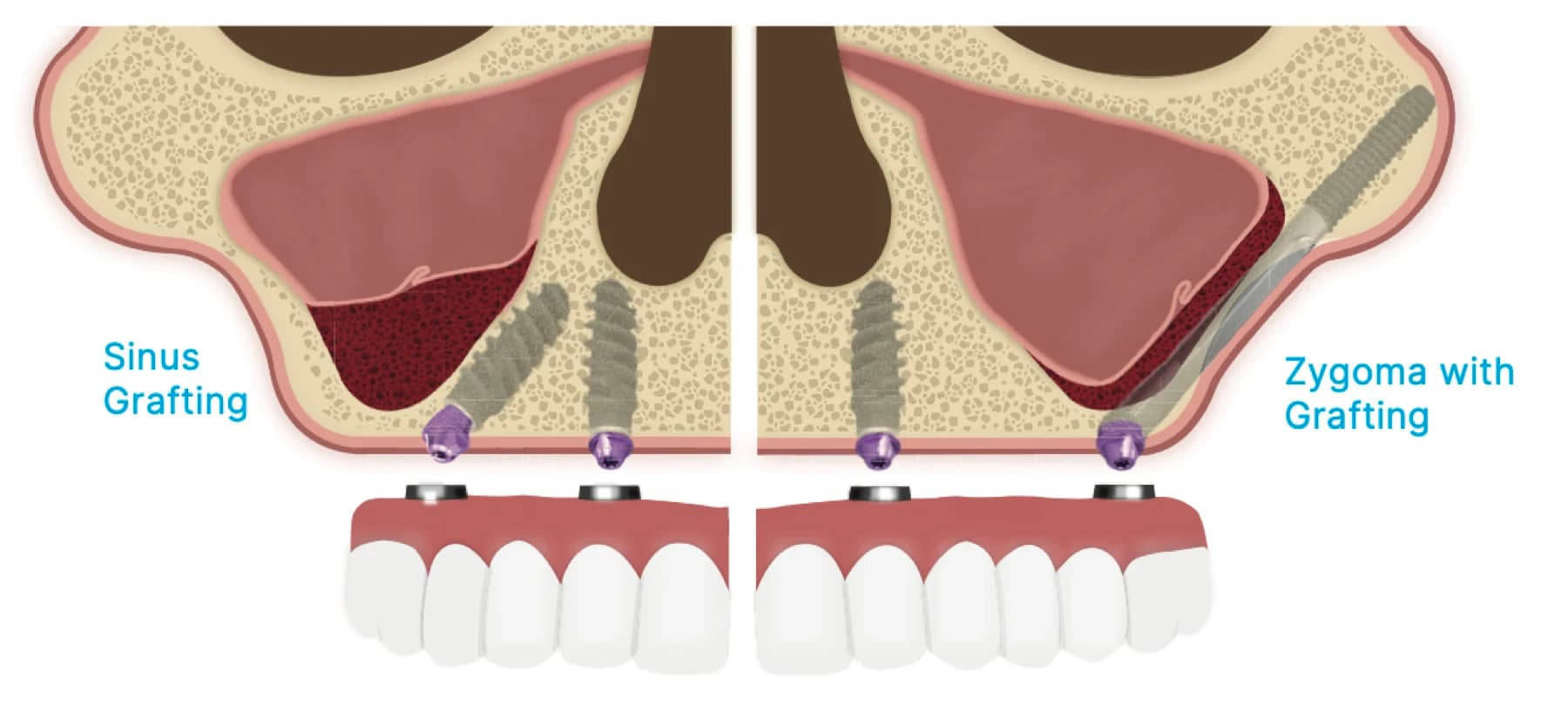
When an implant truly hasn't integrated or has lost too much supporting bone, replacement is the right answer — but that's not the disaster it sounds like. The site is cleaned and allowed to heal, bone is rebuilt with grafting where needed, and a new implant is placed, often with a better plan than the first attempt had. Patients are frequently surprised that a 'failed' implant ends in a stronger result than the one that failed them.
Getting a second opinion on work done elsewhere
You are completely within your rights to have someone else look at an implant that's troubling you, even if it was placed at another office — and doing so is often the smartest move. A fresh 3D scan and an independent exam can reveal a cause the original office missed, or confirm that a simpler fix exists than you were quoted. We regularly care for patients whose implants were placed elsewhere and have loosened, become uncomfortable, or failed, and we'll tell you plainly what we see, including the honest possibility that the original plan was sound.
Because we handle surgery and the in-house lab that makes your teeth under one roof, one team can diagnose what went wrong and rebuild it properly — with a single point of accountability instead of finger-pointing between a surgeon and an outside lab. If you were handed a quote to fix or redo the work, we're glad to review it line by line. The first visit, including the CBCT scan, is free.
Stopping it from happening again
A good repair fixes the tooth; a good plan fixes the reason. Once the cause is clear, prevention is usually within your control: consistent cleaning around the implant, regular maintenance visits so early inflammation is caught before it costs bone, and honest attention to the risk factors that matter most — smoking above all, and well-managed diabetes close behind. Implants don't get cavities, but the gum and bone around them still need care, and peri-implantitis is far easier to prevent than to reverse.
The other half of durable results is how the case is built in the first place. Placing enough implants for the load rather than the minimum, avoiding long unsupported spans, and using well-fitted, properly seated restorations all reduce the mechanical stress that leads to late problems — the same engineering-first thinking behind our full-arch protocols. If your first implant experience left you wary, that's understandable; the fix and the prevention are things we're happy to walk through in person, without pressure.
Written and medically reviewed by Dr. Sam Jain, DMD, MS, and Dr. Arpana Gupta, DDS, MDS, who own this practice.
This article is patient education, reviewed by Dr. Sam Jain, DMD, MS, and Dr. Arpana Gupta, DDS, MDS, and is not a substitute for an exam. Treatment recommendations are made only after an in-person consultation and 3D imaging.