8 Common All-on-4 Mistakes to Avoid
Most All-on-4 regret traces back to a few decisions made before surgery — here are the eight to get right, and how to sidestep each one.
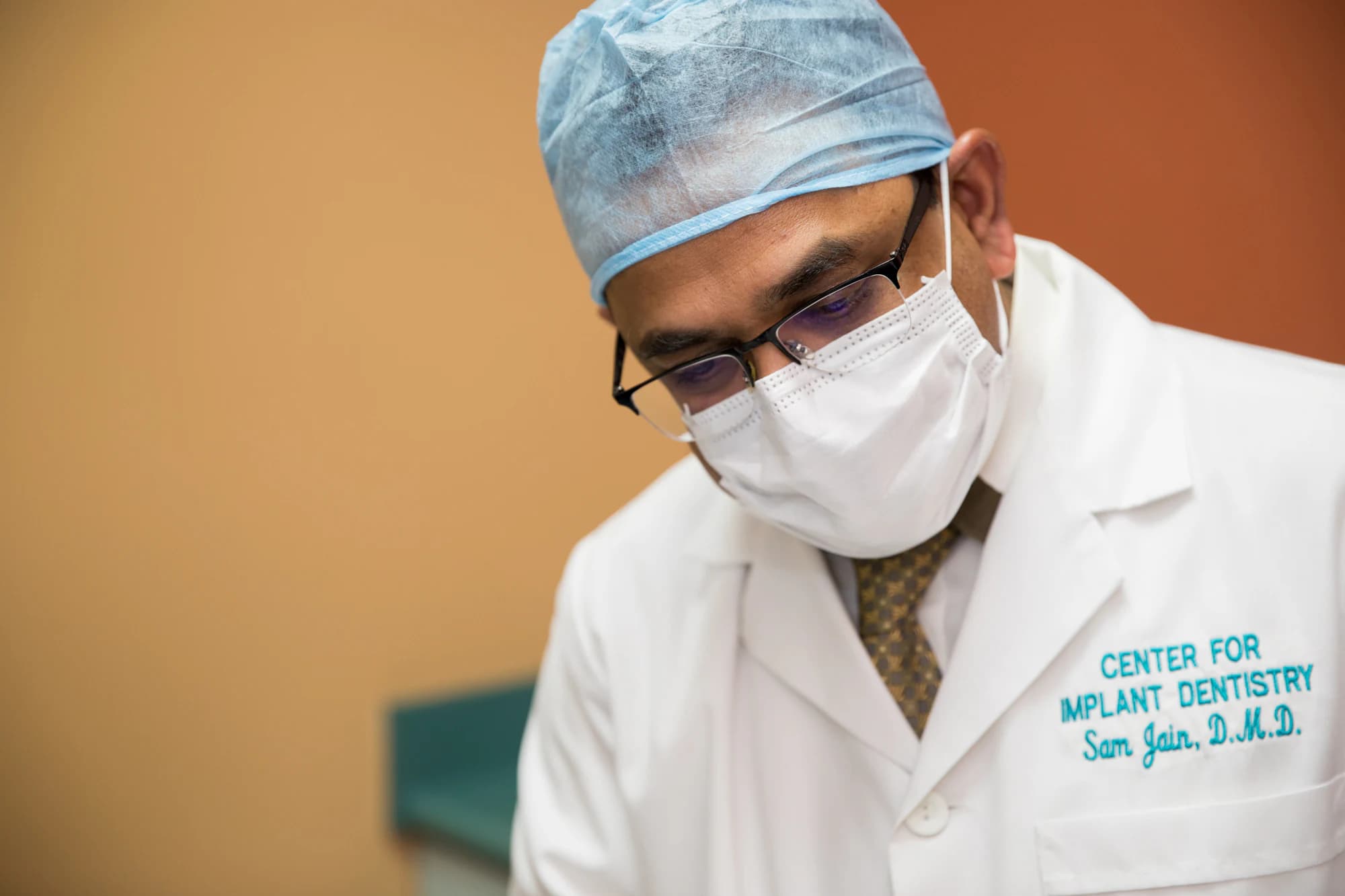

Written and medically reviewed by Dr. Sam Jain, DMD, MS, and Dr. Arpana Gupta, DDS, MDS
Published · Updated
The Short Version: Most Regret Happens Before Surgery
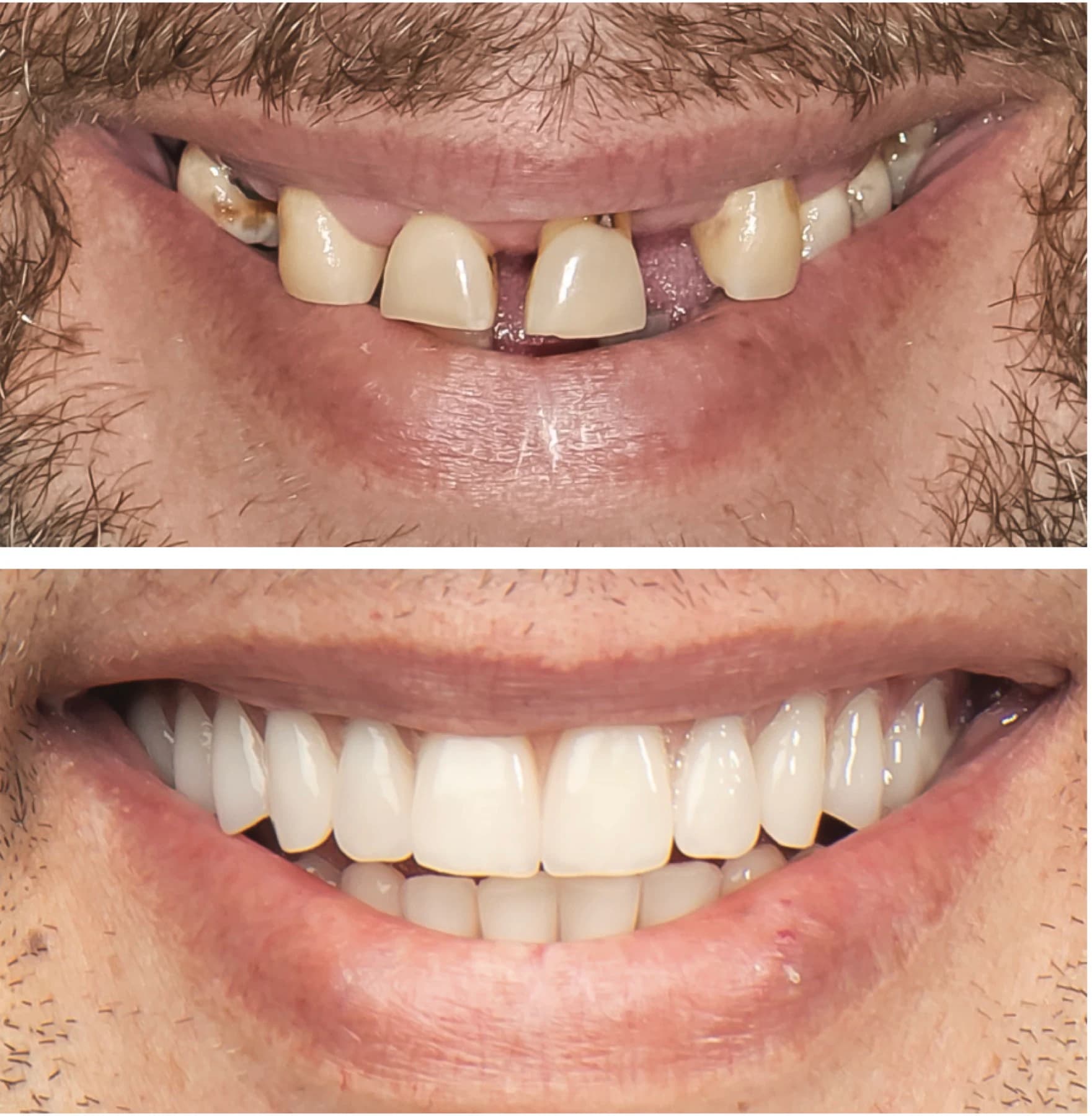
Most All-on-4 disappointment doesn't come from the implants themselves. It comes from decisions made before you're ever in the chair — who you hired, what you were told, and what nobody thought to ask. Get those right and All-on-4 is one of the most predictable things in dentistry; long-term implant survival is commonly cited around 95% over ten years, though your own numbers depend on your bite, hygiene, and health. Get them wrong and you can spend tens of thousands of dollars and still be unhappy.
The eight mistakes below are the ones we see most often, usually when someone comes to us for a second opinion after a quote elsewhere felt off. None of them are exotic. They're the ordinary shortcuts that look fine on the day you sign and cost you later.

Mistakes 1–3: How You Shop and Who You Hire
Mistake 1 is shopping on price alone. Full-arch treatment is a genuine expense wherever you have it done, so hunting for the lowest number is human. The trouble is that the cheapest quote usually hides where the corners got cut: a rushed plan, a stock prosthesis, or a surgeon you'll never see twice. Compare what's actually included, not just the headline figure. Our dental implant cost page breaks down what goes into a real full-arch case, and financing through Cherry or CareCredit is why roughly 92% of our full-arch patients spread the cost rather than choosing on sticker price.
Mistake 2 is hiring a fly-in surgeon, and it's the big one. At many discount chains a traveling surgeon places your implants in the morning and is gone by evening — then someone else, sometimes months later, has to make your teeth fit. When the bite is off or an implant struggles, no single person owns the result. Dr. Sam Jain and Dr. Arpana Gupta, a married team of ICOI Masters, plan, place, and restore every case themselves. The person who put your implants in is the person who makes your teeth and dials in your bite. Our why choose us page explains why that continuity matters more than almost anything else on this list.
Mistake 3 is accepting six to eight months of temporary teeth. "Teeth in a day" is real, but ask what those same-day teeth actually are. At most centers the arch you walk out with is temporary acrylic you wear for half a year while the implants fuse, with the permanent set arriving much later. Because we run our own CAD/CAM zirconia mill in-house — headed by engineer Andy Jain — we deliver final, custom-milled teeth in about 72 hours for a full arch. You can see how that same-day workflow is built.
Mistakes 4–6: The Clinical Details That Get Skipped
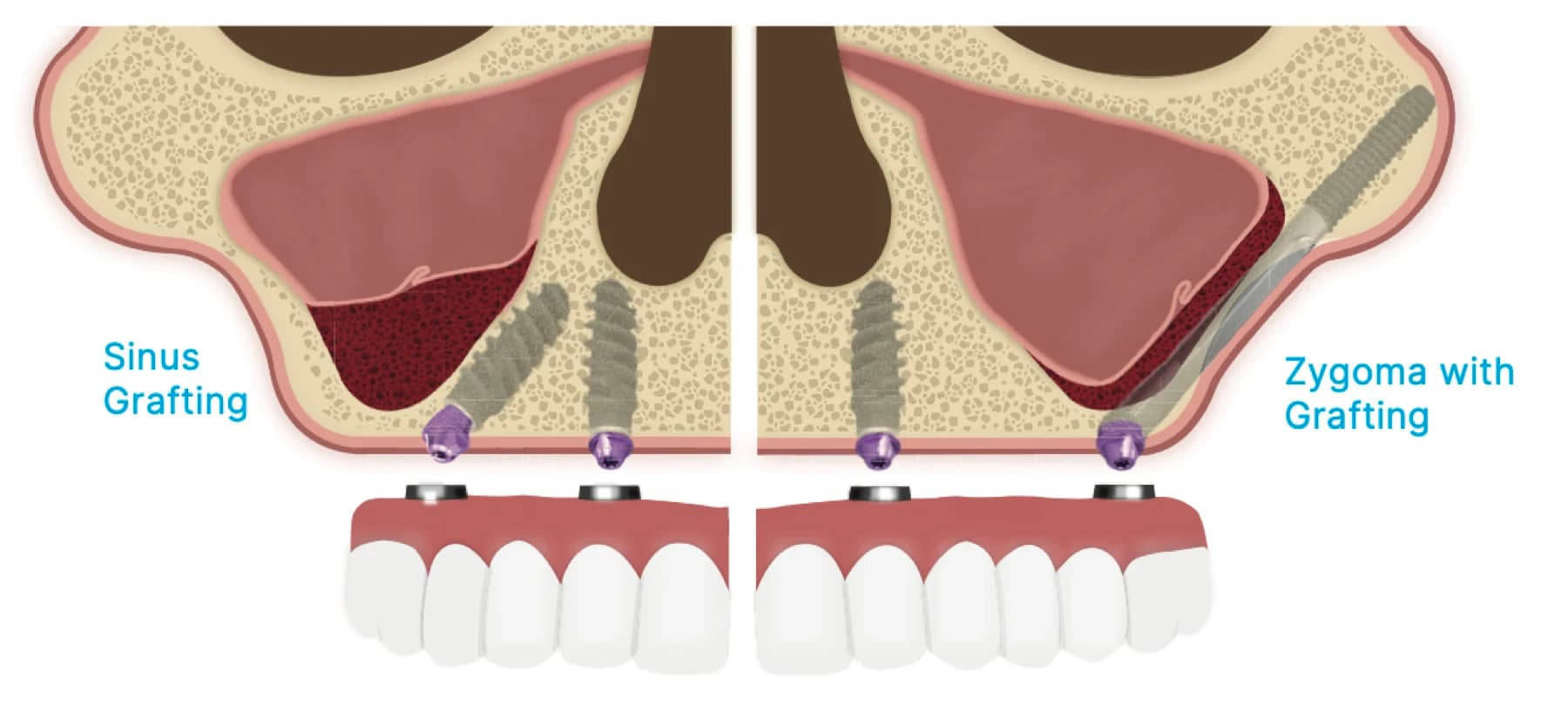
Mistake 4 is assuming you either need bone grafting or aren't a candidate at all. Plenty of people are told they "don't have enough bone" and walk away discouraged. The angled implants in All-on-4 are designed to reach denser bone without adding it, so many of those patients qualify after a proper 3D CBCT scan. And when bone truly is too thin, that isn't the end of the road — zygomatic implants, a sinus lift, or targeted bone grafting open a path to fixed teeth. The only way to know is to measure, not guess; our candidacy page covers who qualifies.
Mistake 5 is ignoring what your final teeth are made of. This gets technical, but it matters for years. Acrylic full-arch teeth are cheaper up front, and research shows a meaningful share of patients face acrylic fractures or screw loosening within roughly five years — heavy biters and grinders most of all. Milled zirconia resists wear and fracture far better and holds its bite shape longer. If your quote doesn't say what material your permanent arch is, ask before you commit.
Mistake 6 is underestimating cleaning and maintenance. A fixed bridge on four implants is not maintenance-free. Food and plaque collect where the bridge meets the gum, and neglect there is the leading path to peri-implantitis — infection around the implants that, left alone, can cost you the whole arch. You'll clean underneath with a water flosser and keep up regular professional cleanings. Smoking and a history of gum disease raise that risk, so those are worth an honest conversation up front. Our page on implant complications walks through what to watch for.
Mistakes 7–8: Under-Building the Case and Toughing It Out
Mistake 7 is choosing four implants when your bite needs more. Four implants hold a full arch beautifully for most people — that's the whole point of the design. But a heavy bite, a strong grinding habit, or unusually generous bone can call for a sturdier foundation. Dr. Jain, who holds an MS in mechanical engineering alongside his dental degree, developed the All-on-8 Robust protocol for exactly those cases. The right number of implants is the number your particular jaw and bite require, decided from your scan — not from a template. If you're only replacing part of an arch, multiple implants may be the better fit entirely.
Mistake 8 is skipping IV sedation because you think you're tough. Full-arch surgery often means removing remaining teeth and placing four implants in a single visit. Trying to white-knuckle that leaves a lot of patients tense and sore for no good reason. IV sedation, available here under one roof, means most people remember little and recover more comfortably. For a longer surgical appointment it's less a luxury than the sensible choice.
The thread running through all eight is simple: All-on-4 rewards planning, continuity, and the right materials, and it punishes shortcuts. If you've been quoted elsewhere and something felt off, a second opinion with a free 3D scan is a low-risk way to check the plan. We also rescue failed implants placed elsewhere — so even if a first attempt went wrong, fixed teeth are usually still on the table. The consultation and CBCT scan are free, a $499 value.
Written and medically reviewed by Dr. Sam Jain, DMD, MS, and Dr. Arpana Gupta, DDS, MDS, who own this practice.
This article is patient education, reviewed by Dr. Sam Jain, DMD, MS, and Dr. Arpana Gupta, DDS, MDS, and is not a substitute for an exam. Treatment recommendations are made only after an in-person consultation and 3D imaging.