A Patient's Guide to Full-Mouth Dental Implants: Options, Candidates, Cost & Timeline
Replacing a whole mouth of failing teeth with a fixed, permanent set — how it works, what it costs, and how the pieces fit together, explained by the surgeons who do the work.
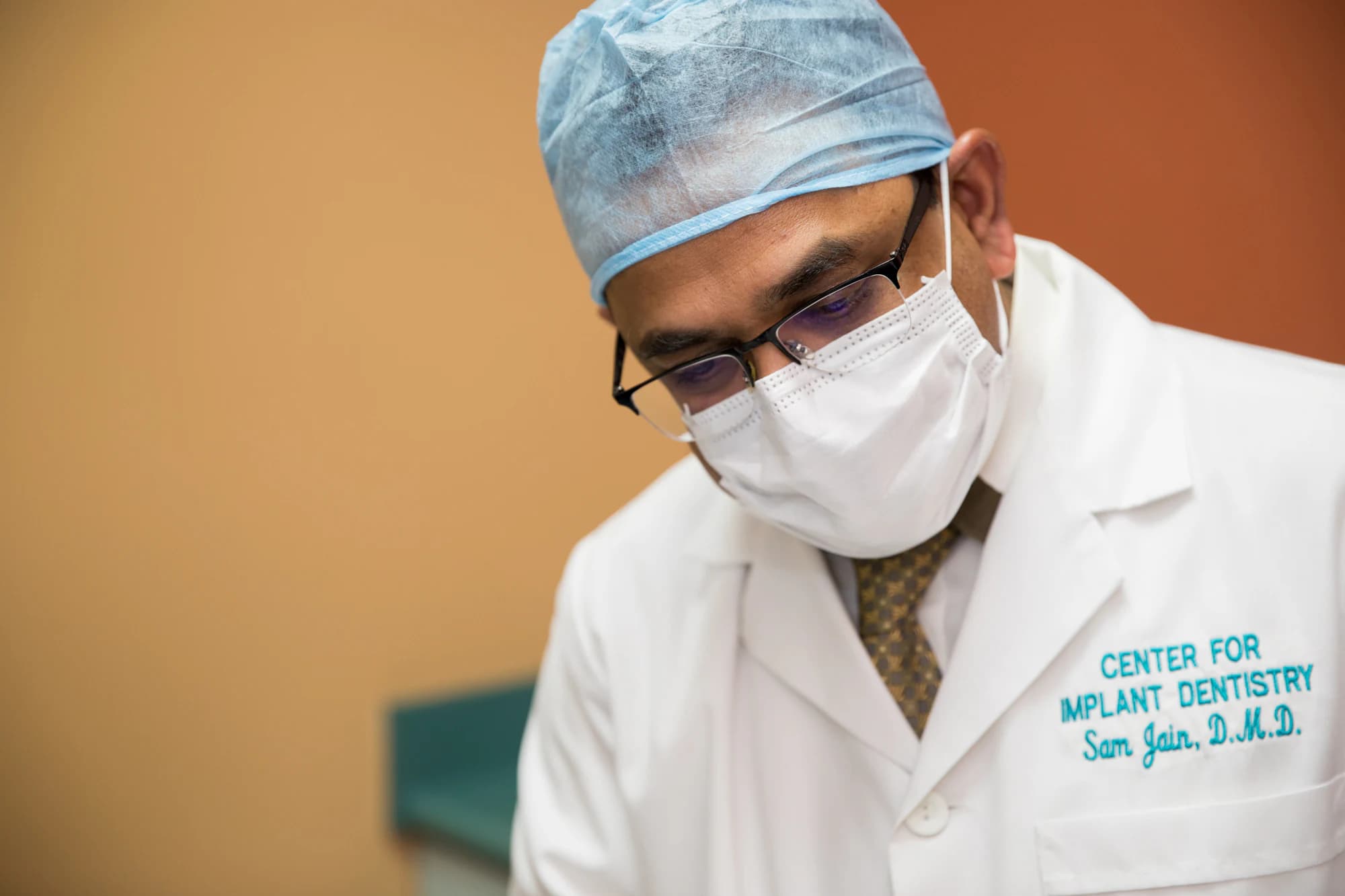

Written and medically reviewed by Dr. Sam Jain, DMD, MS, and Dr. Arpana Gupta, DDS, MDS
Published · Updated
What "Full-Mouth Dental Implants" Actually Means
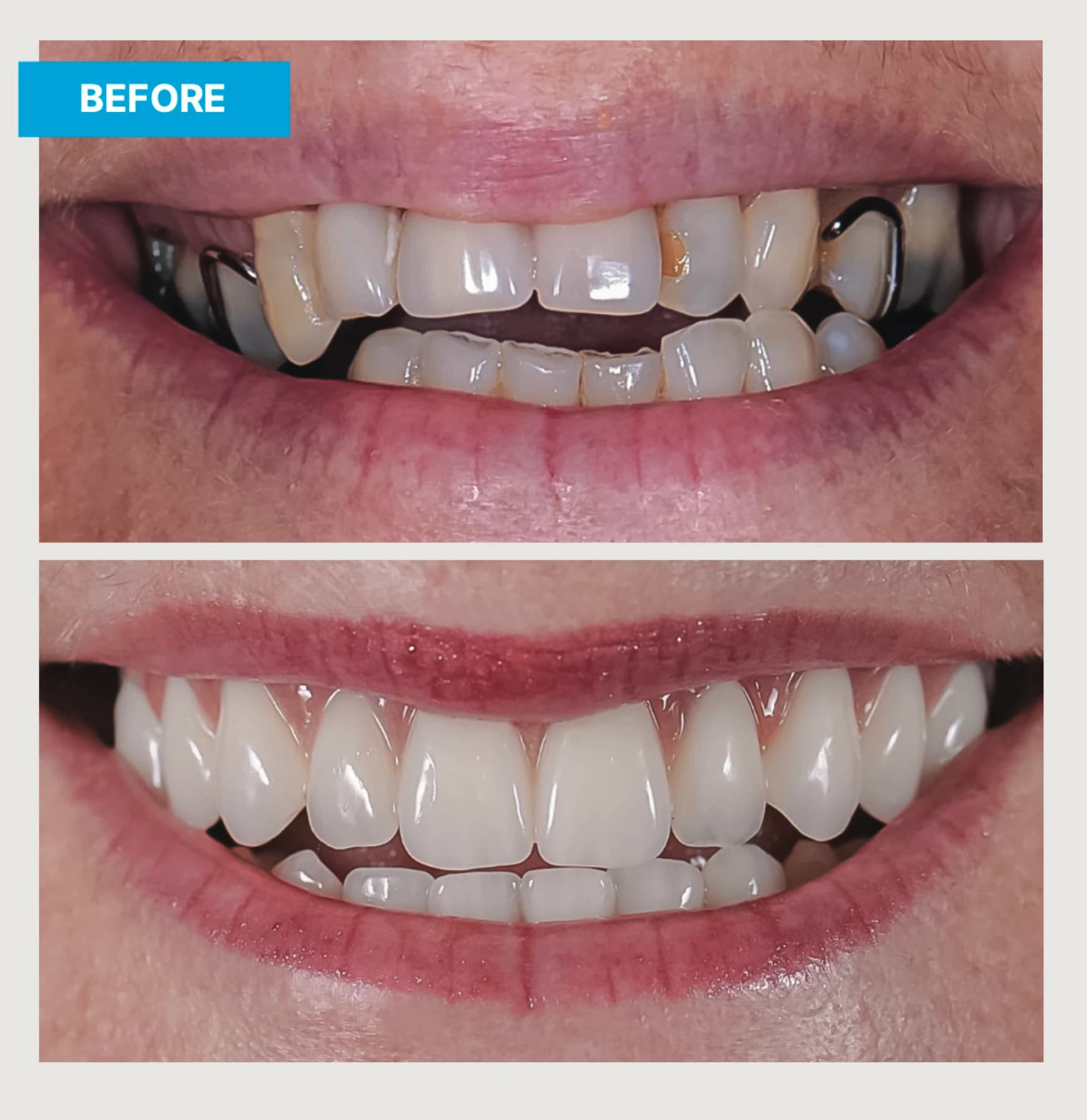
Full-mouth dental implants replace all of your teeth — top and bottom — with new teeth anchored to titanium posts set into your jawbone. The teeth don't come out. You don't soak them at night or coat them in adhesive. They're fixed in place and you brush them like the teeth you were born with. For someone who has lost most of their teeth, or is watching a mouthful of them fail one by one, this is the closest thing modern dentistry offers to starting over.
Here's the part that surprises people: replacing every tooth does not mean placing a separate implant for each one. A full arch of ten to fourteen teeth is usually carried by four to eight strategically placed implants, because the bridge on top spreads the bite force across all of them. So "full-mouth" describes the result — a complete, working set of teeth — not the count of implants underneath. The right number for your jaw depends on your bone, your bite, and how hard you chew, which your surgeon confirms from a 3D scan.
"Full-mouth reconstruction" is the broader term you'll also see. Sometimes it means implants for both arches; sometimes it's a mix of implants, crowns, and repairs for a mouth that's been through a lot. This guide focuses on the implant path, which is what most people mean when they've lost teeth or been told their remaining teeth aren't worth saving.
How the Treatment Fits Together
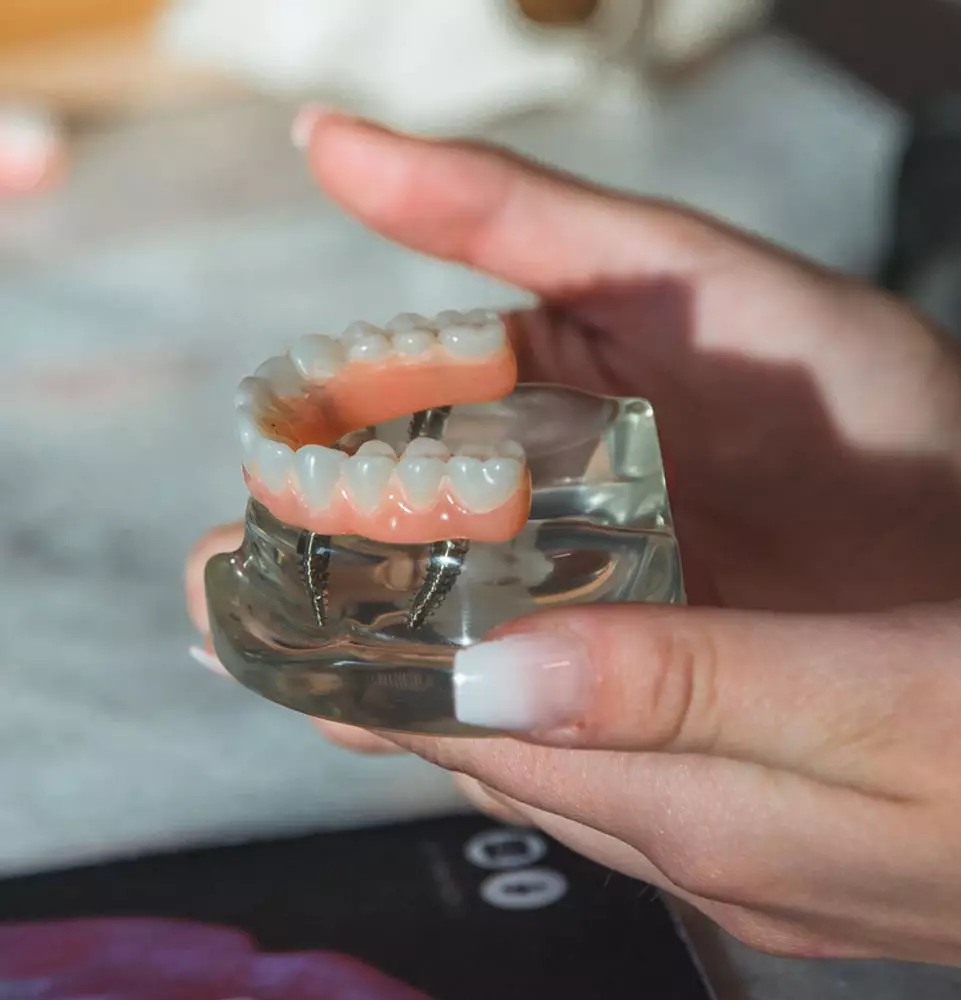
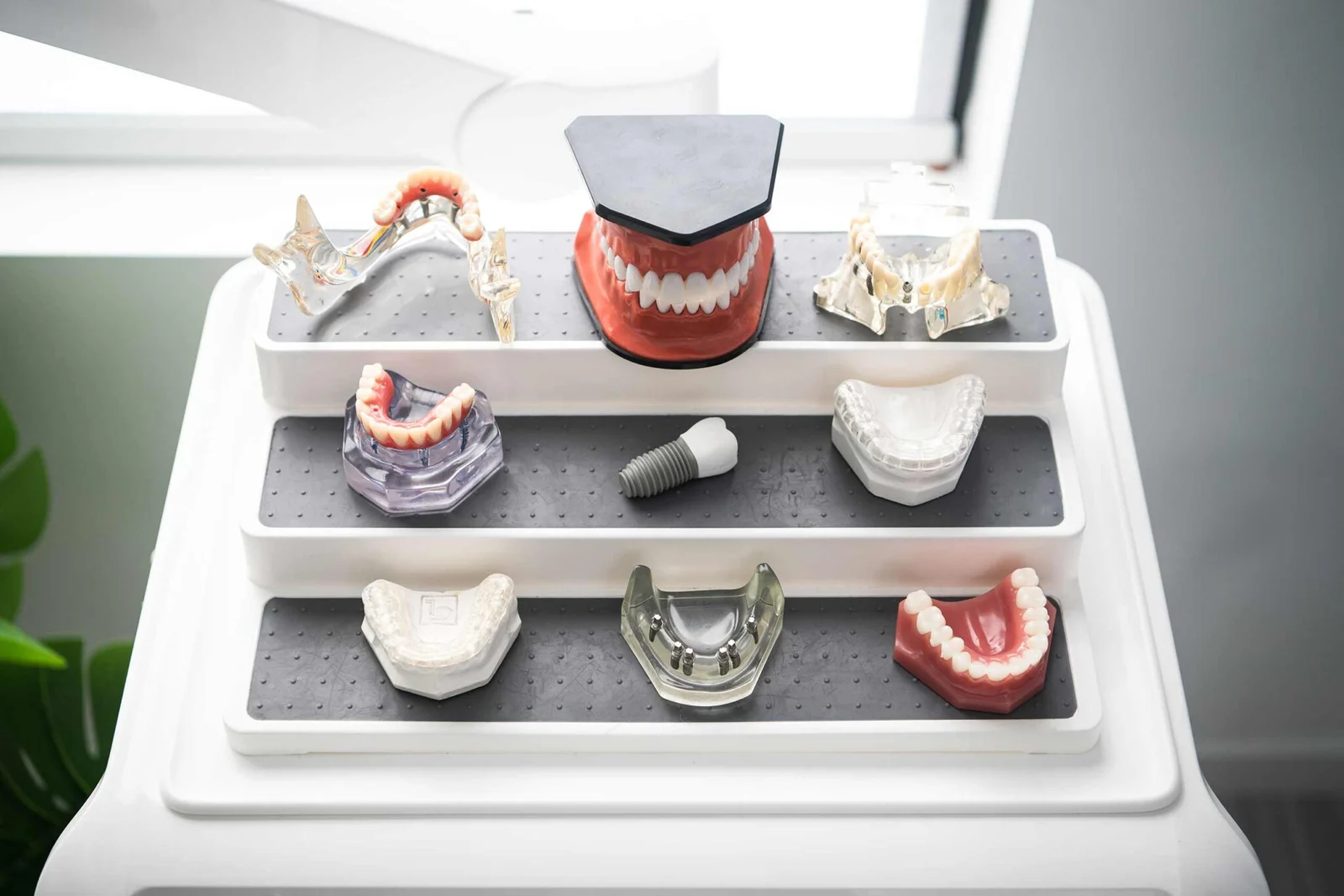
Most full-mouth implant treatment follows one of a few well-worn paths. The most common is All-on-4 — four implants per arch, two straight in front and two angled toward the back to catch denser bone. That angling is why so many people who were told they "don't have enough bone" for implants turn out to qualify anyway. For a heavier bite or a jaw that needs a sturdier foundation, Dr. Sam Jain developed the All-on-8 Robust protocol, which uses more implants to share the load. If you're only missing some teeth in an arch, multiple individual implants may be the better fit instead of a full-arch bridge.
The surgical day itself is usually one visit per arch, done under IV sedation so you're comfortable and remember little of it. Failing teeth are removed, the implants are placed using guided surgery, and a fixed set of teeth goes on — often the same day. What varies enormously between offices is what you actually leave with. At many centers, that same-day arch is a temporary plastic set you wear for six to eight months while the implants fuse. Because our planning, surgery, and a CAD/CAM zirconia mill all sit under one roof, we deliver final, custom-milled teeth in about 72 hours for a full arch — not half a year of provisional acrylic. Our same-day dental implants page walks through that workflow.
Getting there sometimes takes a few extra steps, and it's better to know that upfront. If teeth need to come out, extraction happens first — often at the same appointment as implant placement. If bone is thin, bone grafting or a sinus lift can rebuild the foundation. And when there's almost no usable upper bone at all, zygomatic implants anchor into the cheekbone instead — which is how we treat cases other offices turn away.
Who Qualifies, and Why This Beats Dentures
Full-mouth implants are built for people who are missing most or all of their teeth in one or both arches, or heading there. Good candidates are healthy enough for a routine oral surgery and committed to cleaning around their new teeth. Conditions like diabetes or a smoking habit don't automatically disqualify you, but they do affect healing, so your doctor will factor them in honestly. The one thing that settles candidacy isn't a rule of thumb — it's a 3D CBCT scan that shows exactly how much bone you have and where. Our candidacy page covers the health factors in more detail.
The reason people choose this over a removable plate comes down to how it lives in your mouth. A fixed full-arch bridge doesn't rock, doesn't cover the roof of your mouth the way an upper denture does, and lets most patients return to a normal, unrestricted diet — including the foods dentures make miserable. Just as important, implants transmit chewing force into the jaw, which slows the bone loss that leaves long-term denture wearers with a collapsed, aged lower face. If you're weighing the two, our implants vs. dentures comparison lays out the day-to-day trade-offs.
One more group worth naming: people whose implants failed somewhere else. A failed implant is not the end of the road, and rescuing cases placed by other offices is a routine part of what we do. If that's you, the dental implant complications page explains how these situations get diagnosed and fixed.
Cost, Timeline, and What to Expect
On All-on-4, full-mouth treatment here is a single sticker price per arch: one fixed, all-included fee, with extractions, grafting, IV sedation, and your choice of final material inside it, so what changes the total is whether you're treating one arch or both. An arch that needs six or eight implants, or zygomatic implants, is quoted itemized and in writing after the free consultation and 3D scan. Financing is the norm here rather than the exception — about 92% of full-arch patients use a monthly plan from one of the four lenders we compare. We're in-network with many PPO plans (Delta, Aetna, Cigna, MetLife, Guardian, UnitedHealthcare, Anthem Blue Cross, Blue Shield of California, and more), though not Medicare, Medi-Cal, or HMO plans. The full breakdown lives on our dental implant cost page.
On durability: dental implants have among the best long-term track records in dentistry, with large studies putting implant survival around 95% at ten years. The implants themselves are built to last decades. The bridge of teeth riding on top is a wearing part, and depending on material and bite it may need refreshing somewhere in the ten-to-fifteen-year range — which is one reason we mill durable zirconia in-house rather than fitting the acrylic hybrids some offices use. Your results still depend on cleaning under the bridge daily and keeping up with checkups; the post-op instructions cover the routine.
What ties all of this together is who's doing the work. At the Center for Implant Dentistry, the surgeons who plan your case — Dr. Sam Jain and Dr. Arpana Gupta, a married team of ICOI Masters practicing since 2008 — are the same people who place the implants and make your teeth. No fly-in surgeon, no handoff to a lab across the country. If you want to see whether full-mouth implants make sense for you, the consultation and 3D scan are free, and the scan alone answers most of the questions this guide can't.
Written and medically reviewed by Dr. Sam Jain, DMD, MS, and Dr. Arpana Gupta, DDS, MDS, who own this practice.
This article is patient education, reviewed by Dr. Sam Jain, DMD, MS, and Dr. Arpana Gupta, DDS, MDS, and is not a substitute for an exam. Treatment recommendations are made only after an in-person consultation and 3D imaging.