Full-Mouth Dental Implants: The Cost, and the Cost of Waiting
"Full mouth" means two arches, not one — here's the arithmetic on what restoring an entire mouth costs, what moves the number, and how to pay for it.
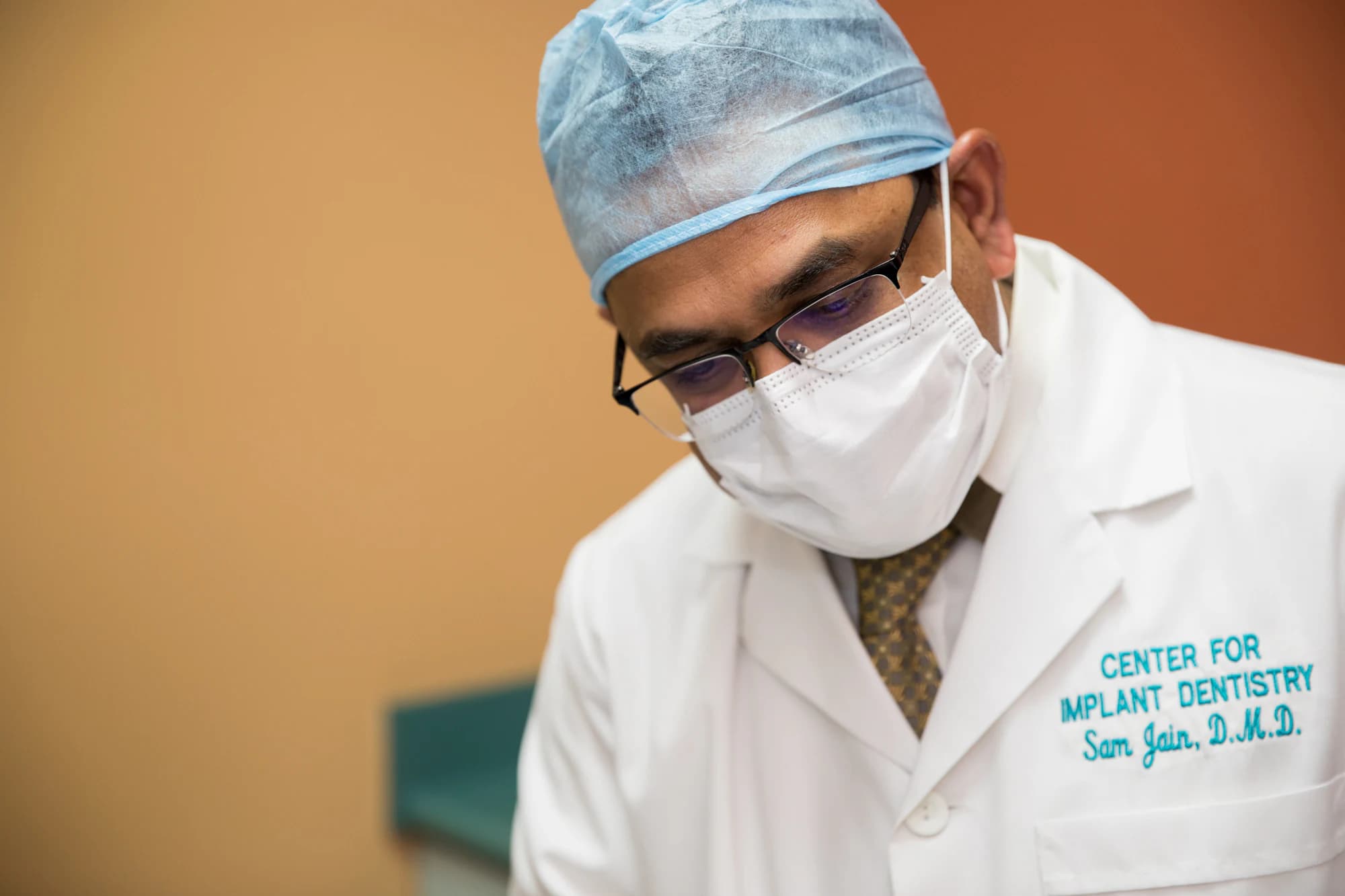

Written and medically reviewed by Dr. Sam Jain, DMD, MS, and Dr. Arpana Gupta, DDS, MDS
Published · Updated
The Short Version: What Full-Mouth Implants Cost
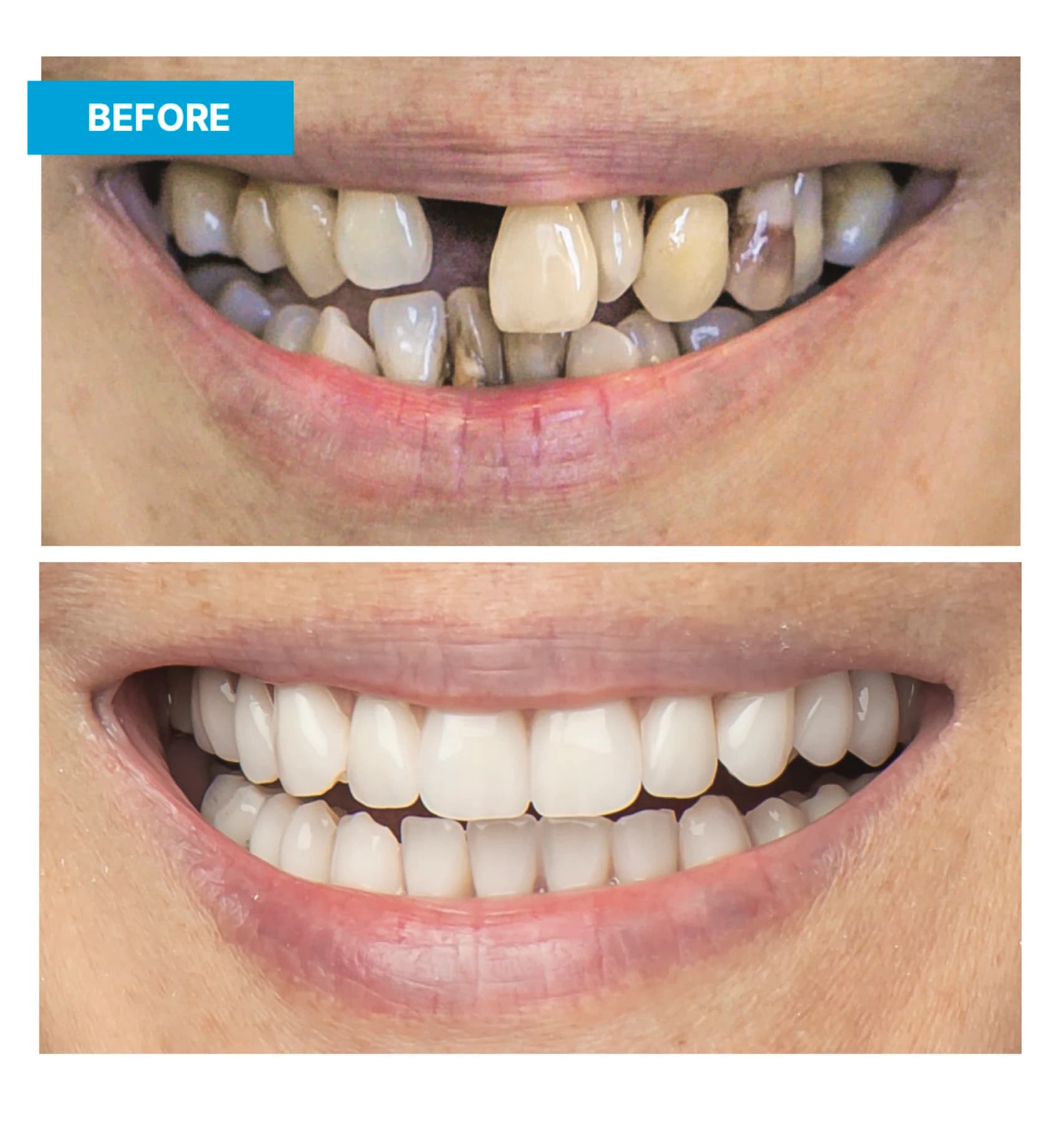
Full-mouth dental implants — a fixed set of new teeth on both the upper and lower jaw — generally run about $30,000 to $70,000 for the whole mouth in the United States, depending on the surgeon, the materials, and how much prep your case needs. The wide range isn't a dodge; it reflects real differences in what's being done — and it's why the only number that matters for you is your own: here, one fixed, all-included All-on-4 fee per arch, or an itemized written quote built from your own 3D scan when an arch needs six or eight implants.
The most useful thing to understand early is the unit of pricing. Almost every quote you'll see, including ours, is priced per arch — one upper or one lower jaw. "Full mouth" means two of those. That single fact clears up most of the sticker-shock confusion patients arrive with, because a figure that sounds like a whole mouth is often the price of a single arch. When you're comparing quotes, confirm whether the number covers one arch or both. Our full-arch cost page breaks the per-arch pricing down in detail.
This is also a different question from replacing one missing tooth. A single implant with a crown is priced as its own unit, and if you only need a few teeth, paying per tooth may cost less than doing a whole arch — see multiple dental implants for where that line falls. Full-mouth pricing applies when most or all of the teeth in both jaws are failing or already gone.
Why Full Mouth Isn't Just Two Single Arches Added Up
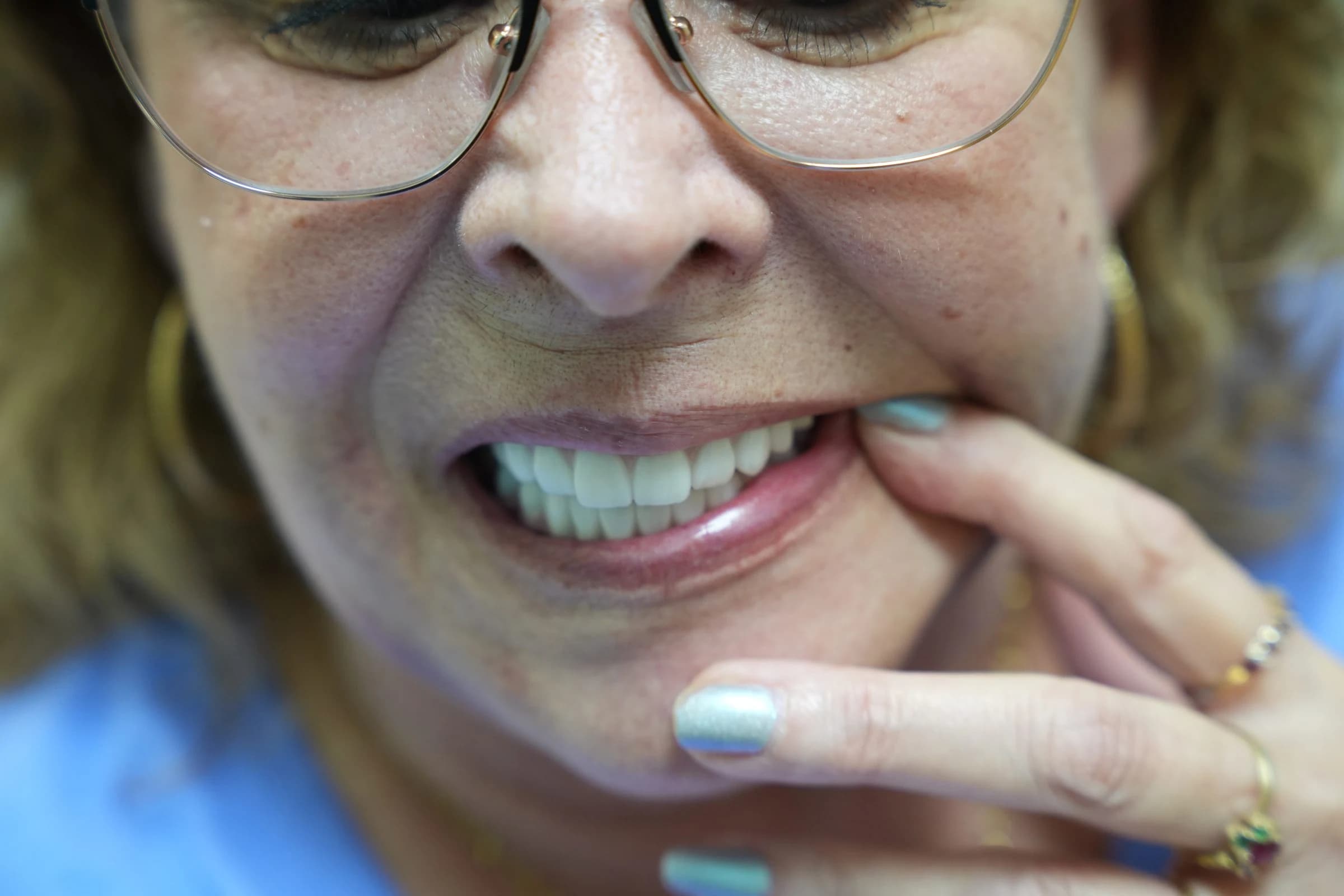
You might expect a whole mouth to cost exactly twice one arch, and sometimes it's close. But a few things shift the math once you're treating both jaws. The upper jaw is often the harder of the two — the bone is softer and the sinuses sit low, so an upper arch is more likely to need a sinus lift or, in severe cases, zygomatic implants anchored in the cheekbone. A lower arch, by contrast, usually has denser bone and fewer complications. So one arch in a full-mouth case can legitimately cost more than the other — though here, two four-implant All-on-4 arches carry the same fixed fee.
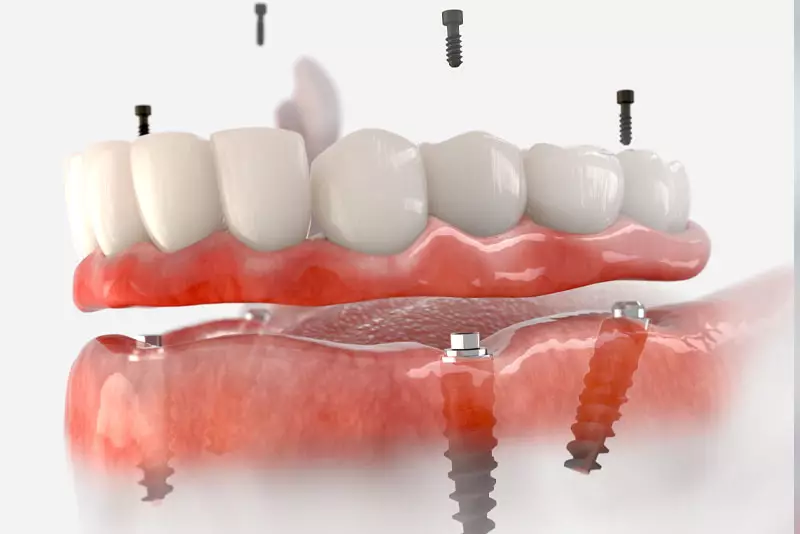
At most offices, the bigger drivers of the final number are the same ones that move any implant quote. How many teeth need to come out first (extractions), whether you need bone grafting to rebuild lost ridge, the sedation you choose, the number of implants per arch, and — this one matters a lot over time — what your final teeth are made of. Acrylic hybrid teeth cost less up front but wear and stain; milled zirconia costs more and lasts far longer. On our All-on-4 arch, the extractions, grafting, IV sedation and either material are inside one fixed, all-included fee. For a heavy bite or generous bone, your surgeon might recommend more than four implants per arch, like the All-on-8 Robust protocol Dr. Sam Jain developed, which changes the price — that arch is quoted in writing — but also the durability.
One quiet cost-mover is who's actually doing the work, and it usually cuts the other way. At many discount full-mouth offers, a traveling surgeon places the implants and hands you off to a separate lab and a separate dentist for the teeth. When the bite is off or an implant struggles, the accountability gets murky. In our practice Dr. Sam Jain and Dr. Arpana Gupta — a married team of ICOI Masters — plan, place, and restore every case themselves, and mill the final teeth in-house. That's not a line item on the quote, but it's a large part of what you're paying for.
Financing a Whole Mouth Without Draining Savings
A number in the tens of thousands is a lot to face at once, and almost nobody pays it as a lump sum. Roughly 92% of our full-arch patients finance their treatment, and for a full-mouth case that usually means monthly payments rather than a single check. A two-arch case is the largest kind of plan, but it can be structured, staged, and spread out. We work with Cherry, CareCredit, Proceed, and Happen Bank, and the front desk will run the actual numbers for your situation before you commit to anything.
One practical strategy for full-mouth cases: you don't have to do both arches at once. Many patients treat the arch that's bothering them most first, then do the second arch months later once they've recovered and budgeted. Splitting it spreads both the cost and the healing, and your surgeon will help you sequence which jaw goes first. There's no clinical rule that both arches must happen the same week.
Insurance rarely covers full-mouth implants in full, but it can chip away at the total. We're in-network with many PPO plans — Delta, Aetna, Cigna, MetLife, Guardian, UnitedHealthcare, Anthem Blue Cross, and Blue Shield of California among them — which sometimes contribute toward extractions, the surgical portion, or the final restoration. We are not able to bill Medicare, Medi-Cal, or HMO plans. And the first step costs nothing: a consultation and a 3D CBCT scan (a $499 value) are free, so you get a real, itemized number for your mouth before any money changes hands.
Cost Against Value: What You're Actually Buying
The honest way to weigh full-mouth implants is against what you'd otherwise spend and live with, not against zero. A quality set of dentures is cheaper up front, but they sit on your gums, can slip when you eat or speak, and — the part people don't hear enough — they don't stop the jawbone from shrinking. Without tooth roots stimulating it, the bone recedes year over year, which is why long-term denture wearers develop that sunken lower face and need relines and remakes. Implants put load back into the bone and largely halt that process. Our implants vs. dentures page lays out the day-to-day and long-term differences side by side.
There's a durability argument too. Implants themselves are built to last decades, and long-term studies commonly cite around 95% survival at ten years — though your own outcome depends on your bite, your hygiene, and your health, and your doctor will give you a realistic picture. The teeth riding on top are a wearing part and may need refreshing somewhere in the ten-to-fifteen-year range, which is exactly why the material matters and why we mill durable zirconia rather than outsource acrylic. Spread across the years you'll use them, a well-built full-mouth restoration often costs less per year than a decade of denture adhesive, relines, and food you've quietly stopped ordering.
None of this makes the number small, and we won't pretend it does. What it does mean is that the right way to decide isn't a web average — it's your actual bone, your bite, and a plan built around them. If you're not sure whether you even need a full mouth restored or just a few teeth, the candidacy evaluation sorts that out, and if you want to understand who'll be doing the work, our why choose us page is a fair place to look. Bring your questions to a free consultation and leave with a real quote, not an estimate off a chart.
Written and medically reviewed by Dr. Sam Jain, DMD, MS, and Dr. Arpana Gupta, DDS, MDS, who own this practice.
This article is patient education, reviewed by Dr. Sam Jain, DMD, MS, and Dr. Arpana Gupta, DDS, MDS, and is not a substitute for an exam. Treatment recommendations are made only after an in-person consultation and 3D imaging.