Dental Implant Restoration Options Explained
The implant is the anchor in your jaw — the restoration is the tooth you actually see and chew with. Here's how crowns, bridges, and dentures on implants really differ, and how to pick.


Written and medically reviewed by Dr. Sam Jain, DMD, MS, and Dr. Arpana Gupta, DDS, MDS
Published · Updated

First, the Distinction Most People Miss
A dental implant and the thing that sits on top of it are two separate parts. The implant is a titanium post placed in your jawbone — it fuses to bone over a few months and acts as an artificial tooth root. The restoration is the visible, chewable part that attaches to that post: a crown, a bridge, or a denture. When people ask about "restoration options," this is what they mean — not the surgery, but the teeth you end up eating and smiling with.
Here's the short answer, because you probably came for it. There are three basic restoration types. A crown replaces one tooth on one implant. A bridge replaces several teeth in a row using a couple of implants as end supports. And a denture — either the kind that snaps on and off, or the fixed kind that's screwed in permanently — replaces most or all of an arch. Which one fits depends on how many teeth are missing, where they are, and how you want to live with the result.
The number of missing teeth doesn't map one-to-one to the number of implants, and that surprises people. You don't need 12 implants to replace 12 teeth. A well-planned bridge or full-arch denture lets a few implants carry a lot of teeth — which is exactly why implant dentistry became affordable enough to be worth doing.
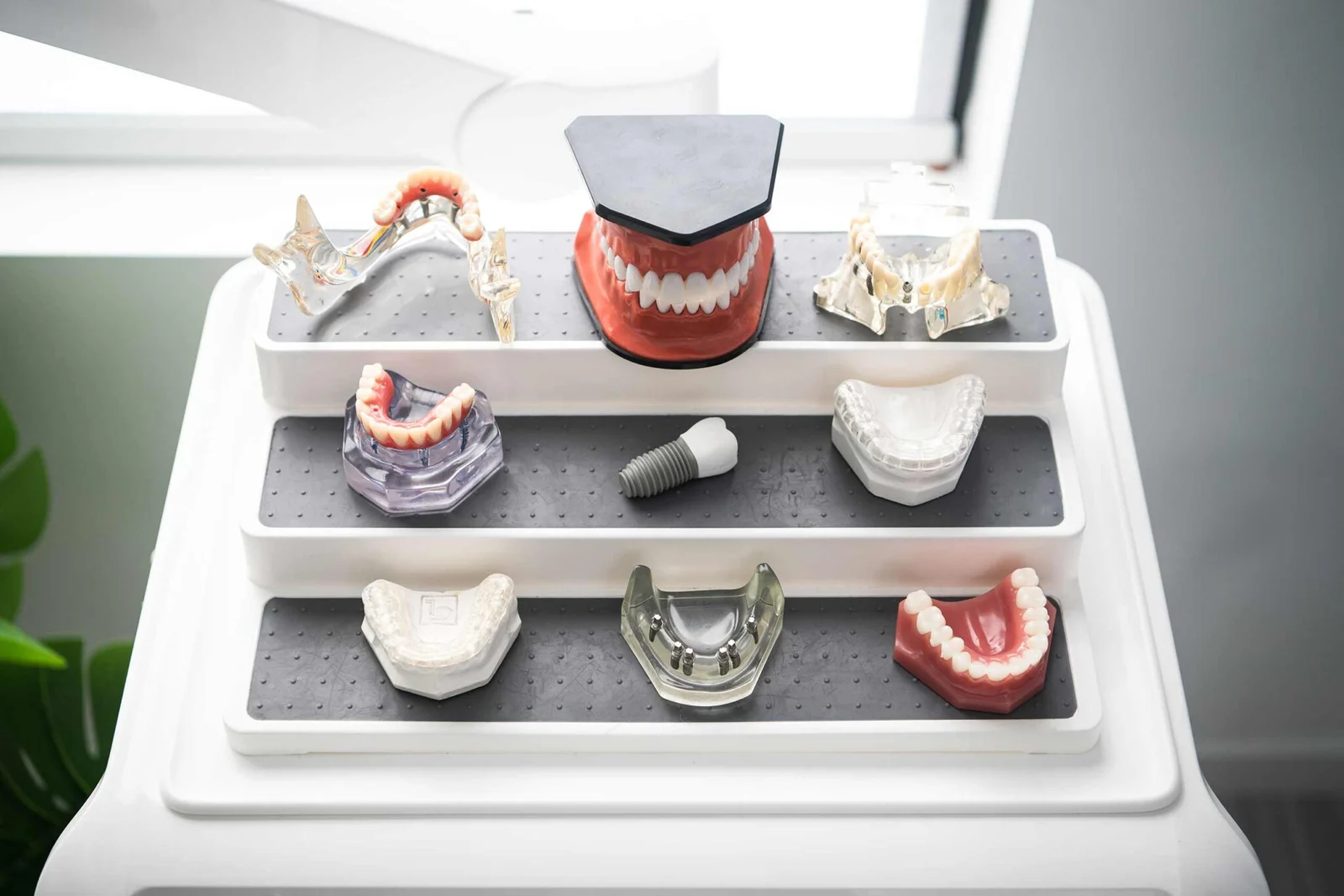
Option 1: The Single Implant Crown
If you're missing one tooth, an implant crown is usually the cleanest fix. One implant goes in where the root used to be, and once it's stable, a small connector called an abutment links it to a custom crown milled to match your neighboring teeth. It stands on its own — it doesn't touch or lean on the teeth beside it, which is the big advantage over an old-style tooth-supported bridge that had to grind down two healthy teeth to hold a fake one in the middle.
A single crown chews like a real tooth and is cleaned like one too: you brush and floss around it normally. For most patients it's the most durable single-tooth option available, and it's what we'd typically recommend when the gap is isolated and the neighbors are healthy. If you're weighing this against replacing several teeth at once, our single and multiple implants page walks through where the line falls.
The one thing worth naming honestly: an implant crown takes longer than a glued-in bridge because you're waiting for bone to fuse. What you get for that wait is a tooth that can last decades and doesn't put your other teeth at risk. Because our zirconia crowns are milled in-house on our own CAD/CAM technology, the final custom crown is often ready in about 24 hours once the implant is restored — not weeks of back-and-forth with an outside lab.
Option 2: The Implant-Supported Bridge
When you're missing several teeth in a row, you don't need an implant for every single gap. An implant-supported bridge places implants at the two ends of the space and spans the teeth between them as one connected unit. Three or four missing teeth can often be handled by two implants — which keeps both the surgery and the cost down compared with placing one implant per tooth.
A bridge on implants is fixed. It doesn't come out; it functions and feels like a solid stretch of teeth. The tradeoff versus single crowns is cleaning: because the replacement teeth are joined, you can't floss between every one the ordinary way, so you'll use a floss threader or a small water flosser under the connected span. Your team will show you exactly how — it's a two-minute habit, not a burden. This option shines in the back of the mouth, where several molars are gone and chewing force is high.
Whether a bridge or individual crowns is smarter for your case comes down to how the missing teeth are arranged and how much bone is under each spot. That's a measurement question, not a guess — which is why every plan here starts with a free 3D CBCT scan so the surgeons who place your implants design the restoration around your actual anatomy.
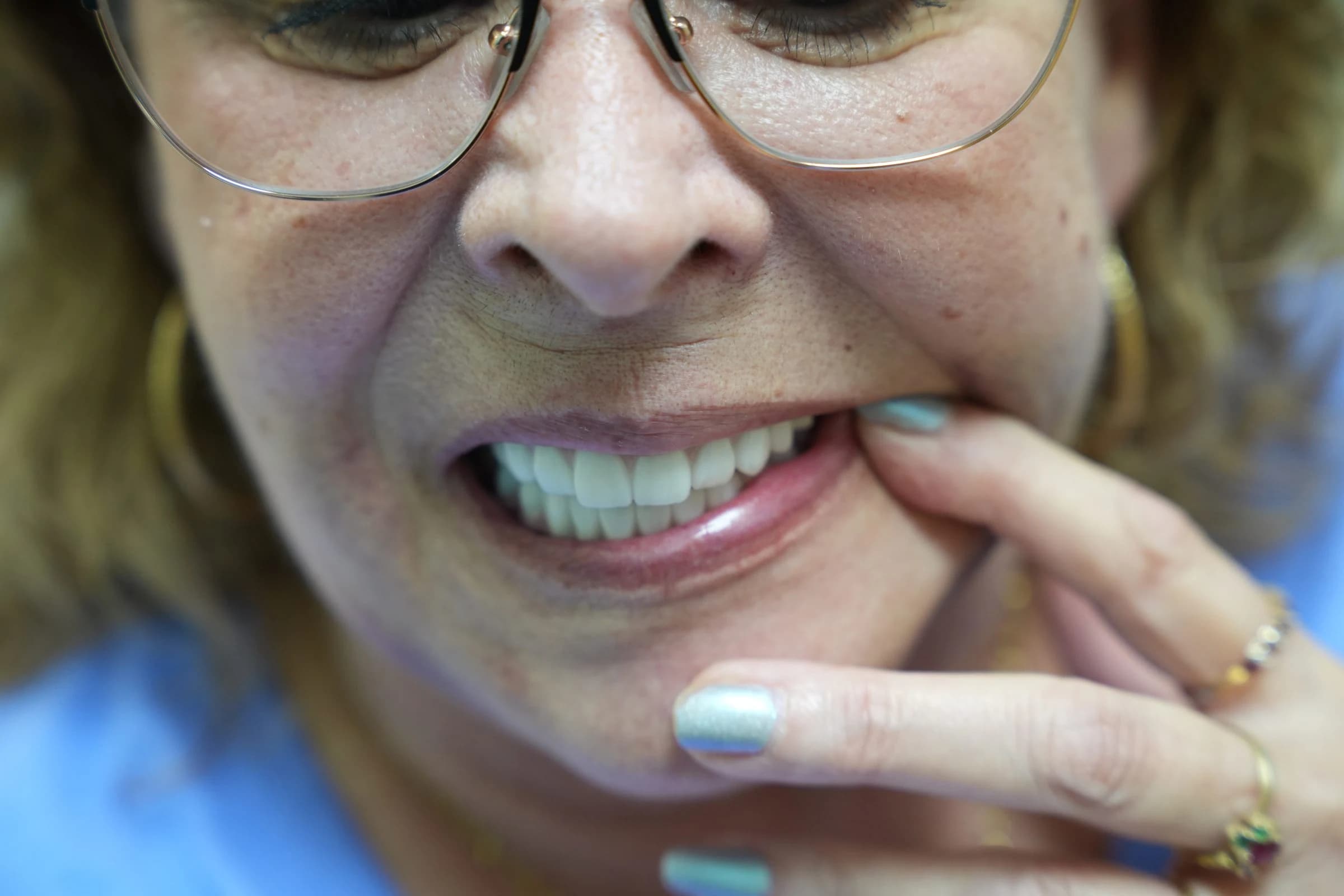
Option 3: Dentures on Implants — Removable vs. Fixed
When most or all of an arch is gone, the restoration is a denture anchored to implants — and this is where the biggest decision lives, because there are two very different versions. A removable, or implant-retained, overdenture snaps onto two to four implants like a seatbelt clicking into place. You take it out at night to clean it, it's the more economical full-arch route, and it ends the wobble and adhesive of a conventional denture. Bite force improves substantially over a plate that just rests on your gums.
The fixed version is a different animal. Here, a full arch of teeth is screwed onto four, six, or more implants and stays in permanently — only your dentist removes it for maintenance. You clean it in your mouth like natural teeth, and it restores the most chewing power of any option, commonly cited at roughly 80 to 90 percent of natural bite versus the 50 to 75 percent range for a removable overdenture. This is the family of treatments people know as All-on-4 and the All-on-8 Robust protocol Dr. Sam Jain developed for heavier bites and better load distribution.
The choice between snap-in and screwed-in is real and personal: cost, how much bite strength you want back, whether you're comfortable removing something nightly, and how much bone you have. If you're still deciding between implants and a traditional plate at all, our implants vs. dentures comparison lays out the honest tradeoffs. And unlike centers that leave you in temporary acrylic for six to eight months, our in-house zirconia mill delivers a final full-arch set in about 72 hours — see the same-day implants workflow for how that timeline works.
How the Right Restoration Actually Gets Chosen
The useful way to narrow this down isn't to pick a favorite from a brochure — it's to answer three questions with a surgeon looking at your scan. How many teeth are missing and where? How much usable bone is under each site? And how do you want to live with the result day to day — fixed and forgettable, or removable and lower-cost? Those answers point clearly to a crown, a bridge, or one of the two denture styles.
What shouldn't change is who does the work. At the Center for Implant Dentistry, Dr. Sam Jain and Dr. Arpana Gupta — a married team of ICOI Masters who've treated 15,000-plus patients since 2008 — personally plan, place, and restore every case under one roof, with no fly-in surgeons handing your bite to a stranger. That continuity matters more for the restoration than for the implant, because the tooth you chew with is a fine-tuning job. They also take the cases others turn away: severely resorbed jaws that need zygomatic implants, and rescuing failed restorations placed elsewhere.
Every restoration path starts the same way here: a free consultation and 3D scan, a $499 value at no charge. Cost is real, so financing through Cherry, CareCredit, and others is there to spread it out, and we're in-network with many PPO plans — the cost page breaks down what moves your number. When you're ready to see which restoration your mouth actually calls for, schedule a consultation and we'll show you on the screen.
Written and medically reviewed by Dr. Sam Jain, DMD, MS, and Dr. Arpana Gupta, DDS, MDS, who own this practice.
This article is patient education, reviewed by Dr. Sam Jain, DMD, MS, and Dr. Arpana Gupta, DDS, MDS, and is not a substitute for an exam. Treatment recommendations are made only after an in-person consultation and 3D imaging.