Bleeding, Swelling or a Bad Taste Around a Dental Implant: What Each Sign Means, and When to Act
The gum around a healthy implant should look and behave like healthy gum around a tooth. When it bleeds, swells, or leaves a taste you can't brush away, it is saying something — sometimes that healing is on schedule, more often that bacteria have gained a foothold. Here is how to read the signs.

Written and medically reviewed by Dr. Sam Jain, DMD, MS, and Dr. Arpana Gupta, DDS, MDS
Published
In this article
- 1First question: is the implant new, or has it been in for years?
- 2Bleeding when you brush or floss
- 3Swollen or red gum around the implant
- 4A bad taste, pus, or a small bump on the gum
- 5What to do at home, and what not to do
- 6When to call, and when it cannot wait
- 7What the examination looks for
- 8Treatment depends on which it is
- 9Bringing an irritated implant to us
First question: is the implant new, or has it been in for years?
In the days after implant surgery, some bleeding and swelling are part of healing. Pink-tinged saliva on the first day is expected, swelling usually peaks around the second or third day and then fades, and some bruising on the cheek is common. What is not expected, even early on, is bleeding that will not slow with firm pressure, swelling that keeps growing after the third day, fever, pus, or a foul taste. Our post-op instructions list those warning signs in full.
An implant that has been comfortable for months or years is a different situation. Around an established implant, bleeding, swelling and a bad taste are not part of normal function. They are signs of inflammation, and the task is to find out why it is there and how far it has gone.
Bleeding when you brush or floss
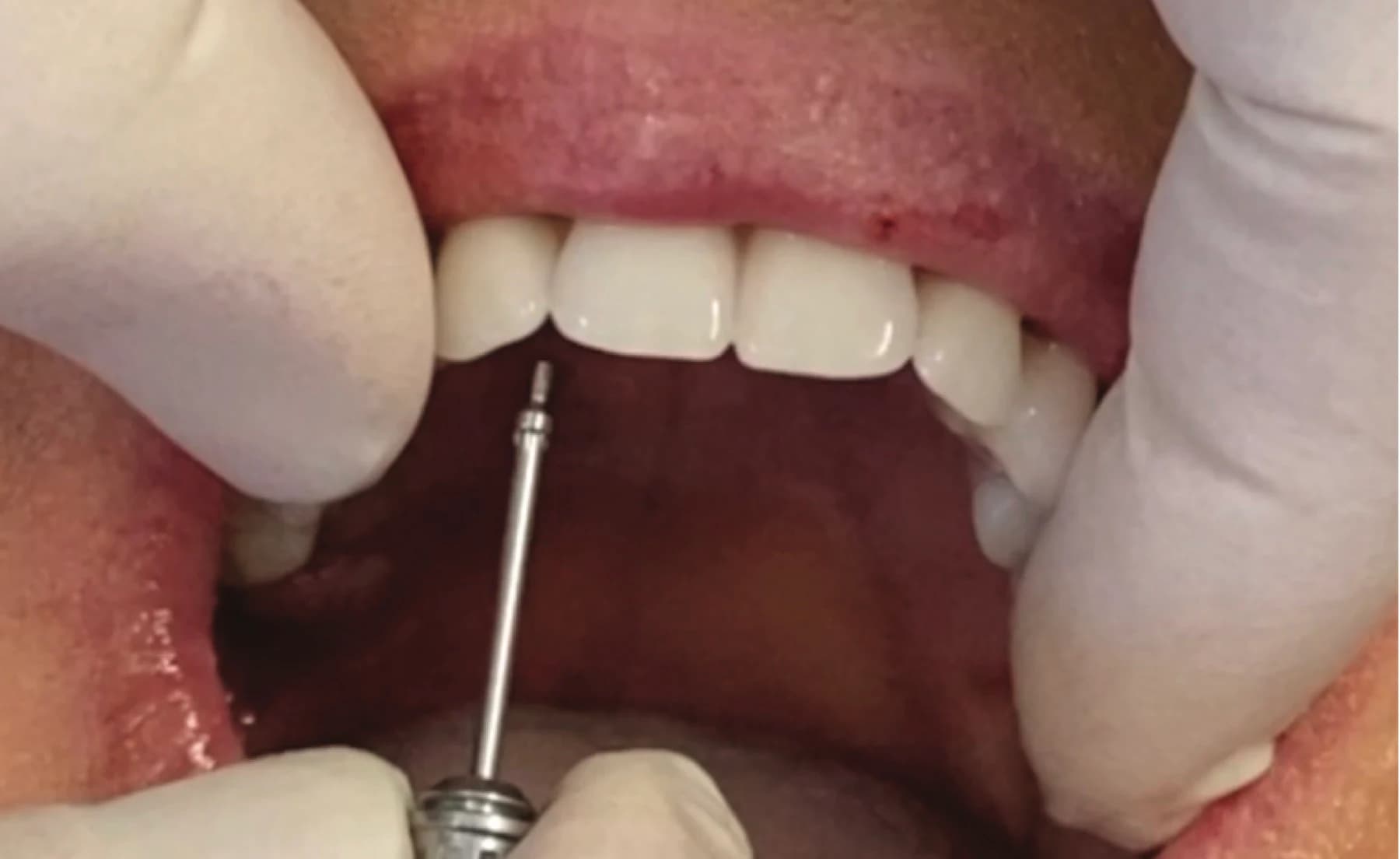
Healthy tissue around an implant should not bleed when it is cleaned gently. The 2017 World Workshop case definitions describe peri-implant health as the absence of redness, swelling and profuse bleeding on gentle probing. Bleeding, then, is the earliest and most common sign of trouble — most often peri-implant mucositis, which is inflammation of the gum around the implant without loss of the supporting bone. It is common: a systematic review of the epidemiology estimated it in about 43% of implant patients.
Two findings from the research are worth knowing. First, the gum around an implant reacts more strongly to plaque than the gum around a tooth. In a study in which volunteers with implants stopped cleaning one area for three weeks, inflammation increased at both, but more at the implants. Second, mucositis is reversible — but not overnight. In that same study, three weeks of resumed cleaning had not yet returned the tissues to their starting condition, and a review prepared for the World Workshop noted that the visible signs can take longer than three weeks to settle.
So the right response to a bleeding implant is more careful cleaning, not less. Many people stop brushing an area that bleeds, which lets the plaque that caused the bleeding build up further.
Swollen or red gum around the implant
Swelling around an implant usually has one of four explanations. The most common is the same biofilm-driven inflammation that causes bleeding. The second is something trapped: a piece of popcorn husk, a shred of floss, or food packed between the implant crown and the tooth next to it — and gaps between implant crowns and neighboring teeth are common, found in 52.8% of 174 single-implant crowns in one study. The third is excess cement left under a cemented crown, which was present in 81% of the diseased implants in an endoscopic study and whose removal resolved the signs of disease in 74% of them. The fourth is peri-implantitis, where the inflammation has progressed to bone loss and a deepening pocket.
With full-arch bridges, there is a fifth possibility: gum tissue that grows up against the underside of the bridge, usually where it is difficult to clean. A systematic review of fixed full-arch implant teeth found this overgrowth in 13.0% of bridges at five years and 26.0% at ten.
Swelling alone does not tell you which of these it is. A small, soft, recent swelling after a popcorn evening is not the same as a firm swelling with a pocket that has been slowly deepening, and only an examination with probing and an X-ray separates them.
A bad taste, pus, or a small bump on the gum
A bad taste that returns shortly after brushing usually comes from something that is producing it continuously: food and bacteria trapped under a crown or bridge, a pocket around the implant, or pus. Pus around an implant — sometimes seen as a small bead when you press the gum, sometimes only tasted — is a sign of active infection. It is one of the findings clinicians use, together with bleeding, deeper pockets and bone loss, to diagnose peri-implantitis.
Sometimes the pus drains through a small pimple-like bump on the gum a few millimeters from the implant, called a sinus tract or fistula. It may come and go, which tempts people to ignore it. It should not be ignored, but it is also not automatically a lost implant; Dr. Sam Jain's case discussion of a sinus tract on a three-year-old implant walks through how one is investigated and why the fix is usually not removal.
Under full-arch bridges, a bad taste or smell often comes from food and plaque collecting under the bridge rather than from infection of the implants themselves — but the two can coexist, and the bridge has to come off for the implants to be checked properly.
What to do at home, and what not to do
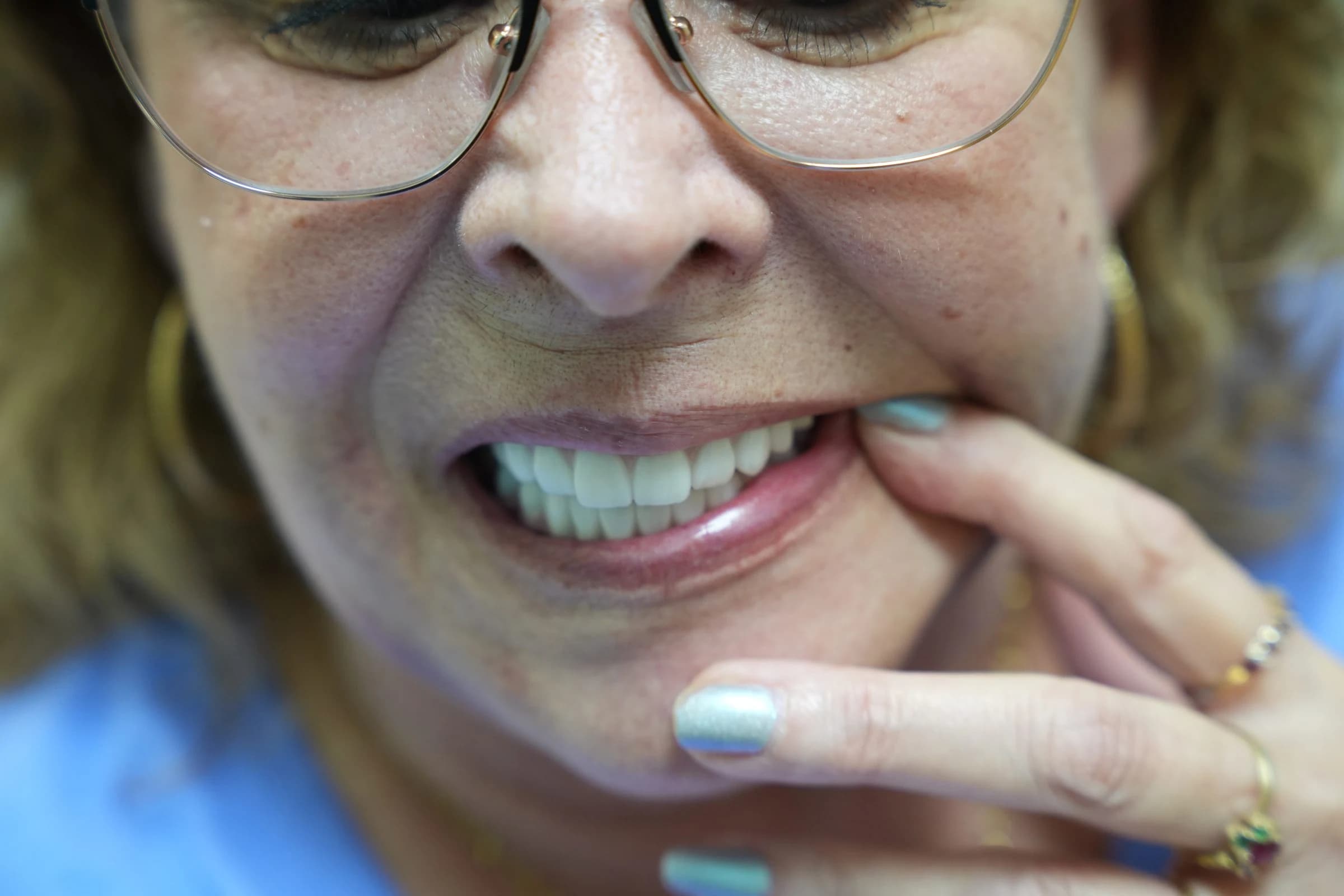
Keep cleaning, gently and thoroughly: a soft brush angled at the gumline, an interdental brush that fits the space next to the implant, and a water flosser, which is particularly useful under bridges. Check for anything trapped between the implant crown and its neighbors. If the area is sore, warm salt-water rinses are soothing.
Do not start leftover antibiotics. Antibiotics do not remove the bacterial film on an implant surface, and a meta-analysis of antibiotics in the treatment of peri-implantitis found no improvement in clinical success when they were added to non-surgical treatment, while warning about resistance. Do not dig at the area with toothpicks or sharp objects, which can damage the seal of gum around the implant. And do not rely on a strong mouthwash in place of mechanical cleaning; the bacteria live in a film that rinsing does not remove.
When to call, and when it cannot wait
Book a visit within days, not weeks, if you have pus or a recurring bad taste, a bump on the gum near the implant, swelling that does not settle, bleeding that continues despite a few weeks of careful cleaning, pain when biting on the implant, or a crown that feels loose. The same applies if a routine visit found a deeper pocket or bone loss. Peri-implantitis tends to begin within the first few years of an implant's life and to progress faster over time, so early treatment is simpler treatment.
Some situations call for emergency care first: facial swelling that is spreading quickly, difficulty swallowing or breathing, or high fever. For those, go to the nearest emergency room or call 911, and then call us.
What the examination looks for
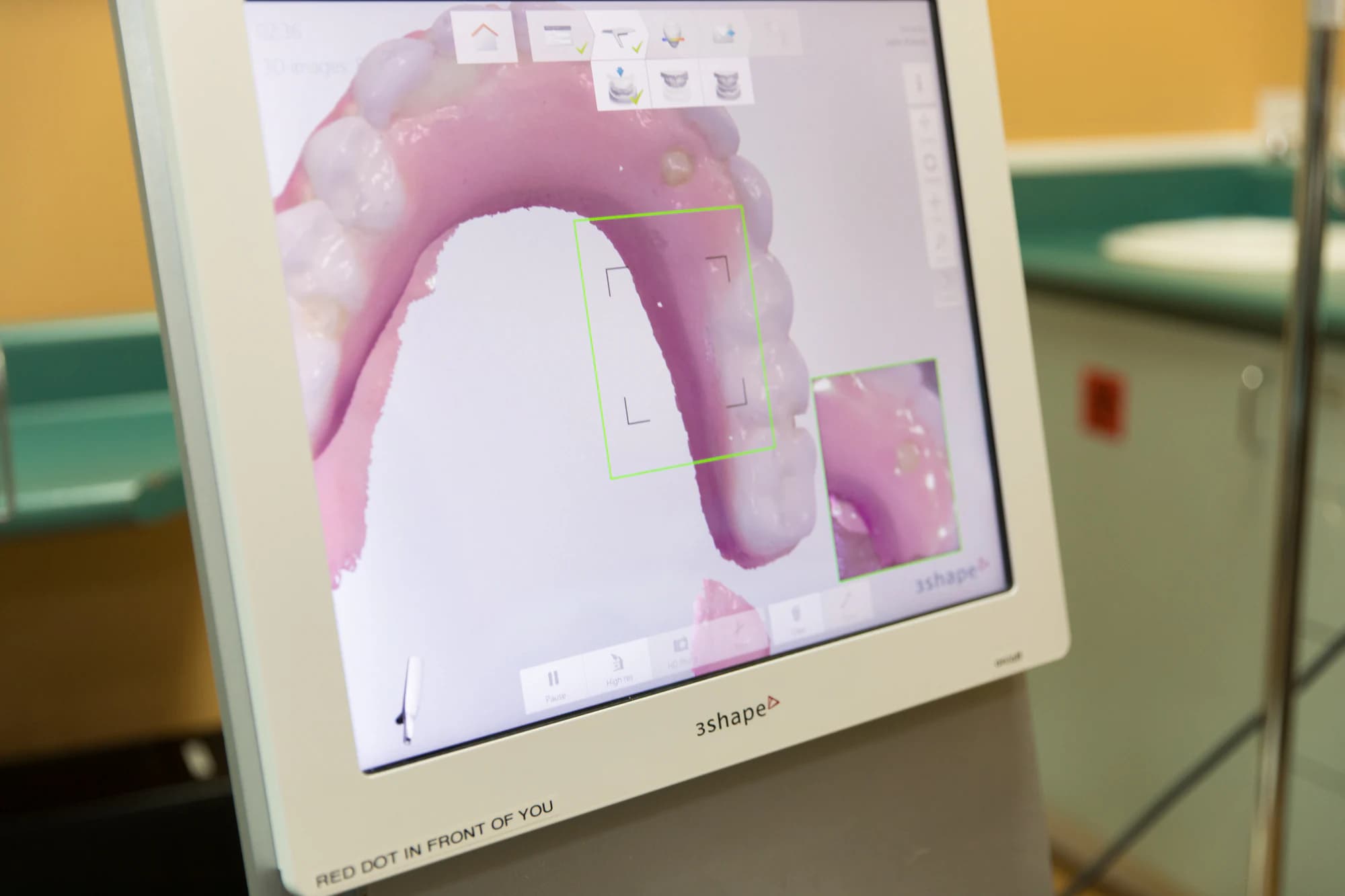
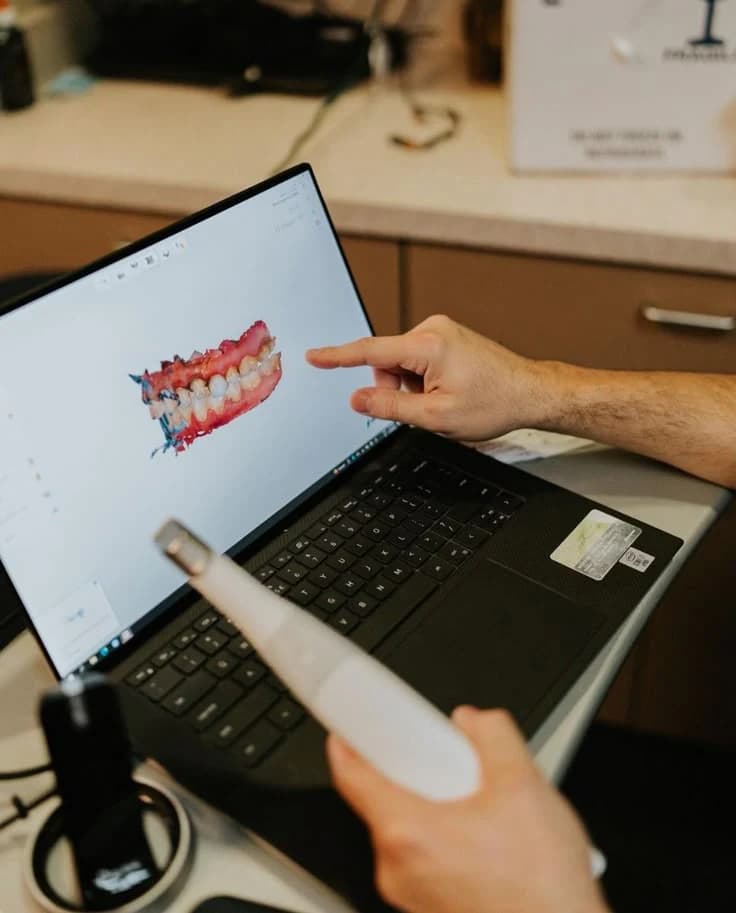
The examination answers two questions: is this inflammation limited to the gum, and if not, how much bone has been lost? We probe around the implant gently to measure pocket depth and check for bleeding and pus, examine the crown or bridge for fit, contour, trapped cement and loose screws, check the contacts with neighboring teeth, and take an X-ray or a 3D CBCT scan. If you have an X-ray taken when the implant was restored, bring it — comparing the two is the clearest way to see whether bone has been lost. Without one, the World Workshop criteria treat bone sitting 3 mm or more below its expected level, with bleeding and pockets of 6 mm or more, as indicating peri-implantitis.
We also look for the conditions that let the inflammation start: a crown that cannot be cleaned, grinding, smoking, diabetes, or a history of gum disease. Treating the gum without addressing those tends to buy only a short reprieve.
Treatment depends on which it is
Mucositis is treated with a thorough professional cleaning of the implant, removal of anything trapped or left behind, and a home-care routine adapted to that implant's shape. A 2021 meta-analysis found that adding antiseptics or other adjuncts did not improve the resolution of mucositis beyond good mechanical cleaning. When the crown's shape is the problem, reshaping or remaking it — which our in-house lab can do — is part of the treatment.
Peri-implantitis needs staged treatment that may include surgery, and sometimes removal of the implant; our article on peri-implantitis treatment explains each step and its odds. For both conditions, what happens afterwards matters as much as the treatment. In a five-year study of patients with mucositis, peri-implantitis developed in 43.9% of those who did not attend maintenance visits and 18.0% of those who did.
Bringing an irritated implant to us
Whether your implant was placed here or at another office, we can examine it. We are open six days a week, and the consultation and 3D scan are free. You leave with a diagnosis in plain language, the treatment options and their costs in writing, and a maintenance plan so the problem does not quietly return. You can book here or read more on our implant complications page.
Written and medically reviewed by Dr. Sam Jain, DMD, MS, and Dr. Arpana Gupta, DDS, MDS, who own this practice. Reviewed
This article is patient education, reviewed by Dr. Sam Jain, DMD, MS, and Dr. Arpana Gupta, DDS, MDS, and is not a substitute for an exam. Treatment recommendations are made only after an in-person consultation and 3D imaging.