Caring for Your Dental Implants: Maintenance Guide
Once your implant has fused and healed, keeping it for life comes down to a handful of small daily habits — here's exactly what they are, and the mistakes that shorten an implant's lifespan.


Written and medically reviewed by Dr. Sam Jain, DMD, MS, and Dr. Arpana Gupta, DDS, MDS
Published · Updated
Treat It Like a Real Tooth, With One Twist
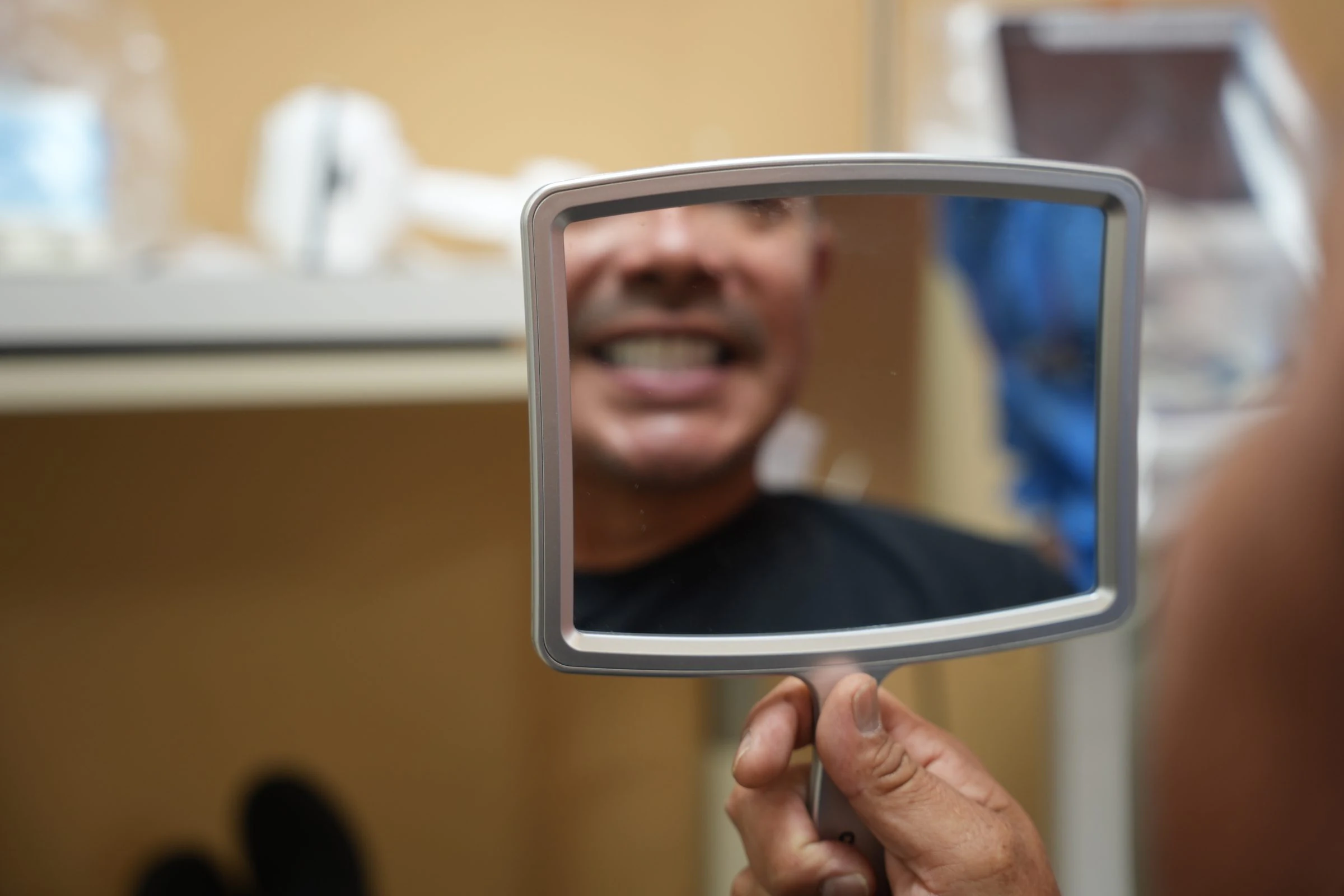
Care for a healed dental implant almost exactly the way you'd care for a natural tooth: brush twice a day, clean between your teeth once a day, and keep your regular hygiene visits. The one twist is that an implant can't get a cavity, but the gum and bone around it can still get inflamed and pull away — so the whole game of long-term implant care is protecting the tissue at the gumline, not the crown itself. Do that consistently and a single implant routinely lasts decades. Peer-reviewed studies commonly cite around 95% implant survival at ten years, and many go far longer.
The reason the gumline matters so much is simple. A natural tooth is cushioned by a ligament and surrounded by fibers that resist bacteria fairly well. An implant is fused directly to bone, and the seal where gum meets titanium is thinner and less forgiving. Let plaque build up there and it can trigger inflammation — first in the gum (peri-implant mucositis), and if it's ignored, in the bone (peri-implantitis), which is the leading reason implants are eventually lost. The good news is that the early stage is reversible, and everything below is aimed at never letting it start.
Your Daily Routine, and the Tools That Actually Matter
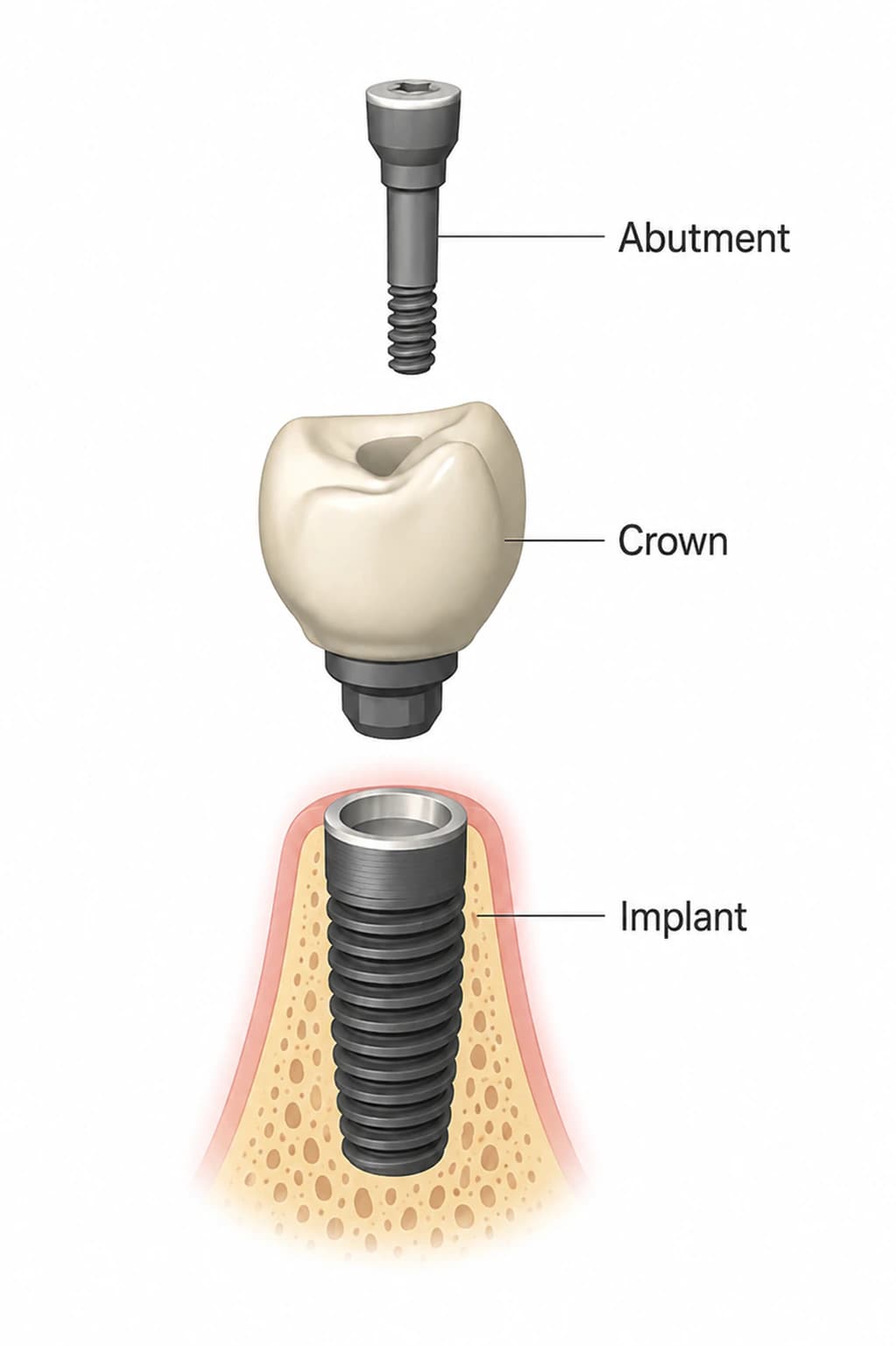
Brush twice a day with a soft-bristled or electric toothbrush and a non-abrasive fluoride toothpaste. Skip the gritty "whitening" or charcoal pastes on and around an implant crown — they can dull a polished zirconia surface and scratch the abutment. Angle the brush toward the gumline and give the back and inside surfaces the same attention as the front; that tucked-away side is where plaque quietly collects.
Cleaning between the teeth once a day is the step that does the heavy lifting, and it's the one most people skip. For a single implant with a normal contact against its neighbor, regular floss or implant-specific floss works fine. Where an interdental (proxy) brush fits, it's often better — a small tapered brush reaches into the sulcus around the implant and clears the space a toothbrush can't. For multiple implants or an implant bridge, a water flosser is a genuinely useful addition: it flushes debris from under and around the restoration where string floss can't easily go. None of this takes long once it's a habit — call it two extra minutes a day to protect a five-figure investment.
One caution worth repeating: be gentle and consistent rather than aggressive. Sawing hard with floss or jamming a too-big interdental brush irritates the very tissue you're trying to protect. If you're ever unsure which tools fit your specific restoration, ask your hygienist to size them for you at a cleaning — the right proxy-brush diameter is not a guess.
Professional Cleanings: Why the Six-Month Visit Isn't Optional
Home care handles the daily plaque; professional cleanings handle what home care misses. Most patients with a healed implant should keep the standard schedule — a cleaning and exam roughly every six months — while people with a history of gum disease, diabetes, or who smoke usually benefit from coming in more often, because those are the same factors that raise peri-implantitis risk. Your hygienist and doctor will set the interval that fits your mouth rather than a one-size number.
There's a real technical reason implant cleanings are different from a standard cleaning: the instruments matter. Traditional steel scalers can scratch a titanium or zirconia surface, and a scratched surface holds plaque more easily — the opposite of what you want. Practices that place a lot of implants use implant-safe tools for the job: plastic or titanium-specific scalers, softer ultrasonic tips, and air polishing that lifts biofilm without gouging the surface. At our Fremont center, the same team that planned and placed your implant also maintains it, so nobody's guessing about the hardware under your gum — it's on the chart, and it's been on our 3D scans since day one.
These visits are also where problems get caught while they're still cheap and reversible. A quick check of the gum's health, a look at how the crown is holding up, and — periodically — a small X-ray to confirm the bone level is stable will flag trouble long before you'd feel it. That's the entire logic of maintenance: small, boring check-ins instead of one expensive rescue.
Warning Signs, Bite Habits, and the Things That Quietly Wear an Implant
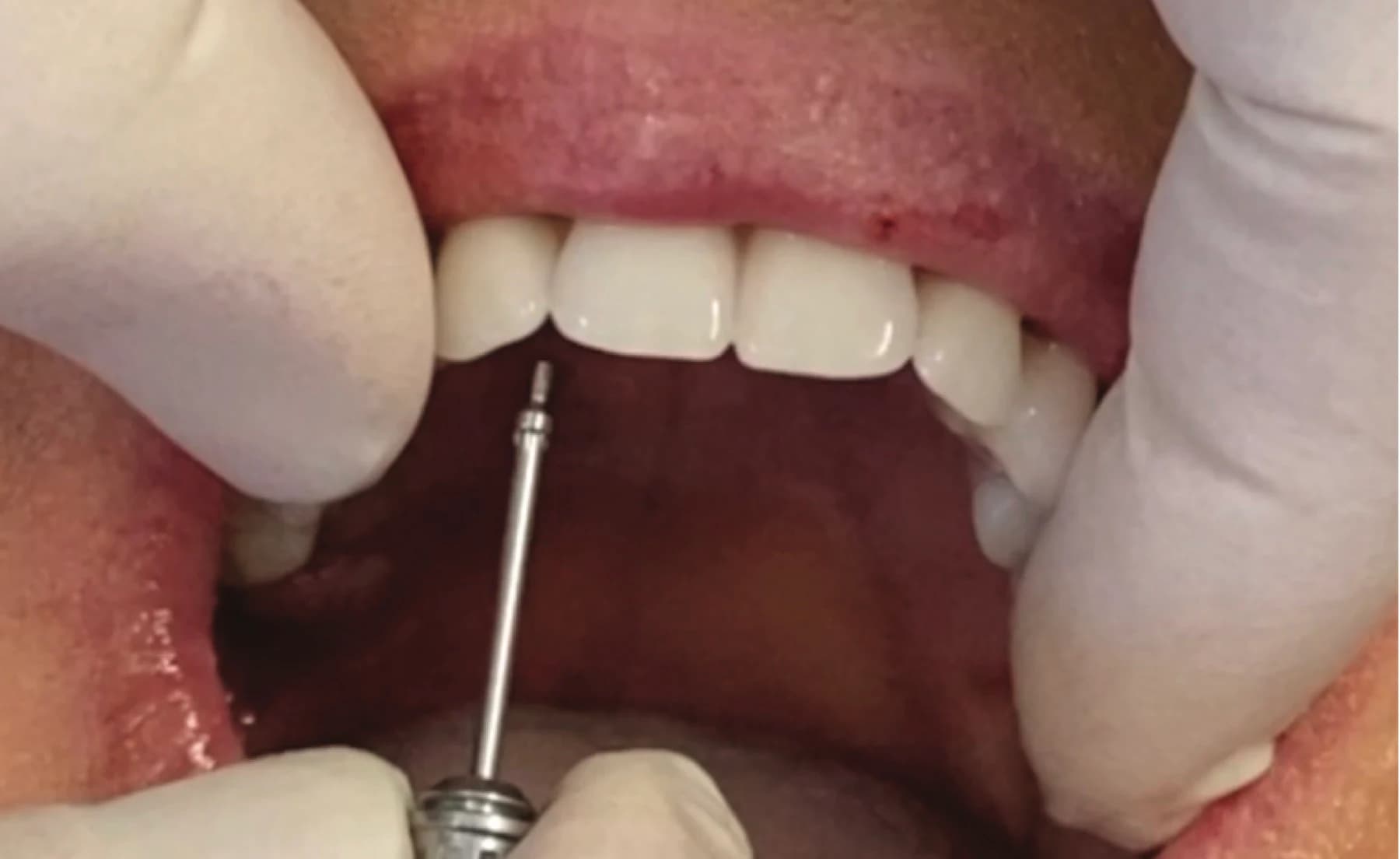
Know what a healthy implant feels like so you notice when something changes. Call your dentist if you see bleeding or puffiness in the gum around the implant, notice it looks like it's receding, get a bad taste or persistent bad breath localized to that spot, feel any looseness in the crown, or have new discomfort when you bite. A loose crown is usually a minor fix — often a screw that needs re-tightening — but a loose implant is not something to wait on. Caught early, most of these are simple; ignored, they're how implants fail. If you want the full breakdown of what goes wrong and how it's repaired, our guide to implant complications and rescues covers it honestly.
Two everyday habits do more slow damage than most people realize. The first is grinding or clenching (bruxism): an implant doesn't have the natural give of a real tooth's ligament, so sustained overload gets transmitted straight to the crown and the bone. If you grind — many people do it in their sleep without knowing — a custom nightguard is cheap insurance. The second is using your teeth as tools: cracking ice, opening packaging, chewing pens. A well-made zirconia crown is strong, but it isn't a bottle opener, and habitual abuse can chip or fracture it.
Finally, the two biggest lifestyle factors are the honest ones your doctor will raise before treatment: smoking and uncontrolled blood sugar both meaningfully raise the risk of peri-implant bone loss over time. Neither automatically dooms an implant, but managing them is one of the highest-leverage things you can do for its lifespan. For a fuller look at what protects implants over decades — and why the same surgeons handling your maintenance is part of that — our why choose us page explains how planning, placement, restoration, and follow-up staying under one roof changes the long game. Questions about your own implant are exactly what a free consultation is for.
Written and medically reviewed by Dr. Sam Jain, DMD, MS, and Dr. Arpana Gupta, DDS, MDS, who own this practice.
This article is patient education, reviewed by Dr. Sam Jain, DMD, MS, and Dr. Arpana Gupta, DDS, MDS, and is not a substitute for an exam. Treatment recommendations are made only after an in-person consultation and 3D imaging.