All-on-4 Questions Answered: Pain, Eating, Healing & Cost
The questions patients actually ask before and after full-arch treatment — answered plainly, with the honest caveats, by the surgeons who do the work.
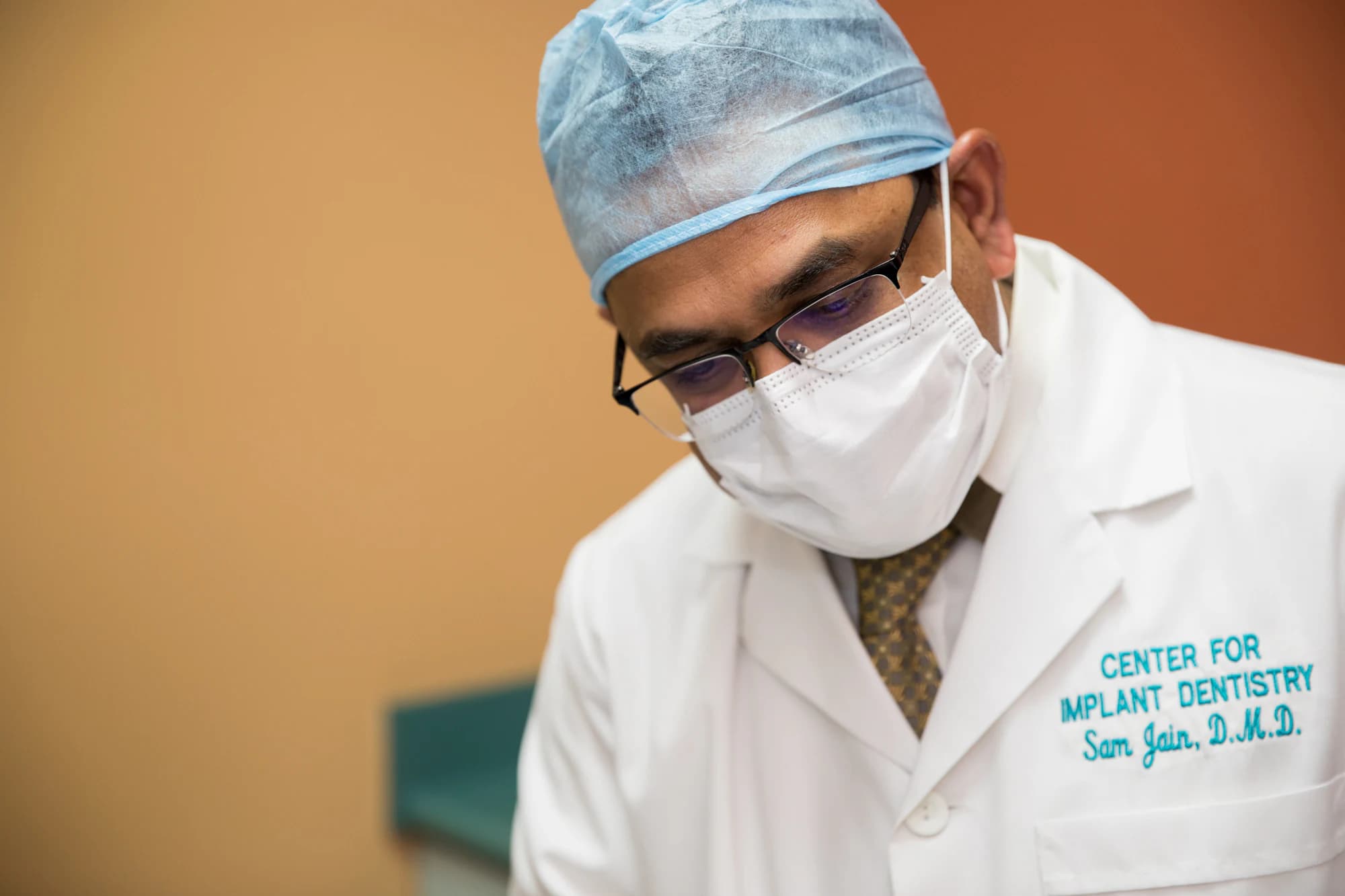

Written and medically reviewed by Dr. Sam Jain, DMD, MS, and Dr. Arpana Gupta, DDS, MDS
Published · Updated
The Questions Almost Everyone Asks First
Two questions come up in nearly every consultation: does it hurt, and how long does the whole thing take? The surgery itself is done under IV sedation, so you don't feel it and most people don't remember much of the appointment. Afterward, the honest answer is that there's soreness and swelling for a few days — it's real surgery, and your jaw was just worked on — but the vast majority of patients manage it with prescription-strength medication for the first day or two and over-the-counter pain relievers after that. Most tell us it was less than they braced for. Our sedation dentistry page explains the comfort options, and the post-op instructions walk through exactly what the first week looks like.
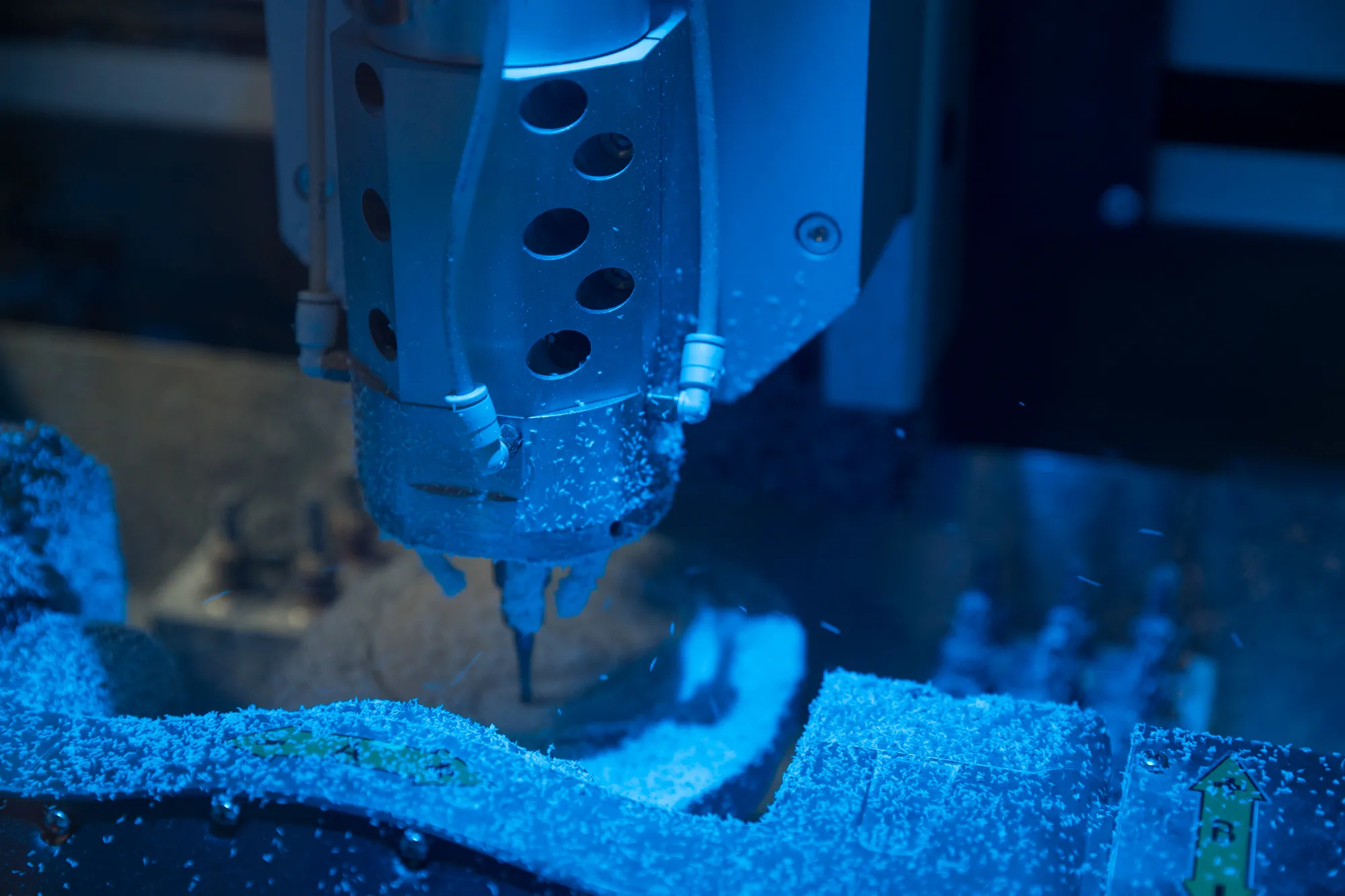
On timing: the surgical day is usually a single visit. Failing teeth are removed, four implants are placed, and a fixed set of teeth is attached — often the same day, which is why people call it "teeth in a day." What varies from office to office is what you leave with. At many centers that same-day arch is a temporary acrylic set you wear for six to eight months while the implants fuse. Because our planning, surgery, and a CAD/CAM zirconia mill all sit under one roof, we can deliver final, custom-milled teeth in about 72 hours for a full arch instead of half a year of provisional plastic. The same-day dental implants page shows that workflow step by step.
Eating, Speaking, and Living With Them
"When can I eat a steak again?" is the question we hear most, and the answer has two parts. In the first several weeks you eat soft — smoothies, eggs, fish, well-cooked vegetables — because the implants are still fusing to bone (osseointegration), and that process typically takes a few months to finish. Pushing hard, crunchy food too early risks the very stability you're trying to build. Once your surgeon confirms the implants have integrated, most patients return to a normal, unrestricted diet, including foods that dentures make miserable. Your doctor will give you a personalized timeline; it depends on your bone and how the case healed.
Speech is usually the pleasant surprise. Because an All-on-4 bridge doesn't cover the roof of your mouth the way an upper denture does, taste and pronunciation feel natural for most people quickly — often within a couple of weeks as your tongue adjusts. And nothing comes out at night. You don't soak these in a cup; they're screwed to the implants and you sleep with them in. If you're weighing this against a removable plate, our implants vs. dentures comparison lays out the day-to-day differences.
Cleaning is different from natural teeth, not harder. You brush the bridge like normal teeth, but because it sits slightly above the gum, you also clean underneath it — a water flosser is the tool most patients rely on, and we show you how at your appointments. Skipping that maintenance is one of the more common reasons a healthy arch runs into gum trouble years later, so it's worth building the habit early.
Cost, Insurance, and Whether You Even Qualify
Cost here is a single number per arch for All-on-4 — one fixed, all-included fee, with extractions, grafting, IV sedation, and your choice of final material inside it — so the main thing that moves your total is whether one or both arches are treated. An arch that needs six or eight implants is quoted in writing, itemized, after the free consultation and 3D scan. Roughly 92% of our full-arch patients finance the work through options like Cherry, CareCredit, Proceed, or Happen Bank. We're in-network with many PPO plans (Delta, Aetna, Cigna, MetLife, Guardian, UnitedHealthcare, Anthem Blue Cross, Blue Shield of California, and others), though we don't take Medicare, Medi-Cal, or HMO plans. The full picture lives on our dental implant cost page.
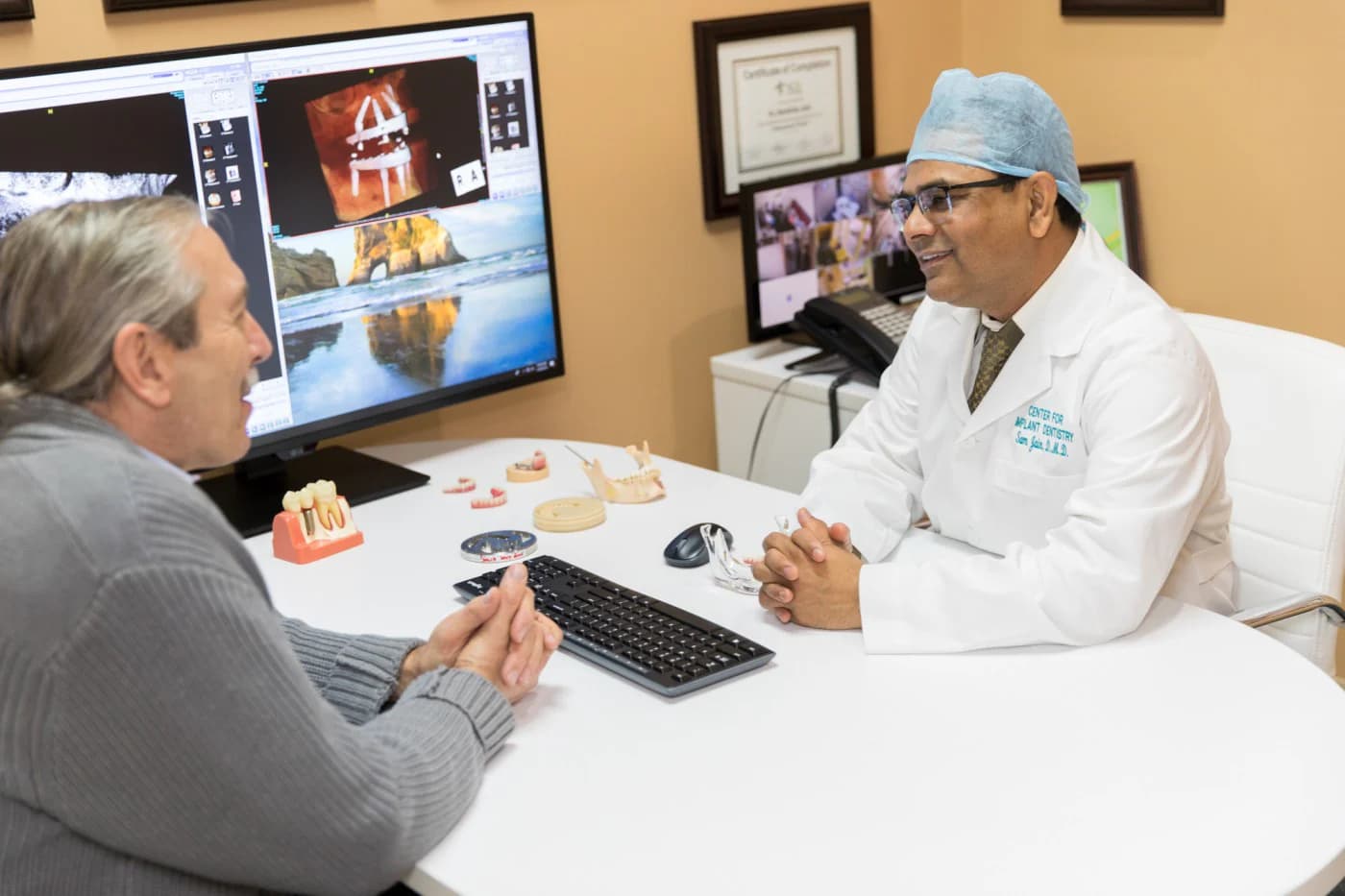
"Can I even have this done?" is worth answering before cost, honestly. All-on-4 is built for people missing most or all of the teeth in an arch, or heading there. Because the two rear implants are angled to reach denser bone, many patients who were told elsewhere that they "don't have enough bone" turn out to qualify after a proper 3D CBCT scan — that's a common and welcome surprise. When bone truly is too thin, the answer isn't a removable denture by default; it's a different plan — zygomatic implants anchored in the cheekbone, a sinus lift, or targeted grafting. Our candidacy page covers the health factors that matter, and the consultation plus 3D scan (a $499 value) is free.
The Long-Tail Questions Nobody Warns You About
Will they set off metal detectors or ruin an MRI? No. The implants are titanium and the bridge is zirconia; neither triggers airport security, and implants are generally MRI-safe — tell your radiologist you have them, as you would any implant, and they'll advise on the specific scan. Do the teeth ever need replacing? The implants themselves are built to last decades, but the fixed bridge riding on top is a wearing part; depending on material and bite, a bridge may need refreshing somewhere in the ten-to-fifteen-year range. This is one place material choice matters — milled zirconia is far more durable than the acrylic hybrids some offices use, which is why we mill it in-house rather than outsource it.
A few more that come up often. You can treat one arch or both — many people do the upper and lower at different times to spread out cost and recovery, and your surgeon will help you sequence it. If an implant placed somewhere else has failed, that's not the end of the road; taking on failed cases and rescuing them is part of what we do, and our dental implant complications page explains how. And if you're deciding between four implants and a sturdier foundation for a heavy bite, ask about the All-on-8 Robust protocol Dr. Sam Jain developed — sometimes the right number for a particular jaw is more than four.
The thread running through all of these is that good answers depend on your actual mouth, not an average. The surgeons who plan your case — Dr. Sam Jain and Dr. Arpana Gupta, a married team of ICOI Masters — are the same people who place the implants and make your teeth, with no fly-in surgeon handing you off. If you have a question that isn't here, our general FAQs cover more ground, and you can bring the rest to a free consultation.
Written and medically reviewed by Dr. Sam Jain, DMD, MS, and Dr. Arpana Gupta, DDS, MDS, who own this practice.
This article is patient education, reviewed by Dr. Sam Jain, DMD, MS, and Dr. Arpana Gupta, DDS, MDS, and is not a substitute for an exam. Treatment recommendations are made only after an in-person consultation and 3D imaging.