Zirconia vs Acrylic Full-Arch Teeth: Survival, Wear, Repairs, Hygiene and Cost, Compared on the Evidence
The implants under a full arch are only half of the decision. The teeth on top are usually either acrylic on a metal framework or zirconia, and the two age very differently. Here is what the long-term studies show about each, where each one fails, and how to decide which suits your mouth and budget.


Written and medically reviewed by Dr. Sam Jain, DMD, MS, and Dr. Arpana Gupta, DDS, MDS
Published
What the two options actually are
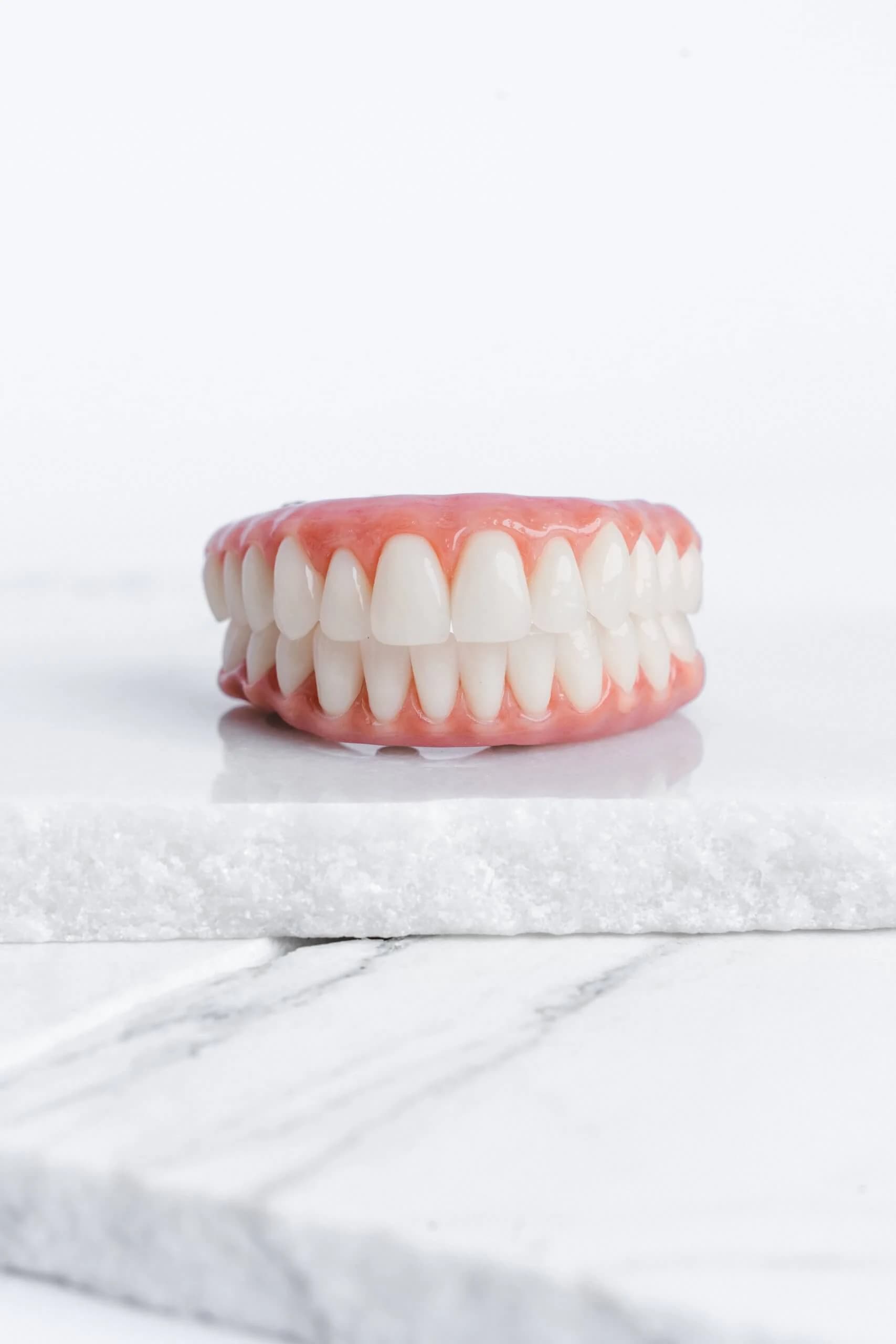
Acrylic full-arch teeth — often called a hybrid — are denture teeth set in pink acrylic that is processed onto a metal framework. The framework gives strength; the acrylic gives the teeth and gum their shape. They are relatively light, comfortable to bite on, and quick and inexpensive to repair. They are also the usual material for temporary teeth fitted on the day of surgery while the implants heal.
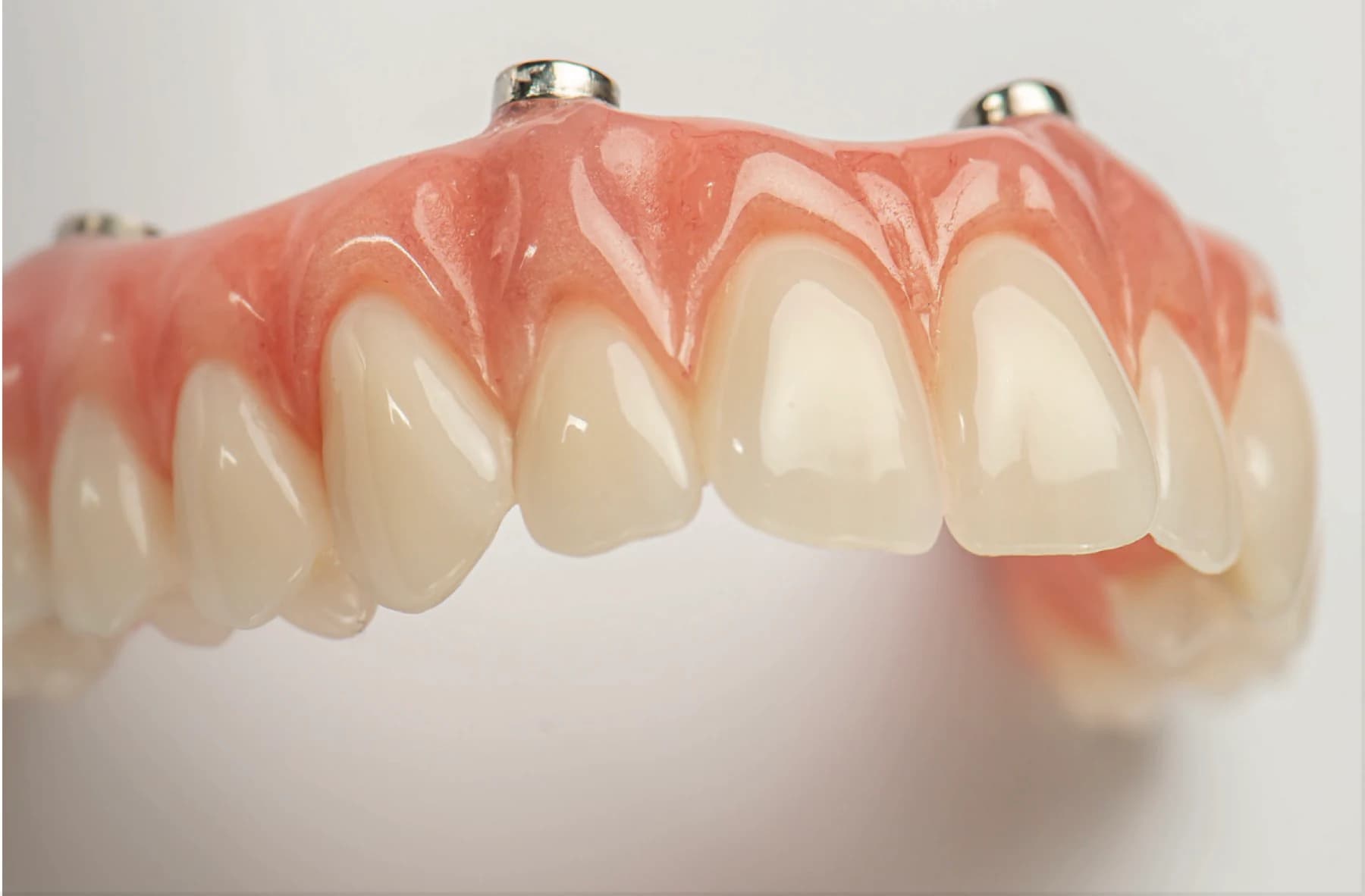
Zirconia full-arch teeth are milled from a block of zirconium dioxide, a very strong white ceramic, and fastened to the implants through titanium cylinders bonded inside. There are two main designs. Monolithic zirconia is milled as one solid piece, with pink porcelain limited to the gum area or omitted. Layered zirconia has porcelain built up over a zirconia core for the tooth surfaces. That distinction matters, because the two behave differently, and our premium full-arch teeth are monolithic zirconia milled in our own lab.
Survival and complications over time
The most direct comparison is a 2020 study of 74 full arches followed for a mean of 8.7 years. Zirconia bridges survived at 93.7% at five years compared with 83.0% for metal-acrylic bridges, and later complications were more frequent with acrylic. There was no difference in peri-implantitis or implant failure — the material affected the teeth on top, not the implants. A 2026 meta-analysis of studies comparing metal-reinforced zirconia with metal-acrylic bridges found significantly less prosthetic wear with zirconia, a lower risk of peri-implantitis and less marginal bone loss, with no difference in implant survival, framework fractures, appearance or speech, while warning that most of the studies had a moderate to serious risk of bias.
Studies of each material on its own point the same way. In a laboratory's records of 2,039 monolithic zirconia bridges, six fractured, for a five-year survival of 99.3%, and a 2026 meta-analysis found technical complications of 1% to 3% for monolithic zirconia compared with up to 27% for layered designs. For acrylic, a study of lower metal-acrylic bridges followed for a mean of 18.5 years found acrylic tooth fractures in 45.8% of patients and wear in 75%, and a 2023 study found two-thirds of patients had at least one complication, the first at a mean of 23 months.
Where zirconia can fail
Zirconia is not unbreakable, and the design has to respect that. In a 2026 analysis of 3,300 monolithic zirconia bridges from one commercial laboratory, five-year survival was 91.67% — lower than the 99.3% reported from another laboratory — and the leading cause of failure was fracture of the zirconia framework, especially in bridges made with insufficient vertical space. A published case report described a zirconia arch that cracked because implant components from different manufacturers left it slightly misfitting.
The lessons are practical. A zirconia arch needs enough thickness, which depends on how much space there is between the jaws; it needs a passive fit on components that match; cantilevers behind the last implant need to be limited; and patients who grind need a night guard. When a zirconia arch does fracture, it cannot be reliably repaired and is remade — which, with the design stored digitally and a mill in the building, is faster than it once was, but is still a new arch.
Wear, chipping and repairs
Acrylic's main weakness is wear. Denture teeth gradually flatten, the bite can drop, and individual teeth chip or break off. In a private-practice series, whole sets of acrylic teeth had to be replaced for wear in eight of 45 patients between five and twelve years. The upside is that acrylic repairs are usually simple: a broken tooth can often be replaced on the existing framework, and a worn bridge can be re-toothed.
Monolithic zirconia barely wears and rarely chips, because there is no separate porcelain layer to fracture. Layered porcelain is another matter: a systematic review of fixed full-arch implant bridges found chipping or fracture of veneering material in 33.3% of bridges at five years and 66.6% at ten. So the comparison is really three-way — acrylic wears, layered porcelain chips, and monolithic zirconia resists both but must be designed with enough bulk. Our article on All-on-4 bridge repair describes how each is fixed.
Gum health, cleaning and odor
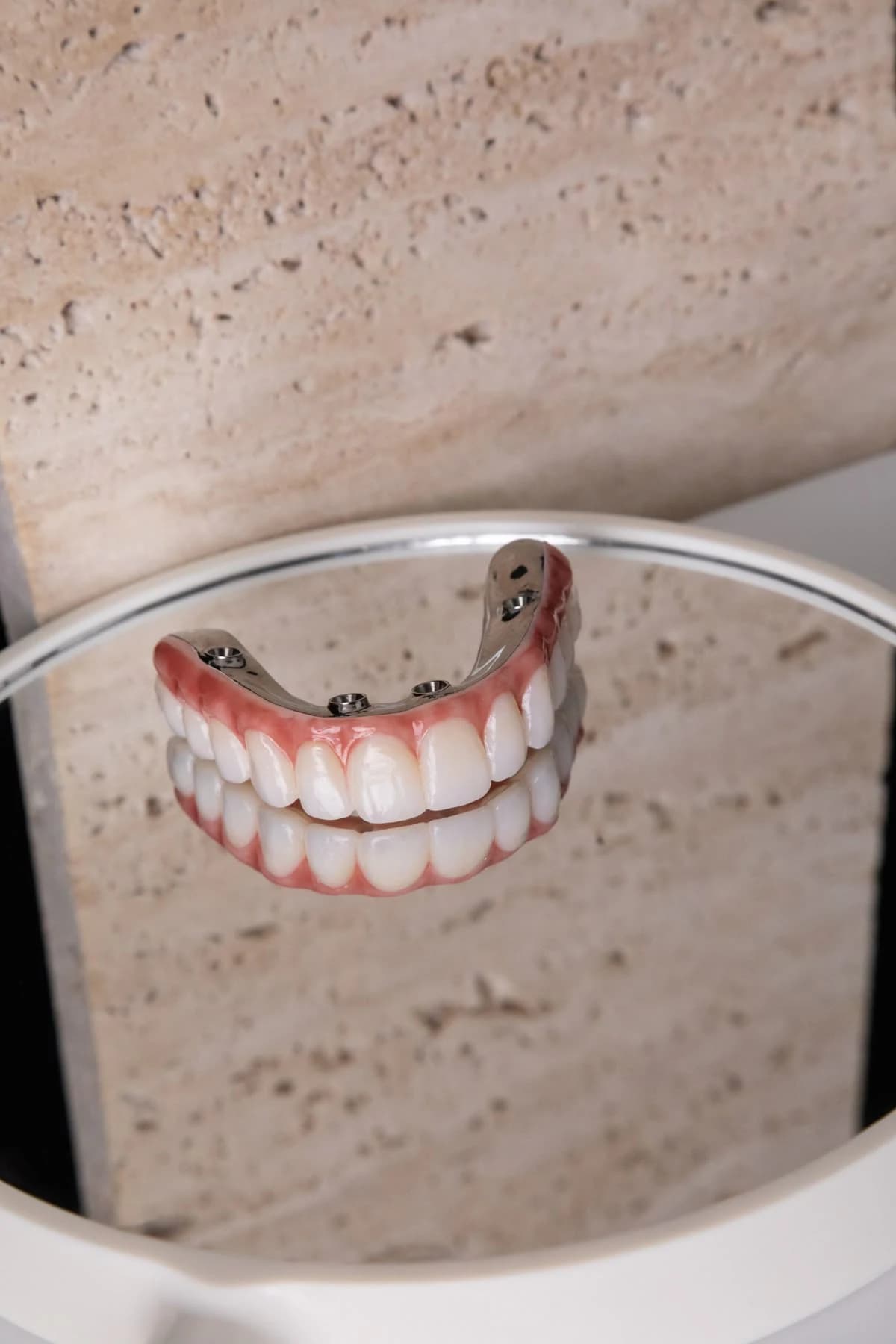
Glazed and polished zirconia is smooth and dense, and the 2026 comparative meta-analysis found less peri-implantitis and bone loss around zirconia bridges than acrylic ones, although the certainty of that evidence was limited. What matters at least as much as the material is the shape of the underside of the bridge. In a study of upper full-arch bridges, concave areas on the underside collected more biofilm than convex ones and were associated with more bone loss around the nearest implants.
Whichever material is chosen, the underside should be designed so that a water flosser and brushes can reach it. Our article on food trapping and odor under full-arch bridges explains why that design detail matters.
Look, feel and speech
Both materials can look natural in skilled hands. Monolithic zirconia holds its color and polish over the years, while acrylic can stain and lose its surface gloss with time. The comparative meta-analysis found no significant difference in patient-rated appearance or speech between zirconia and acrylic bridges.
Some patients notice that acrylic feels softer and quieter when teeth meet, particularly against another set of implant teeth, while zirconia feels firmer. For most people the difference fades quickly, but it is worth trying both in the mouth when that is possible, and it is one reason a well-made temporary set helps patients know what they like before the final teeth are made.
Cost now, and cost over time
Zirconia costs more to make. In the 2020 comparison, a zirconia bridge cost several thousand dollars more at the start than a metal-acrylic hybrid in that study's setting. The same study found that zirconia had fewer complications and higher prosthetic survival, and that the costs of maintenance and of treating complications did not differ greatly between the two groups, which the authors attributed to zirconia's lower complication rate. In other words, the study did not find that acrylic's upkeep erased the difference; what favored zirconia there was durability and fewer problems, not a lower total bill.
On an All-on-4 arch here, the material does not move the fee: one fixed, all-included per-arch fee covers final teeth in acrylic (PMMA) or zirconia, your choice. Beyond that bundle we do not publish fees, because a responsible number depends on each patient's bone, bite and plan. The implant count comes from a 3D scan, and an arch that needs six or eight implants is quoted in writing, itemized, after it. Our All-on-4 cost article explains what a full-arch quote includes and how to compare quotes fairly.
When acrylic is still a sound choice
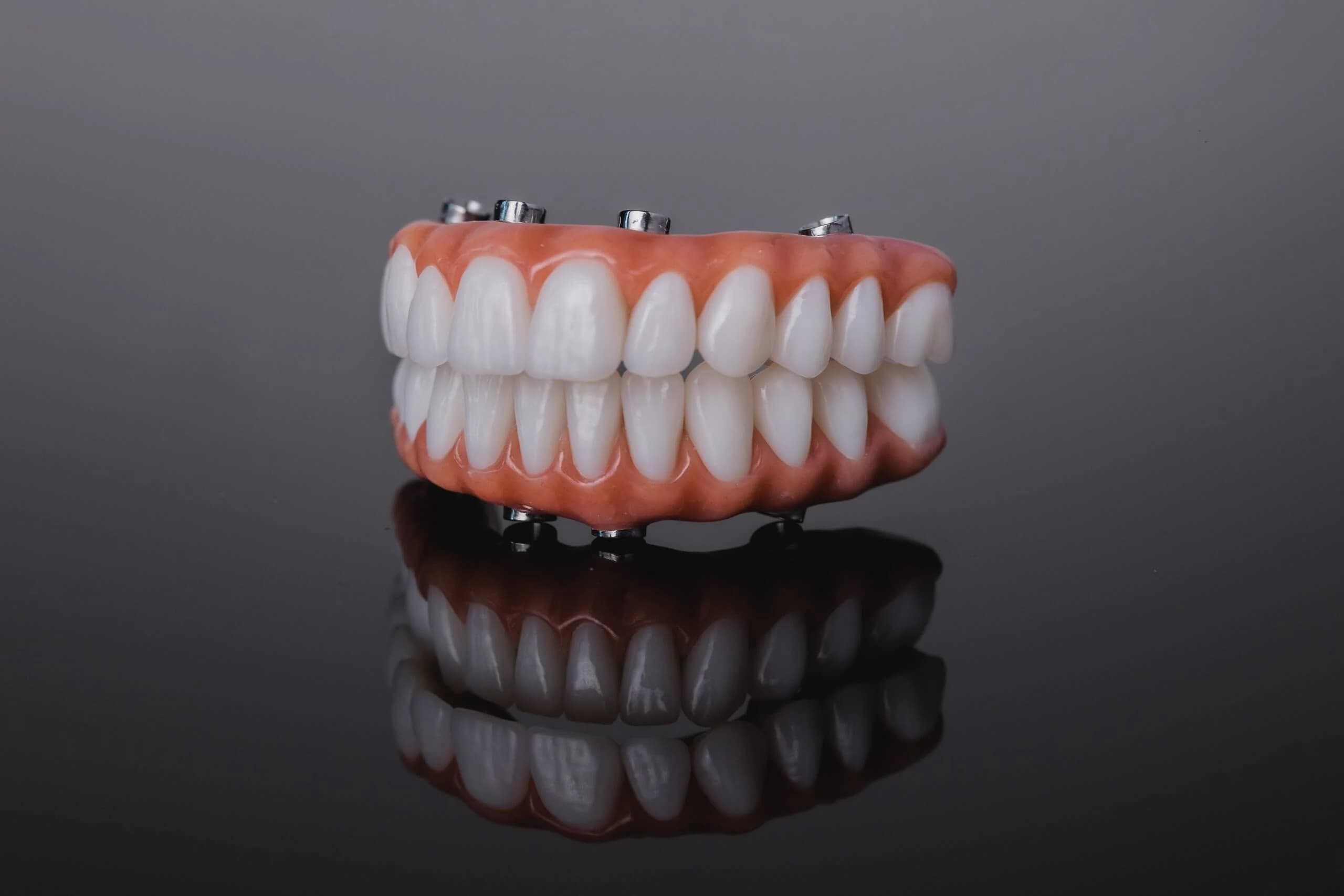
Acrylic remains the standard material for temporary teeth attached on the day of surgery, when the bite has to be forgiving while the implants integrate. As a final material, it can suit patients for whom the lower initial cost matters most, patients who value easy chairside repairs, and some cases where the space available for the bridge or the opposing teeth make a metal-reinforced acrylic design the more practical engineering choice. In one long-term series, metal frameworks opposing a removable denture did not fracture, while cantilevered frameworks opposing fixed teeth were at high risk.
An acrylic bridge is also not a permanent commitment. Many patients start with acrylic and move to zirconia later, when repairs accumulate or the teeth wear, usually on the same implants.
How we help you choose
The choice is made from measurements rather than preference alone. A 3D CBCT scan and bite records show how much vertical space is available, where the implants will be and how long any cantilever would be; the examination tells us whether you grind or clench and what the opposing teeth are. From that, Dr. Sam Jain — whose training in mechanical engineering shapes how bite forces are planned — and Dr. Arpana Gupta recommend a material and a design, and explain why.
Because our teeth are designed and milled in our own lab, full-arch patients typically receive their final custom-milled teeth in about 72 hours, and any later adjustment or remake happens in the building. You receive both options, where both are suitable, with their expected maintenance and costs in writing. You can book a consultation here.
Written and medically reviewed by Dr. Sam Jain, DMD, MS, and Dr. Arpana Gupta, DDS, MDS, who own this practice. Reviewed
This article is patient education, reviewed by Dr. Sam Jain, DMD, MS, and Dr. Arpana Gupta, DDS, MDS, and is not a substitute for an exam. Treatment recommendations are made only after an in-person consultation and 3D imaging.