Food Trapping Around Dental Implants: Beside an Implant Crown, Under an All-on-4 Bridge, and the Smell That Comes With It
Food caught around an implant is one of the most common complaints after treatment, and one of the least discussed beforehand. It happens for different reasons beside a single implant crown and under a full-arch bridge, and the fixes differ too. Here is what causes it, why it is worth fixing, and what actually works.

Written and medically reviewed by Dr. Sam Jain, DMD, MS, and Dr. Arpana Gupta, DDS, MDS
Published
In this article
- 1Two different problems behind the same complaint
- 2Beside an implant crown: the gap that opens with time
- 3Why trapped food matters beyond the annoyance
- 4Fixing food trapping beside an implant crown
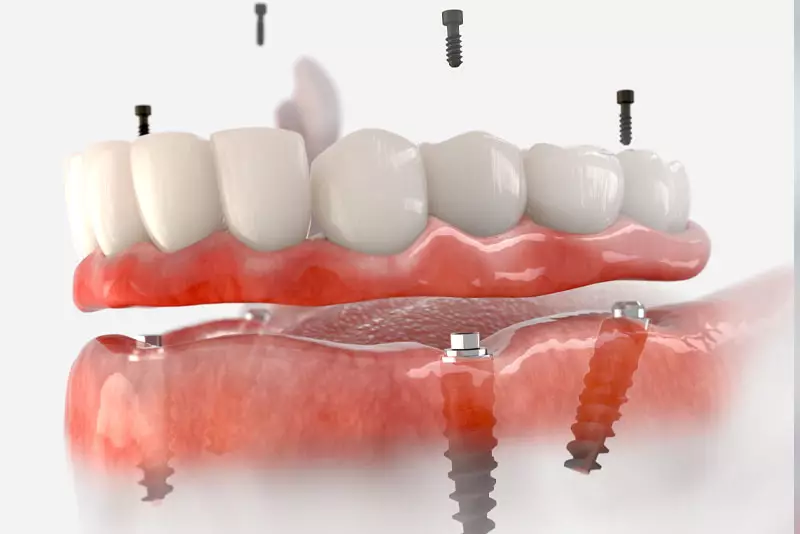
- 5Under a full-arch bridge: why food and odor collect
- 6Cleaning under an All-on-4 bridge
- 7When the bridge itself needs to change
- 8A bad smell that will not go away
- 9Bringing a food-trapping implant or bridge to us
Two different problems behind the same complaint
Beside a single implant crown, food usually packs into a gap that has opened between the crown and the neighboring natural tooth. Under a full-arch bridge such as an All-on-4, food and plaque collect in the space between the underside of the bridge and the gum, and the odor people notice usually comes from there. Both are common, both inflame the gum if they are ignored, and both have practical fixes, but they are not the same fix.
We described open contacts as one of the regrets patients raise most in our article on dental implant regrets. This article goes further into why they happen, what they do over time, and how both problems are solved.
Beside an implant crown: the gap that opens with time
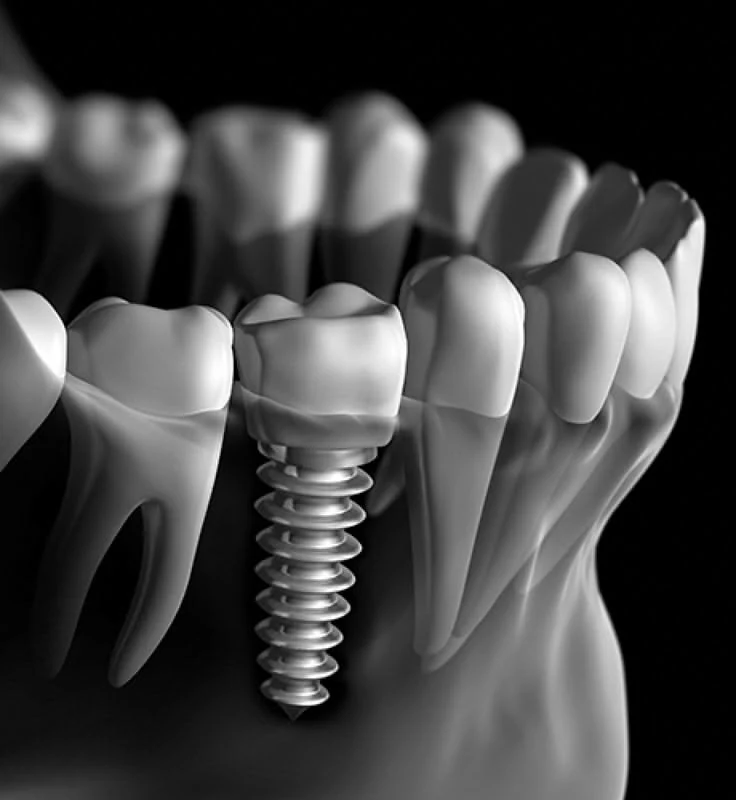
When an implant crown is delivered, it touches the teeth on either side. Months or years later, that contact often opens. In a study of 174 single implant crowns, an open contact with a neighboring tooth was found at 52.8% of them, most often on the side toward the front of the mouth, and slightly more often in the upper jaw. A 2025 study of 293 implants in the back of the mouth found a contact had opened at 30.7%, half of them within about 19 months, and teeth that already had small gaps between them were roughly three times more likely to develop one.
The reason is that natural teeth are not fixed in place. They drift slowly throughout life, generally toward the front of the mouth, while an implant fused to bone does not move. A review of the problem noted that it can appear as early as three months after the crown is placed, and suggested screw-retained crowns, so contacts can be corrected easily, and periodic checks.
Why trapped food matters beyond the annoyance
Food wedged against the gum causes local inflammation, bleeding and soreness, and repeatedly trapped food feeds the biofilm that drives inflammation around implants. The tooth next to the implant is also at risk. In a 2026 study of 445 implant restorations, decay was found on an adjacent tooth in 8.1% of cases, most often next to molar implants. A study of molar implants found decay on adjacent teeth in 7.4% of cases when the implant sat close to the neighboring tooth, but in 40% when the distance at the bone was 6 mm or more — a large, food-trapping space between an implant and a tooth.
The same 2026 study found decay on neighboring teeth was far more common when the crown was attached directly to the implant than when an intermediate abutment was used. Design choices made at the time of the crown therefore matter for the health of the teeth around it.
Fixing food trapping beside an implant crown
Cleaning comes first, because it protects the gum and the neighboring tooth while the contact is corrected. Floss catches some debris, but around implants a water flosser often works better: in a 30-day randomized trial, bleeding around implants decreased at 81.8% of implants in the water flosser group compared with 33.3% in the floss group. An interdental brush sized to the space is also effective.
The contact itself can usually be closed. On a screw-retained crown, the crown is removed, material is added to its side in the lab, and it is replaced — often in a short visit, and without the weeks an outside lab would add, because ours is in the building. When the gap is large, or the crown's shape makes the space under the contact hard to clean, remaking the crown with better contours is more reliable. Occasionally the neighboring tooth is the better place to add material, particularly if it needs a filling anyway. Because teeth keep moving, a retainer or night guard worn at night can help keep a corrected contact closed, and checking contacts is part of every maintenance visit.
Under a full-arch bridge: why food and odor collect
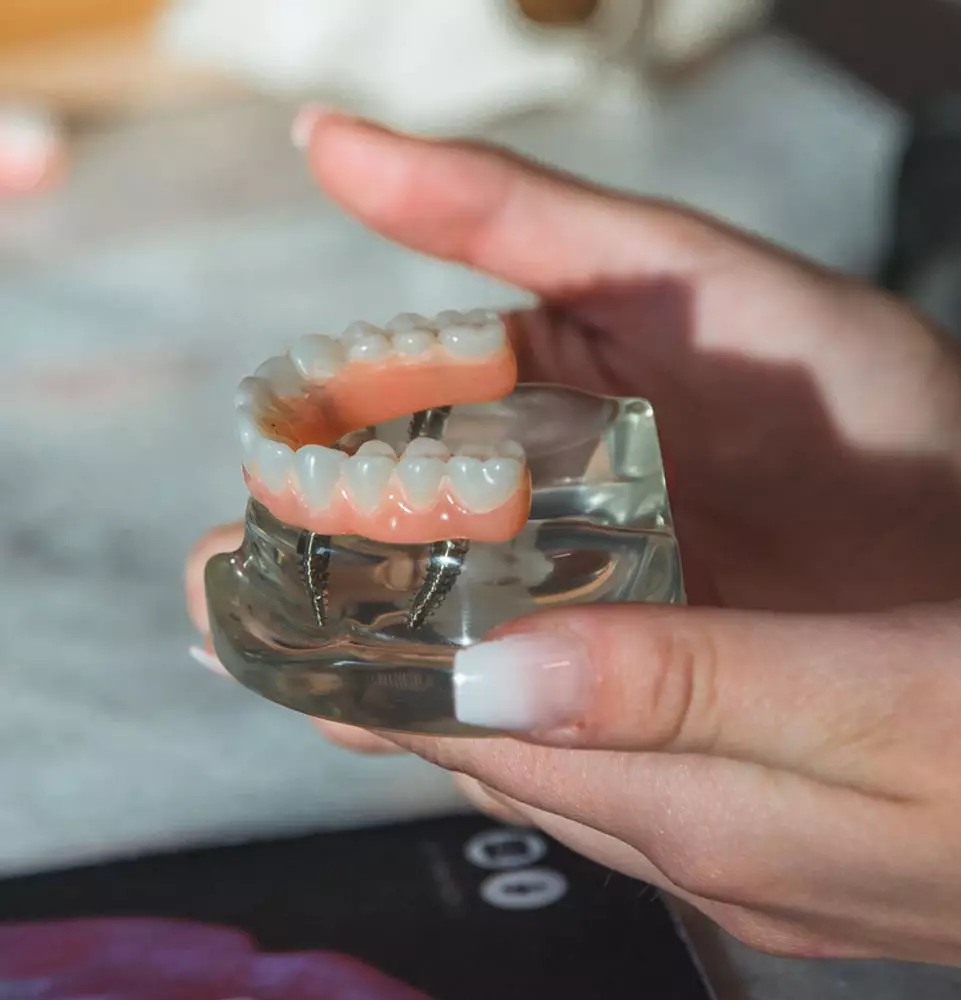
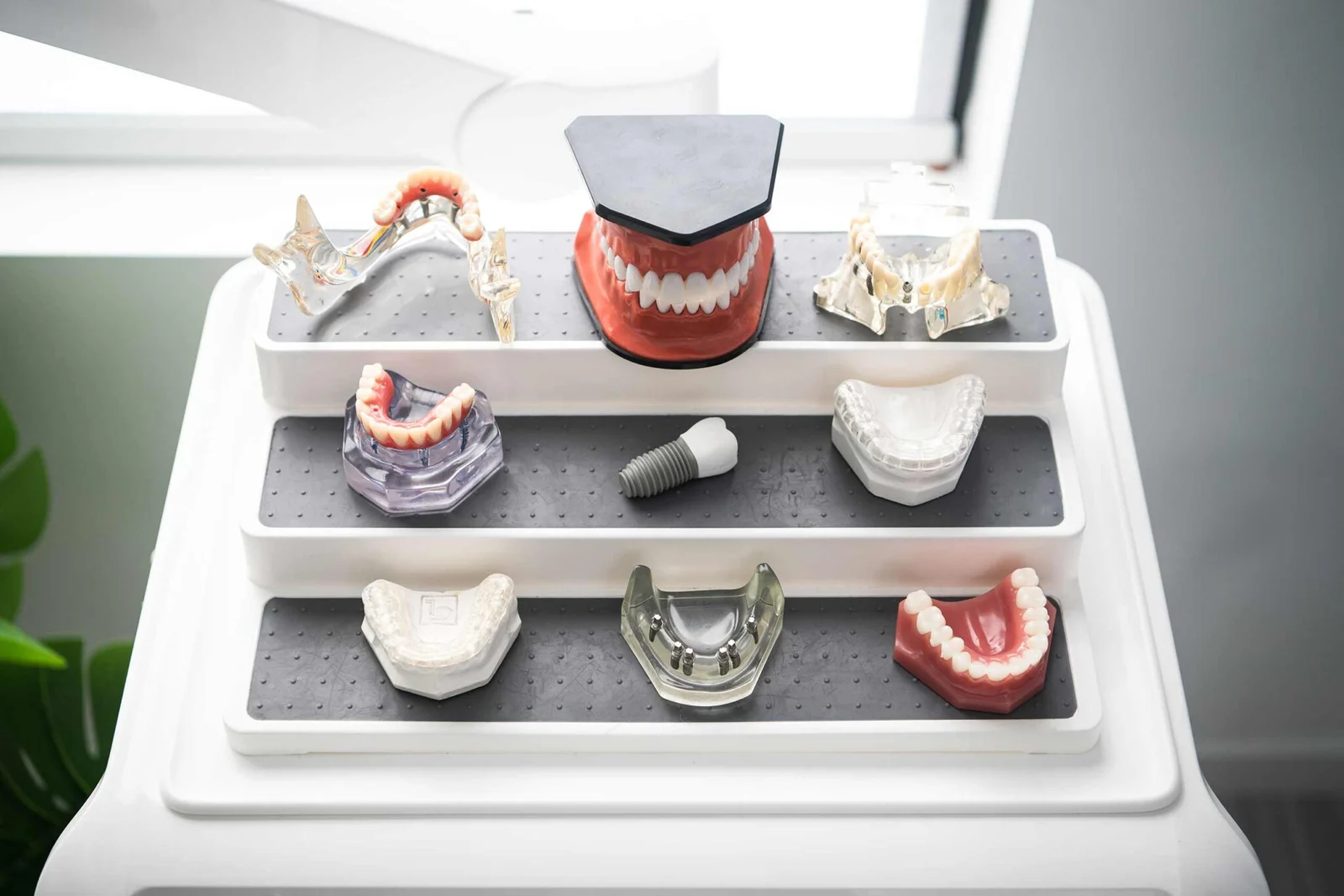
A fixed full-arch bridge has to leave some space between its underside and the gum so that the area can be cleaned, and that space is where food and plaque collect. How much collects depends heavily on the shape of the underside. In a study of 56 upper full-arch bridges on 388 implants, areas of the underside with a concave shape had abundant biofilm in 25.9% of cases compared with 14.3% for convex areas; abundant biofilm was associated with redness of the gum, and implants next to concave areas had more bone loss. Patients in that study were very satisfied with how their teeth looked and worked, but only 19.6% were fully satisfied with how easy they were to clean.
Over time, gum tissue can also overgrow toward the underside of a bridge that is hard to clean. A systematic review of fixed full-arch implant teeth found this overgrowth in 13.0% of bridges at five years and 26.0% at ten. The smell people describe under an All-on-4 is usually this combination of trapped food, biofilm and inflamed tissue in a space the brush does not reach.
Cleaning under an All-on-4 bridge
A daily routine that reaches the underside makes the biggest difference. A water flosser directed along the gum under the bridge, interdental brushes passed between the implants, and a single-tuft brush or threader floss for the areas behind the last implants are the usual combination; our article on cleaning All-on-4 implants walks through the tools and the technique.
Professional maintenance matters more for full arches than for single teeth, because some areas cannot be reached from the outside. At maintenance visits, the bridge can be removed when needed so the implants, the abutments and the underside of the bridge can be cleaned and inspected directly.
When the bridge itself needs to change
If food keeps collecting and odor keeps returning despite a good routine, the design is usually the problem: a concave or ridge-lapped underside that traps debris, gaps between the bridge and the gum where the tissue has shrunk, or tissue that has grown into contact with the bridge. Reshaping the underside so it is smooth and convex, and so a water flosser can sweep it, often solves the problem. When the bridge cannot be reshaped enough, a new bridge is designed around cleanability from the start.
Because we design and mill full-arch teeth in our own lab, the underside can be redesigned around the specific problem rather than copied from the original. Our article on All-on-4 bridge repair explains when reshaping is enough and when a new bridge is the better choice.
A bad smell that will not go away
Persistent odor is not always trapped food. It can also come from infection around an implant, especially if there is bleeding, swelling or pus, or from sources outside the mouth such as the sinuses or tonsils. If odor persists despite thorough cleaning under and around the teeth, the implants and restoration should be examined. Our article on bleeding, swelling or a bad taste around an implant explains which signs point to infection.
Bringing a food-trapping implant or bridge to us
Whether your implant crown or bridge was made here or elsewhere, we can examine it, check the contacts and the underside, and identify the cause. At a free consultation with a 3D scan, you receive a plain-language explanation and the options — cleaning changes, adjusting the contact, reshaping the bridge, or remaking a crown or bridge — with costs in writing. You can book here.
Written and medically reviewed by Dr. Sam Jain, DMD, MS, and Dr. Arpana Gupta, DDS, MDS, who own this practice. Reviewed
This article is patient education, reviewed by Dr. Sam Jain, DMD, MS, and Dr. Arpana Gupta, DDS, MDS, and is not a substitute for an exam. Treatment recommendations are made only after an in-person consultation and 3D imaging.