Wisdom Teeth Removal in Fremont: Complete Procedure Guide
What actually happens during a wisdom tooth extraction, why it doesn't have to hurt, and how to heal fast — explained plainly by Fremont surgeons who do this every week.
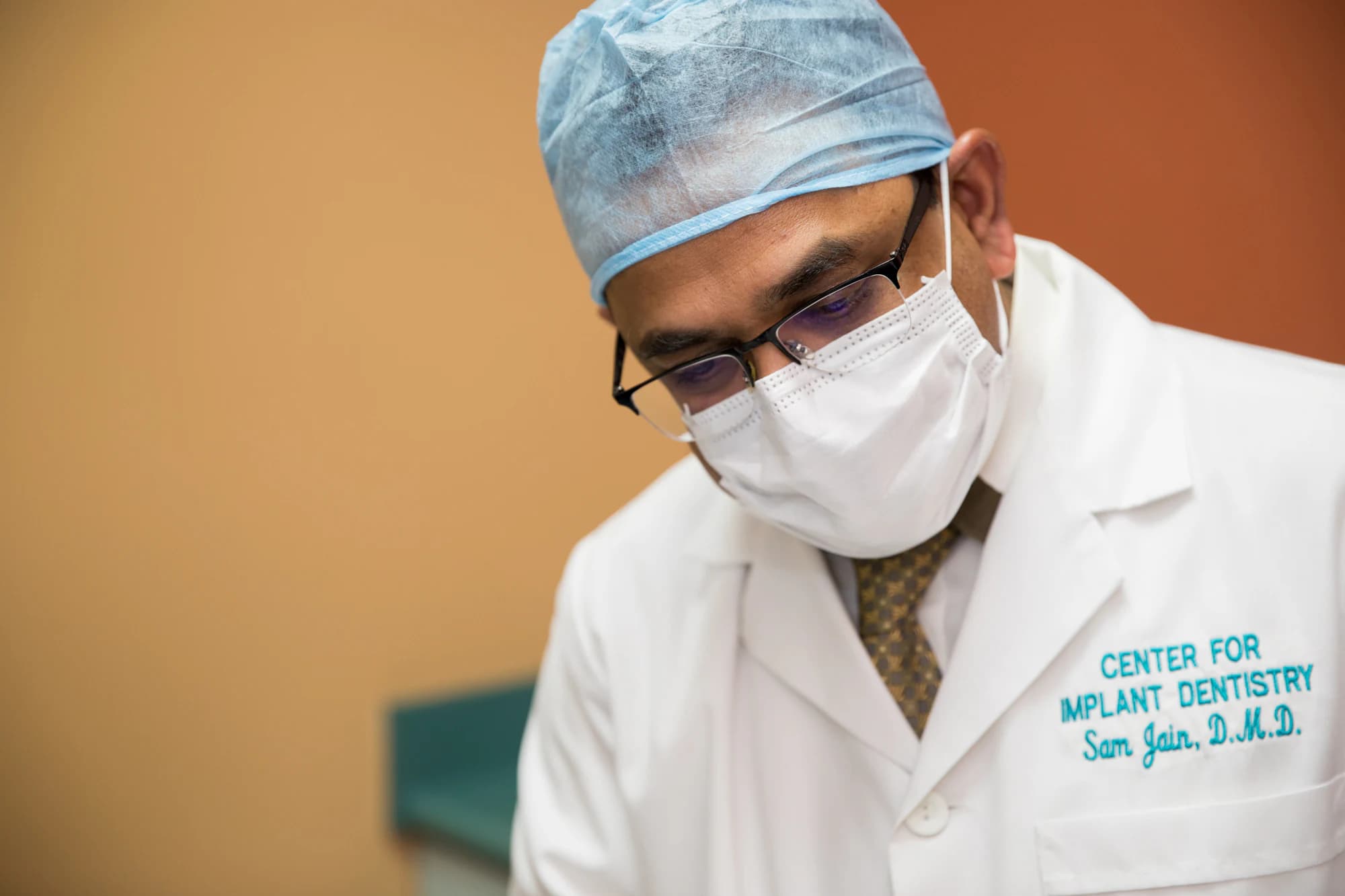

Written and medically reviewed by Dr. Sam Jain, DMD, MS, and Dr. Arpana Gupta, DDS, MDS
Published · Updated
The Short Version: What Wisdom Teeth Removal Actually Involves
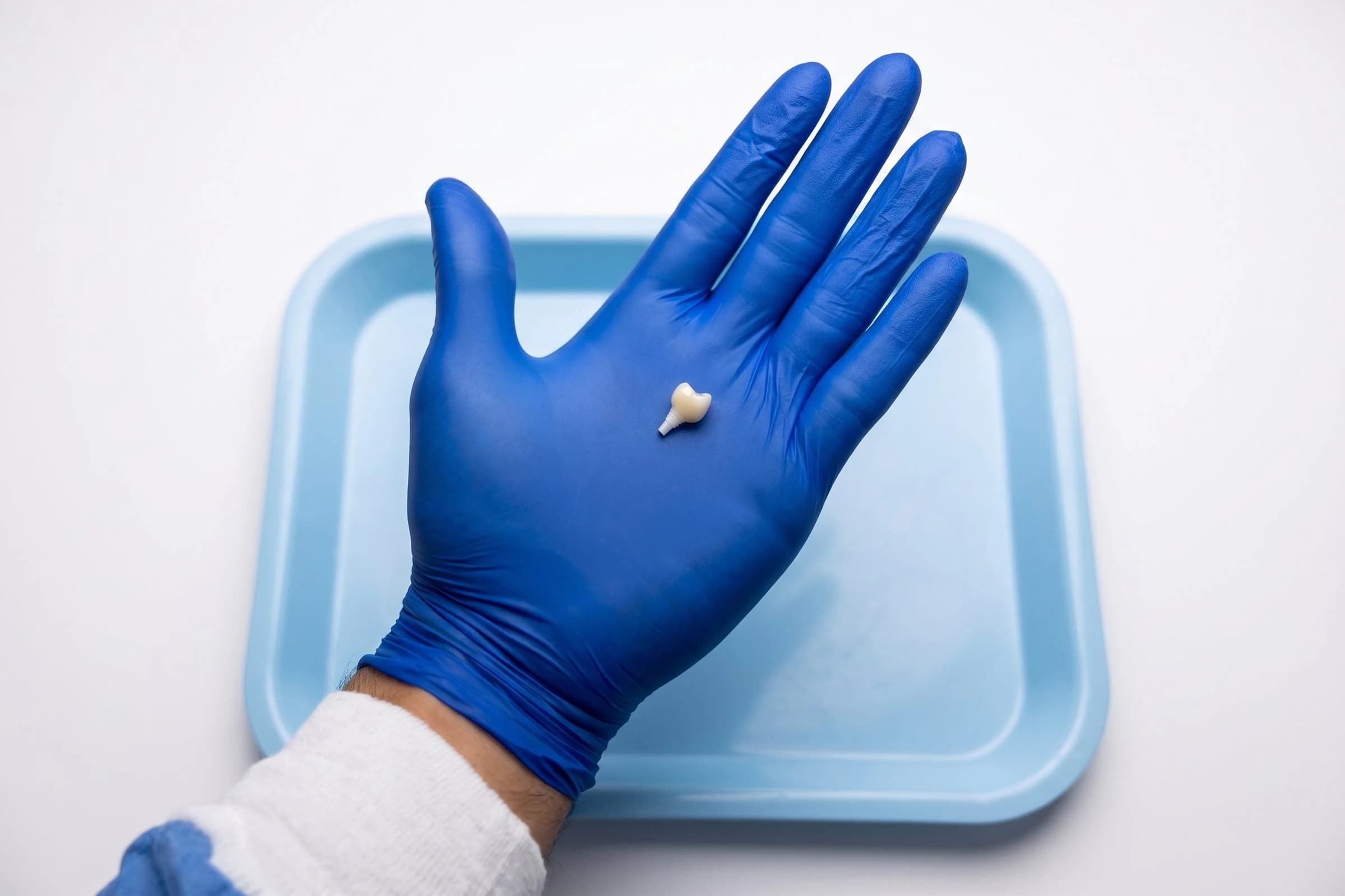
Wisdom teeth removal is a surgical extraction of one or more third molars — the last teeth at the back of your jaw. For a tooth that has erupted normally, it can be a quick lift-and-remove. For an impacted tooth still buried in gum or bone, the surgeon numbs the area, opens a small flap of gum to reach the tooth, sometimes removes a little bone over it, and often cuts the tooth into sections so each piece comes out through a smaller opening. The socket is cleaned, stitches go in if needed, and you bite on gauze to start a blood clot. Start to finish, a single tooth is often 20 to 40 minutes; all four together usually run under an hour.
Here is the part most pages skip: how hard the extraction is depends almost entirely on the tooth's angle and how much bone covers it — not on your pain tolerance or how long you wait. A fully erupted upper wisdom tooth can pop out in seconds. A horizontally impacted lower one, wrapped near the nerve, is a careful, deliberate procedure. A 3D scan tells us which one you're dealing with before we ever start, so there are no surprises mid-appointment.
We should be straight about our lane: the Center for Implant Dentistry is a dedicated implant surgical center, not a general dentist who occasionally pulls teeth. We do surgical and impacted extractions all the time, usually as the first step before placing an implant — sometimes in the same visit. If you're missing a wisdom tooth spot you'd never replace, that's simple. If you're losing a molar you'll want restored, our dental extractions and extraction with immediate implant pages explain how we handle both in one sitting.
What Your Comfort Actually Depends On
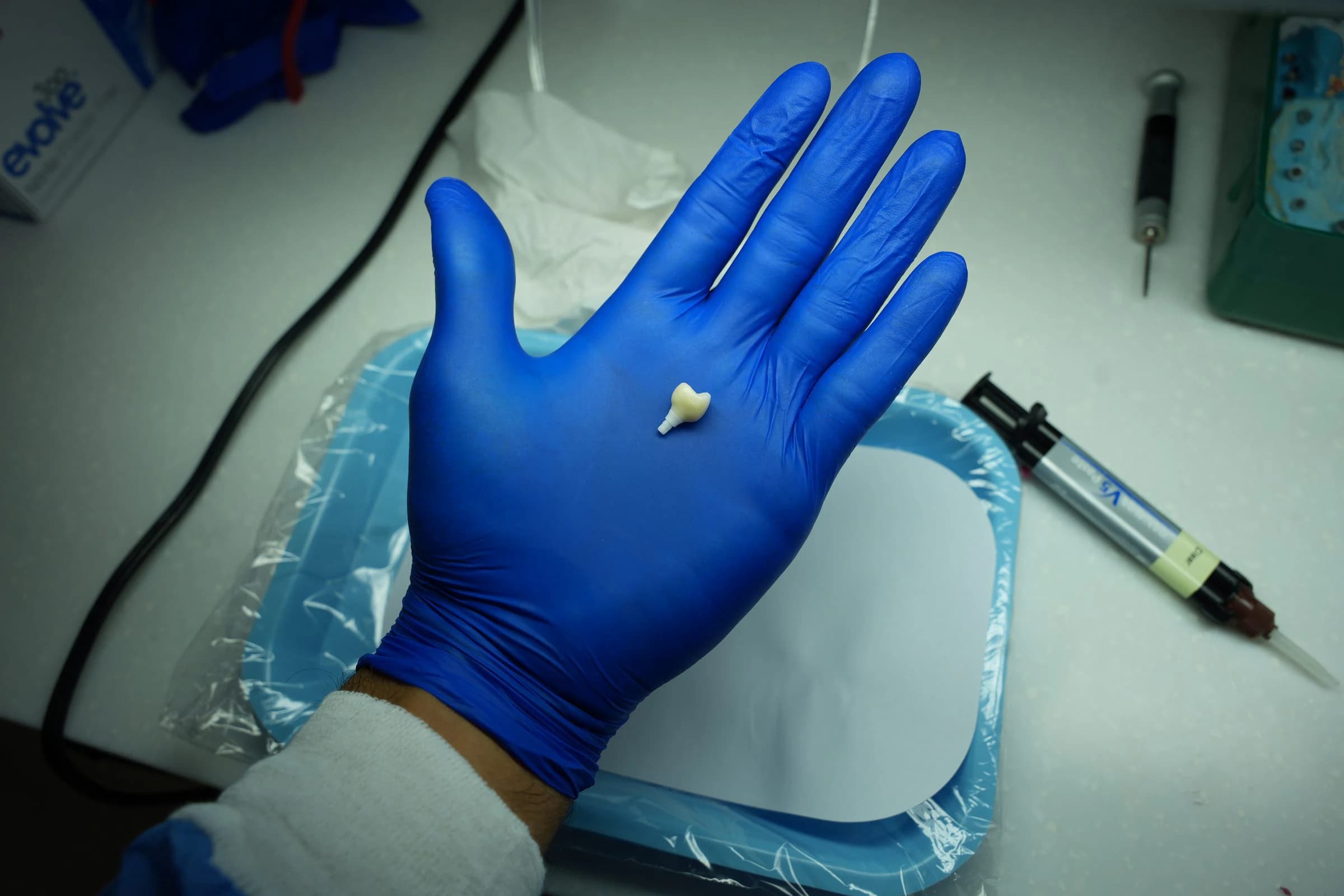
During the procedure, you should feel pressure and movement rather than pain. That's what local anesthetic is for, and for anxious patients or complex impactions we add IV sedation so you're relaxed, drowsy, and remember almost nothing of the appointment. Most sedation patients tell us the hardest part was deciding to come in. Our sedation dentistry page walks through the comfort options and who each one suits.
No one can promise you'll feel nothing. This is real surgery, and there's typically some soreness and swelling for a few days. What separates a smooth recovery from a rough one is largely surgical technique: a clean, atraumatic extraction that respects the bone and soft tissue heals faster and hurts less than a rushed one. Because the same surgeons plan and perform every case here — never a rotating fly-in provider — the person doing your extraction is accountable for how you feel the next morning.
For the great majority of patients, the discomfort after surgery is well controlled with a day or two of prescription-strength medication, then ordinary over-the-counter pain relievers. Ice, rest, and following the aftercare instructions do most of the heavy lifting. Your surgeon will confirm a plan built around your specific extraction, since a single erupted tooth and four deep impactions are not the same recovery.
Recovery: What the First Two Weeks Really Look Like
The first 72 hours have one job: protecting the blood clot in each socket. That clot is your body's bandage, and dislodging it exposes bone and nerve endings — the painful complication called dry socket. To keep it in place: no straws, no smoking or vaping, no vigorous spitting or rinsing, and no poking the area. Swelling usually peaks around day two or three, so cold packs on the cheek in the first day and gentle heat afterward help. Sleep with your head slightly elevated the first couple of nights.
Most people are through the worst of it in 72 hours and back to work or school within a few days, with the soft tissue largely healed by seven to ten days. Dry socket risk, when it happens, tends to show up around days three to five — so if your pain is clearly improving and then suddenly worsens near the end of that first week, call us rather than waiting it out. Eat soft, lukewarm foods at first (yogurt, eggs, soup, mashed potatoes), keep hydrated, and start gentle warm salt-water rinses only after the first 24 hours. Our post-op instructions lay out the day-by-day version you can keep on your phone.
A small note that matters if you're an implant patient: when a molar you'll want to replace is extracted, the timing of the socket's healing affects when — and how — the implant goes in. In many cases we can place an implant into the fresh socket the same day, preserving bone and skipping a second surgery. When bone has already been lost, a small bone graft at the time of extraction keeps the site ready. Your surgeon will tell you which path fits your case, and why.
Cost, Coverage, and Doing It Right the First Time
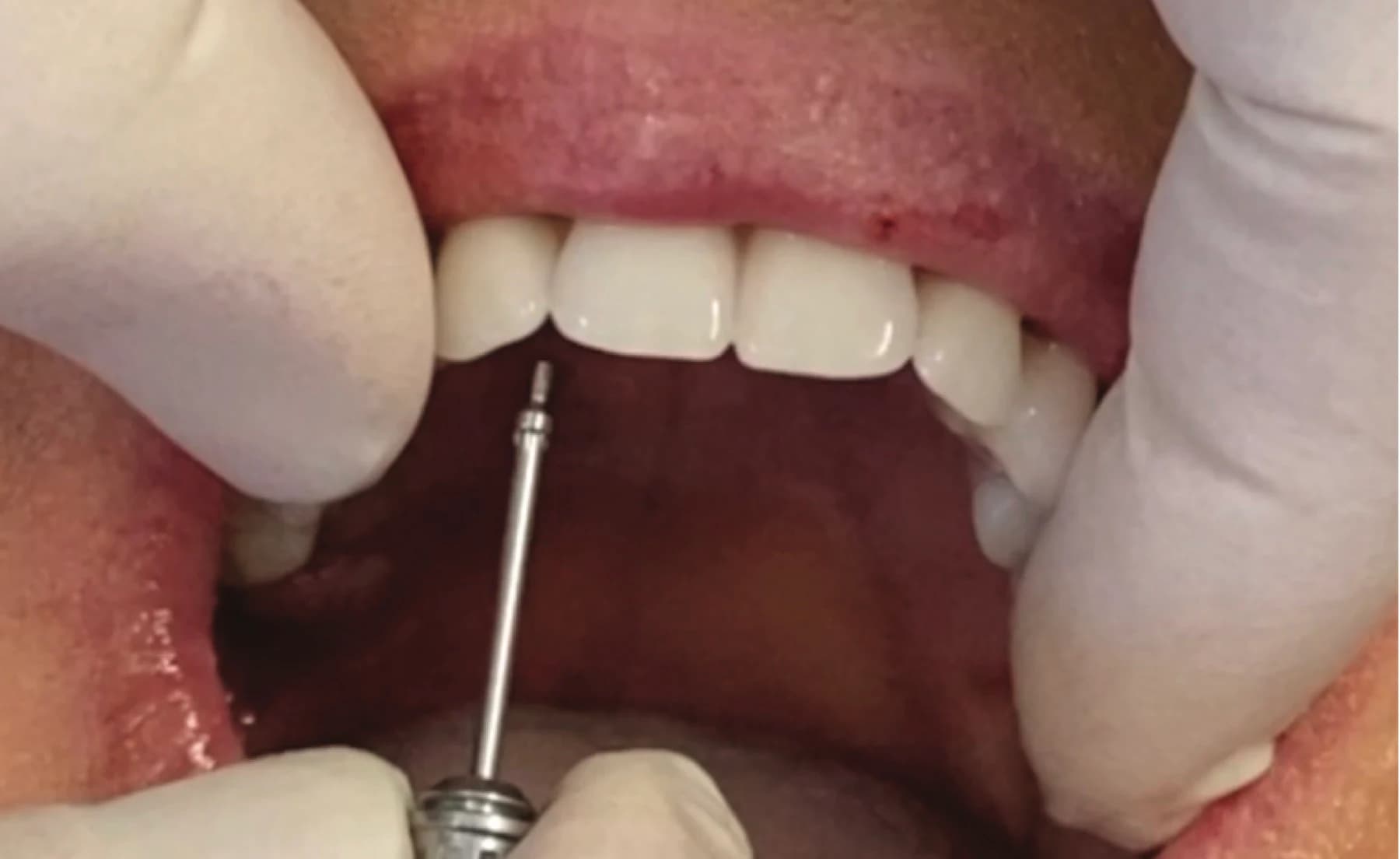
Wisdom tooth extraction cost depends on how many teeth, whether they're erupted or impacted, and whether you choose sedation — an impacted tooth requiring surgical removal costs more than a simple erupted one, and IV sedation is an add-on. Many PPO dental plans cover a meaningful share of medically indicated extractions. We're in-network with a range of PPOs including Delta, Aetna, Cigna, MetLife, Guardian, UnitedHealthcare, Anthem Blue Cross, and Blue Shield of California, and our team will run your benefits before treatment so the number isn't a mystery. We are not in-network with Medicare, Medi-Cal, or HMO plans.
The bigger financial question is usually what happens to the space afterward. Wisdom teeth generally don't need replacing, but the molars in front of them do the daily work of chewing — and if one is failing alongside the wisdom tooth, extracting both and planning the replacement together saves you a second procedure and a second recovery. Because we plan, place, and restore implants in-house with our own CAD/CAM zirconia mill, we can move from extraction to a final custom tooth far faster than the usual months of temporaries. See how the full workflow runs on our same-day dental implants page, and what drives pricing on the dental implant cost page.
If you're weighing whether to keep, extract, or replace a back tooth, the honest move is to look at it on a 3D scan first. Your consultation and CBCT scan here are free — a $499 value — and they turn guesswork into a clear plan. You can book a free consultation or read more about why families choose us for the cases other offices send elsewhere.
Written and medically reviewed by Dr. Sam Jain, DMD, MS, and Dr. Arpana Gupta, DDS, MDS, who own this practice.
This article is patient education, reviewed by Dr. Sam Jain, DMD, MS, and Dr. Arpana Gupta, DDS, MDS, and is not a substitute for an exam. Treatment recommendations are made only after an in-person consultation and 3D imaging.