Dental Implant Recovery Time & How to Heal Faster
Most of the visible healing after a single implant takes about a week; the bone fusing underneath takes a few months — here's the realistic timeline and how to help it along.
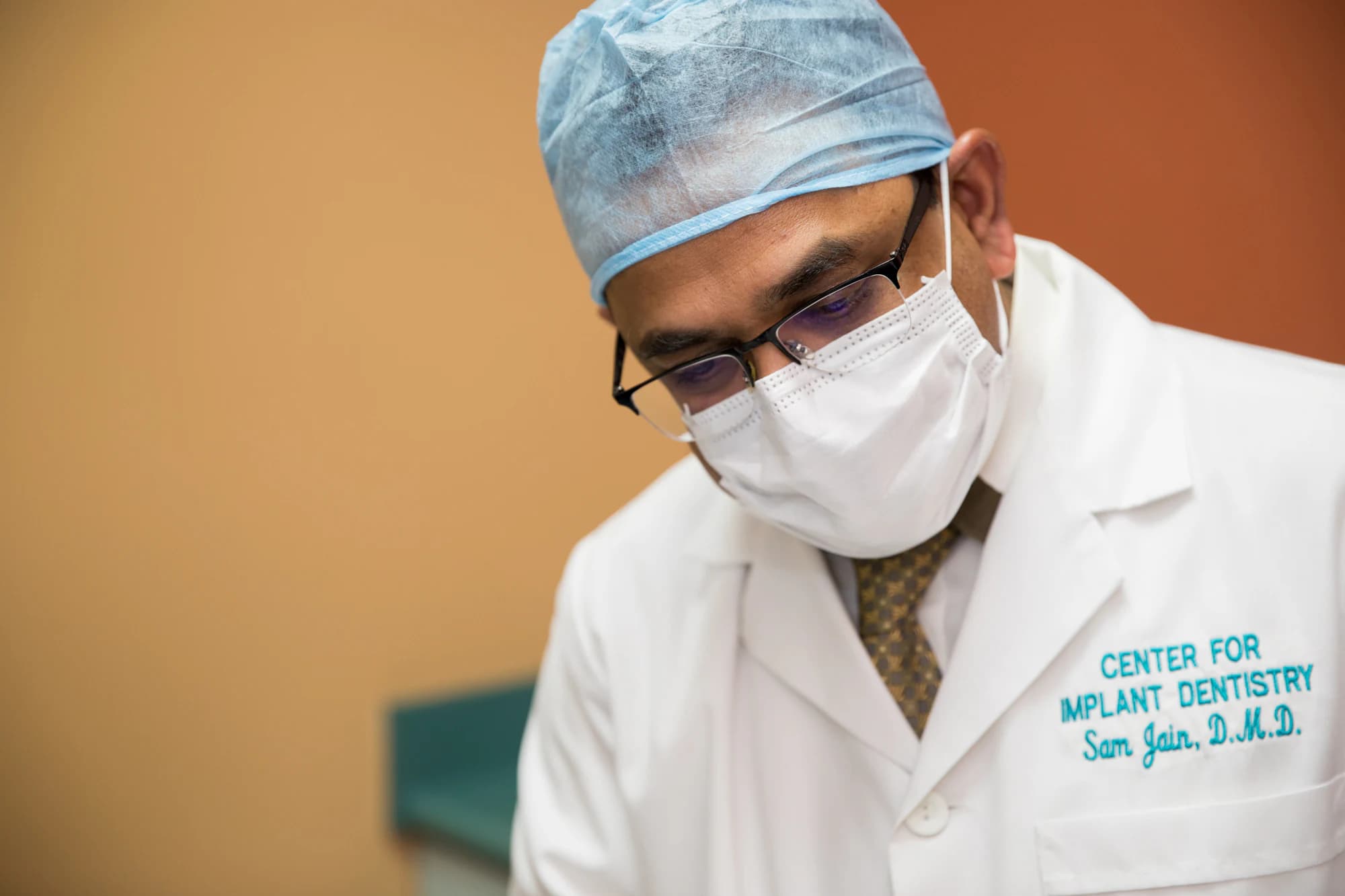

Written and medically reviewed by Dr. Sam Jain, DMD, MS, and Dr. Arpana Gupta, DDS, MDS
Published · Updated
Two Timelines, Not One
Recovery from a single dental implant runs on two clocks at once, and confusing them is where most of the worry comes from. The first clock is your gums and the surgical site healing over — the part you feel. For most people that settles in about a week: soreness and swelling peak around 48 to 72 hours, then fade, and by day seven you're usually back to work and normal life. The second clock is slower and invisible: the implant fusing to your jawbone, a process called osseointegration, which typically takes about three to four months in the denser lower jaw and four to six months in the softer upper jaw.
Here's the reassuring part most pages bury. You don't sit at home for those months. Once the gum tissue has calmed down — often within a week or two — you look and feel normal while the bone quietly does its work underneath. The waiting is real, but it's mostly happening below the surface. Your surgeon confirms the implant has integrated before attaching the final crown, because that fusion is what makes the tooth last.
One more thing worth saying plainly: a single-implant recovery is generally gentler than what people picture. This isn't full-arch surgery. It's one titanium post placed in one site, and for many patients it's less eventful than the tooth extraction that may have come before it.
Week One, Day by Day: What Normal Actually Feels Like
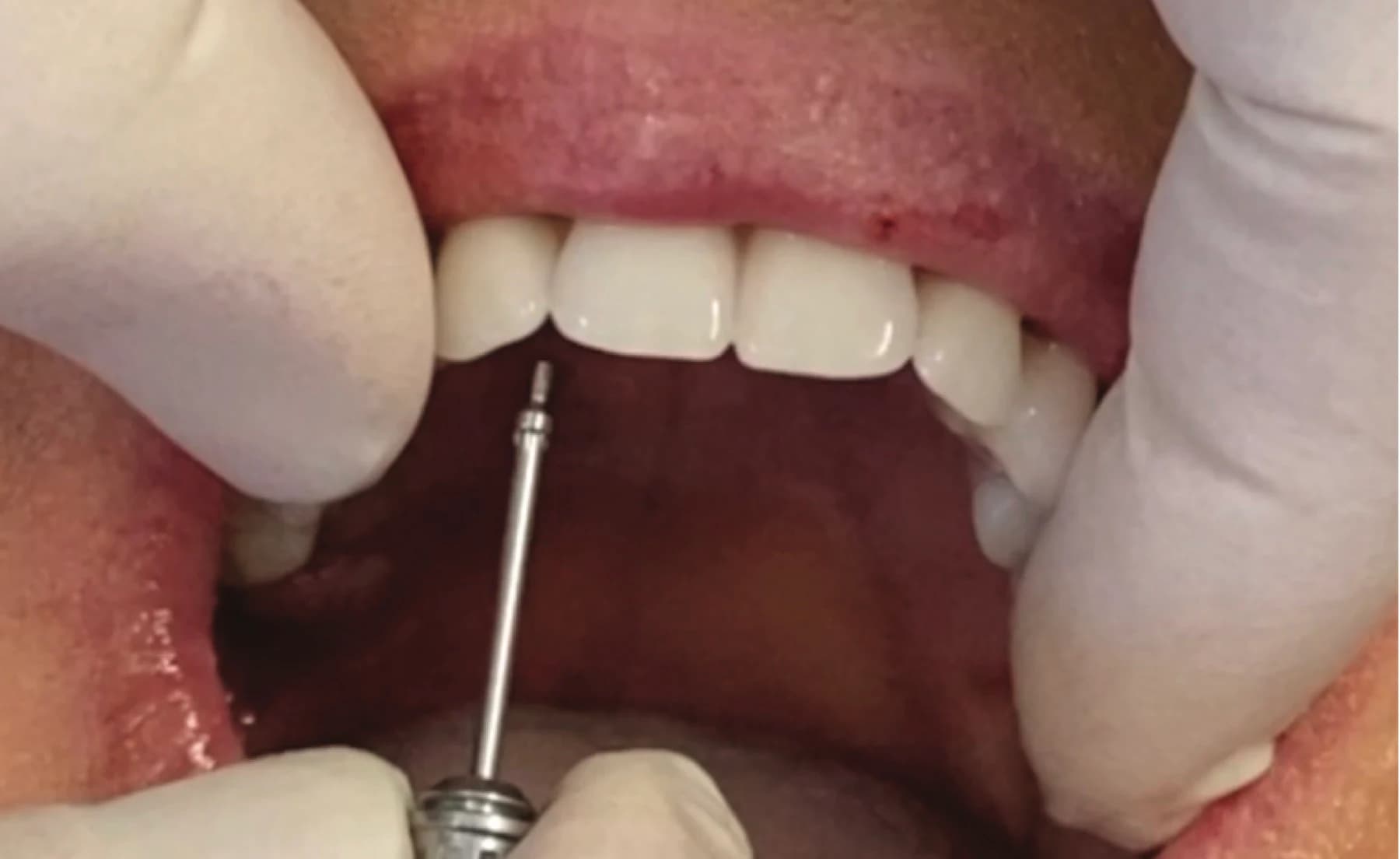
The first 24 to 48 hours are the peak. Expect some swelling, mild bleeding or oozing, and tenderness around the site. This is normal, not a complication. Ice packs — roughly 20 minutes on, 20 minutes off — genuinely help during the first two days, and keeping your head slightly elevated, even while sleeping, takes pressure off the area. Most single-implant patients manage the discomfort with over-the-counter pain relievers, sometimes with a short course of something stronger for the first day or two if your doctor prescribes it.
Swelling usually crests between the second and third day, then starts to recede — which surprises people who assume day three should feel worse. By the end of the first week, most of the visible healing is behind you. You'll eat soft foods during this stretch (smoothies, eggs, yogurt, well-cooked vegetables, soups that aren't hot), chew on the opposite side, and skip the straw, since suction can disturb the site. Our full post-op instructions walk through the hour-by-hour version, and every patient leaves with them in hand — not as a generic printout, but as part of the welcome package built around your case.
When to call rather than wait: swelling or pain that's climbing after day three instead of easing, bleeding that won't settle, or a fever. These are uncommon with a straightforward single implant, but knowing the line matters. Because the surgeons who place your implant are the same people you call — Dr. Sam Jain and Dr. Arpana Gupta, not an answering service routing you to a stranger — you get a real answer from someone who knows your mouth. If you want to understand the rare things that can go sideways and how they're handled, our page on implant complications is honest about it.
How to Speed Up Implant Recovery
You can't rush bone biology, but you can absolutely avoid slowing it down — and a handful of choices make a measurable difference. The single biggest one is not smoking. Nicotine constricts blood flow to the healing bone and gum, and it's one of the most common reasons an implant is slow to integrate or fails to at all. If you can pause for the first couple of weeks, and ideally longer, you're doing your implant a real favor. Right behind it: keep the site clean exactly as instructed (gentle rinsing, not vigorous swishing, in the early days), and take it easy on strenuous exercise for the first 48 to 72 hours, since a spiking heart rate can worsen swelling and bleeding.
The rest is unglamorous but effective. Follow the soft-food guidance instead of testing it early — chewing hard food on a fresh implant is exactly the wrong kind of stress. Stay hydrated, eat enough protein to give your body the raw material to heal, and take medications on the schedule you're given rather than waiting for pain to build. Manage the conditions that affect healing: well-controlled blood sugar heals better than uncontrolled diabetes, so if that's you, it's worth tightening up around your procedure. None of these are secrets — they're just the difference between a recovery that goes to plan and one that drags.
There's also a factor most patients never think about: how the implant was placed in the first place. A precisely positioned implant, seated with minimal trauma to the surrounding tissue, simply heals faster and more predictably than one placed by feel. That's the quiet argument for guided surgery. We plan every case on a free 3D CBCT scan and place implants with X-Guide and Navident EVO navigation, so the post goes exactly where the planning said it should — no oversized flaps, no guesswork, less tissue disruption to recover from. You can see how that technology works on our advanced dental technology page.
What Changes the Timeline — and When 'Recovery' Ends Early
Not every implant follows the textbook clock, and it's worth knowing why yours might differ. If you needed bone grafting or a sinus lift to build a foundation first, add healing time before or around the implant — the graft has to mature. Upper-jaw implants generally take a little longer than lower-jaw ones because the bone is less dense. Replacing several teeth rather than one doesn't necessarily mean a rougher recovery, but it's a bigger procedure; our page on multiple dental implants covers that specifically, and full-arch recovery is a different conversation altogether. Your age, general health, and how closely you follow aftercare all nudge the number, which is why your doctor gives you a timeline built on your scan rather than a brochure average.
For the right candidate, part of the wait can disappear on day one. With immediate or same-day placement, a tooth can go in the same visit as the implant — the bone still integrates over the following months, but you don't leave with a gap. Whether that's an option for you depends on your bone and bite, and it's decided from your 3D scan; our same-day dental implants page explains who qualifies. If the surgery itself is what you're dreading, IV sedation means you sleep through it and remember little, which also tends to make the first day feel easier.
The honest bottom line: a single implant is a short recovery wrapped around a longer, mostly silent healing process, and the odds are strongly in your favor — long-term implant survival commonly runs around 95% over ten years. What tilts those odds is precise placement and steady aftercare, both of which are within reach. If you're still weighing whether an implant is the right move at all, our comparison of implants versus dentures is a useful next read — and the consultation and 3D scan are free, so you can get a real timeline for your own mouth before you commit to anything.
Written and medically reviewed by Dr. Sam Jain, DMD, MS, and Dr. Arpana Gupta, DDS, MDS, who own this practice.
This article is patient education, reviewed by Dr. Sam Jain, DMD, MS, and Dr. Arpana Gupta, DDS, MDS, and is not a substitute for an exam. Treatment recommendations are made only after an in-person consultation and 3D imaging.