How to Choose the Best Dental Implant Dentist
The single most important choice you make isn't the brand of implant or the type of arch — it's the person planning, placing, and restoring it, and here's how to judge that.
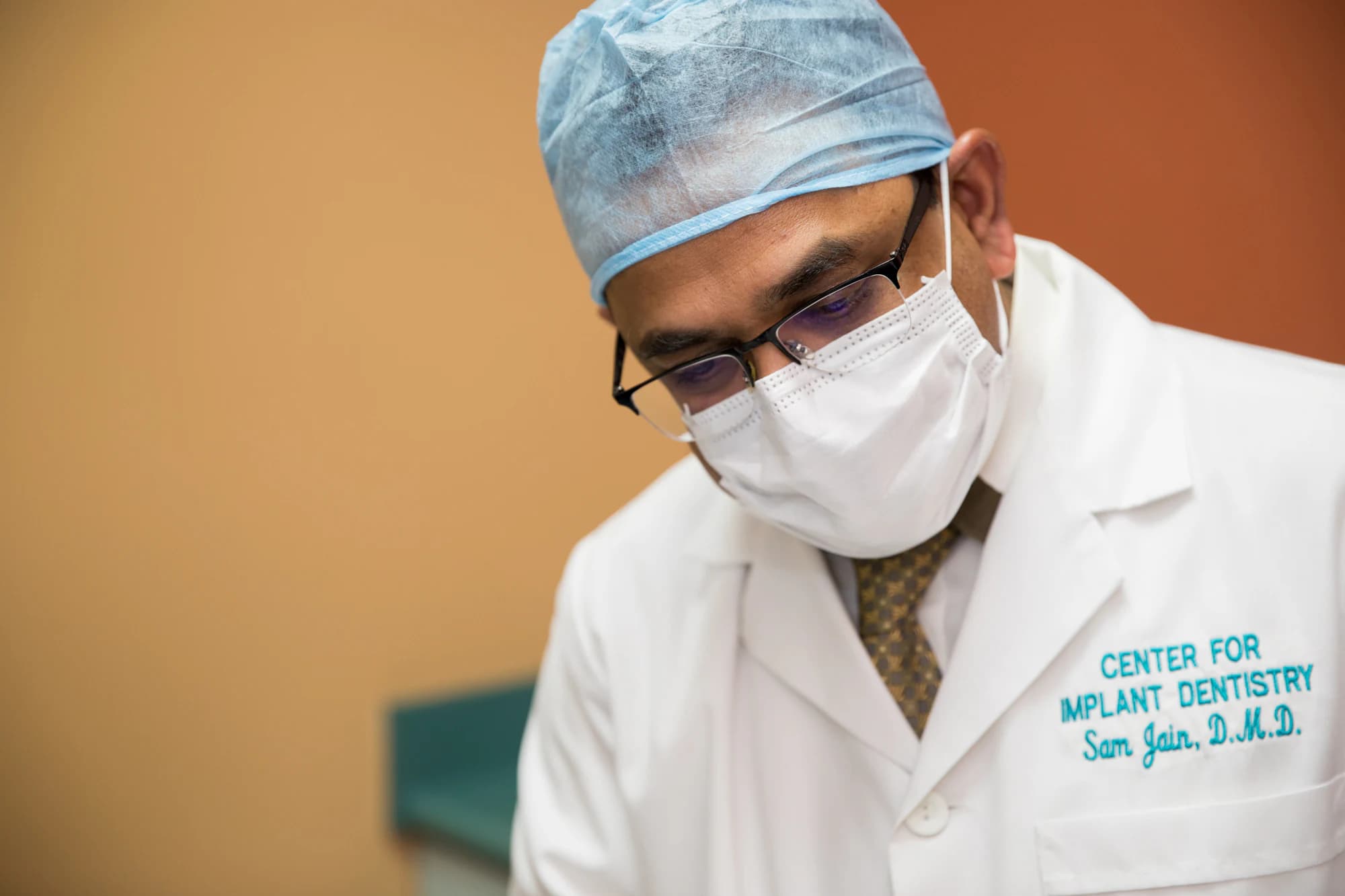
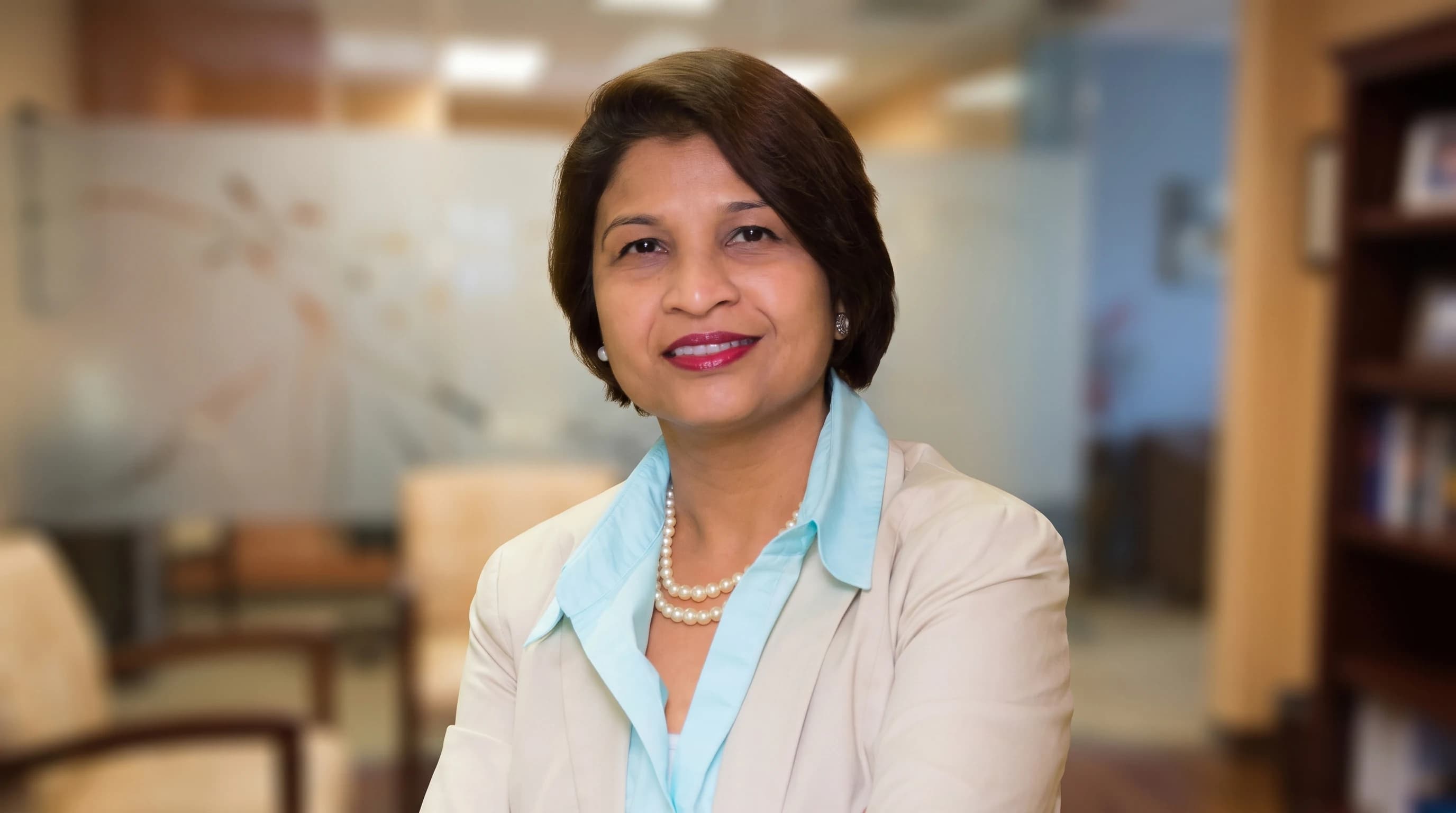
Written and medically reviewed by Dr. Sam Jain, DMD, MS, and Dr. Arpana Gupta, DDS, MDS
Published · Updated
Find Someone Who Does Only This — and Does the Whole Case
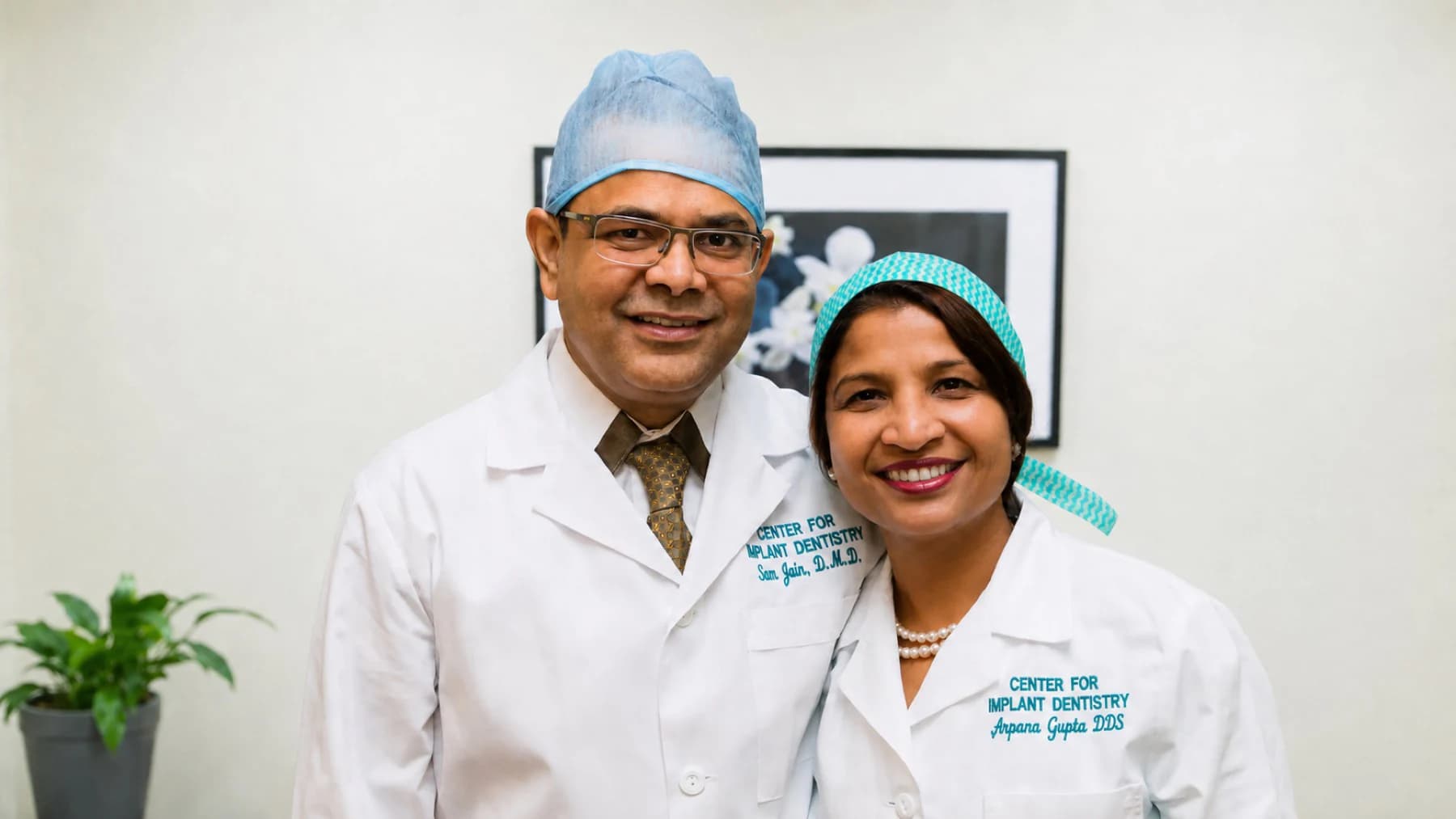
The best dental implant dentist is the one who plans, surgically places, and then restores your implants — the same person, start to finish — and who does implant work as their focus rather than as one service among fillings and cleanings. That single test filters out most of the risk. When one experienced clinician owns the entire case, nobody hands your bite off halfway through, and there's no gap between the surgeon who set the angle and the person who has to make teeth fit on it.
Two things matter more than the logos on the wall: how often this person does implants, and whether they stay with you from the 3D scan to the final tooth. A high-volume implant surgeon has seen the odd anatomy, the tricky bite, and the rescue case, and has a plan for each. Ask directly how many implants they place a year and who restores the case. If the answer is that a traveling "fly-in" surgeon places and then leaves, keep looking.
At the Center for Implant Dentistry, that's the whole model. Dr. Sam Jain (DMD, with an MS in mechanical engineering) and Dr. Arpana Gupta (DDS, MDS in endodontics) — a married team, both ICOI Masters — personally plan, place, and restore every case themselves. It's an implants-only center, family-owned in Fremont and San Francisco since 2008, with 15,000+ patients treated. No fly-in surgeons, no handoffs.
Credentials That Actually Mean Something
Any licensed dentist can legally place an implant, so titles are where people get lost. Focus on training and experience, not just the letters. Look for advanced implant credentials — ICOI (International Congress of Oral Implantologists) Master or Fellow status, for example — which reflect documented case volume and continuing surgical education, not a weekend course. A surgeon comfortable with the hard cases has usually earned recognition beyond a basic license.
The more revealing credential is what a practice will take on. A center that handles severe bone loss, bone grafting, and zygomatic implants — the long implants anchored in the cheekbone for jaws with almost no usable bone — is operating at a level most general offices refer out. So is one that will rescue a failed implant placed somewhere else. If a practice does the cases others send away, that tells you more than any brochure.
Reviews are the last honest signal, read the right way. Volume and consistency matter more than a perfect average; look for specific stories about full-arch results, comfort, and follow-through. Our own record is a 4.9-star Google rating and 600+ reviews across Google and Yelp — but read the reviews themselves, not just the number, wherever you're comparing offices.
Technology and Workflow: Why 'Under One Roof' Changes Your Result
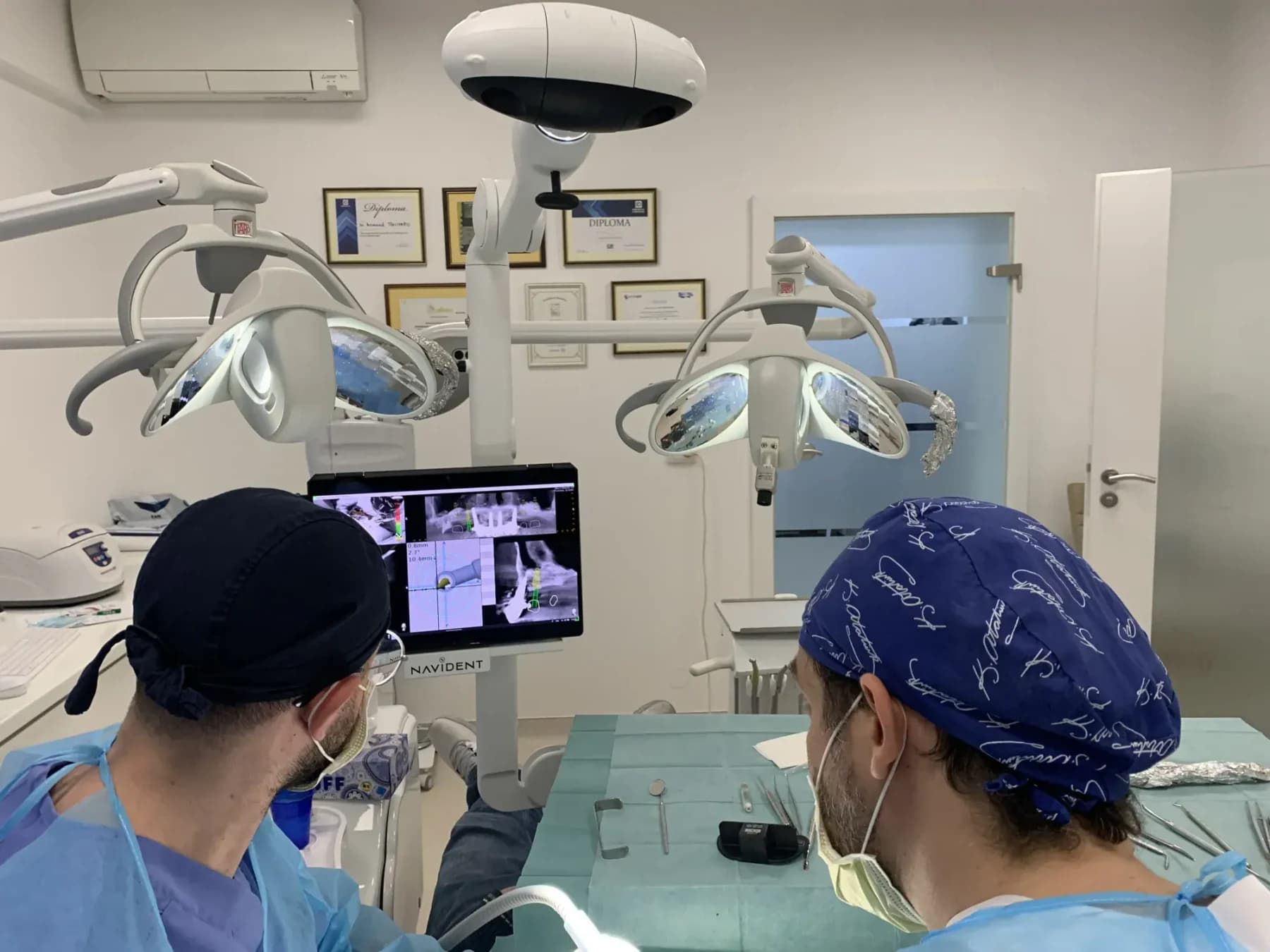
A great implant result is planned before a single incision. That planning starts with a 3D CBCT scan, which measures your bone in three dimensions so the surgeon can place each implant into solid bone and around nerves and sinuses — instead of guessing from a flat X-ray. Ask whether the office has its own CBCT and whether they use guided surgery. We plan with a free 3D CBCT and place using X-Guide and Navident EVO navigation, which keeps the drill on the plan in real time. You can see the equipment on our advanced technology page.
The bigger differentiator is where your final teeth are made. Many offices place implants, then send impressions to an outside lab and put you in temporary acrylic for six to eight months while you wait. We run an in-house CAD/CAM zirconia mill, so final custom-milled teeth come back in roughly 24 hours for qualifying single or multiple implants and about 72 hours for a full arch — not half a year of provisional plastic. That's the point of same-day dental implants done properly: everything from scan to sedation to the finished tooth sits under one roof.
One roof also means comfort and complex cases are handled in-house. IV sedation is available for anxious patients or longer surgeries, and for heavy bites Dr. Jain — drawing on his engineering background — developed the All-on-8 Robust protocol, which distributes bite force across more supports. When one team controls planning, surgery, restoration, and milling, fewer variables get lost in the handoffs between separate offices.
Cost, Insurance, and the Questions to Ask at the Consultation
Price matters, but the cheapest quote and the most expensive one rarely tell you much on their own. What you want is a clear, itemized plan — implants, any grafting, the final restoration, sedation — so you can compare like with like. Roughly 92% of full-arch patients finance through options like Cherry, CareCredit, Proceed, or Happen Bank. We're in-network with many PPO plans — Delta, Aetna, Cigna, MetLife, Guardian, UnitedHealthcare, Anthem Blue Cross, Blue Shield of California, and more — though not Medicare, Medi-Cal, or HMO plans. Our cost breakdown explains what actually moves your number.
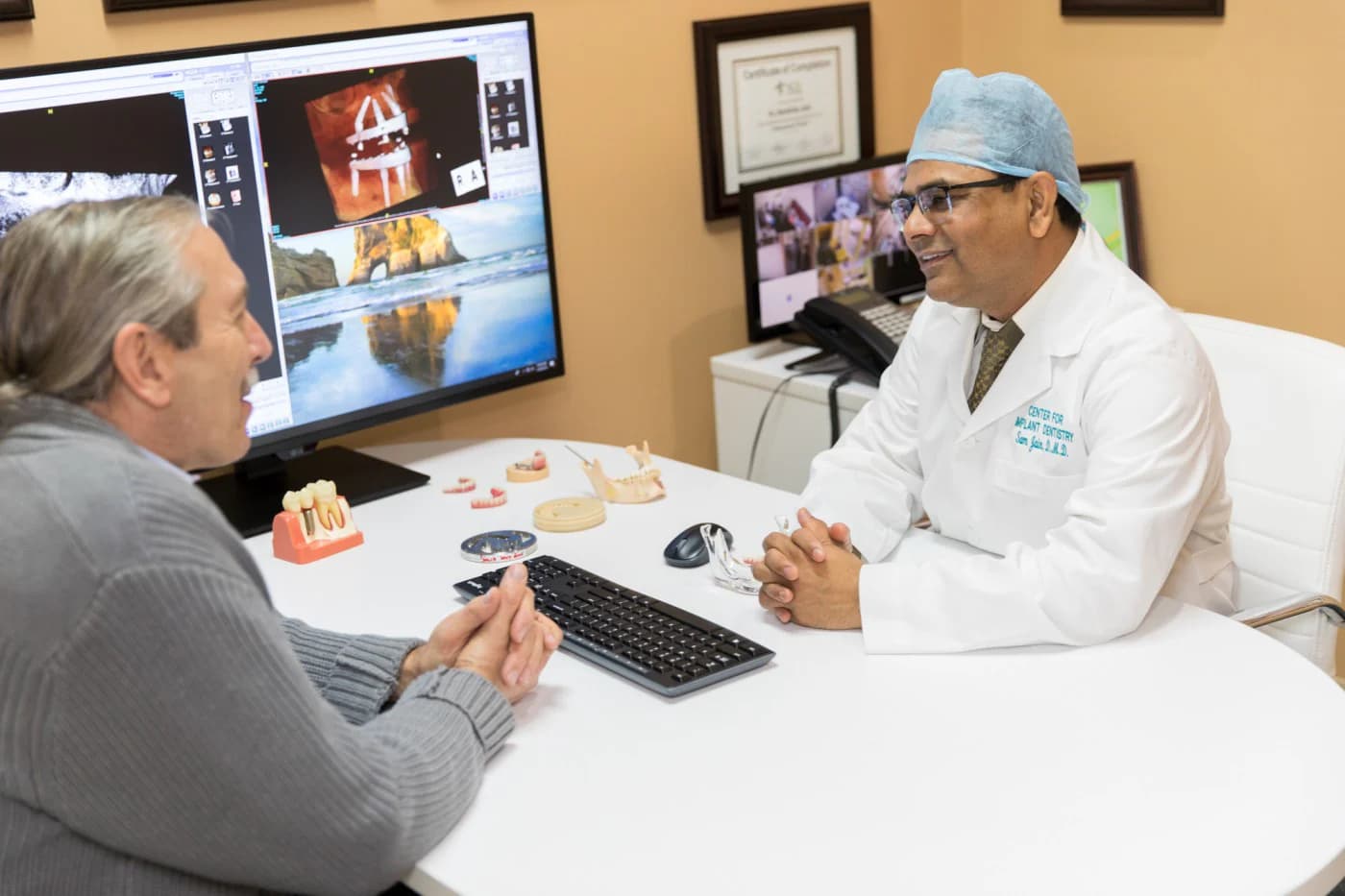
Use the consultation as an interview, and bring a short list. Who places the implants, and who restores them — the same person? How many implants do you place a year? Do you have your own CBCT and guided surgery? Will I wear temporaries for months, or get final teeth in days? Do you handle bone grafting and failed implants in-house, or refer them out? What happens if something goes wrong later, and who do I call? A confident implant specialist answers all of these plainly, with your scan on the screen.
The last question a good consultation answers is whether you're even a candidate — and more people qualify than expect to. Our candidacy page covers what genuinely rules people in or out, and the why choose us page lays out the full model. When you're ready, the free consultation and 3D scan are a $499 value at no cost, and the welcome package explains what to expect on your first visit.
Written and medically reviewed by Dr. Sam Jain, DMD, MS, and Dr. Arpana Gupta, DDS, MDS, who own this practice.
This article is patient education, reviewed by Dr. Sam Jain, DMD, MS, and Dr. Arpana Gupta, DDS, MDS, and is not a substitute for an exam. Treatment recommendations are made only after an in-person consultation and 3D imaging.