What to Look for When Choosing a Dental Clinic
The right dentist matters, but so does the practice behind them — here's how to judge a clinic as an organization: its people, its equipment, and how a case actually moves through the building.
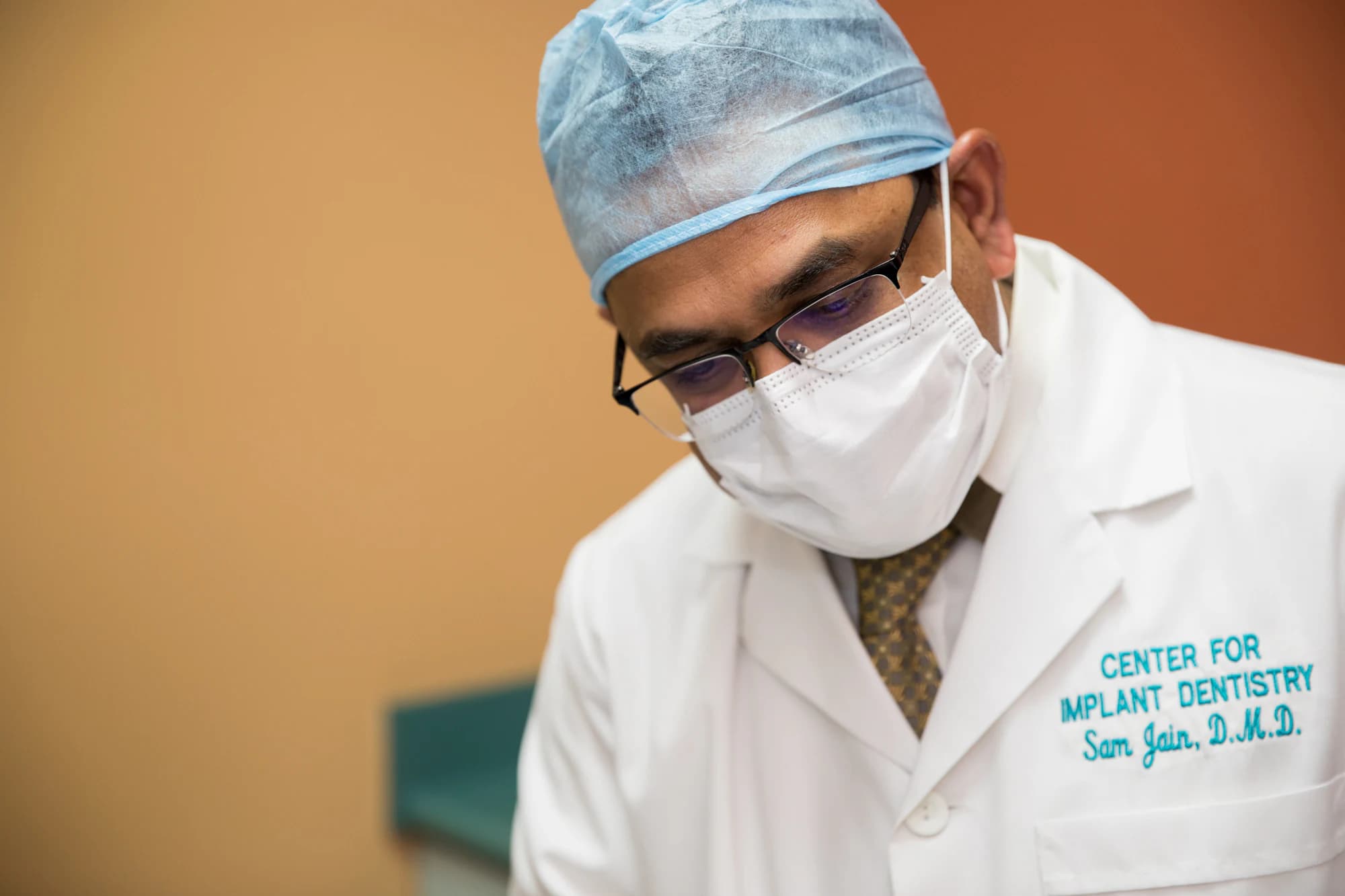
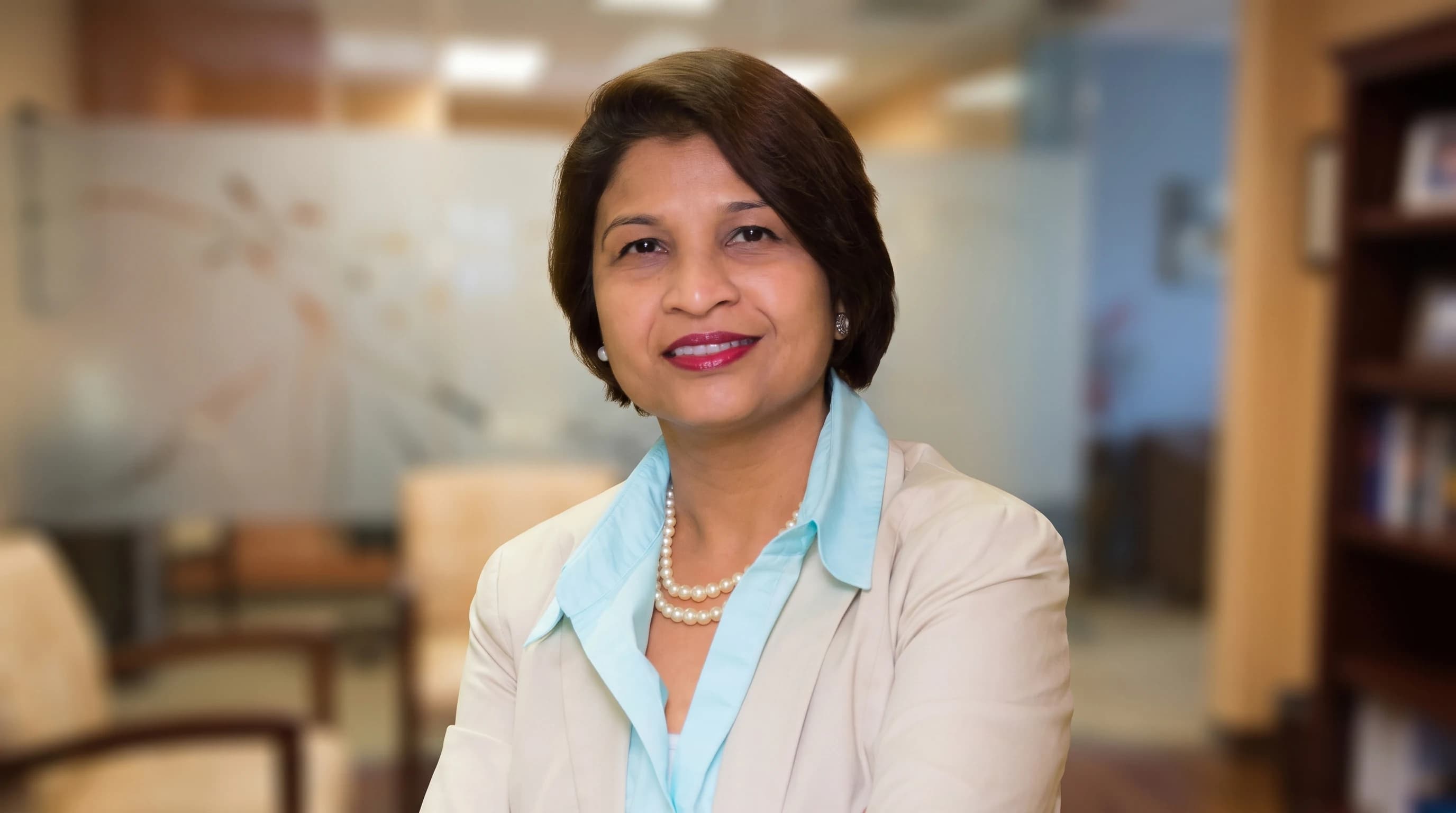
Written and medically reviewed by Dr. Sam Jain, DMD, MS, and Dr. Arpana Gupta, DDS, MDS
Published · Updated
The Fast Answer: What Separates a Good Clinic From an Average One
If you only remember one thing, remember this: look at how much of your treatment happens inside the same building, under the same team. A great dental clinic controls its own planning, surgery, sedation, and lab work rather than outsourcing pieces to strangers you never meet. When one team owns the whole chain — the scan, the surgical plan, the placement, the final teeth — fewer things get lost in the handoff, and there's one clear owner if something needs fixing.
Beyond that, four things tell you most of what you need to know: the credentials and continuity of the people (do the same doctors plan and finish your case?), the diagnostic technology (is there real 3D imaging on site, or just flat X-rays?), the physical facilities (a proper surgical suite, sedation, an on-site lab), and how transparent the practice is about cost and coverage before you commit. A clinic that scores well on all four is usually a safe place to be treated. One that's vague on any of them deserves a few more questions before you book.
For a procedure as permanent as dental implants, the clinic you pick is a bigger decision than most people treat it as. You're not buying a cleaning — you're choosing the organization that will plan, place, and stand behind hardware meant to last decades. It's worth an hour of scrutiny.

The People: Who Actually Plans, Places, and Finishes Your Case
Start with the humans, because they matter more than the logo on the door. The question that cuts through most marketing is simple: will the same doctor who plans my case also perform the surgery and restore the final teeth? At a lot of clinics the answer is no. Some large groups bring in a traveling implant surgeon for a day, place the implants, and hand you back to a different dentist for everything after — so no single person owns your result. That fragmentation is where accountability tends to disappear.
Look for continuity and real credentials. In implant dentistry, designations like ICOI Master (International Congress of Oral Implantologists) signal years of documented surgical work and continuing education, not a weekend course. At our center, Dr. Sam Jain — who holds a DMD plus a master's in mechanical engineering — and Dr. Arpana Gupta, a DDS with a master's in endodontics, are both ICOI Masters, and they personally plan, place, and restore every case. There are no fly-in surgeons. That's also why a family-owned practice often behaves differently from a private-equity chain: the owners are the ones treating you, and their name is on the outcome. You can read more about that on our why choose us page.
One more test of a serious clinic: does it take the hard cases, or only the easy ones? Practices that routinely handle failed implants placed elsewhere, severe bone loss, or zygomatic implants for jaws with almost no bone have depth an average office doesn't. You want that depth even if your case is straightforward — it means the team has seen the complications before they happen to you.
The Building and the Technology: What's Actually Under One Roof
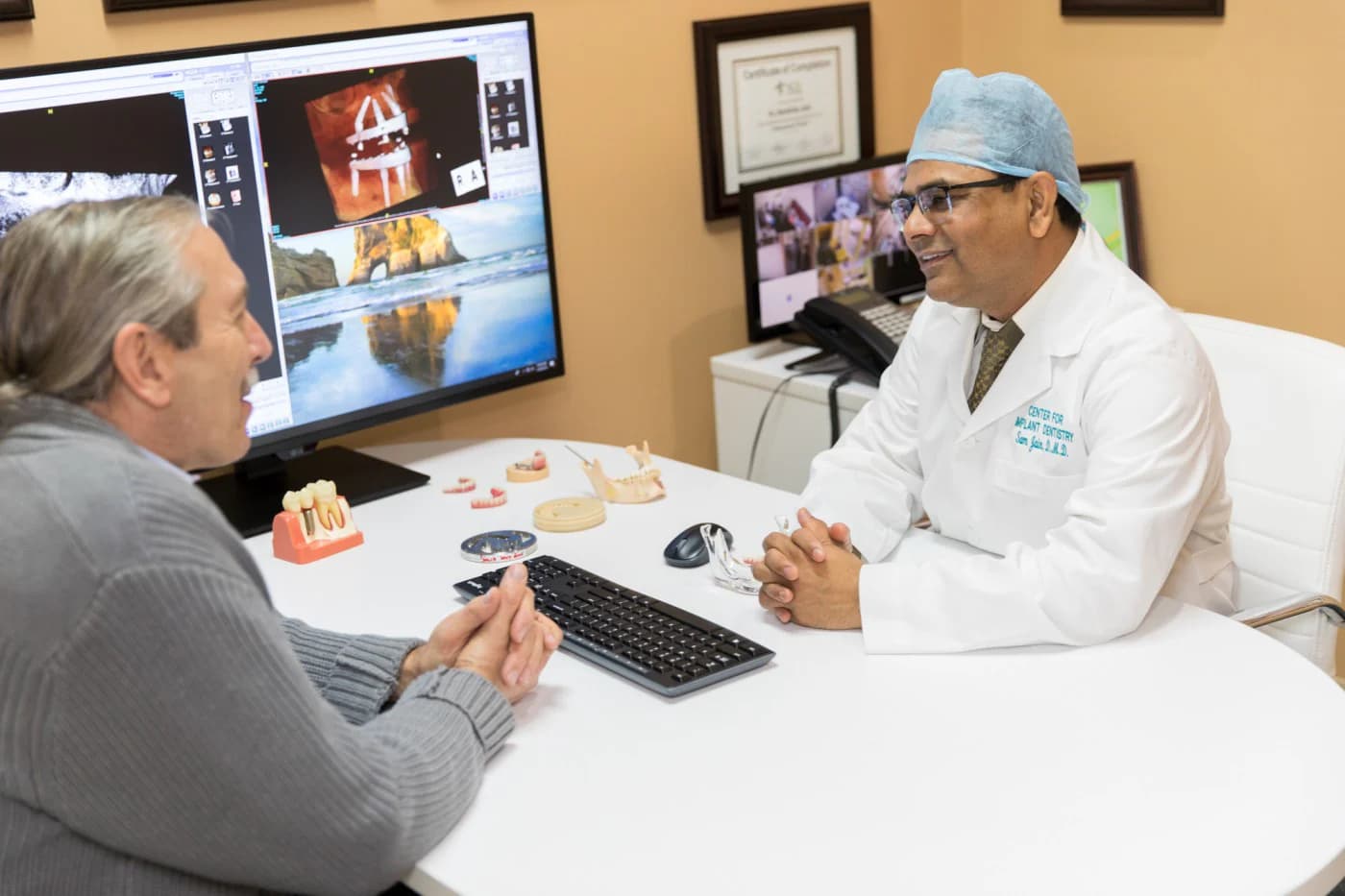
Walk through what a clinic can do on site versus what it sends out, because that shapes both your results and your timeline. The single most useful diagnostic tool for implants is a 3D CBCT scanner — it measures bone in three dimensions and shows exactly where nerves and sinuses sit, which a flat 2D X-ray simply can't. A clinic planning implants without on-site 3D imaging is guessing more than it should. Ask whether they have it, and whether the scan is included or an extra charge; ours is free and part of the first visit.
Then look for the surgical infrastructure: computer-guided surgery systems, IV sedation so anxious patients can be comfortable, and — this is the one most clinics don't have — an in-house dental lab. When the lab is under the same roof, the clinic controls the fit and finish of your teeth and can turn them around fast. Our on-site CAD/CAM mill produces final, custom teeth in roughly 24 hours for qualifying single or multiple implants and about 72 hours for a full arch — instead of six to eight months in temporary plastic while an outside lab works. You can see the equipment on our advanced technology page and the fast-turnaround workflow on the same-day implants page.
The point of "everything at one address" isn't a bragging right — it's fewer referrals, fewer appointments, fewer chances for a detail to slip between two offices that don't talk to each other. If a clinic has to send you across town for your scan, somewhere else for sedation, and to an outside lab for the teeth, ask yourself who's coordinating all of that, and what happens when a step goes sideways.
Track Record, Cost Transparency, and Insurance
Reviews and volume are imperfect but useful signals. A long track record and a large number of consistent reviews suggest a practice that's handled a wide range of cases and stuck around to answer for them — we've treated more than 15,000 patients since 2008 and hold a 4.9-star Google rating and 600-plus reviews across Google and Yelp. Read a few of the detailed ones, not just the star count; you're looking for patterns in how the practice communicates and how it handles problems, not a perfect score.
A trustworthy clinic is also straight with you about money before you're in the chair. Ask for a written treatment plan with the cost broken out, and ask what's included — the scan, the sedation, the final teeth, any follow-ups. Ask whether they're in-network with your insurance; we're in-network with many PPO plans (Delta, Aetna, Cigna, MetLife, Guardian, UnitedHealthcare, Anthem Blue Cross, and Blue Shield of California, among others), though like most implant centers we don't take Medicare, Medi-Cal, or HMO plans. Because most patients spread the cost out, we work with financing partners like Cherry, CareCredit, and Happen Bank — roughly 92% of our full-arch patients finance their care. The honest cost breakdown is on its own page.
Finally, use the consultation itself as your last data point. A good one doesn't pressure you — it looks at your actual anatomy on a 3D scan, explains your options in plain language, and gives you room to think. If you leave a consult feeling rushed or upsold instead of informed, that tells you something about the organization, not just the appointment. Still comparing your options? Our candidacy guide and the implants-vs-dentures comparison are good next reads, and the FAQ page answers most of what people ask before booking.
Written and medically reviewed by Dr. Sam Jain, DMD, MS, and Dr. Arpana Gupta, DDS, MDS, who own this practice.
This article is patient education, reviewed by Dr. Sam Jain, DMD, MS, and Dr. Arpana Gupta, DDS, MDS, and is not a substitute for an exam. Treatment recommendations are made only after an in-person consultation and 3D imaging.