How to Find the Best Dentist Near You
The best dentist for you isn't the one with the flashiest ad — it's the one whose training, technology, and honesty match what your mouth actually needs. Here's how to tell them apart.
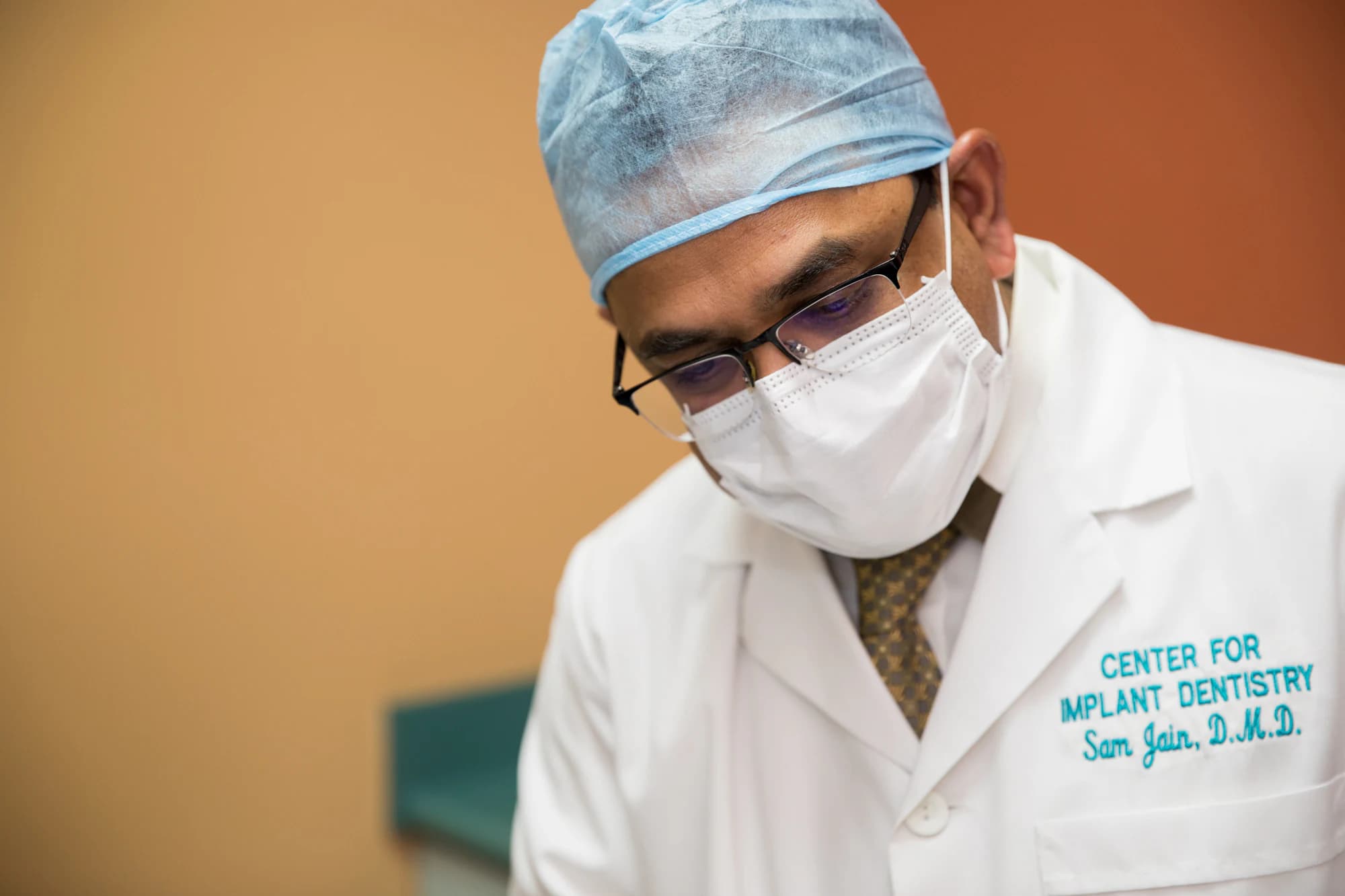
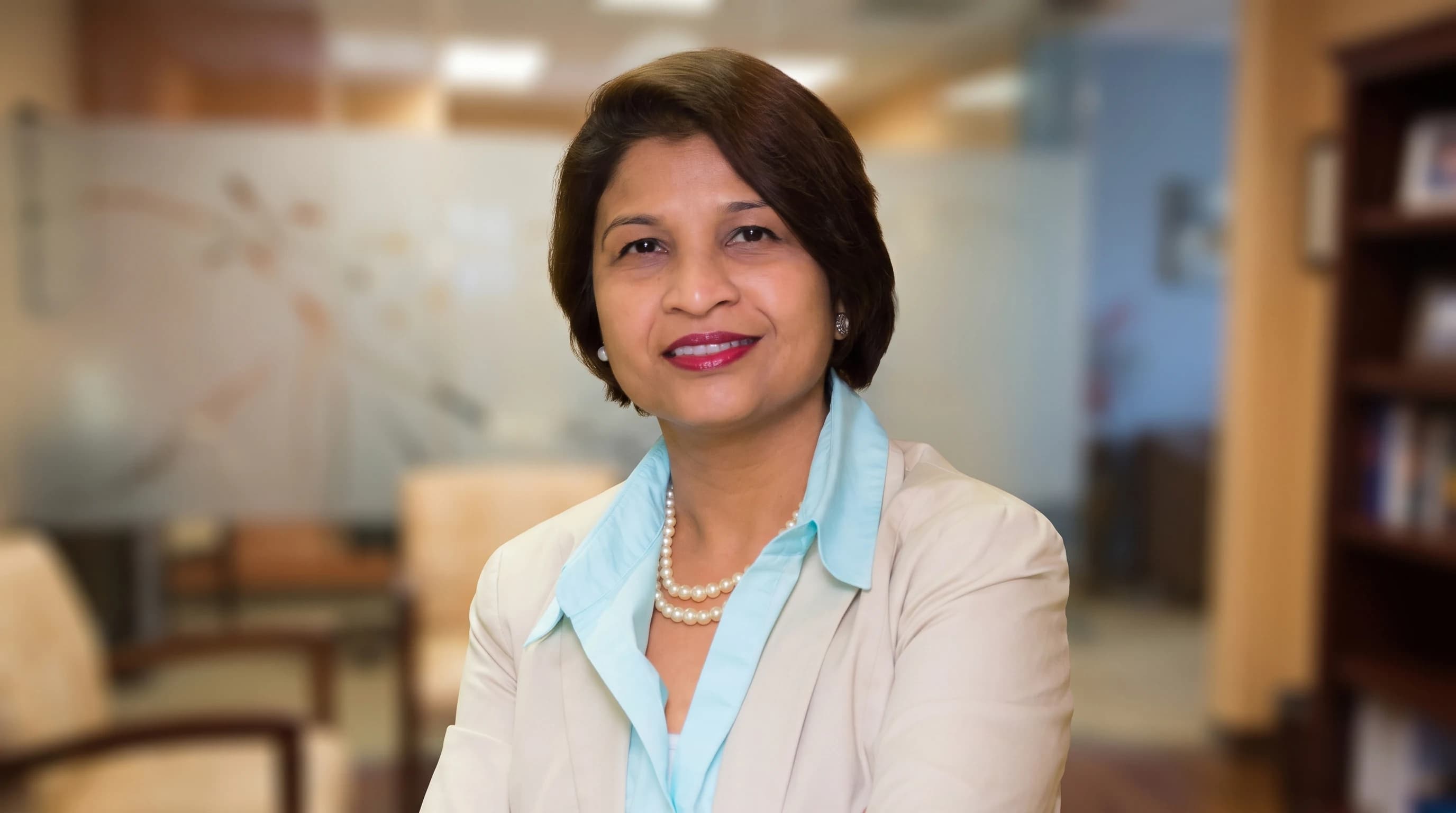
Written and medically reviewed by Dr. Sam Jain, DMD, MS, and Dr. Arpana Gupta, DDS, MDS
Published · Updated

Match the Dentist to the Job
Start by naming what you actually need, because "best dentist near me" means very different things depending on the job. For cleanings, fillings, a chipped tooth, or your kids' checkups, a good general or family dentist is exactly right, and you're mostly screening for competence, cleanliness, communication, and convenience. For something bigger and permanent — replacing teeth, a full-mouth rebuild, jaw surgery — you want a dentist who does that specific procedure often, not one who does it occasionally between routine visits. Skill in dentistry, like anywhere in medicine, tracks closely with how many times someone has done the exact thing you need.
So the single most useful move is to sort your search into two questions. Is this everyday care, where a strong local generalist wins? Or is it a complex, high-stakes procedure, where you want a focused specialist who has done hundreds or thousands of them? Getting that split right up front saves you from the two common mistakes: driving across town for a specialist to fill a simple cavity, or letting a general office attempt a complex implant case it only does a handful of times a year.
Everything below is how to actually vet either kind — the signals that mean something, the ones that don't, and the questions that separate a genuinely excellent practice from a well-marketed average one.
Credentials, Experience, and Who Actually Does the Work
Start with training, then look past it. A dentist's degree (DDS or DMD — they're equivalent) tells you they're licensed; what tells you more is what they've done since. For routine care, look for someone who keeps up with continuing education and has been steadily practicing in your area. For a procedure, the question shifts to volume and focus: how many of these does this person do in a year, and is it a core part of their practice or an occasional add-on? Advanced credentials are a useful signal here — things like specialty degrees, fellowships, or Mastership in a recognized body such as the ICOI for implant dentistry, mean someone has met a bar well above a basic license.
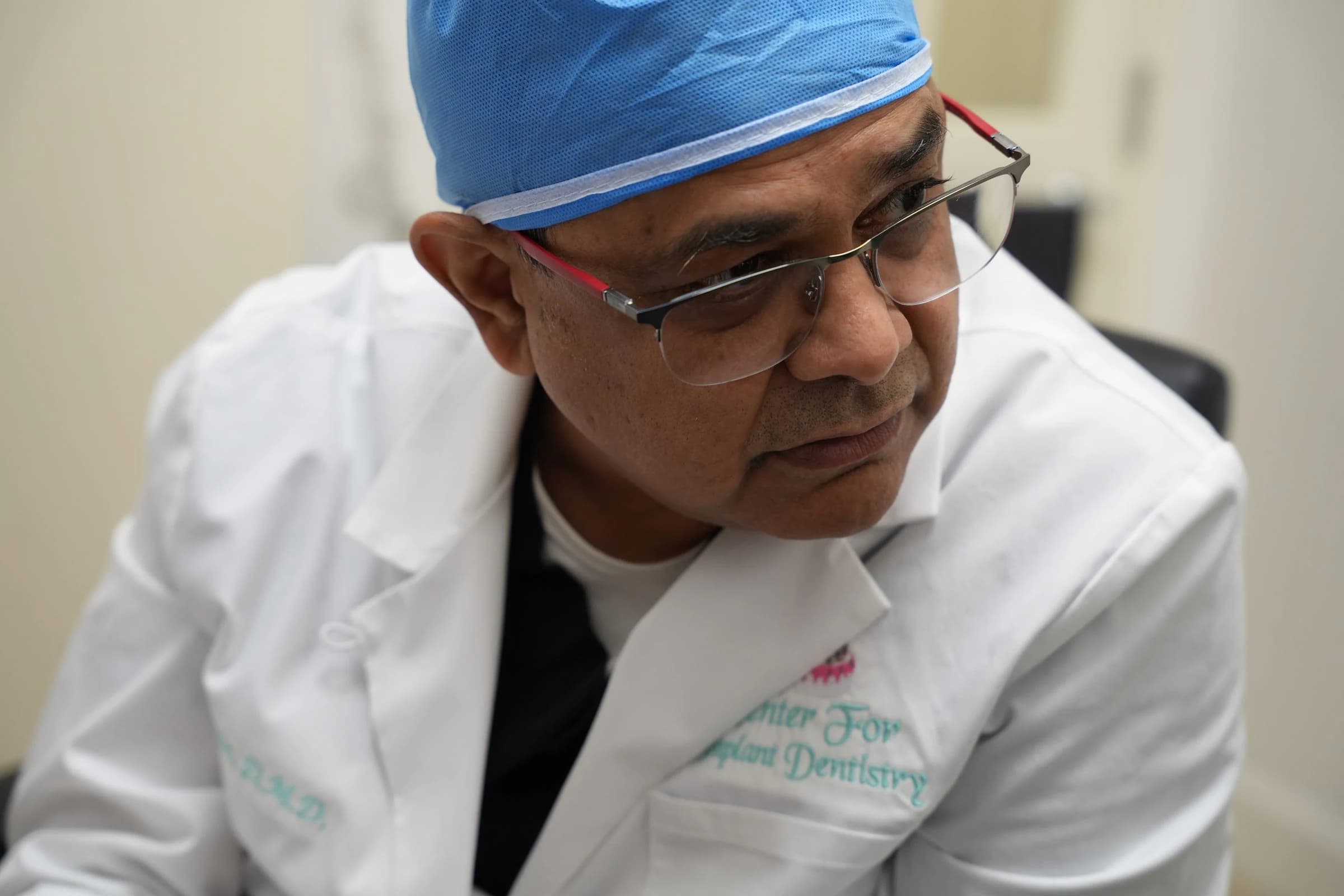
Ask one question most patients never think to ask: who, specifically, will do my treatment from start to finish? In a lot of offices — especially for implants — a traveling or "fly-in" surgeon places the hardware on one visit, then hands your case off to a different dentist to make and fit the final teeth. That handoff is where bites go wrong and accountability gets blurry. It's worth knowing whether one team owns your whole case. At our own center in Fremont, the two owner-surgeons, Dr. Sam Jain and Dr. Arpana Gupta — a married team, both ICOI Masters — personally plan, place, and restore every case themselves, so the people who design your bite are the ones who finish it. Whatever practice you choose, that continuity is a fair thing to expect and to ask about directly.
For anything complex, it's also reasonable to ask what a practice does when a case gets hard — severely thin bone, a medically complicated patient, or a repair of work that failed elsewhere. Offices that genuinely take the difficult cases will tell you plainly; offices that quietly refer them out will too, if you ask. Neither answer is wrong, but you want to know which one you're standing in before you commit.
How to Read Reviews, Technology, and the Office Itself
Online reviews are useful if you read them like a clinician rather than a shopper. A perfect 5.0 with twelve reviews tells you less than a 4.8 or 4.9 across many hundreds — volume smooths out both the fake raves and the one-off bad days. Read the middle-of-the-road reviews, not just the extremes, and watch how the office responds to criticism, because that's a live demonstration of how they'll treat you if something goes sideways. For context, a well-run, high-volume practice will often carry something like a 4.9 average across several hundred Google and Yelp reviews; that combination of a high score and real volume is the signal worth trusting.
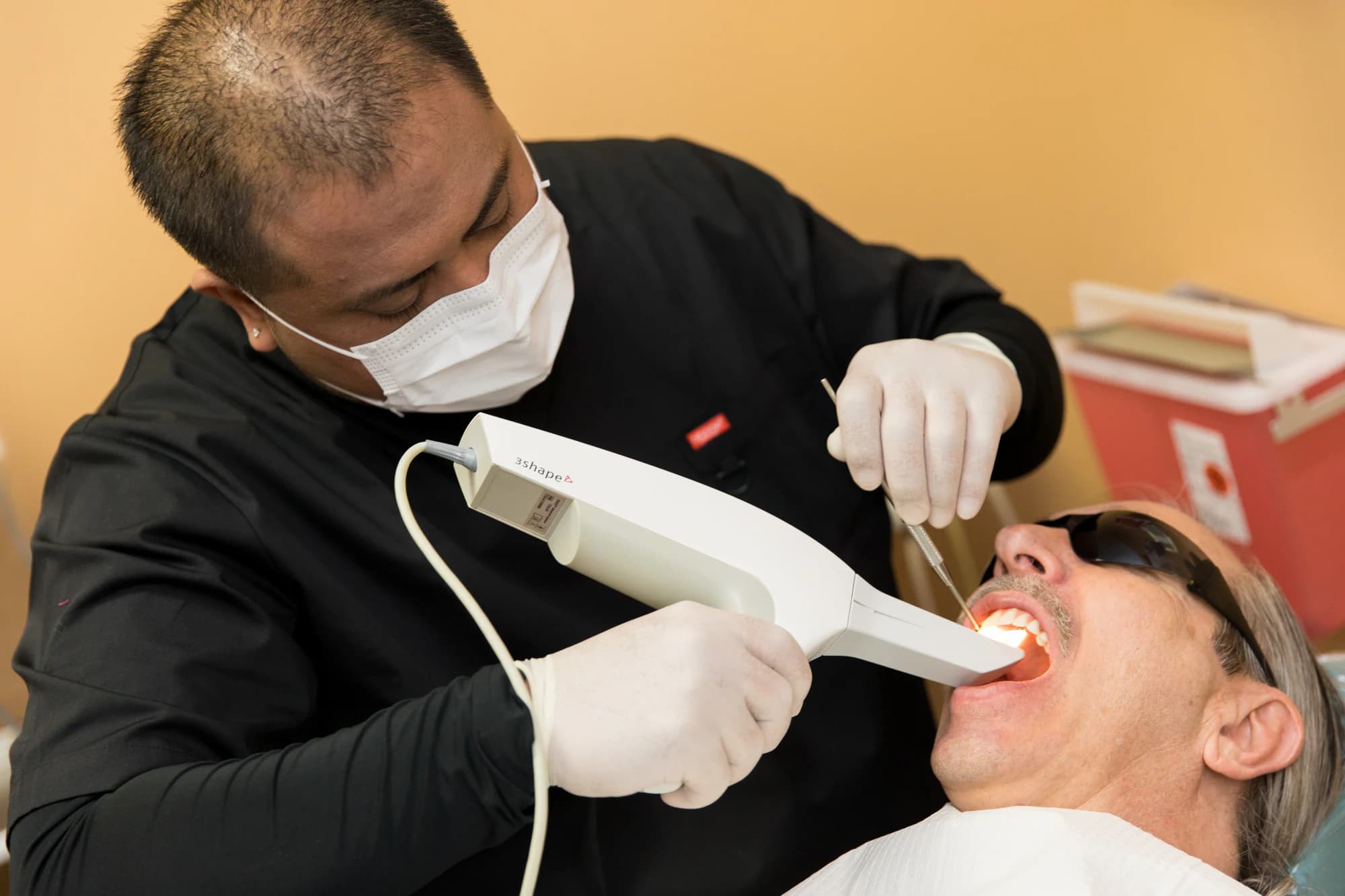
Technology matters, but only the kind that changes your outcome. For a checkup, digital X-rays and a clean, modern operatory are plenty. For surgery, the equipment genuinely changes results: a 3D CBCT scanner shows bone, nerves, and sinuses in three dimensions instead of a flat X-ray's guess, and computer-guided surgery places implants along a plan rather than freehand. Some practices go further and mill your final teeth in-house — an in-house CAD/CAM zirconia mill can produce custom teeth in about a day for a single implant or a few, or a few days for a full arch, instead of the six to eight months of temporary plastic that outsourcing to an outside lab often means. You can see what that hardware actually does on our advanced dental technology and same-day dental implants pages. Don't be dazzled by gadgets for their own sake — ask how a given tool changes your specific result.
Then trust your own eyes at the first visit. Is the place clean and well-run? Does the staff explain things without rushing or upselling? Does the dentist look at your whole mouth and your history, or reach for a treatment plan before understanding you? Comfort options matter too if you're anxious — a practice that offers real sedation for bigger procedures is signaling that it takes patient experience seriously, not just throughput.
Cost, Insurance, and Honest Money Conversations
A good dentist is straight with you about money before you're in the chair. You want clear pricing, a written treatment plan, and someone who'll tell you which options are genuinely necessary versus nice-to-have. Be a little wary of two extremes: the office that pressures you toward the most expensive plan on the first visit, and the suspiciously cheap quote that turns into add-ons once treatment starts. Ask what's included, what isn't, and what happens if something needs redoing.
Insurance is where "near me" and "affordable" collide, so check the specifics. Ask whether the practice is in-network with your particular plan — being in-network with major PPOs (Delta, Aetna, Cigna, MetLife, Guardian, UnitedHealthcare, Anthem Blue Cross, Blue Shield of California, and others) usually means lower out-of-pocket costs, while government plans like Medicare, Medi-Cal, and HMOs are often not accepted at surgical or specialty practices. For larger treatment, ask about financing: reputable offices work with partners like Cherry, CareCredit, Proceed, and Happen Bank so a big number becomes a manageable monthly one. As a reality check, most patients don't pay for major work in a single lump sum — at our center, for example, roughly 92% of full-arch patients finance the treatment; our cost page breaks down what actually moves the number.
One more honest test: does the practice let you find out where you stand before you commit any money? A free or low-cost first consultation — ideally with the actual diagnostic imaging your case needs — lets you evaluate the dentist as much as they evaluate you. At our center that first consultation and 3D CBCT scan are free (a $499 value), which means you can sit down, see your own scan on the screen, and get real numbers before deciding anything. That's the standard worth holding any practice to: transparency you can check, not promises you have to take on faith.
When "Best Dentist" Really Means "Best Specialist"
For everyday dentistry, the guidance above is enough: pick a competent, communicative local generalist you trust, and keep your regular visits. But if your search for a dentist is really being driven by missing, failing, or hopeless teeth, the calculus changes — that's not a job for whoever's closest, it's a job for someone who does that one thing constantly. Replacing teeth well is a surgical and engineering problem as much as a dental one, and the gap between an occasional operator and a dedicated one is largest exactly here.
That's the niche our own practice was built for. The Center for Implant Dentistry is a family-owned, implants-only center in Fremont and San Francisco — we don't do routine cleanings and fillings, we do dental implants, multiple implants, and full-arch work like All-on-4 and the All-on-8 Robust protocol Dr. Sam Jain developed, all day, every day. Everything sits under one roof: the free 3D scan, guided surgery, IV sedation, and an in-house mill that turns out final teeth in about a day for single implants or a few days for a full arch. We also take the cases other offices decline — patients told they have "no bone" who qualify through zygomatic implants or bone grafting, and failed implants placed elsewhere that need rescuing. Implants done well have a strong track record; peer-reviewed studies commonly cite around 95% survival at ten years, though your own outcome depends on your health, your bite, and who does the work.
None of this means you need us for a toothache or a cleaning — that's your general dentist's job, and a good one is worth keeping for life. It means that when the question is specifically about replacing teeth, the search worth running is for an implant team rather than a general dentist, evaluated on the same signals: focused experience, one accountable team, the right technology, and honest money conversations. If that's where you are, our why choose us page lays out how we're set up, and a free consultation will show you your own scan and a real plan before you owe anything.
Written and medically reviewed by Dr. Sam Jain, DMD, MS, and Dr. Arpana Gupta, DDS, MDS, who own this practice.
This article is patient education, reviewed by Dr. Sam Jain, DMD, MS, and Dr. Arpana Gupta, DDS, MDS, and is not a substitute for an exam. Treatment recommendations are made only after an in-person consultation and 3D imaging.