Medical Clearance for Dental Implants: What It Is, Who Needs It
Patients hear “clearance” and picture an exam they might fail. It is a request for facts, usually answered in a phone call — and here is exactly what gets asked.
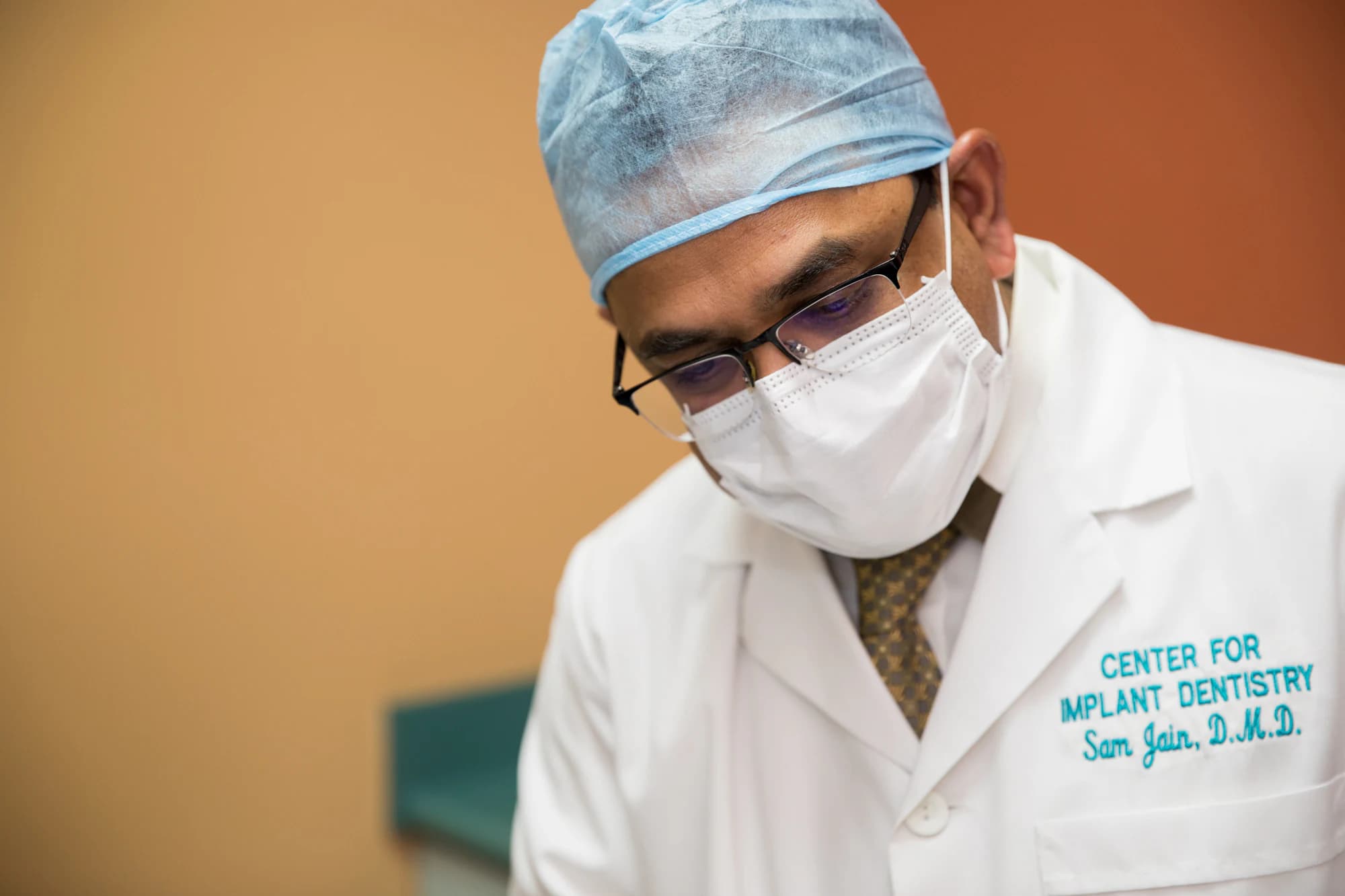

Written and medically reviewed by Dr. Sam Jain, DMD, MS, and Dr. Arpana Gupta, DDS, MDS
Published

Clearance is a request for information, not permission
The word does a lot of damage. Medical clearance is a specific, narrow question put to the physician who manages a condition: is this patient stable enough for an elective outpatient surgical procedure under local anesthetic or intravenous sedation, and is there anything about the condition or its medications we should plan around? It is not an examination you can fail, and it is not a second opinion on whether you should have implants. That decision remains yours and ours.
Who tends to need it: anyone with a recent cardiac event, stent or cardiac surgery; a condition that is currently unstable or poorly controlled; certain anticoagulation situations; active cancer treatment; an organ transplant or ongoing immunosuppression; uncontrolled diabetes; and significant respiratory disease when sedation is planned. Who tends not to: well-controlled blood pressure, well-controlled diabetes, treated thyroid disease, and a distant history of something long since resolved.
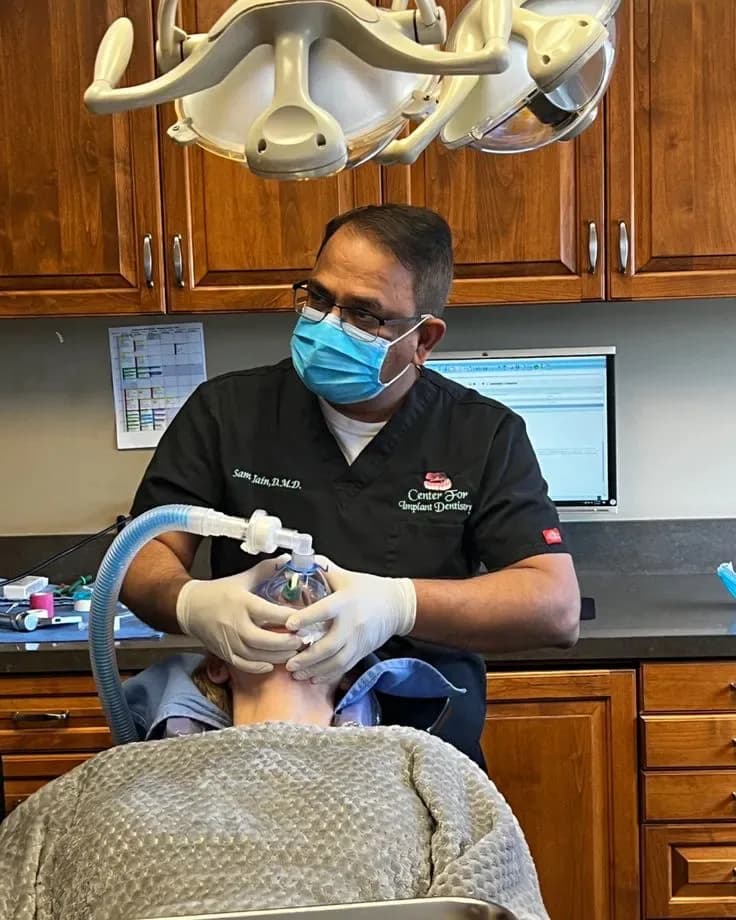
One reason the request comes up here more than at a general dental office is that our doctors provide intravenous sedation in-office. Sedation, rather than the surgery itself, is frequently what makes a physician's input worth having — and the doctors carry ACLS certification and run sedation to hospital-style protocols precisely because the answer to “what if” should be a procedure rather than an improvisation.
Antibiotics beforehand: a much shorter list than people expect
A great deal of what patients think of as clearance is really the premedication question, and it has a clearer answer than most people have been told. The American Heart Association's 2021 scientific statement reviewed everything published since the major 2007 narrowing — a change that left roughly 90% fewer patients qualifying for antibiotic prophylaxis before a dental procedure — and concluded that there are no recommended changes to the 2007 guidelines. Fewer antibiotics, and the evidence since has not argued for reversing that.
The categories that remain are specific: prosthetic cardiac valves, including transcatheter-implanted prostheses and homografts; prosthetic material used for valve repair; a previous episode of infective endocarditis; a cardiac transplant with valve regurgitation; and particular congenital heart conditions — unrepaired cyanotic disease, or repaired defects with residual shunts or regurgitation. For patients in those categories, prophylaxis is recommended for dental procedures involving manipulation of gingival tissue or the periapical region of the teeth, or perforation of the oral mucosa. Implant surgery is squarely in that description.
If you are not in one of those categories, the current answer is that routine antibiotics before dental work are not recommended for you — and that is not casualness. A prophylactic dose that does not help still carries the risk of an allergic reaction, contributes to resistance, and is associated with Clostridioides difficile infection. Not prescribing is a decision with reasons behind it, not an omission.
Hip and knee replacements, where two professional bodies still disagree
This is the question patients get the most conflicting answers to, so here is the state of it. The ADA's clinical practice guideline states that in general, for patients with prosthetic joint implants, prophylactic antibiotics are not recommended prior to dental procedures to prevent prosthetic joint infection. The evidence review behind it did not find an association between dental procedures and prosthetic joint infection.
The orthopedic side has now largely converged on the same point. The clinical practice guideline from the American Academy of Orthopaedic Surgeons and the American Association of Hip and Knee Surgeons, summarized in the Journal of the AAOS in 2025, concluded that routine antibiotic prophylaxis before dental procedures may not lower the risk of periprosthetic joint infection in patients with hip or knee replacements — a limited-strength recommendation — alongside a second limited-strength finding that dental screening before joint replacement may not lower that risk either.
Where the two diverge is timing. The orthopedic work group's statements on delaying a dental procedure after joint replacement, or the reverse, are explicitly consensus opinion in the absence of reliable evidence, resting on the risk of transient bacteremia, whether the procedure is invasive, and whether an active dental infection is being treated. The ADA's Council on Scientific Affairs has publicly objected to that being read as a routine three-month wait, calling the delay a clinical opinion rather than an evidence-informed recommendation. We tell you this because you may well hear a firm-sounding rule from one professional and a different one from another. The honest description is that it is unsettled — which is exactly why your orthopedic surgeon's own preference gets a vote in your plan rather than an argument about who is right.

What to bring, and what happens while you wait
Bring more than you think is relevant. Every prescription with dose and frequency — including injections, infusions and inhalers, which patients routinely leave off because they do not feel like medication. Over-the-counter drugs and supplements. The names and contact details of your prescribers. Any recent laboratory results that bear on surgery, such as an A1c, an INR or a platelet count. The date and detail of any recent surgery, stent, joint replacement or cardiac procedure. And any past reaction to an antibiotic or an anesthetic, however long ago.
Clearance is rarely what holds a case up, because it does not have to come first. The consultation, the 3D CBCT scan and the written treatment plan happen regardless; clearance runs alongside the parts of the process that do not depend on it, and is usually resolved by the time a surgical date is being chosen. When it does take longer — an appointment with another one of your doctors, a repeat blood test — we say so plainly rather than leaving a scheduled date to quietly slip.
The bottom line is the same one that runs through every medical history we see: disclosure changes the plan, not the verdict. The conditions that genuinely rule out implant surgery are rare; the conditions that change its timing, its sedation, its antibiotics or its follow-up are common. The full picture of what matters on the health form is the place to start, and your free consultation reviews all of it before anyone proposes anything.
Written and medically reviewed by Dr. Sam Jain, DMD, MS, and Dr. Arpana Gupta, DDS, MDS, who own this practice. Reviewed
This article is patient education, reviewed by Dr. Sam Jain, DMD, MS, and Dr. Arpana Gupta, DDS, MDS, and is not a substitute for an exam. Treatment recommendations are made only after an in-person consultation and 3D imaging.