Emergency Equipment in the Dental Operating Room
The gear you hope is never used is the gear that tells you the most about who's placing your implants.
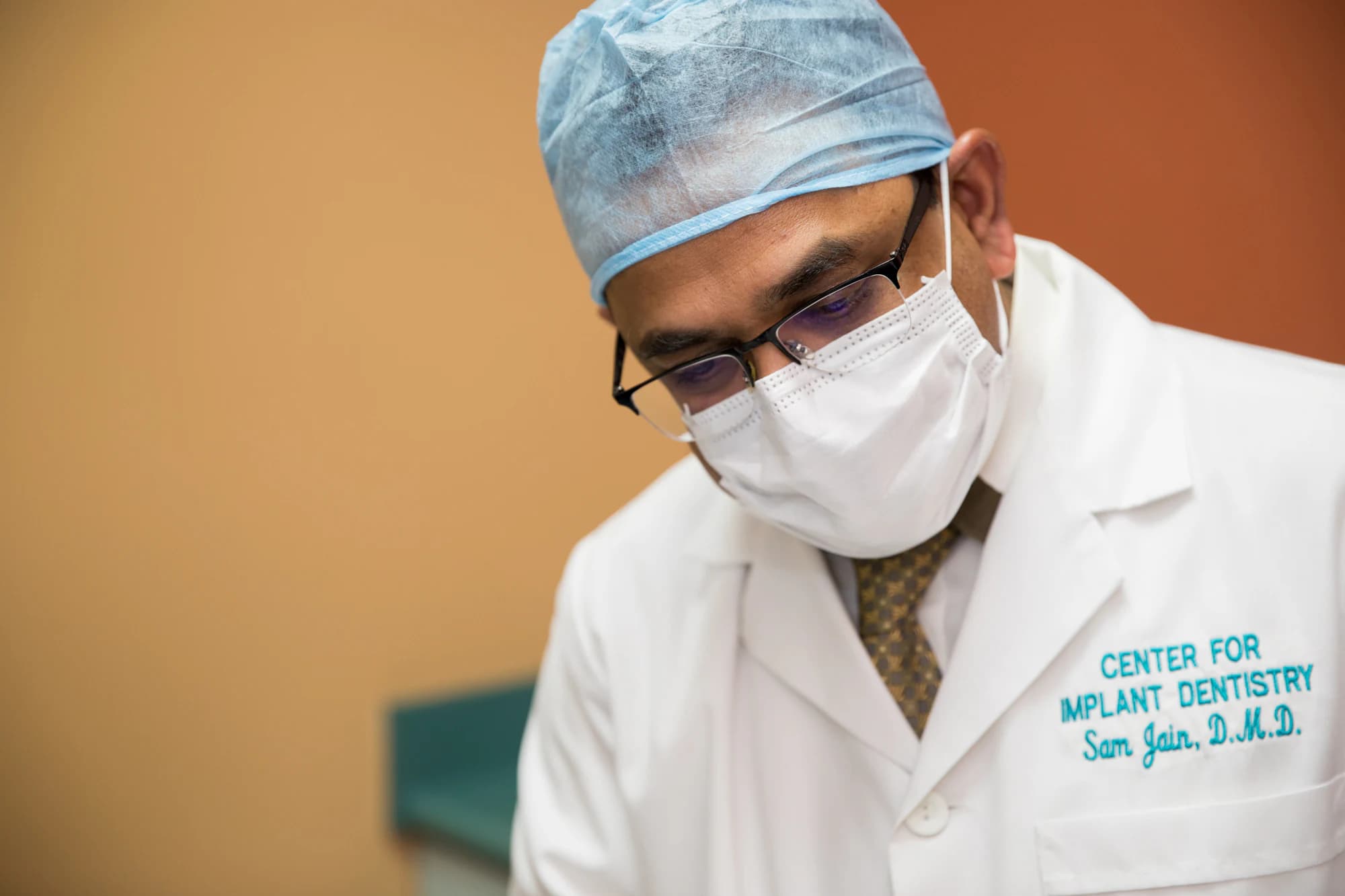
Written and medically reviewed by Dr. Sam Jain, DMD, MS, and Dr. Arpana Gupta, DDS, MDS
Published · Updated
What a well-equipped implant OR carries
A dental operating room set up for surgery and IV sedation should carry, at minimum, a supply of supplemental oxygen with a delivery system, suction, a bag-valve-mask (adult and pediatric masks), airway adjuncts, an automated external defibrillator (AED), continuous monitoring for oxygen and breathing, and an emergency drug kit that includes epinephrine, the sedation reversal agents flumazenil and naloxone, albuterol, nitroglycerin, aspirin, glucose, and antihistamines. That's the floor, not the ceiling. If a practice offers intravenous sedation, most state dental boards require a specific sedation permit, and issuing that permit comes with a mandated list of emergency drugs, monitors, and staff training.
The reason all of this exists is simple. Implant surgery itself is very safe, and serious medical emergencies in the chair are rare. But 'rare' is not 'never,' and the events that do happen — a fainting episode, an allergic reaction, a drop in breathing under sedation, a cardiac event in an older patient — move fast. Equipment only helps if it is already in the room, already checked, and already familiar to the people using it. You cannot order a crash cart mid-emergency.
Why monitoring is the part most patients never think about
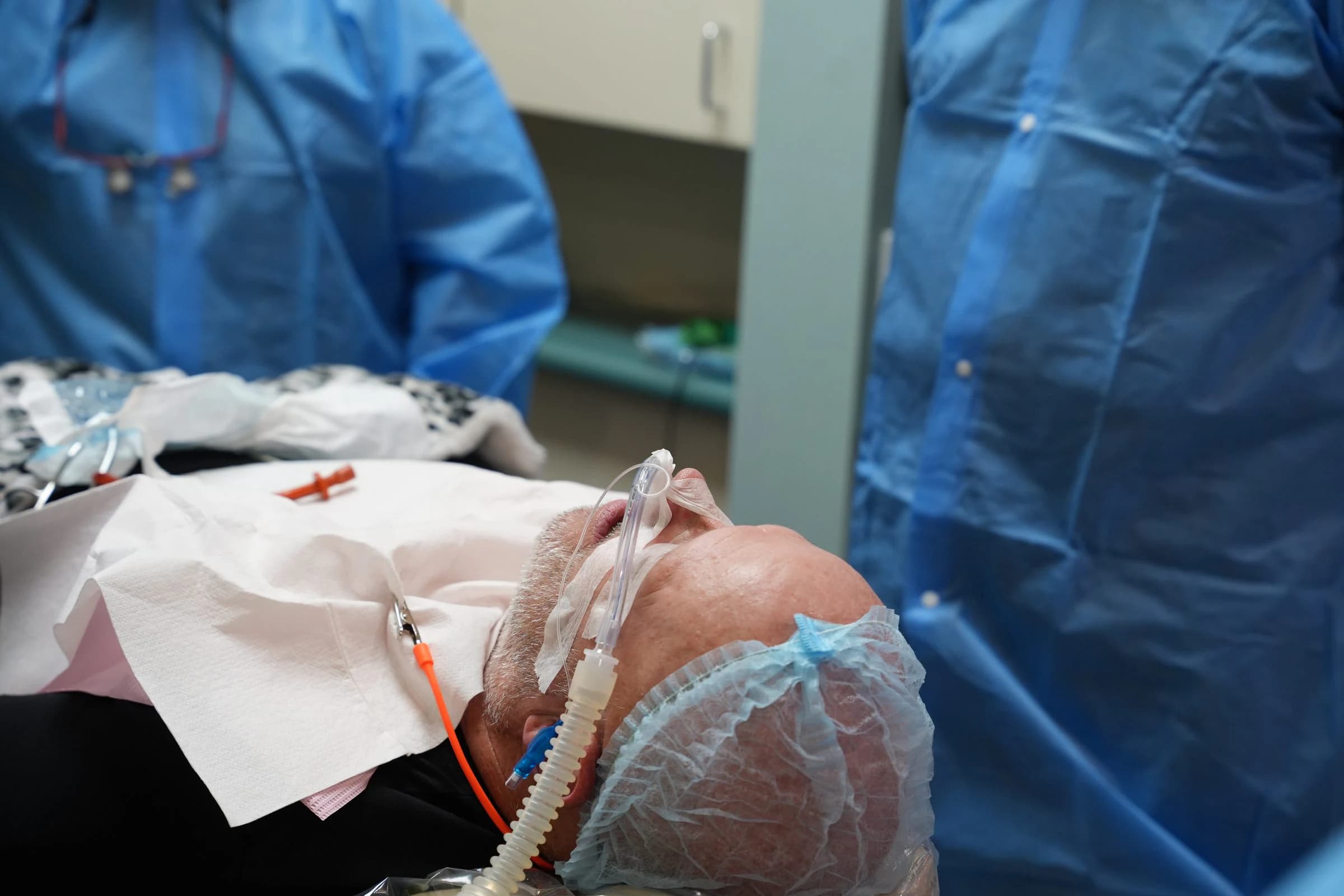
The most important piece of 'equipment' in a sedation case is often the monitoring, not the drugs. Under IV sedation, ADA guidelines call for continually tracking oxygen saturation, heart rate, blood pressure, and breathing. Two tools do the heavy lifting: a pulse oximeter and a capnograph.
Here's the distinction that matters. A pulse oximeter tells you how much oxygen is in the blood — but it flags a problem after oxygen has already dropped. Capnography measures the carbon dioxide in each exhaled breath, which means it can catch slowed or obstructed breathing minutes earlier, before oxygen levels fall at all. That head start is the whole point. For a sedated patient, minutes are the difference between a small adjustment and a genuine crisis. When you ask a practice how they monitor breathing during sedation, 'we watch the chest' is a weaker answer than 'pulse oximetry plus end-tidal CO2.'
There's also a quieter safety layer that lives before the OR: knowing the patient. A thorough medical history, a review of medications and conditions, and honest candidacy screening prevent more emergencies than any device on the wall. The best readiness is the emergency that never starts.
Equipment is only as good as the team and the drills
A defibrillator in a cabinet does nothing on its own. What turns a shelf of gear into actual safety is a trained team that rehearses. Updated ADA and dental-board expectations emphasize documented emergency protocols and regular practice drills — mock scenarios where the staff rehearses who grabs the oxygen, who calls 911, who runs the AED, and who charts the timeline. Offices that offer deeper sedation are generally expected to carry the training and equipment for advanced cardiac life support (ACLS), not just basic CPR.
This is also where the ownership model of a practice quietly shows up. In our office, Dr. Sam Jain and Dr. Arpana Gupta plan, place, and restore every case themselves — the same two surgeons, every time, not a rotating roster of fly-in providers who don't know the room. Familiarity is a safety feature. The surgeon who uses the same suite, the same monitors, and the same staff every day is the one who notices the half-second something looks off. You can read more about how we're set up and why it's different if that matters to you, and it should.

How planning technology lowers the odds you ever need the crash cart
The best emergency is the one that never happens, and a lot of that is decided before the first incision. Guided surgery is part of readiness, not separate from it. A free 3D CBCT scan maps the exact position of nerves, sinuses, and bone before we touch anything, and guided systems like X-Guide and Navident EVO place each implant along a pre-planned path. Fewer surprises in surgery means a calmer case, shorter chair time, and a lower dose of sedation — all of which reduce risk. You can see the full toolkit on our technology page.
Doing everything under one roof reinforces that. Because our in-house CAD/CAM mill produces final custom teeth in roughly 24 hours for single and multiple implants — and about 72 hours for a full arch — the surgery, sedation, and restoration all happen in a controlled environment we run and monitor ourselves, rather than being handed off across offices. And because we take the harder cases — zygomatic implants for patients told they have 'no bone,' plus rescues of failed implants placed elsewhere — the readiness has to be real, not decorative.
None of this should make surgery sound frightening. It shouldn't be. The point is the opposite: when the equipment, the monitoring, the training, and the planning are all genuinely in place, you get to relax and let the team do the worrying. If you want to see the setup for yourself, that's exactly what a free consultation and 3D scan is for — come look at the room, ask about the monitors, and meet the people who'll actually be in it.
Written and medically reviewed by Dr. Sam Jain, DMD, MS, and Dr. Arpana Gupta, DDS, MDS, who own this practice.
This article is patient education, reviewed by Dr. Sam Jain, DMD, MS, and Dr. Arpana Gupta, DDS, MDS, and is not a substitute for an exam. Treatment recommendations are made only after an in-person consultation and 3D imaging.