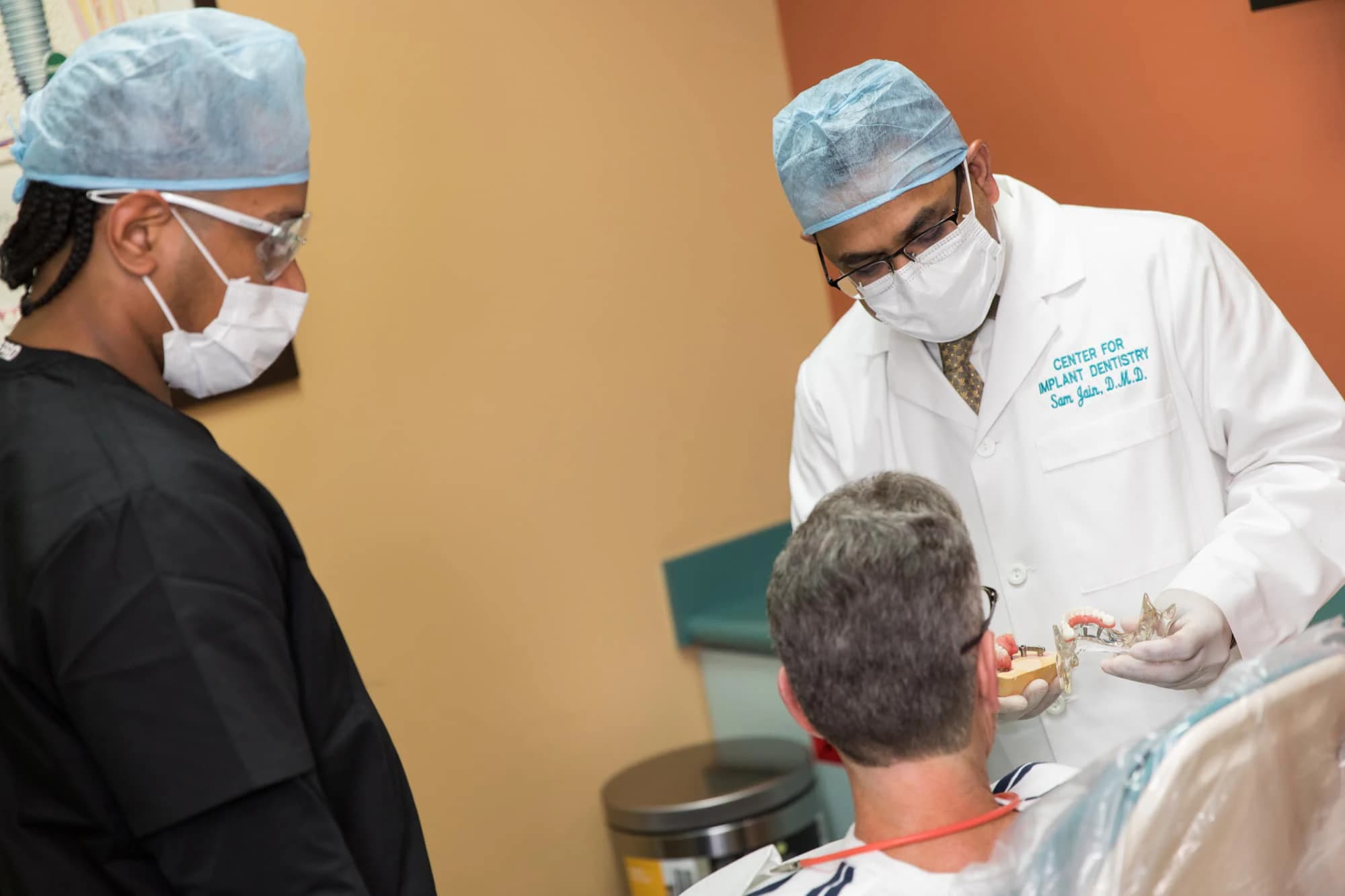
Replace the missing tooth while protecting healthy teeth.
Dental Implant vs. Bridge: The Honest Comparison
Hear from patients who chose the implant over the bridge
Schedule ConsultationOne Gap, Two Very Different Answers
A Bridge Borrows From Two Healthy Teeth. An Implant Stands On Its Own.
You have one missing tooth, and two paths in front of you. A dental bridge fills the gap by capping the healthy teeth on either side and hanging a false tooth between them. A single tooth implant fills it by putting a new root into the bone, right where the old one was, touching nothing else.

That difference sounds small in a consult room. It isn't. To carry a bridge, a dentist has to grind two perfectly good neighbor teeth down to pegs — enamel that never grows back — and the bone under the gap keeps shrinking because nothing is rooted in it anymore. An implant asks nothing of the teeth beside it and gives the bone a reason to stay.
This is the same side-by-side we walk patients through before they choose. We do single tooth implants and multiple implants every day — planned, placed, and restored by one team — so we'll show you honestly what a bridge saves you now and what it can quietly cost you later.
The Practice
This Practice, At A Glance
Figures reflect the practice's real numbers and general clinical ranges; your specifics are confirmed at a free consultation with 3D imaging. Individual results vary.
Six Categories. One Honest Ledger.
How a single tooth implant and a traditional tooth-supported bridge compare where it actually matters — to your other teeth, your bone, and your budget over time.
Impact on healthy teeth
Single tooth implantStands completely on its own. The teeth on either side are never touched — full enamel, flossed individually, untouched for life.
Traditional dental bridgeRequires grinding down two healthy neighbor teeth into pegs to hold the crowns. That enamel never grows back.
Jawbone health
Single tooth implantThe titanium root stimulates the bone with every bite, so the ridge stays dense and your face keeps its shape.
Traditional dental bridgeSits above the gap. The bone underneath keeps shrinking — often a dark shadow opens beneath the false tooth over time.
Longevity
Single tooth implantBuilt to be a one-time answer — long-term success rates commonly reported around 95%, and many implants last a lifetime.
Traditional dental bridgeTypically needs replacement every 5–10 years, and a problem in either anchor tooth can bring the whole bridge down.
Cost over 20 years
Single tooth implantHigher up front, but usually a single investment — no serial replacements, no treating ground-down anchor teeth later.
Traditional dental bridgeCheaper on day one, then a tab that keeps running: replacements every few years plus the cost of the altered support teeth.
Feel & cleaning
Single tooth implantFeels and cleans like a natural tooth — brush and floss around it normally, nothing threaded underneath.
Traditional dental bridgeYou must thread floss under the false tooth daily; food traps beneath it, and it never quite feels like your own tooth.
Treatment timeline
Single tooth implantGuided placement, then a custom-milled tooth from our in-house lab — often in about 24 hours, not months of temporaries.
Traditional dental bridgeTwo or more visits to prep the neighbors, take impressions, and cement — with permanent changes made at the first appointment.
Comparisons are general guidance; your plan is confirmed after an exam and free 3D CBCT scan. Individual results vary.
The Two Teeth Nobody Warns You About
The Two Teeth
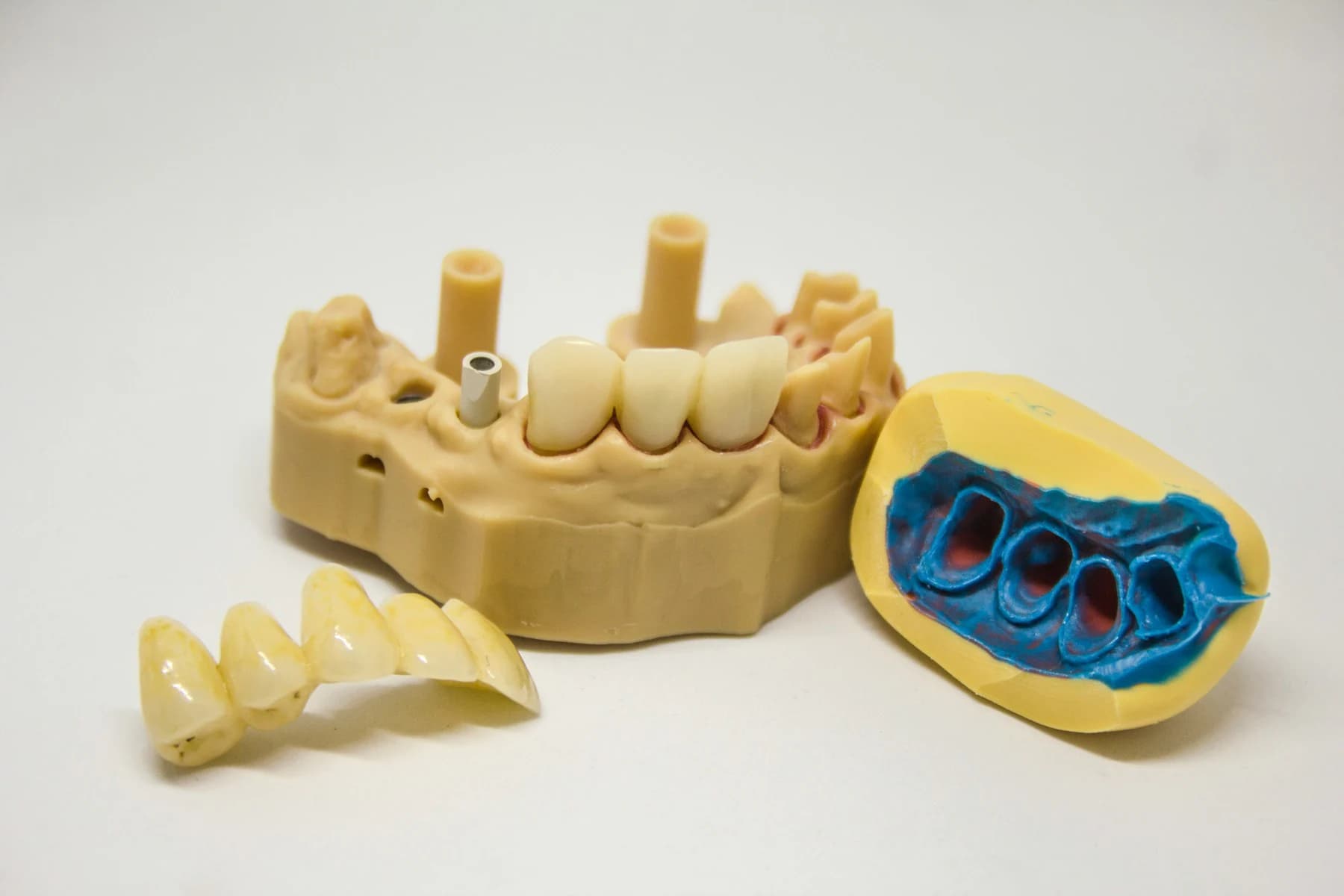
Ask about a bridge and you'll hear about the gap. What rarely comes up is what happens to the two teeth on either side of it. To anchor a three-unit bridge, those healthy neighbors get filed down to small pegs so crowns can be cemented over them. Enamel doesn't regenerate. From that day on, two teeth that had nothing wrong with them are load-bearing supports — and if either one develops decay under its crown or a root problem years later, the whole bridge often comes down with it.
That's the quiet math of a bridge: you solve one missing tooth by permanently altering two more. A single tooth implant treats only the tooth that's actually gone. The titanium root goes into the empty socket, a custom crown goes on top, and the teeth beside it stay exactly as they were — full enamel, flossed individually, standing on their own.
Bone Is The Long Game A Bridge Can't Play
Bone Is The Long Game
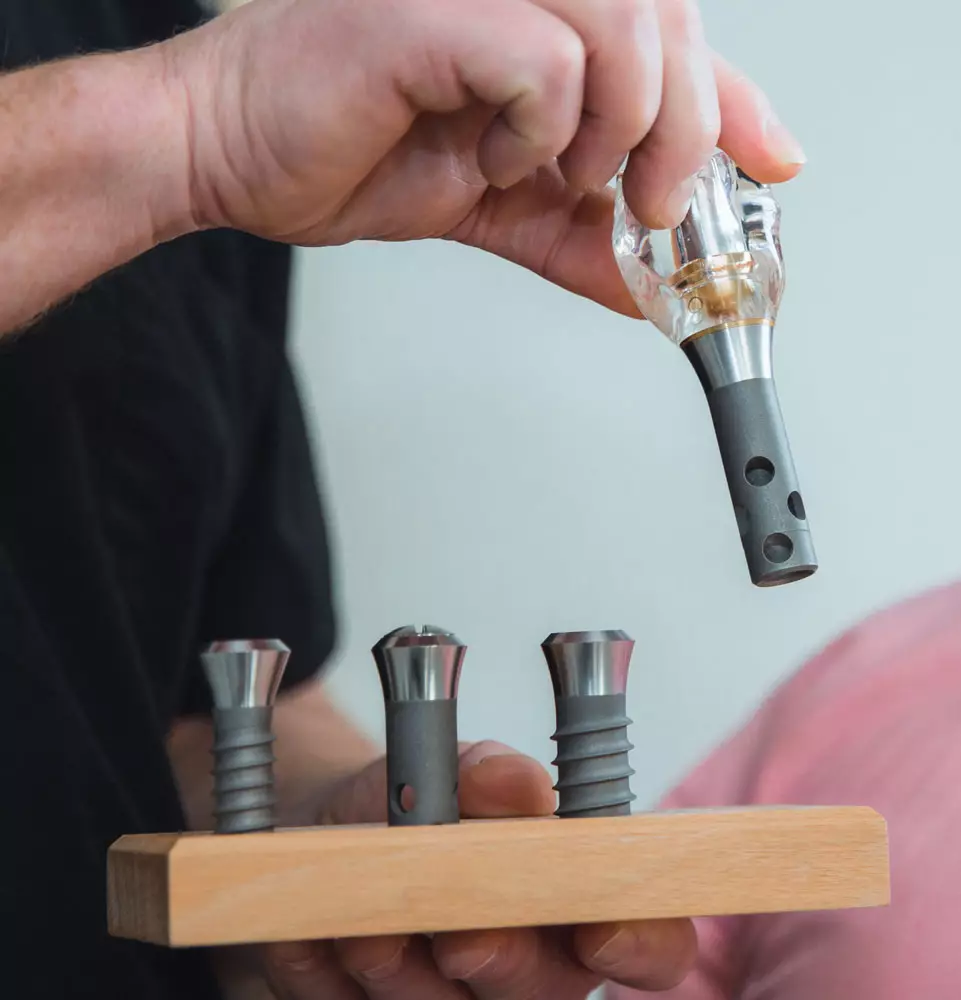
Here's the part you can't see under the gum. A tooth root does more than hold a tooth — every bite sends a signal into the jaw that tells the bone to stay dense. Take the root away and that signal stops. Research shows the ridge can lose about half its width within the first year, and it keeps going from there. A bridge sits above that shrinking bone; it looks fine for a while, then the gum recedes with the bone beneath it and the margin starts to show.
An implant is the only option that puts a working root back. The bone grows tightly around the titanium and gets the daily stimulation it's been missing, so the ridge holds its shape and your face keeps its structure. Dr. Sam Jain — an ICOI Master with a master's in mechanical engineering — and Dr. Arpana Gupta plan every case on a free 3D CBCT scan, so you see your own bone before you decide. For gaps where the bone has already thinned, we graft or place at an angle rather than defaulting to a bridge that ignores the problem.
Over Twenty Years, The Cheaper Option Flips
A bridge usually costs less on day one. That's the honest part, and it's real. But as the bone changes and the supporting teeth age, bridges get replaced — two or three times across two decades is common, each a fresh procedure with fresh lab bills, plus the eventual cost of treating the ground-down anchor teeth. The tab keeps running.
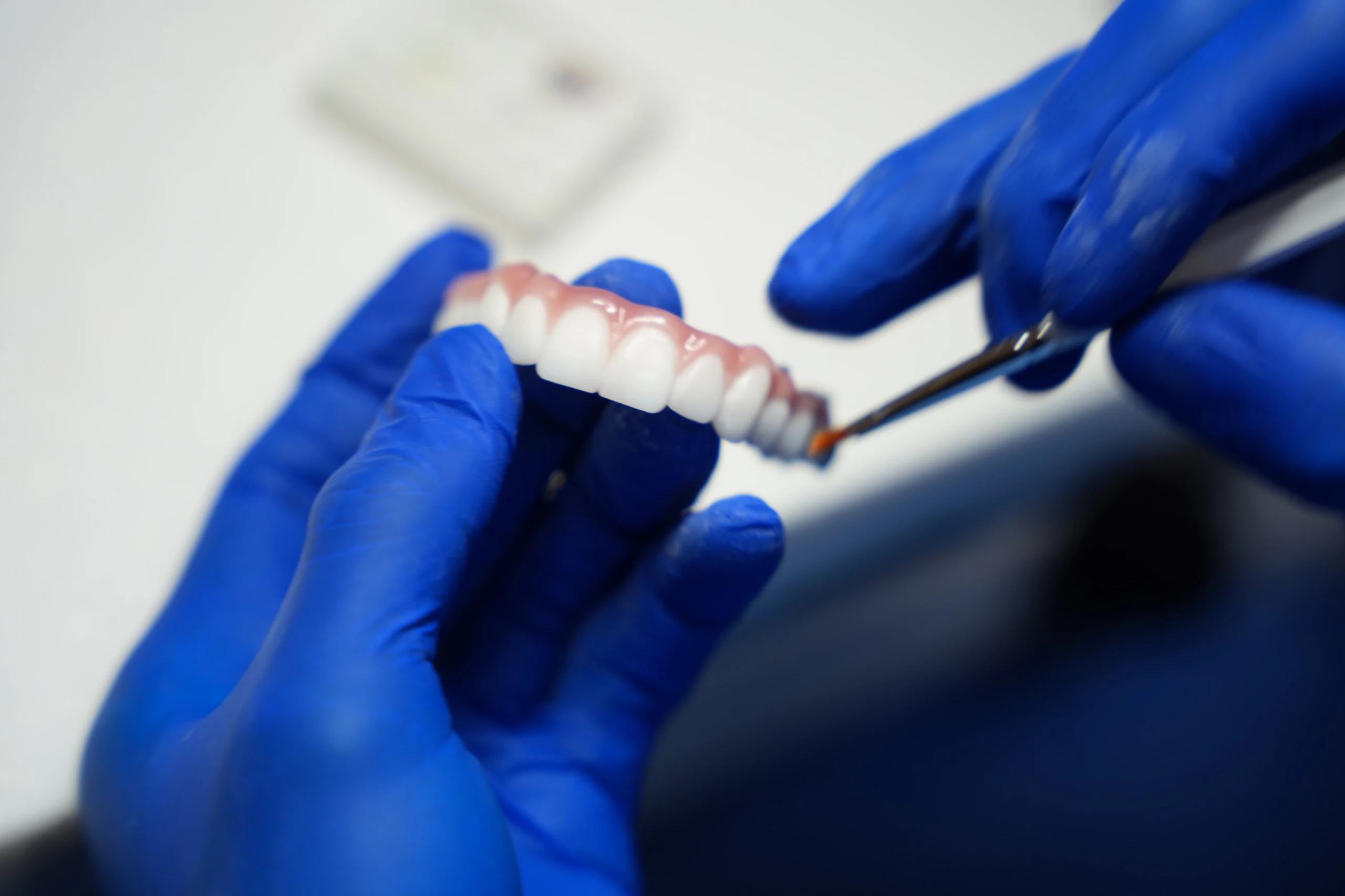
A well-placed implant is built to be a one-time answer, with long-term single-implant success rates commonly reported around 95% and many lasting a lifetime. Because our surgery, sedation, and zirconia lab all share one building — no fly-in surgeons, no outsourced crowns — the written number often lands closer than patients assumed an implant could. Many patients finance with a monthly plan sized to their written quote, and we're in-network with many PPO plans. We'll put your real number in writing at a free consult, then you compare the whole twenty years, not just the first invoice.
One Gap, Two Roads.The Questions That Decide It.
Is a single tooth implant really better than a bridge?
For most people with healthy teeth beside the gap, yes — and the reason is what a bridge does to those teeth. A bridge only works by grinding down the two neighbors into pegs to hold it, and it leaves the bone under the gap to keep shrinking. An implant treats only the tooth that's missing, preserves the bone, and doesn't touch anything else. A bridge can still be the right call in specific situations — if those neighbor teeth already need crowns anyway, for instance — and we'll tell you honestly when that's true on your scan.
Why does a bridge require grinding down my other teeth?
A traditional bridge is one solid piece: a false tooth in the middle fused to crowns on each end. Those crowns have to fit over the teeth beside the gap, so the dentist files that healthy enamel down to make room. Enamel doesn't grow back, so the change is permanent — and from then on, two teeth that were fine are carrying the load of a third. An implant avoids this entirely by anchoring in the bone where the missing root used to be.
Does a bridge stop bone loss like an implant does?
No. This is the difference you can't see under the gum. Bone stays dense only where a tooth root stimulates it with each bite. A bridge sits on top of the gum and puts nothing into the bone, so the ridge underneath keeps shrinking — research shows roughly half the bone width can be lost within the first year. An implant is the only option that replaces the root itself, which is why it preserves both the bone and the shape of your face.
Is a bridge cheaper than an implant?
On day one, usually yes. Over twenty years, the math often flips. A bridge is a wearing part: each replacement is a fresh procedure with fresh lab costs, plus the eventual cost of treating the two anchor teeth that were ground down. A well-placed implant is built to be a one-time answer. Because our surgery and zirconia lab are both in-house, the itemized quote often lands closer than patients expect — and many finance it with a monthly plan.
How long does getting a single tooth implant take?
Far less time than most people expect. After a free 3D CBCT scan, Dr. Jain or Dr. Gupta places the implant with guided surgery, and because we mill your final tooth in our own lab, many single-tooth cases receive a custom tooth in about 24 hours rather than the months of temporaries other offices quote. The bone then integrates around the root over the following weeks. Everything — planning, surgery, sedation, and the tooth itself — happens under one roof.
What if the tooth has been missing for a while and the bone has shrunk?
That's exactly the kind of case we take. When bone has already thinned under an old gap, the answer isn't to give up and default to a bridge — it's to rebuild. We bone-graft, place implants at an angle, or use other techniques to anchor securely, and for severe cases we place zygomatic implants in the cheekbone. Your free 3D scan settles it against your actual bone — including for many patients told 'no' at other offices.
Still weighing your options? Learn more about full mouth dental implants or schedule a free consultation.
One Gap. Make The Choice With Real Data. A Free 3D Scan Shows What Your Bone Actually Needs
Clinically reviewed by
Updated
 Dr. Sam Jain, DMD, MS
Implant Surgeon, Implantologist & Founder
 Dr. Arpana Gupta, DDS, MDS
Implant Surgeon & Implantologist
Their review covers the treatment description, candidacy, timelines, risks and aftercare.
- Treatment details change as our protocols and materials do.
- Your options can only be determined after an in-person examination and a 3D scan.