Dental Implant Repair: What Can Break on an Implant Tooth, How Each Part Is Fixed, and What Drives the Cost
When an implant tooth breaks, the implant in the bone is rarely the part that failed. Crowns chip, abutments crack and screws loosen, and each has its own repair. Here is how to tell what broke, what the evidence says about each part, and what a sensible repair plan looks like.


Written and medically reviewed by Dr. Sam Jain, DMD, MS, and Dr. Arpana Gupta, DDS, MDS
Published
In this article
- 1Most implant repairs involve the parts above the bone
- 2A chipped or broken implant crown
- 3A cracked or fractured abutment
- 4Loose and broken screws
- 5When the implant itself is damaged
- 6Replacing an implant crown or a short implant bridge
- 7What implant repair costs, and what changes the number
- 8Preventing the next repair
- 9Bringing a broken implant tooth to us
Most implant repairs involve the parts above the bone
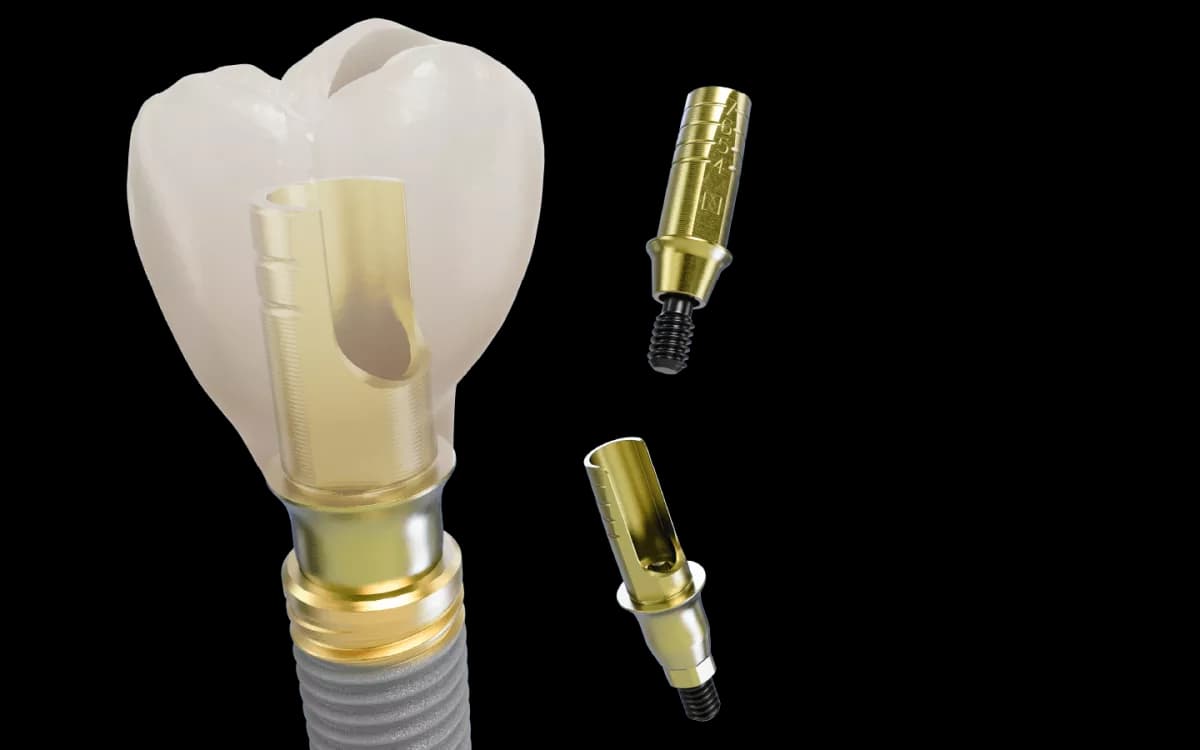
An implant tooth has three main parts: the implant in the bone, the abutment that connects it through the gum, and the crown you chew with, held together by one or two small screws. The implant is designed to last the longest, and usually does. A systematic review of implant-supported single crowns found 95.2% of the implants still in place at ten years, while the crowns on top survived at 89.4% over the same period. In other words, the crown is more likely to need attention than the implant under it.
That is not a sign that implants are fragile. A review comparing older and newer implant studies found that five-year survival of implant restorations rose from 93.5% to 97.1% as techniques improved, but also that complications remain common enough that they have to be expected and planned for. The practical upshot is reassuring: most repairs are replacements of parts that were designed to be replaceable.
If your implant tooth moves rather than breaks, the cause is usually a loose screw, and our article on an implant that feels loose covers that separately. This article is about parts that chip, crack or fracture.
A chipped or broken implant crown
Chipping is the most common thing that happens to an implant crown made with a layer of porcelain. In the single-crown review, fracture of the veneering material occurred in 3.5% of crowns within five years. A 2018 systematic review comparing crown materials found chipping at almost the same rate on metal-ceramic and zirconia-ceramic crowns — 2.9% and 2.8% at five years — but more zirconia-ceramic crowns failed through fracture of the core material, 2.1% compared with 0.2%. That review found no studies on fully monolithic zirconia crowns that met its criteria, so the evidence for the newer solid designs is still accumulating.
A small chip on a porcelain edge can often be polished smooth. A chip that exposes the core, catches food or affects the appearance usually means a new crown, because patching porcelain in the mouth rarely lasts. How easy that is depends on how the crown is attached. A screw-retained crown can be unscrewed, taken to the lab and replaced without disturbing the implant. A cemented crown generally has to be cut off. A systematic review of the two methods concluded that screw-retained restorations seem preferable, largely because they are retrievable when something goes wrong — which is one reason we generally restore implants that way.
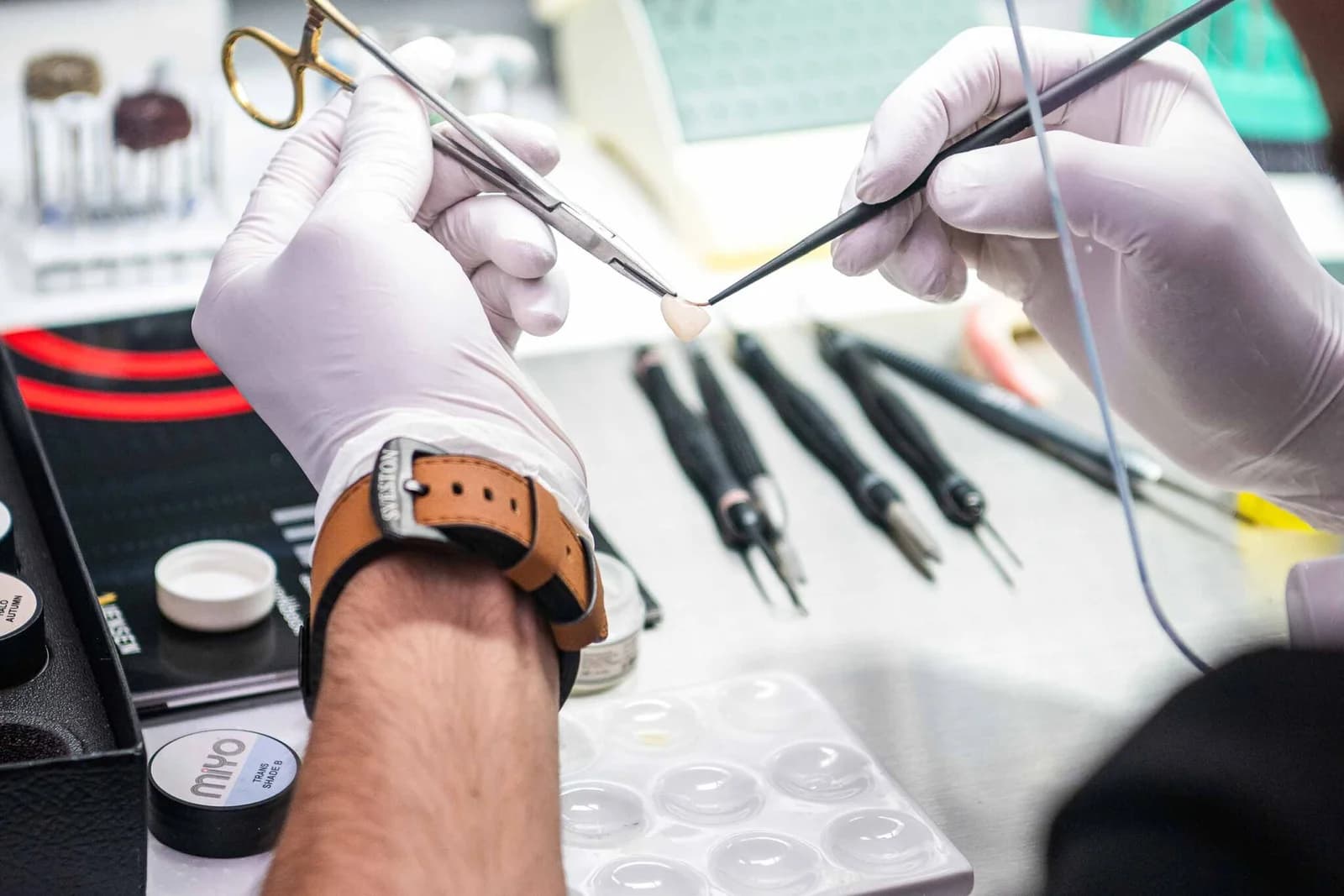
Because our lab designs and mills crowns in the building, a replacement crown does not wait weeks on an outside laboratory. For qualifying cases it can be scanned, milled and seated the same day; our same-day crowns page explains which cases qualify.
A cracked or fractured abutment
The abutment sits under the crown and carries its load into the implant. Abutment failure is uncommon: a 2018 systematic review estimated it at between 0.7% and 2.8% over five years, depending on the connection. The same review found that ceramic abutments, chosen in some front-tooth cases for their color, fractured significantly more often than metal abutments. When an abutment cracks, the crown usually loosens or tilts with it.
A broken abutment is replaced rather than repaired. The important detail is that the new one must be made for that implant's specific connection, from the original system or a precisely matched component, because an abutment that nearly fits is a common reason screws keep loosening and crowns keep failing. Identifying the implant system is therefore the first step, particularly for implants placed at another office. We restore the major systems, including Nobel Biocare, Straumann and Zimmer Biomet, and can design custom abutments in our own lab.
Loose and broken screws
Screws are the most frequent mechanical problem on implant teeth. Screw loosening affected 8.8% of single crowns within five years in the systematic review, and a screw that stays loose under chewing can eventually fracture. A loose screw is usually replaced and tightened in a single visit; a broken one has to be retrieved from inside the implant, which is more delicate but usually possible without harming the implant.
Because the causes and fixes for screws are specific — bite overload, grinding, mismatched parts, the wrong tightening value — they have their own article on a loose implant tooth and broken screws.

When the implant itself is damaged
The implant body can fracture, but rarely: in a retrospective study of 10,099 implants, 44 fractured, or 0.44%. Fractures tended to appear years after placement, and the risk was higher with grinding, with implants next to a cantilevered section of a bridge, and with narrower implants. Internal threads can also be damaged, for example during an attempt to remove a broken screw.
A fractured implant cannot be repaired. It is removed, the site is assessed and often grafted, and a new implant is placed when the bone allows — sometimes in the same visit. Our article on implant removal and replacement explains how that is done and what the success rates are.
Replacing an implant crown or a short implant bridge
Sometimes a crown or a small implant bridge is replaced not because it broke, but because something around it changed. The gum may have receded and exposed a margin, the contact with the neighboring tooth may have opened and started trapping food — a study of 174 single implant crowns found open contacts in 52.8% — or the neighboring tooth may have developed decay. In a 2026 study of 445 implant restorations, decay was found on an adjacent tooth in 8.1% of cases, more often next to molar implants, and markedly more often when crowns were attached directly to the implant rather than through an intermediate abutment.
In those situations the implant usually stays and only the restoration is remade, from a new digital scan. It is also the moment to fix whatever caused the problem: reshaping the crown so the space next to it can be cleaned, closing a contact, or changing the connection. A short implant bridge that has fractured or no longer fits is handled the same way, provided the implants under it are healthy. Full-arch bridges have their own considerations, covered in our article on All-on-4 bridge repair.
What implant repair costs, and what changes the number
Repair costs vary more than new-implant costs because the work varies so much. Polishing a chip, replacing a screw, making a new abutment and crown, and removing and replacing a fractured implant are entirely different amounts of work. The other factors are whether original components are available for the implant system, whether the crown is screw-retained or has to be cut off, how much lab work is involved, and whether anything else — gum inflammation, a decayed neighboring tooth, bite problems — needs treatment at the same time.
For implants we placed, chips, wear, loosened screws and bite adjustments on the restorations we made are handled here, under the warranty terms written into your treatment plan for the material you chose; the warranty page explains how those terms are set. For an implant placed elsewhere, we examine it, identify the system, and give you an itemized written quote for each reasonable option before anything is done. Some dental insurance plans contribute to replacing a crown or abutment, subject to their own rules; we check your benefits and file the claim.
Preventing the next repair
Most repeat repairs trace back to the same few causes, and most of them can be addressed. Grinding is the largest: a 2025 meta-analysis found bruxism associated with several-fold higher odds of every mechanical complication it studied, including ceramic fracture, abutment fracture and screw fracture, so a night guard is often part of a repair plan. A bite adjusted so the implant is not the first tooth to take the load, crowns shaped so they can be cleaned, and original components tightened to the correct value all help.
Regular maintenance visits catch small problems — a slightly loose screw, an opening contact, early decay on a neighboring tooth — while they are still small. Our implant care guide describes the home routine and what those visits check.
Bringing a broken implant tooth to us
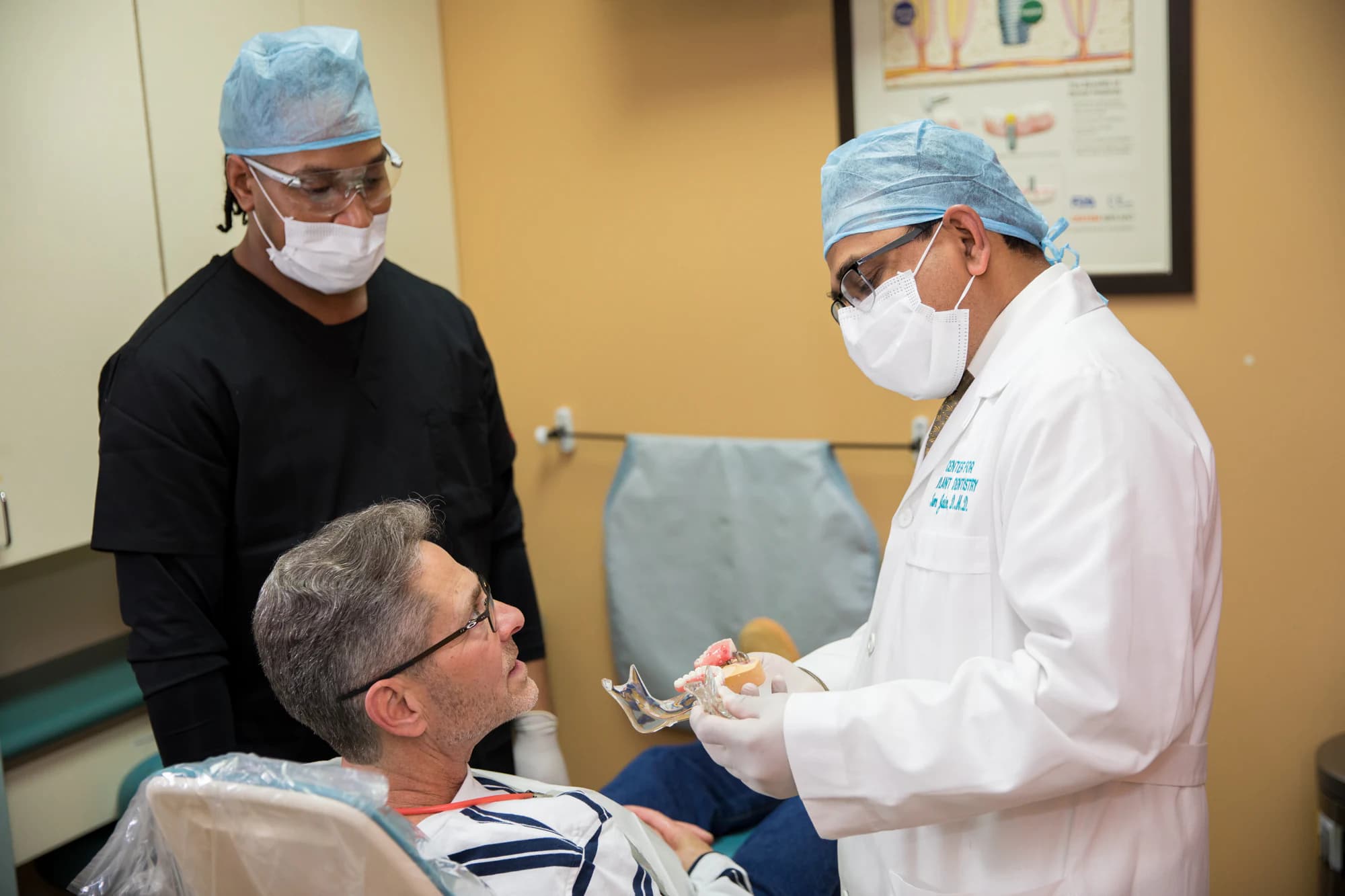
If part of an implant tooth has chipped, cracked or come off, keep any pieces, avoid chewing on that side, and do not glue anything back. Repairing implant restorations, including those placed at other offices, is a routine part of our work. We are open six days a week, and at a free consultation we examine the implant, take the imaging needed to check the bone and the connection, and explain in plain language what broke, why, and what each option costs, in writing. You can book a free consultation here, or read more on our implant complications page.
Written and medically reviewed by Dr. Sam Jain, DMD, MS, and Dr. Arpana Gupta, DDS, MDS, who own this practice. Reviewed
This article is patient education, reviewed by Dr. Sam Jain, DMD, MS, and Dr. Arpana Gupta, DDS, MDS, and is not a substitute for an exam. Treatment recommendations are made only after an in-person consultation and 3D imaging.