Dental Implant Pain Years Later: Why an Implant That Was Fine Starts to Hurt, Especially When You Bite
An implant that has been comfortable for years should not suddenly hurt. When it does, there is a reason, and it is often not the implant itself. Here are the causes that show up most often, how each one feels, and how they are told apart.

Written and medically reviewed by Dr. Sam Jain, DMD, MS, and Dr. Arpana Gupta, DDS, MDS
Published
In this article
- 1Late pain is a clue, not a verdict
- 2Why biting can hurt on an implant
- 3A loose screw, a cracked part or a fractured implant
- 4Infection around the implant
- 5Food trapped beside the implant, and the tooth next door
- 6Pain that comes from somewhere else
- 7What to do if an implant starts to hurt
- 8How the cause is found
- 9Bringing a painful implant to us
Late pain is a clue, not a verdict
Soreness in the days after implant surgery is expected and fades; our article on implant pain after surgery covers that period. Pain that begins months or years later is different. A healthy, integrated implant has no nerve inside it the way a tooth does, so new pain almost always comes from something around it: the screw and crown on top, the gum and bone around it, the bite, the tooth next to it, or a structure nearby such as the sinus.
That is useful to know for two reasons. Most of those causes are treatable, often simply. And several of them get harder to treat the longer they are left, which is why late implant pain deserves an examination rather than a wait-and-see.
Why biting can hurt on an implant
A natural tooth sits in a thin cushioning ligament that lets it move very slightly and senses pressure. An implant is fused directly to bone, with no ligament, so it cannot shift away from a heavy contact and the patient is less aware of overload until it hurts. Bites also change over the years. Natural teeth drift, wear and move, while the implant stays exactly where it was placed, so a crown that was perfectly adjusted can gradually become the first tooth to hit when you close. A gap opening between an implant crown and its neighboring tooth is a sign of that movement: in a study of 293 implants in the back of the mouth, a contact opened at 30.7% of them, half of those within about 19 months.
A crown that takes too much of the bite can cause tenderness when chewing and, over time, contribute to bone loss. A 2025 systematic review of occlusal overload concluded that excessive loading contributes to marginal bone loss and peri-implantitis, that grinding magnifies it, and that mechanical overload and bacterial biofilm appear to act together. An overloaded implant is usually treated by adjusting the bite and, for patients who grind, a night guard.
A loose screw, a cracked part or a fractured implant
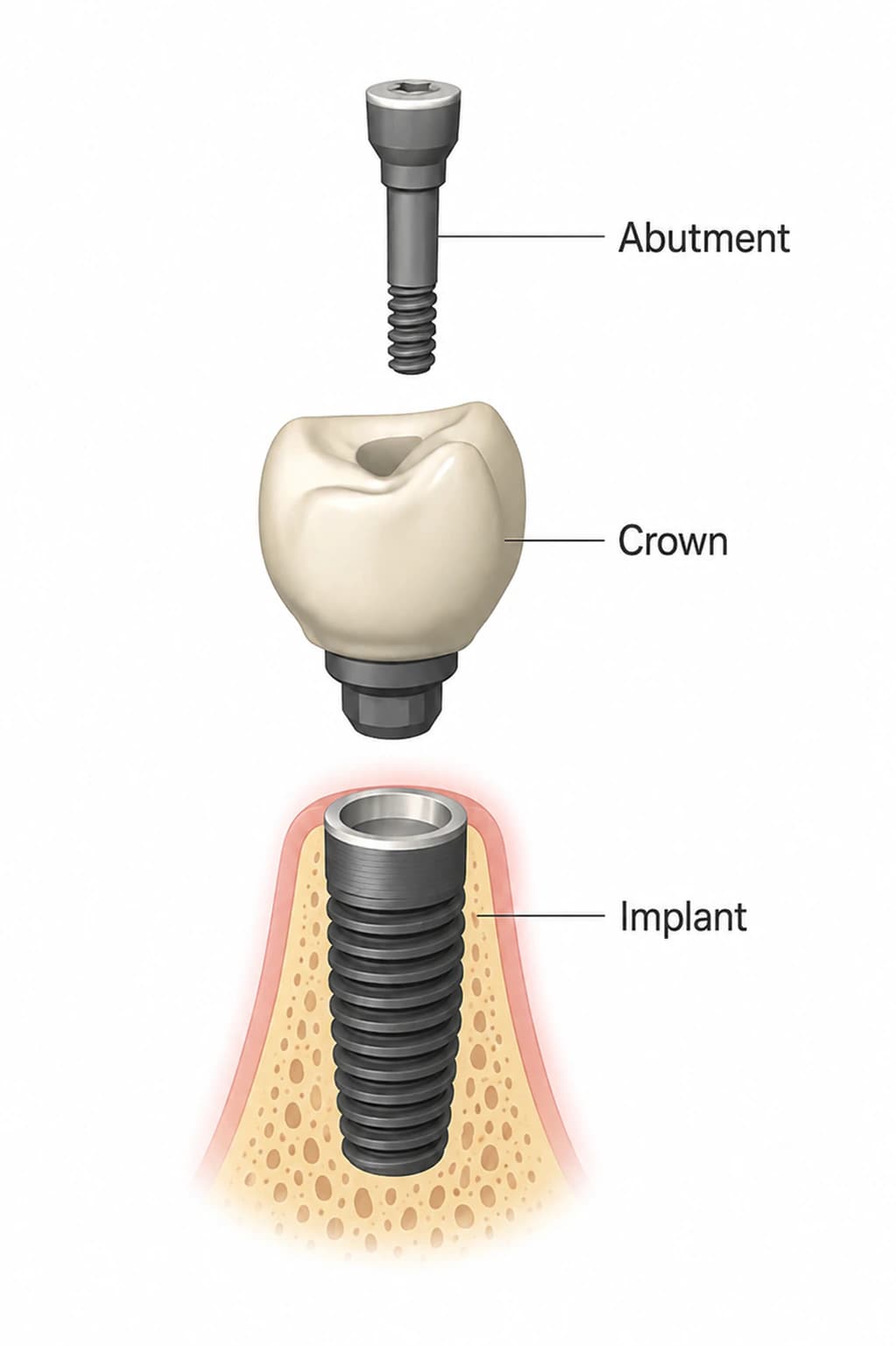
Tenderness on biting, a faint clicking, or a sense that the crown shifts slightly are typical of a loosened screw. It is common: screw loosening affected 8.8% of single implant crowns within five years in a systematic review. A loose screw lets the crown rock under load, which irritates the tissue and can eventually break the screw, so it should be tightened or replaced promptly; our article on an implant that feels loose explains how.
Less often, the abutment cracks, or the implant itself fractures. In a series of 10,099 implants, 44 fractured, on average about eight years after placement; grinding and implants next to a cantilever carried a much higher risk. Grinding is a common thread in all of these mechanical problems — a 2025 meta-analysis found bruxism associated with several-fold higher odds of screw loosening, screw fracture, abutment fracture and implant fracture.
Infection around the implant
Peri-implantitis — inflammation around an implant with loss of the supporting bone — can cause tenderness, swelling, bleeding, a bad taste or pus. It often causes little pain, particularly early on, which is one reason it can progress unnoticed; when it does hurt, there is usually already a pocket around the implant. Peri-implantitis frequently begins within the first few years of an implant's life and tends to accelerate, so pain accompanied by bleeding or swelling should be examined within days.
Our articles on bleeding, swelling or a bad taste around an implant and on peri-implantitis treatment explain how those signs are read and treated.
Food trapped beside the implant, and the tooth next door
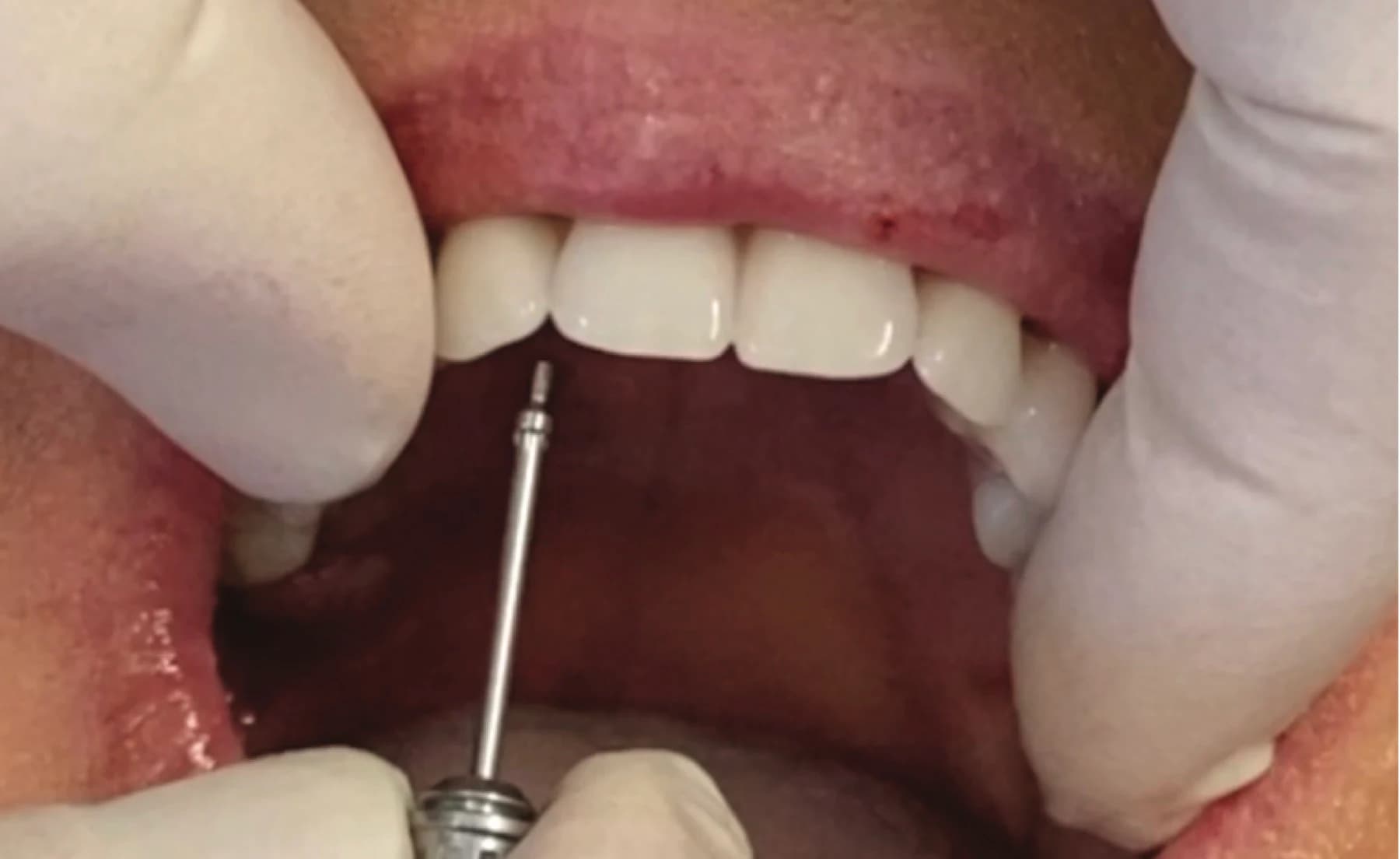
Pressure or soreness that builds after meals and eases after flossing often means food is packing between the implant crown and a neighboring tooth. Open contacts next to single implant crowns are common — found at 52.8% of 174 crowns in one study — and trapped food inflames the gum and can make the area ache. Our article on food trapping around implants covers the fixes.
Trapped food also puts the neighboring tooth at risk. In a 2026 study of 445 implant restorations, decay was found on an adjacent tooth in 8.1% of cases, and a study of molar implants found decay on adjacent teeth in 7.4% of cases when the implant sat close to the tooth but 40% when the gap at the bone was 6 mm or more. A cavity, crack or nerve problem in that tooth can feel exactly like implant pain, because the pain is hard to localize. Checking the neighboring teeth is part of every examination of a painful implant.
Pain that comes from somewhere else
For upper back implants, the sinus is worth considering. Sinus inflammation after a sinus lift is uncommon — about 1% in a 2024 meta-analysis — and more frequent after zygomatic implants, at about 4%, but ordinary sinus congestion can also make upper teeth and implants feel sore under pressure. Aching jaw muscles and jaw joints from grinding or clenching can radiate to implant teeth too.
Two causes patients often worry about are rare. Persistent nerve pain after implant surgery was found in 0.3% of patients in a university study of more than 1,000 patients — all of those affected were 60 or older — and it usually begins after the surgery rather than appearing years later. True titanium allergy is also uncommon: in a study of 1,500 implant patients, 0.6% tested positive, mostly among people who already had allergy-like symptoms or unexplained implant failures.
What to do if an implant starts to hurt
Chew on the other side, keep the area clean — including between the implant and its neighbors — and note what triggers the pain: biting, cold, meals, lying down, or nothing in particular. That history helps the diagnosis. Do not start leftover antibiotics, which can mask an infection without treating it, and do not try to tighten or glue anything yourself.
Book a visit within days if the pain persists, if the crown moves, or if there is bleeding, swelling, a bad taste or pus. Facial swelling that spreads quickly, fever, or difficulty swallowing or breathing needs emergency care first.
How the cause is found
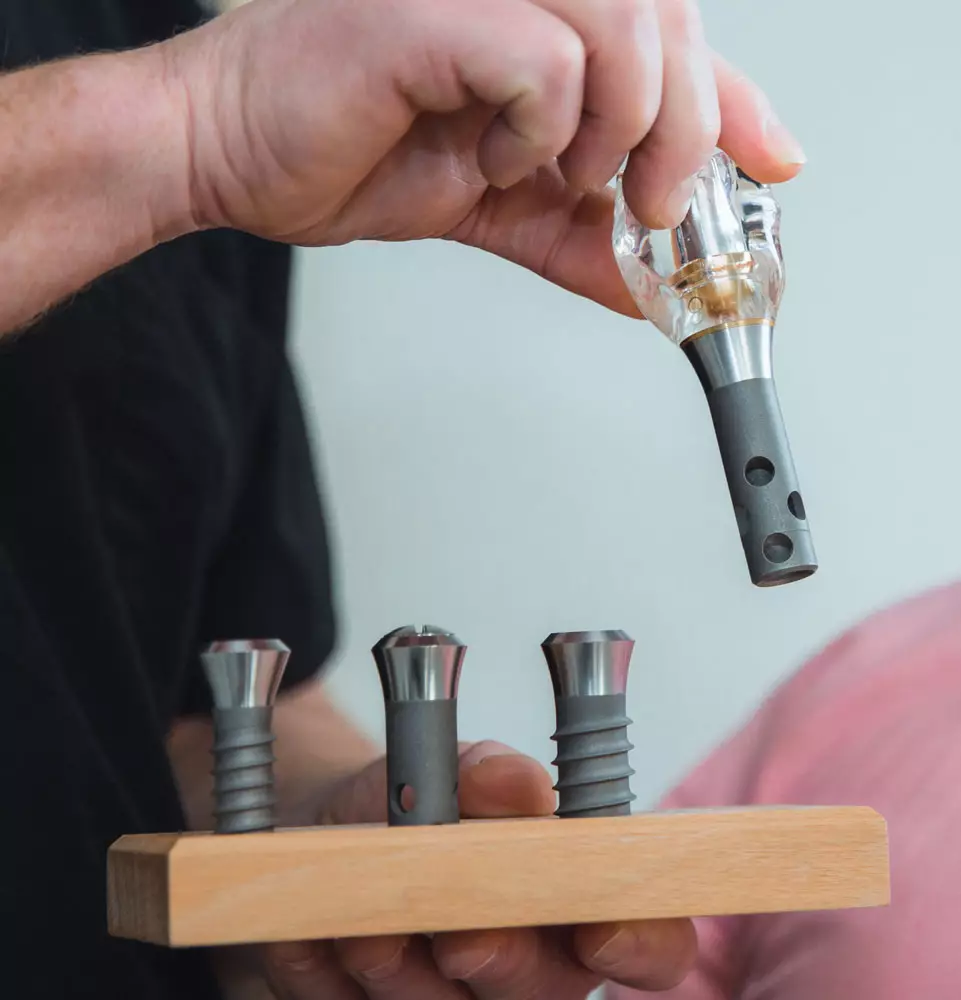
A painful implant is diagnosed by ruling causes in and out. We check the bite with marking paper, test whether the crown or the implant moves, probe the gum for pockets, bleeding and pus, look for trapped food and open contacts, and test the neighboring teeth. An X-ray or 3D CBCT scan shows the bone around the implant, the fit of the parts, any fracture, the neighboring roots and, for upper implants, the sinus. When a crown is screw-retained, removing it lets us inspect the screw, the abutment and the implant connection directly.
Once the cause is clear, the treatment is usually specific and proportionate: a bite adjustment, a new screw, a reshaped or remade crown, treatment of the gum or the neighboring tooth, or, less often, treatment of peri-implantitis or replacement of a damaged part.
Bringing a painful implant to us
Whether your implant was placed here or at another office, we can examine it. We are open six days a week, and the consultation and 3D scan are free. You receive a plain-language explanation of what is causing the pain and the treatment options, with costs in writing. You can book here, or read more on our implant complications page.
Written and medically reviewed by Dr. Sam Jain, DMD, MS, and Dr. Arpana Gupta, DDS, MDS, who own this practice. Reviewed
This article is patient education, reviewed by Dr. Sam Jain, DMD, MS, and Dr. Arpana Gupta, DDS, MDS, and is not a substitute for an exam. Treatment recommendations are made only after an in-person consultation and 3D imaging.