Helping a Parent Get Dental Implants: A Family Guide
Half the full-arch consultations we see start with an adult son or daughter doing the homework. Here's how to do that job well — from vetting the practice to the ride home after surgery.
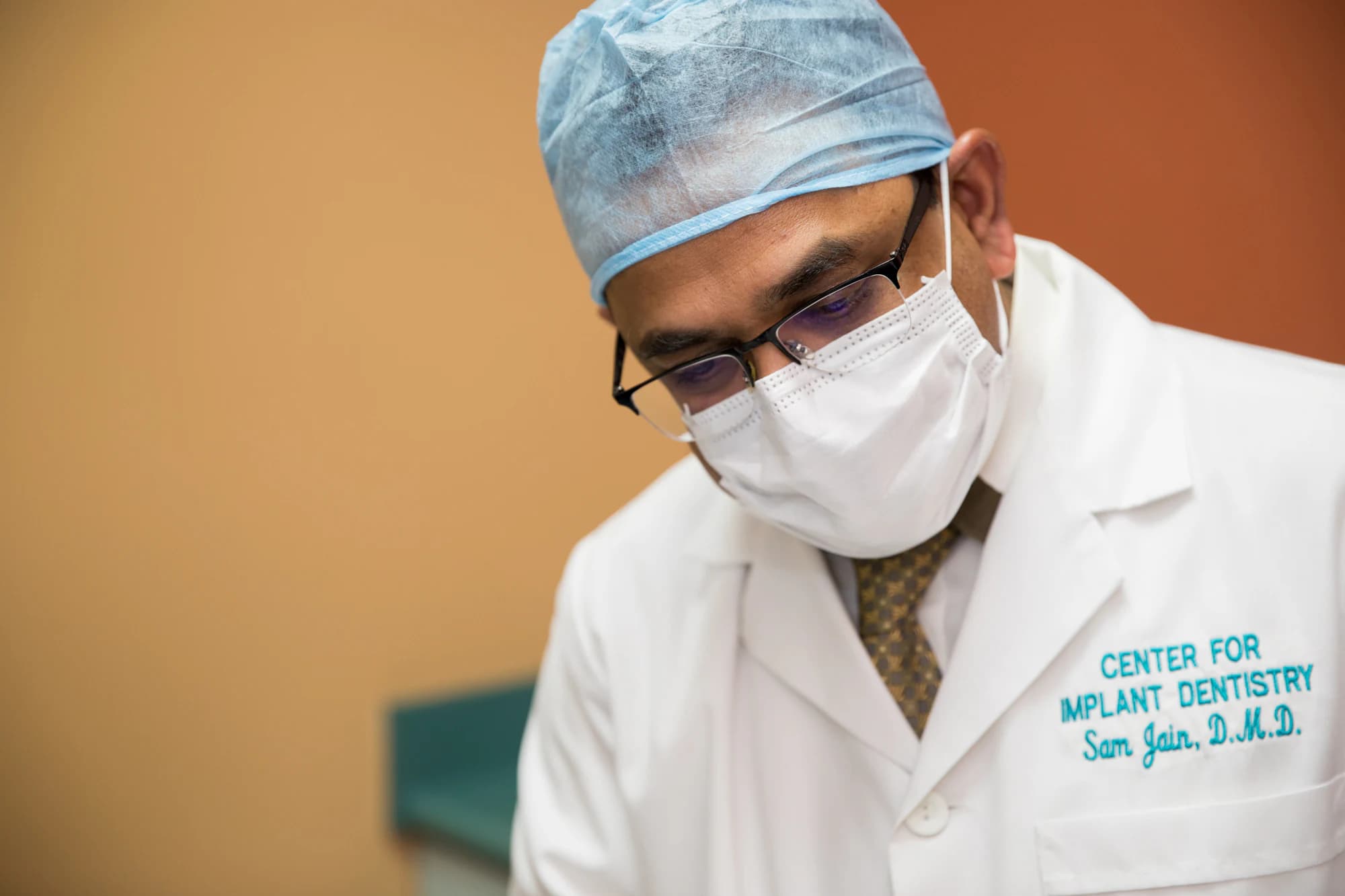

Written and medically reviewed by Dr. Sam Jain, DMD, MS, and Dr. Arpana Gupta, DDS, MDS
Published

Why this usually falls to the adult children
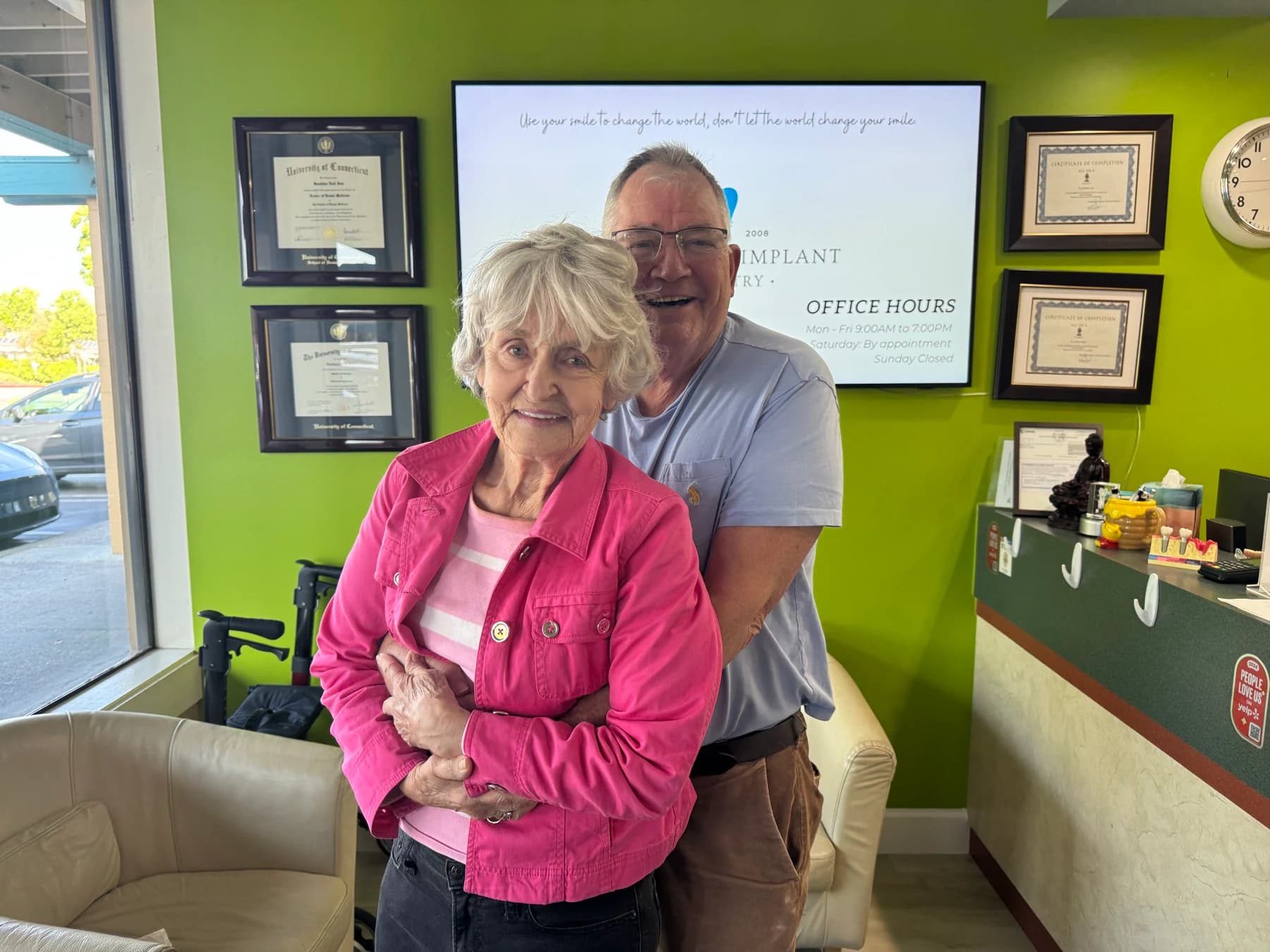
The pattern is familiar to us: a parent has struggled with failing teeth or loose dentures for years, quietly narrowed their diet to what stays put, and stopped smiling in photos — and it's a son or daughter who finally opens the laptop. That's not overstepping; it's often exactly what's needed. Implant treatment is a significant decision with real money involved, and a second set of eyes on the research protects everyone.
Two things are worth saying at the start. First, you are welcome in the room here — at the consultation, on the phone, in the follow-ups. We'd rather answer a family's questions together than have you relay them secondhand. Second, the decision still belongs to your parent. The best thing you can do is make it an *informed* decision, and this guide is the homework list. If your parent has been told they're 'too old,' start with our implants for seniors page: there is no upper age limit — health decides, not birthdays.
How to vet a practice on someone else's behalf
You can't judge surgical skill from a website, but you can verify what should be verifiable. Check the doctors' actual credentials — licenses and NPI numbers can be looked up in public registries, and a practice confident in its people will link them (ours are on the verified credentials page, with the registry links to check us yourself). Look for who actually does the surgery: rotating providers and 'smile consultants' are different from owner-doctors who examine, operate, and answer for the result years later.
Then judge honesty by how they handle money before you ever visit. A practice that publishes its fees, itemizes its estimates in writing, and tells you plainly what insurance won't cover is showing you how it will behave later. Be wary of quotes that can't be itemized, urgency discounts that expire this month, and anyone who promises a specific result before seeing a 3D scan of your parent's jaw.
The consultation: come along, and bring these questions
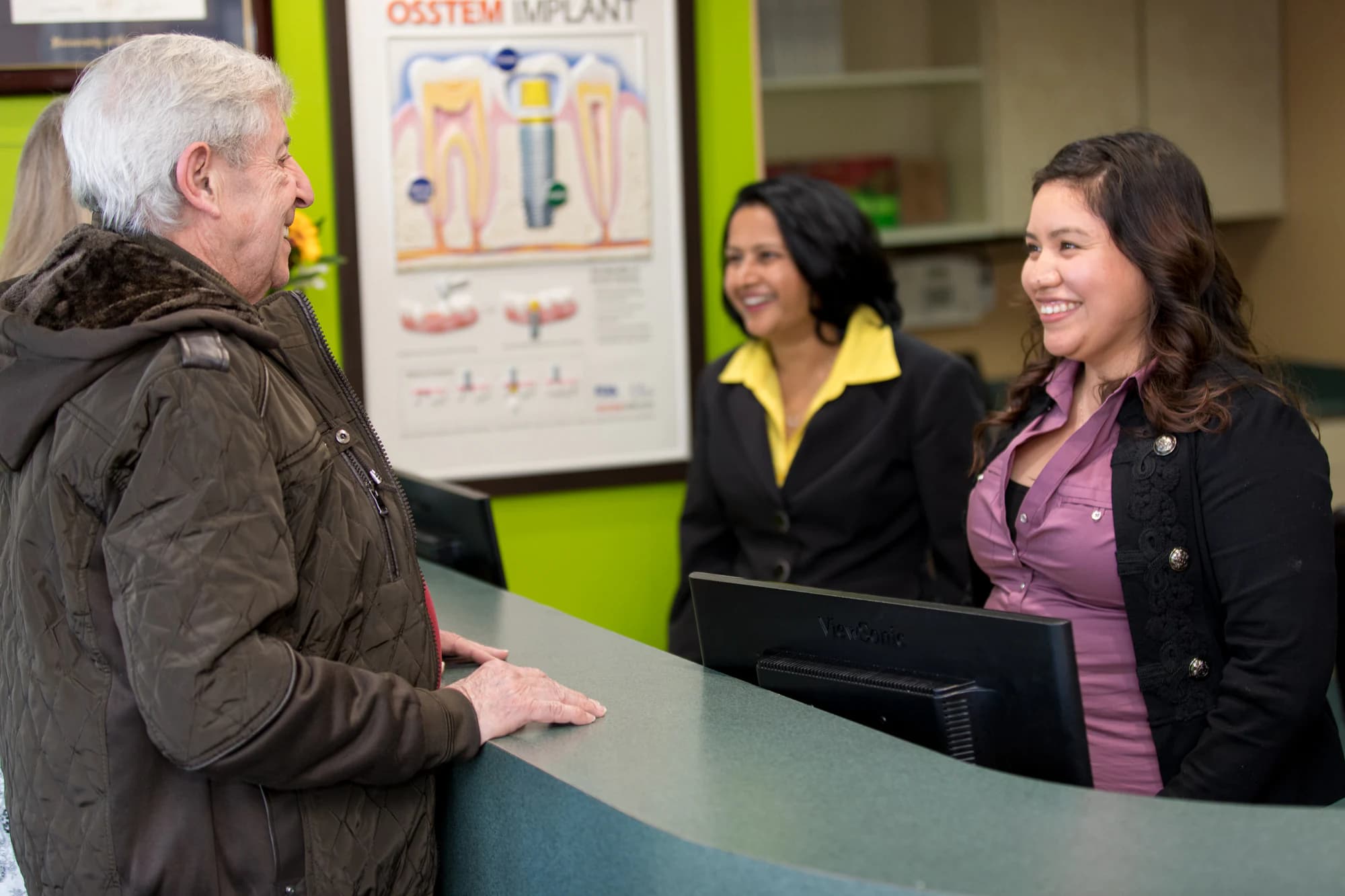
Book one consultation together before deciding anything — ours is free, including the 3D CBCT scan, and about an hour. Sit in. The right practice will talk *to your parent* while making room for your questions; the wrong one will pitch past them to whoever holds the checkbook. Useful questions to bring: What exactly does the quoted number include? Who places the implants, and who do we call in five years? What happens if something needs adjusting later? How many visits, and what does each one involve?
Ask about comfort too, because fear — not money — is what has kept many parents in failing teeth for a decade. Oral and IV sedation are available here, supervised by ACLS-certified doctors, and the practical detail that matters for you: a sedated patient needs a driver, which usually means your calendar. The details live on our sedation page — read it before the consult so the logistics don't surprise you.
The money conversation, without the awkwardness
Money is where family help matters most and gets most delicate. The useful facts: most dental PPO plans cap annual benefits at a set maximum (a real dent in a single tooth, a small one in a full arch); Medicare and Medicaid can't be used for implant work here; and the gap is usually financed into monthly payments. Prequalifying is a soft credit check that takes minutes, and a co-applicant with stronger credit — often the adult child — can meaningfully widen the options. The full picture is on our financing page.
One honest caution in both directions: don't let a parent talk themselves out of treatment to avoid 'being a burden,' and don't pressure one into treatment they're not ready for. The itemized written estimate exists so the whole family can look at the same real numbers, at home, without anyone selling anything. That's also why we put every cost in writing before asking for a decision.
After surgery: what your parent will actually need from you
The first few days are where family help is practical, not just moral. Plan for: the drive home (required after sedation), soft meals for the early days — and for full-arch patients, a softer-food period while the implants integrate — help keeping medications on schedule, and a watchful eye for the things that should prompt a call to us: pain that climbs after day three instead of easing, growing swelling, or fever. Everything else — mild soreness, some swelling peaking around day two or three — is normal healing.
After that, your job shrinks to encouragement: follow-up visits happen with the same doctors who did the surgery, cleanings and maintenance keep the investment healthy, and the day your parent orders the steak or the corn on the cob without thinking about it, you'll know the homework was worth it. If you're starting from a denture situation, our implant-supported dentures guide explains the honest middle options too — sometimes the right first step isn't the biggest one.
Written and medically reviewed by Dr. Sam Jain, DMD, MS, and Dr. Arpana Gupta, DDS, MDS, who own this practice.
This article is patient education, reviewed by Dr. Sam Jain, DMD, MS, and Dr. Arpana Gupta, DDS, MDS, and is not a substitute for an exam. Treatment recommendations are made only after an in-person consultation and 3D imaging.