
Save the tooth or replace it? Understand both paths.
Dental Implants vs. Root Canal: An Honest Way To Decide
Hear from patients who faced the same save-or-replace choice
Schedule ConsultationThe Decision Nobody Explains Well
Save The Tooth You Have. Or Replace It With One That Lasts.
A dentist just said the words "root canal" — or maybe "this one's not worth saving." Now you're weighing two very different paths for the same aching tooth, and the internet is split between people who swear by saving every tooth and people who wish they'd pulled theirs years ago. Both are right, sometimes. The trick is knowing which camp your tooth belongs in.

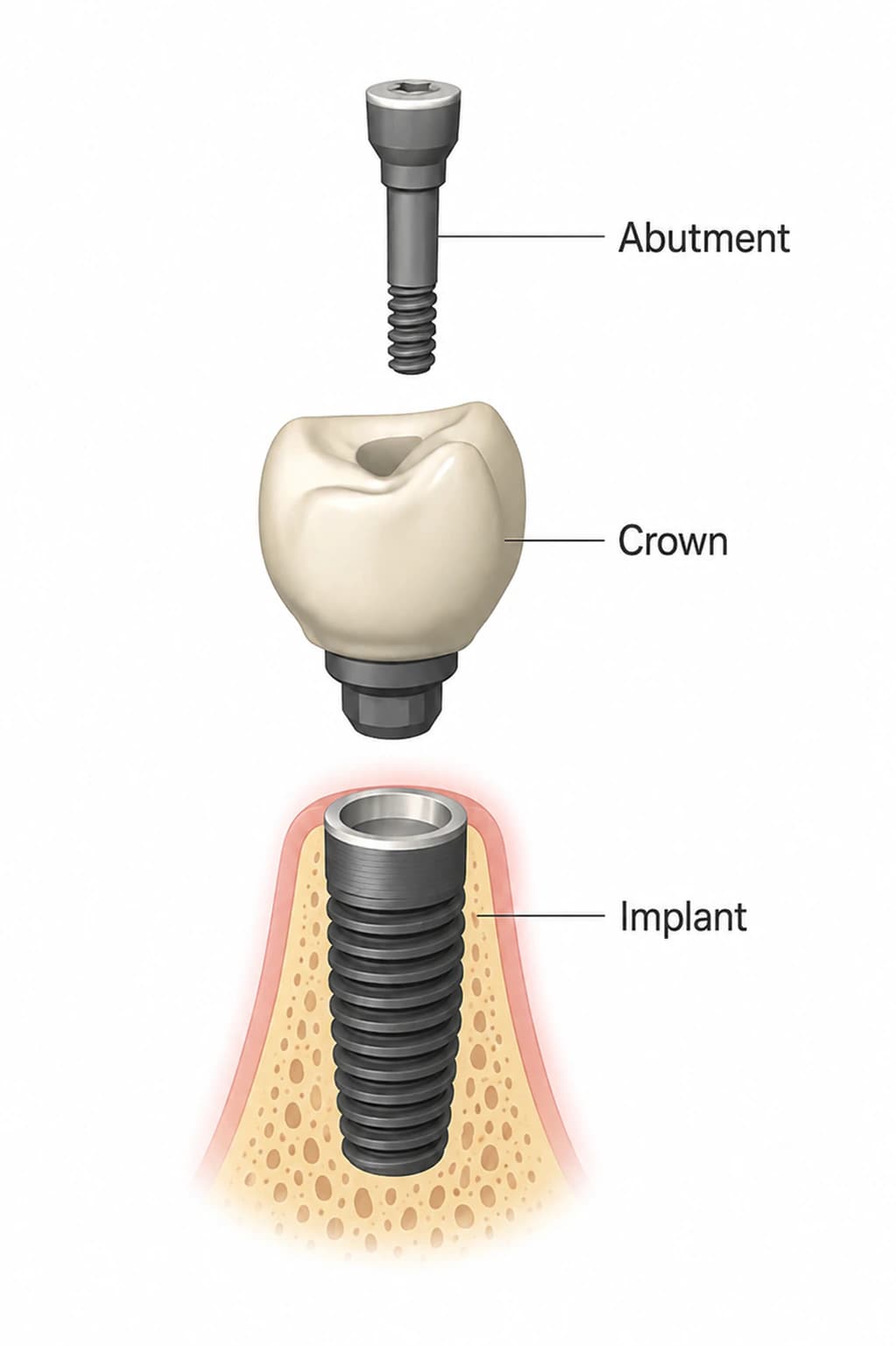
Here's the view from a practice with no root-canal revenue at stake — and a co-founder whose master's degree is in endodontics, the specialty of saving teeth. A root canal removes the infected nerve, seals the tooth, and usually caps it with a crown — often a post too, if there's little structure left. Done on the right tooth, it's the more conservative choice, and nothing beats a healthy natural tooth you keep. An implant is the other road: extract the tooth, place a titanium root in the bone, and build a new tooth on top that can't decay and can't need a second root canal.
The real question isn't "which is better" — it's "which is better for this tooth, this many treatments in, with this much of it left." A first-time root canal on a solid molar is a different bet than a re-treatment on a cracked, already-crowned tooth. Below we lay both roads out side by side, honestly, so you can walk into any consult knowing what you're actually choosing between.
The Practice
This Practice, At A Glance
Figures reflect the practice's real numbers and general clinical ranges; your specifics are confirmed at a free consultation with 3D imaging. Individual results vary.
Save It Or Replace It? The Twenty-Year Ledger
How a root canal (with crown, sometimes a post) and a dental implant compare on the things that decide it — for this tooth, at this stage.
Keeping your natural tooth
Extract & dental implantThe tooth comes out. A titanium root and a new tooth take its place — nothing of the original remains.
Root canal + crownYou keep your own tooth, roots and all. Nothing artificial in the bone, and often the more conservative first move.
Longevity
Extract & dental implantThe implant itself can last decades — often a lifetime — with ~95% success at ten years, and it can never decay or need a root canal.
Root canal + crownA well-done first root canal can last many years to a lifetime. But a re-treated or cracked tooth is a shorter, less certain bet.
Re-treatment odds
Extract & dental implantNo nerve to re-infect and no enamel to decay. Maintenance is cleaning and the occasional crown check — not repeat rescues.
Root canal + crownFirst-timers do well; re-treatments succeed far less often, and a hairline crack under the crown can end the tooth outright.
Cost over 20 years
Extract & dental implantHigher up front, then a flat line — no repeat root canals or crown swaps on that tooth over the decades.
Root canal + crownCheapest this year. But redo + new crown + eventual implant anyway can quietly become the most expensive road of all.
Impact on neighbors & bone
Extract & dental implantThe implant stimulates the jawbone like a real root, so the bone stays and neighboring teeth aren't touched.
Root canal + crownPreserves the tooth's own root and bone — as long as the tooth survives. No drilling on the teeth beside it.
When each one wins
Extract & dental implantBest when the tooth is cracked, already re-treated, badly broken down, or keeps re-infecting — replace it once, cleanly.
Root canal + crownBest on a first root canal with solid remaining structure in healthy bone. Save the good tooth; don't rush to pull it.
Comparisons are general guidance; your plan is confirmed after an exam and free 3D CBCT scan. Individual results vary.
When A Root Canal Is The Right Call And We'll Tell You So
When A Root Canal Is The Right Call
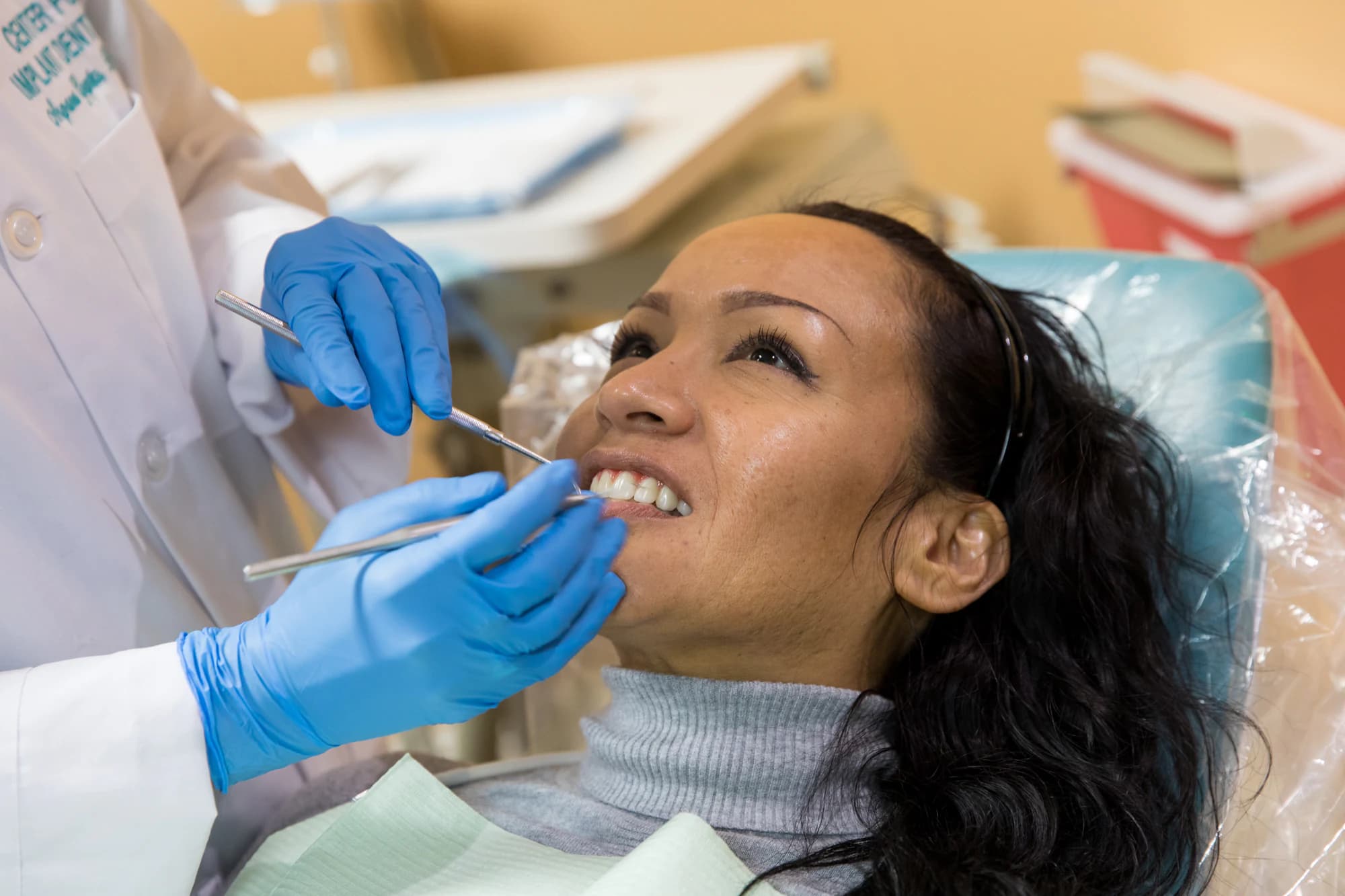
Because we place implants for a living, patients expect us to push extraction. We don't. If a tooth is on its first root canal, has enough solid structure for a crown to grip, and sits in healthy bone, saving it is usually the smarter, more conservative move — and cheaper this year. A natural tooth still has its own ligament, its own subtle sensation when you bite, its own perfect fit against its neighbors. No implant, however good, fully replaces a healthy tooth you get to keep.
The math tilts when a tooth has already been through the cycle. A re-treated root canal succeeds meaningfully less often than a first attempt, and a tooth that's cracked below the gumline, lost most of its wall, or keeps flaring up with infection is a tooth spending your money to fail slowly. Each redo — new crown, new post, sometimes an apicoectomy — is real cost and real time buying borrowed years. At some point you're renovating a house whose foundation is gone.
That's the honest fork: a root canal buys you your own tooth for as long as it holds; an implant restarts the clock with a tooth that can't decay and can never need a root canal. We'll show you which side your tooth is on using a free 3D CBCT scan — the same scan we'd use to plan an implant — and if the tooth is worth saving, we'll say so and send you to keep it.
The Twenty-Year View Where The Costs Actually Land
The Twenty-Year View
Compare a root canal and an implant on price today and the root canal wins easily. Compare them across twenty years and the picture can flip, depending on how many times the saved tooth needs rescuing. A root canal plus crown that lasts is a bargain. A root canal, crown, later re-treatment, new crown, and eventual extraction-and-implant anyway is the most expensive road of all — you paid for the save *and* the replacement.
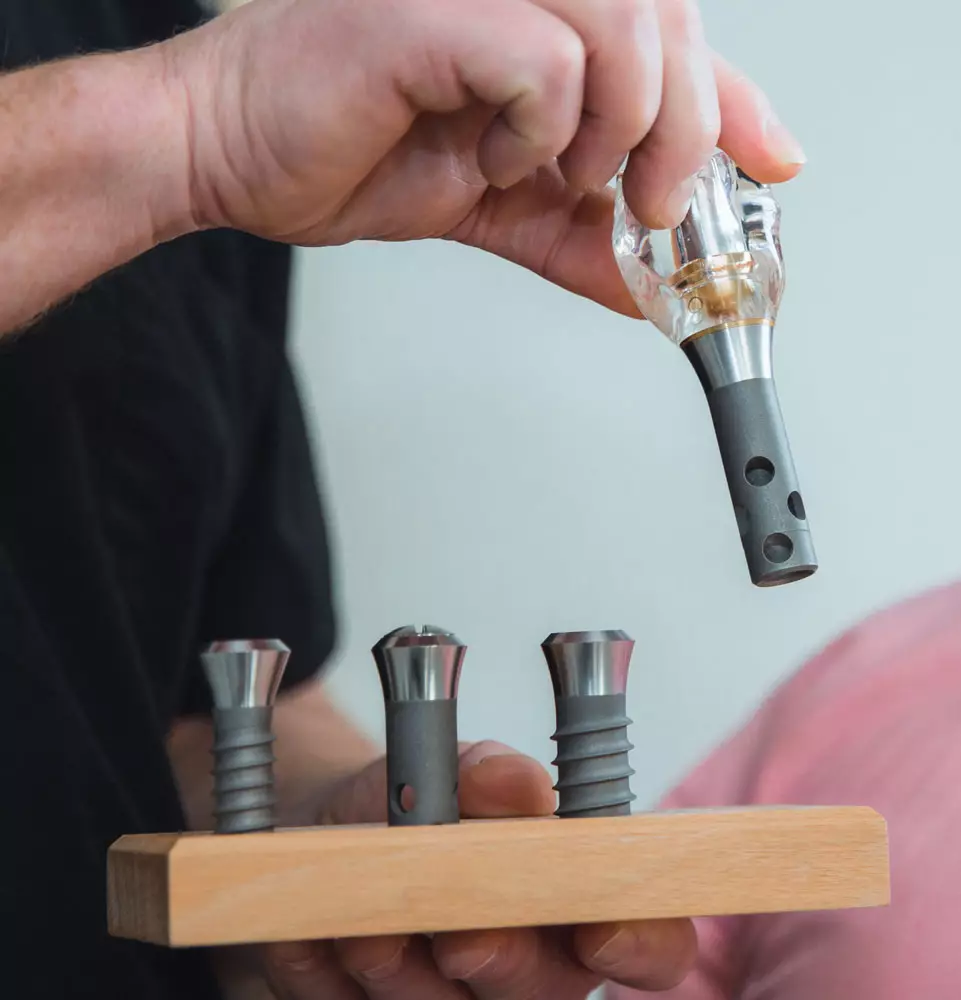
An implant is a bigger number up front and a flatter line afterward: no decay, no root canals, no crown replacements every several years on that tooth. Because our CBCT, guided surgery, IV sedation, and our own in-house zirconia mill all sit down one hallway — no fly-in surgeons, no outsourced lab markup — the number surprises patients who assumed a real implant had to cost a fortune. You get your final tooth in roughly 24 hours on many single cases, not months of temporaries.
The point isn't that implants are cheaper — sometimes the root canal genuinely is. The point is to run the *twenty-year* math, not the this-week math, especially on a tooth that's already been treated once. Bring your situation to a free consultation and we'll put honest numbers next to your actual scan, whichever way they point.
Still Torn?The Questions Worth Asking First
My root canal failed. Is an implant my only option now?
Not always — but it's often the most reliable one. A failed root canal can sometimes be re-treated or fixed with a small surgery at the root tip, and if the tooth still has good structure, that's worth exploring first. The catch is the odds: re-treatments succeed noticeably less often than first attempts, and if the tooth is cracked or badly broken down, you'd be paying to delay the inevitable. When a re-treatment isn't sensible, extraction and an implant replace the tooth once with something that can't decay and can never need a root canal. A free 3D CBCT scan tells us honestly which of those two you're actually choosing between.
Isn't saving my natural tooth always better than replacing it?
When the tooth can genuinely be saved, yes — and we'll tell you so even though we only place implants. A healthy natural tooth has its own ligament, its own bite sensation, and a perfect fit nothing artificial fully copies. The honest exception is a tooth that's already been through the cycle: cracked below the gum, mostly hollowed out, or on its second or third rescue. Past a certain point, 'saving' it means paying repeatedly to watch it fail slowly. The goal is the right call for that specific tooth — not a rule that fits every one.
Which one actually costs less over time?
A root canal plus crown that lasts is almost always the cheaper road — that's the real case for saving a good tooth. Where the math flips is the tooth that needs rescuing more than once: a root canal, then a re-treatment, then a new crown, then extraction and an implant anyway means you paid for both the save and the replacement. An implant costs more up front but flattens out — no repeat root canals, no decay, no crown swaps on that tooth. Run the twenty-year number, not just this year's. Our honest cost breakdown and a free consult give you the real figure for your case.
If I choose the implant, do I have to walk around with a gap?
Usually not. On many single teeth we extract, place the implant, and deliver a final tooth in roughly 24 hours, because our surgery, 3D imaging, and zirconia mill are all under one roof. That means no months of a visible gap and no shuttling between a surgeon and an outside lab. We plan the extraction and the replacement as one connected step — you can read exactly how on our extraction and immediate implant page.
How do you decide whether my tooth is worth saving?
We start with a free 3D CBCT scan — the same scan we'd use to plan an implant — and look at three things: how much solid tooth structure is left for a crown to grip, whether there's a crack heading below the gumline, and how the surrounding bone looks. A first root canal on a structurally sound tooth in healthy bone is a save. A cracked, re-treated, or hollowed-out tooth that keeps flaring up is a replace. We have no root-canal revenue at stake either way — and Dr. Gupta's master's in endodontics means judging whether a tooth can be saved is squarely her training.
Who actually does the implant if I go that route?
The same two owner-doctors who plan it — every step, every case. Dr. Sam Jain (DMD with a master's in mechanical engineering, ICOI Master) and Dr. Arpana Gupta (DDS, MDS with advanced training in endodontics, and ICOI Master) plan, place, and restore your implant personally. There are no fly-in surgeons here. Dr. Gupta's endodontic training is part of why our save-or-replace advice is straight: she spent years saving teeth before this practice, so she knows exactly when a tooth is worth it and when it isn't.
Still weighing your options? Learn more about full mouth dental implants or schedule a free consultation.
Not Sure Whether To Save It Or Replace It? A Free 3D Scan Gives You A Straight Answer — Either Way
Clinically reviewed by
Updated
 Dr. Sam Jain, DMD, MS
Implant Surgeon, Implantologist & Founder
 Dr. Arpana Gupta, DDS, MDS
Implant Surgeon & Implantologist
Their review covers the treatment description, candidacy, timelines, risks and aftercare.
- Treatment details change as our protocols and materials do.
- Your options can only be determined after an in-person examination and a 3D scan.