You do not need the most implants. You need the right support.
How Many Dental Implants Do I Actually Need?
See how many implants real patients needed — and what they got back
Schedule ConsultationThe Number Nobody Explains Clearly
Count The Teeth You're Missing. Not The Implants You Think You Need.
Most people walk in doing the wrong math. They count the gaps in their smile, multiply by one, and brace for a number that sounds impossible. If you're missing eight teeth, the fear says eight implants. If you're missing them all, the fear says a mouthful of titanium. It doesn't work that way, and it never has.
An implant is a root, not a tooth. A single root can carry one crown — or it can share the load of a bridge, or anchor a whole arch of teeth alongside a handful of its neighbors. The right question isn't "how many teeth am I missing," it's "how few implants can carry them back, and carry them for decades." That answer changes with your bone, your bite, and how much you're replacing.
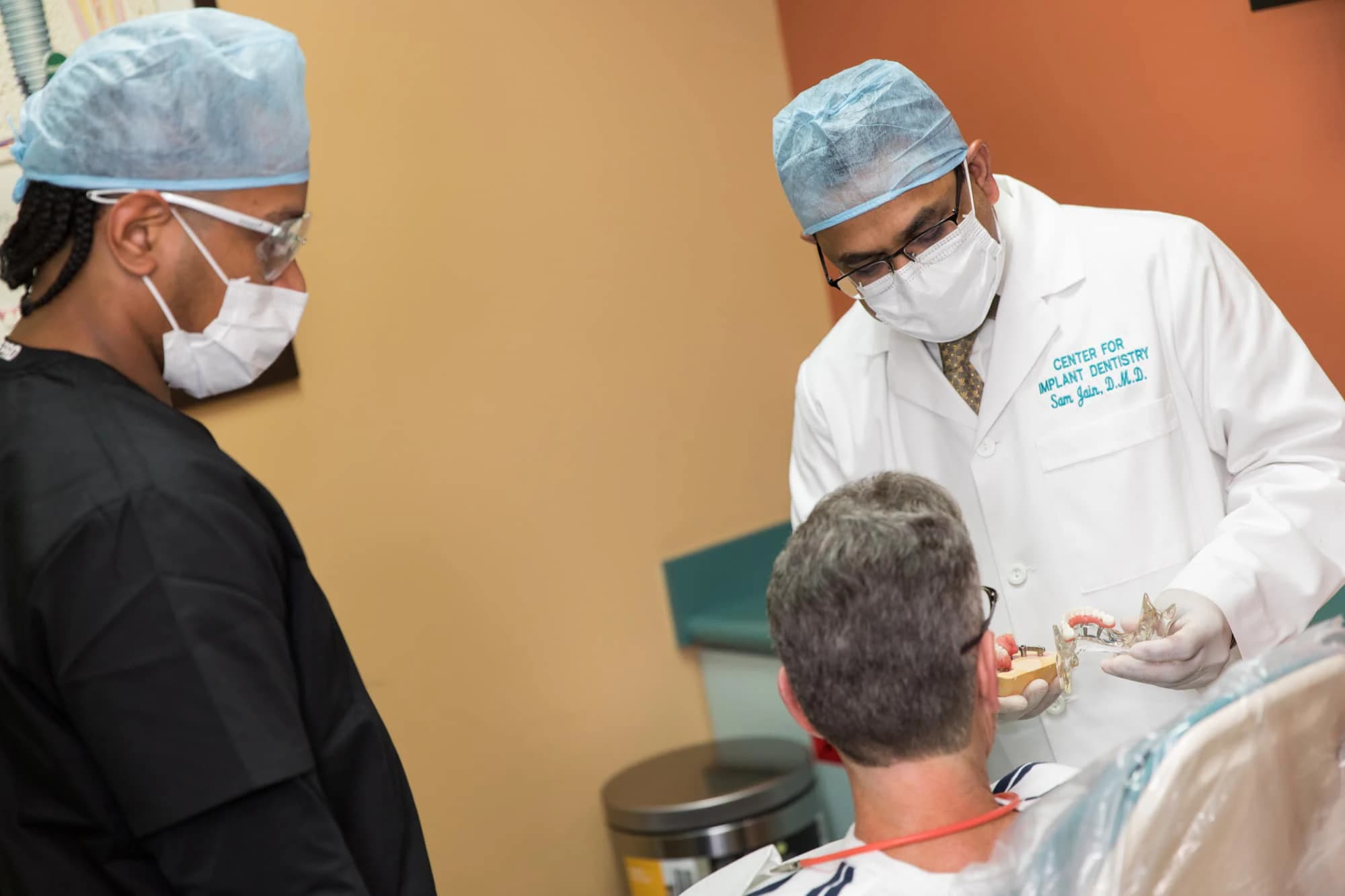
Here's the framework we walk patients through in the consult room in Fremont and San Francisco — one tooth, a few teeth, or most of them — so you arrive already knowing roughly where you land. Then a free 3D CBCT scan turns "roughly" into your exact number, read off your actual jaw.
The Practice
This Practice, At A Glance
Figures reflect the practice's real numbers and general clinical ranges; your specifics are confirmed at a free consultation with 3D imaging. Individual results vary.
How Many You Actually Need, By How Much You're Missing
Find the row that matches your mouth. The left column is the honest number and the service it points to; the right column is the myth we spend our days correcting.
1 missing tooth
What you actually need1 implant + 1 crown. A single root replaced, neighboring teeth untouched — often to final teeth in about 24 hours. This is single-implant territory.
The one-implant-per-tooth myth"One tooth, one implant" — which happens to be correct here, and is exactly why people wrongly assume the rule holds for every case after it.
2–4 missing teeth in a row
What you actually need2 implants carrying a fixed bridge. Two well-placed roots span three or four teeth — no removable partial, nothing that clasps onto healthy teeth.
The one-implant-per-tooth myth3 or 4 separate implants, one per gap — thousands of dollars of hardware you didn't need, and more surgery than the span requires.
Several teeth, gaps spread out
What you actually needA planned mix — a bridge here, a single implant there — mapped on your 3D scan to use the fewest roots for the most teeth.
The one-implant-per-tooth mythAn implant for every empty socket, treating your mouth like a spreadsheet instead of a structure.
Most of one arch
What you actually need4 implants supporting a full fixed arch (All-on-4) — a complete set of teeth on four precisely angled roots, with fixed teeth the same day and final milled teeth in about 72 hours.
The one-implant-per-tooth myth10–14 implants to 'match' the teeth — a number that scares people out of treatment they could easily have.
A full arch, heavy bite or soft bone
What you actually need8 implants for maximum strength — Dr. Jain's All-on-8 Robust, engineered to spread bite force across twice the anchors.
The one-implant-per-tooth mythEither too few implants for the load, or a fear-driven guess at 'more is safer' with no planning behind it.
Told you have 'no bone'
What you actually needOften still a fixed arch — zygomatic implants anchor in the cheekbone, or grafting rebuilds the site. The number stays small; the anchoring gets smarter.
The one-implant-per-tooth myth"You're not a candidate" and a lifetime of dentures — the answer too many patients are handed before a proper scan.
Comparisons are general guidance; your plan is confirmed after an exam and free 3D CBCT scan. Individual results vary.
The Myth That Costs People Thousands "One Implant Per Tooth"
The Myth That Costs People Thousands
Somewhere along the way, the idea took hold that every missing tooth needs its own implant. It's the single most expensive misunderstanding in this field — and it sends people either into sticker shock they didn't need, or away from treatment entirely because the imagined number felt absurd.
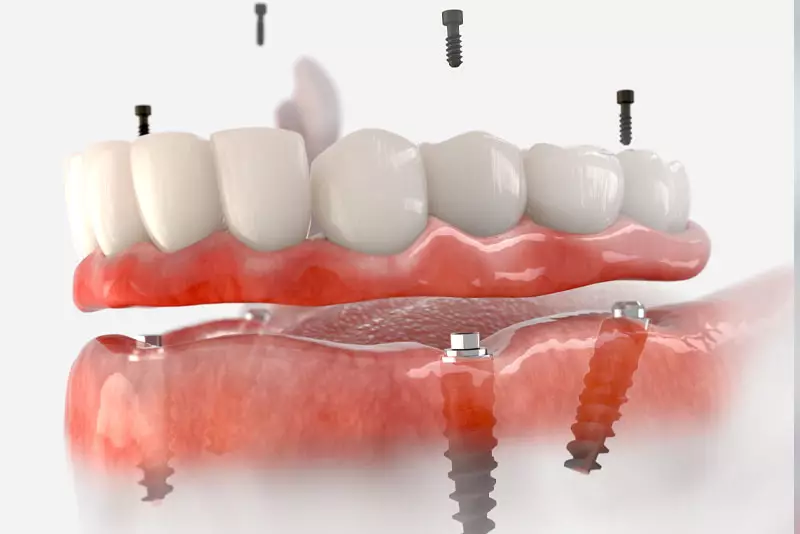
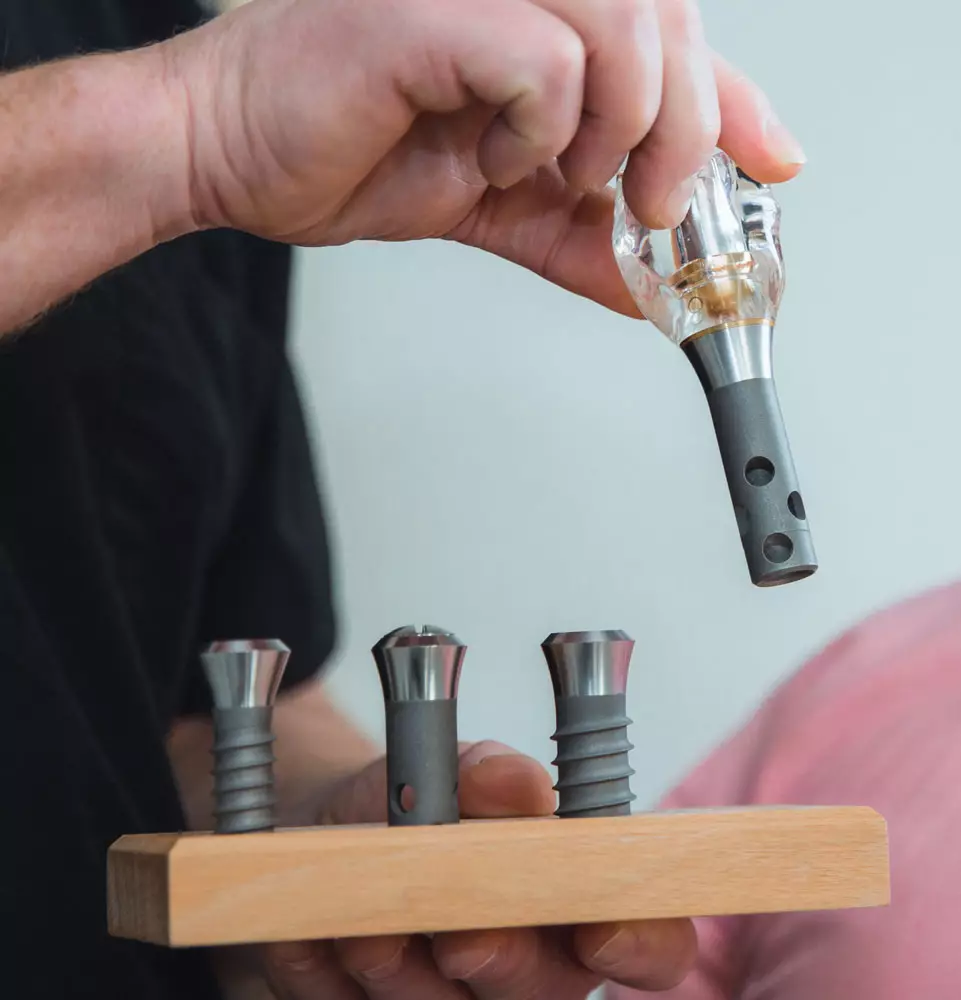
Think of it the way a structural engineer would, which is exactly how Dr. Sam Jain — who came to dentistry from mechanical engineering — thinks about it. A bridge spanning a river doesn't need a pillar under every foot of roadway; it needs the right pillars in the right places to carry the span. Teeth are the same. A row of three or four missing teeth can ride on a bridge held by two well-placed implants. A full upper or lower arch — fourteen teeth — rides on four to eight. The teeth you see are the roadway. The implants are the pillars, and good planning means fewer of them, not more.
This is why the free scan matters more than any online estimate. On your CBCT, we can see where your bone is dense enough to anchor a pillar and where it isn't, then place the smallest number of implants that will hold the most teeth safely. Fewer implants, placed precisely, is better dentistry — and usually a smaller number than you feared. Curious what drives the total either way? Our honest cost breakdown lays it out.
Find Your Row One Tooth, A Few, Or All Of Them
Find Your Row
Missing a single tooth. You need one implant and one crown — a titanium root placed where yours used to be, topped with a zirconia crown milled in our own lab, often to final in about a day. It never touches the healthy teeth on either side, which is the quiet advantage over a traditional bridge that grinds down its neighbors. This is the world of single dental implants.
Missing a few teeth in a row. You almost certainly do not need one implant per gap. Two or three implants can carry an implant bridge that replaces three, four, even five teeth in a stable, fixed span — no removable partial, no clasps, nothing to take out at night. That's the heart of our multiple-implant work, and it's where the "one per tooth" myth costs people the most.
Missing most or all of an arch. A full set of teeth rides on four to eight implants — not fourteen. The classic solution is All-on-4: four implants supporting a complete fixed arch, often with teeth the same week. For heavier bites, softer bone, or patients who simply want the strongest foundation we build, Dr. Jain developed All-on-8 Robust — eight implants spreading the load end to end, with no single implant as a point of failure. And if you've been told you have "no bone" for any of this, zygomatic implants anchor in the cheekbone and often make a fixed arch possible anyway.
How Many Will I Need?And Everything That Follows
Do I really need one implant for every missing tooth?
No — and this is the most important thing to understand before you see any estimate. Implants are roots, not teeth, and a few roots can carry many teeth. One missing tooth takes one implant. Three or four missing teeth in a row usually take two implants and a bridge. A full arch of fourteen teeth takes four to eight, not fourteen. Anyone quoting you one implant per tooth for a multi-tooth case is quoting you more surgery and more cost than you likely need.
How many implants do I need for 3 missing teeth?
Typically two. Two implants placed at the ends of the gap can carry a fixed bridge that replaces all three teeth — solid, permanent, and cleaned like natural teeth. There's no removable partial and nothing that clasps onto your healthy teeth. In some cases the exact placement shifts based on bone, which is what your free 3D scan determines, but 'three teeth on two implants' is the everyday answer.
How many implants to replace all my teeth?
For a full arch — all upper or all lower teeth — the answer is four to eight implants per arch, not one per tooth. All-on-4 uses four; our All-on-8 Robust uses eight for a stronger foundation under heavy bites or softer bone. Replacing every tooth in your mouth (both arches) means two arches' worth, so roughly eight to sixteen implants total — still a fraction of the 28 teeth they support.
Are more implants always better and stronger?
Not automatically. The goal is the right number in the right places, not the highest number. Too few implants overloads them; too many means unnecessary surgery, cost, and healing. That's why Dr. Jain — an ICOI Master with an engineering background — plans placement on your CBCT scan before anything is decided. Sometimes that means the extra strength of All-on-8; often it means the elegant minimum. Both are 'better' only when they fit your anatomy.
What if I've been told I don't have enough bone?
You may still need only a small number of implants — placed differently. Zygomatic implants anchor in the dense cheekbone instead of the jaw, and bone grafting can rebuild a site over time. Many patients told 'no' elsewhere leave here with a fixed arch on four to six implants. Both owner-surgeons plan, place, and restore these cases in-house — we don't fly in outside surgeons — so the plan is made by the people who'll do the work.
How do I find out my exact number?
With a free consultation and 3D CBCT scan — a $499 value at no cost. The scan shows your actual bone in three dimensions, and from it we can tell you precisely how many implants your case needs and where they'd go, with the number in writing. It's the only way to move from 'roughly' to 'exactly,' and it's the honest starting point for any real plan.
Still weighing your options? Learn more about full mouth dental implants or schedule a free consultation.
They Asked The Same Question
And Got A Straight Answer Four, Six Or Eight
Our patients wrote these, and we cannot edit a word. The rating beside them counts every review on our Google profile — not only the five-star ones shown here.
Elisa Morris
Dr Jain is very professional. He’s perfectionist make sure your hap with the result
Marsh Fong
I had beautiful smile I like this place amazing they did my mouth implant treatment I am very happy feel confident my smile and they are amazing doctors very confident about work . I wish I give it 100 stars
prajwol Basnet
I recently had my 2 implant treatment here and I’m very happy with the results. Dr. Jain and Dr. Gupta are very experienced and explained everything clearly, which made me feel comfortable throughout the treatment. I was also really impressed that they have an in-house lab, so everything is done under one roof. A friend recommended this place to me, and I’m glad I came here. Everyone was welcoming and professional, and overall I had a very good experience. Definitely recommend!
Frank Chang
I did my implant they did same day I am very process very smooth and fast dr Jain and Dr Gupta has lot of experience very good and knowledgeable doctors I recommend this implant center I came with lot of pain yesterday they finish process same day
M Welch
⭐⭐⭐⭐⭐ I cannot say enough wonderful things about the Center for Implant Dentistry! From the moment I walked through the door until the moment I walked out with my beautiful new smile, I felt welcomed, cared for, and confident that I was in the right hands. I had All-on-6 full upper and lower implants. Dr. Jain and Dr. Gupta are incredibly talented at what they do. They didn’t just give me new teeth — they gave me a new lease on life. Seeing my new smile for the first time was emotional, and I honestly couldn’t be happier with the end result. The amount of skill, care, and attention to detail that went into my treatment was incredible. The entire staff was amazing from beginning to end. Everyone was welcoming, patient, kind, and made me feel comfortable throughout the whole process. Having major dental work done can be scary, but they took such great care of me every step of the way. I walked in hoping to get my smile back, and I walked out with more confidence than I could have imagined. I can smile again without trying to hide my teeth, and that means more to me than I can put into words. Thank you, Dr. Jain, Dr. Gupta, and the entire Center for Implant Dentistry team for giving me my smile and my confidence back. You truly changed my life, and I will forever be grateful. If you are considering dental implants and are nervous or unsure about taking that first step, I wholeheartedly recommend Center for Implant Dentistry. My only regret is that I didn’t do this sooner! ⭐⭐⭐⭐⭐ A truly life-changing experience.
Samyak Jain
I had been hiding my smile for a long time. Eating was difficult, smiling in photos felt uncomfortable, and little by little it started affecting my confidence in ways I did not even realize. Walking into Center for Implant Dentistry, I was hopeful, but also nervous. This was a big decision for me. Now, when I look in the mirror, I do not just see new teeth. I see my confidence coming back. I can smile freely again, eat comfortably, and feel like myself again. That is something I will always be grateful for. I highly recommend Center for Implant Dentistry to anyone thinking about dental implants. This place did not just change my smile. It changed how I feel about myself. I visited again this Implant Center for checkups and the whole staff is lovely.
mohammad omar mohammadi
I am very I came yesterday my missing teeth they did surgery immediately and I got my tooth immediately very profession I am very happy I am very scared before that because I have missing teeth in front but they fix it write away Thank you dr Jain and dr Gupta I recommend this implant center
Emerson Salvador
They did an amazing job with my dental implants and gave me a new smile that enhanced my confidence. They have great customer service and were really informative.
Lady Gemini
They did excellent work on my brother Bring your mother, your sister, your brother they do excellent work and they’re very patient and they make you look beautiful. There’s a picture.
Jessica To
Amazing center I did my full mouth dental implant treatment long time 8 year almost no problem I am very happy this implant center is amazing they have in-house the power of making teeth I very very happy . Highly recommend if somebody wants implant
james wells
I am very happy for this place I did my full mouth dental implant treatment from this place 5 year ago and result xame very good my teeth looks very natural I coming from all way from Sacramento the reason for choosing this place because they have everything under one roof every expertise under one roof engineering surgical experience manufacturing facility because this kind of treatment needs expertise who have good experience and dr jain and dr Gupta is amazing When I got my final teeth I feel like that moment is glimpse of eternity Very happy
Vincent Betar
The entire staff here are really amazing from the receptionist to the doctors who perform an amazing transformation of my teeth and my facial expressions. I feel very grateful for the work done and very satisfied. I highly recommend center for Implant dentistry sincerely. Vince Betar.





Reviews are individual patient experiences, shown as posted. Results vary from person to person.
Let's Find Your Number — Free Scan, Honest Answer
Clinically reviewed by
Updated
 Dr. Sam Jain, DMD, MS
Implant Surgeon, Implantologist & Founder
 Dr. Arpana Gupta, DDS, MDS
Implant Surgeon & Implantologist
Their review covers the treatment description, candidacy, timelines, risks and aftercare.
- Treatment details change as our protocols and materials do.
- Your options can only be determined after an in-person examination and a 3D scan.