Reasons to Consider Sedation Dentistry
If fear, a stubborn gag reflex, or the dread of a long appointment has kept you out of the chair, sedation is often the single thing that finally makes treatment possible.


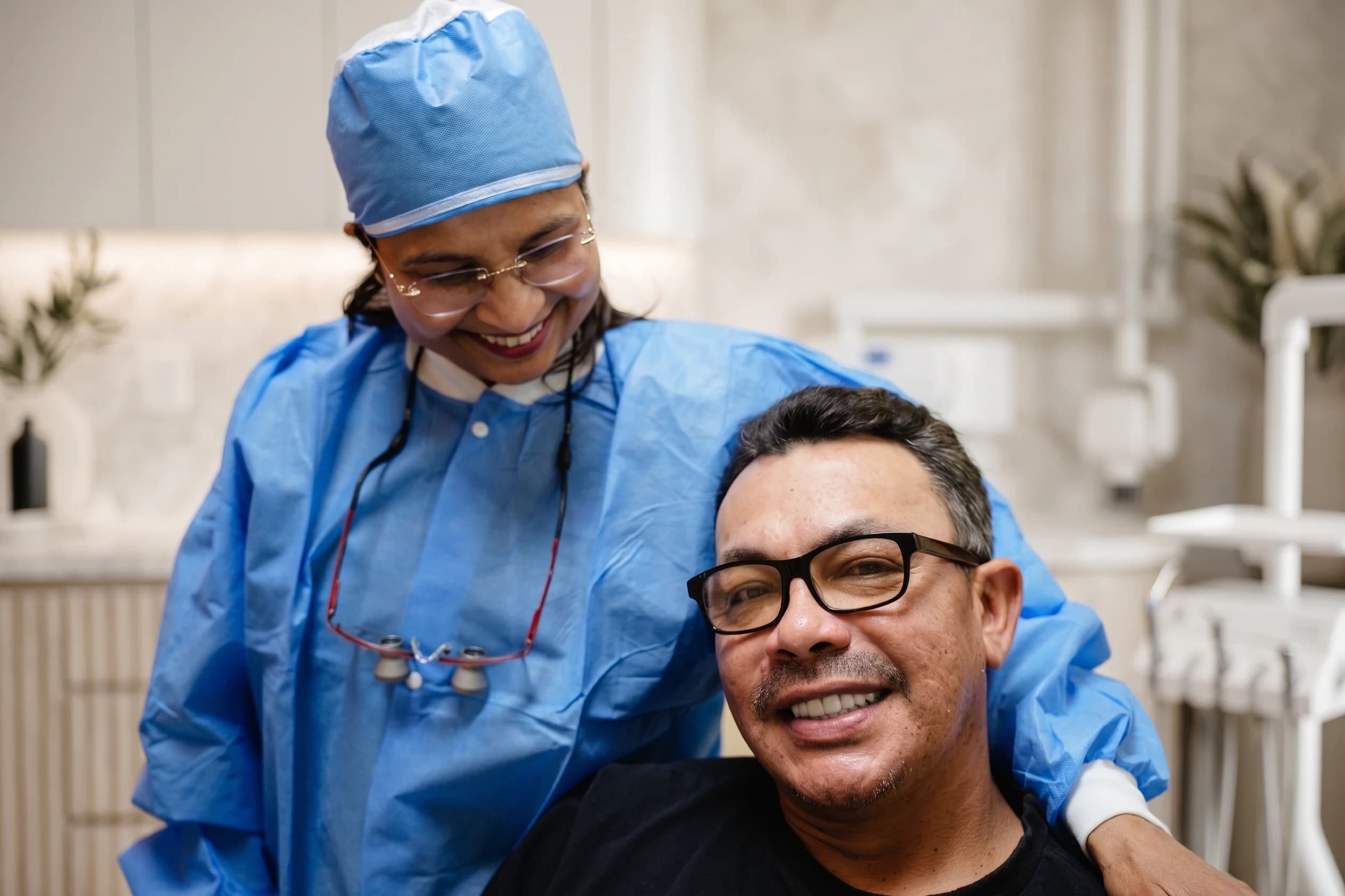
Written and medically reviewed by Dr. Sam Jain, DMD, MS, and Dr. Arpana Gupta, DDS, MDS
Published · Updated
In this article
- 1Why Patients Choose Sedation
- 21. It Ends Dental Fear Instead of Working Around It
- 32. It Makes a Strong Gag Reflex a Non-Issue
- 43. Big Cases Get Done in One Calm Visit
- 54. It's the Only Comfortable Path Through the Hard Cases
- 65. Time Compresses — a Long Appointment Feels Short
- 76. Safety Comes From Training, Not Just the Medication
- 87 & 8: Options That Fit You, and a Team That Stays With You
Why Patients Choose Sedation
Most people don't ask for sedation because surgery hurts — modern local anesthetic already handles the pain. They ask for it because of everything around the pain: the fear, the sounds, the pressure, the strong gag reflex, the sheer length of a big appointment. Sedation lets you get real work done without white-knuckling the armrest for two hours. For a lot of our patients, it's the difference between finally fixing their teeth and putting it off for another five years.
So the honest reason to consider it comes down to a simple question: is something other than the actual dentistry keeping you out of the chair? If the answer is yes — anxiety, past bad experiences, a gag reflex that fights every instrument, or a case big enough that you'd rather not be mentally present for it — sedation is worth a real conversation. The rest of this article walks through the specific benefits that matter most, so you can tell which ones apply to you.
1. It Ends Dental Fear Instead of Working Around It
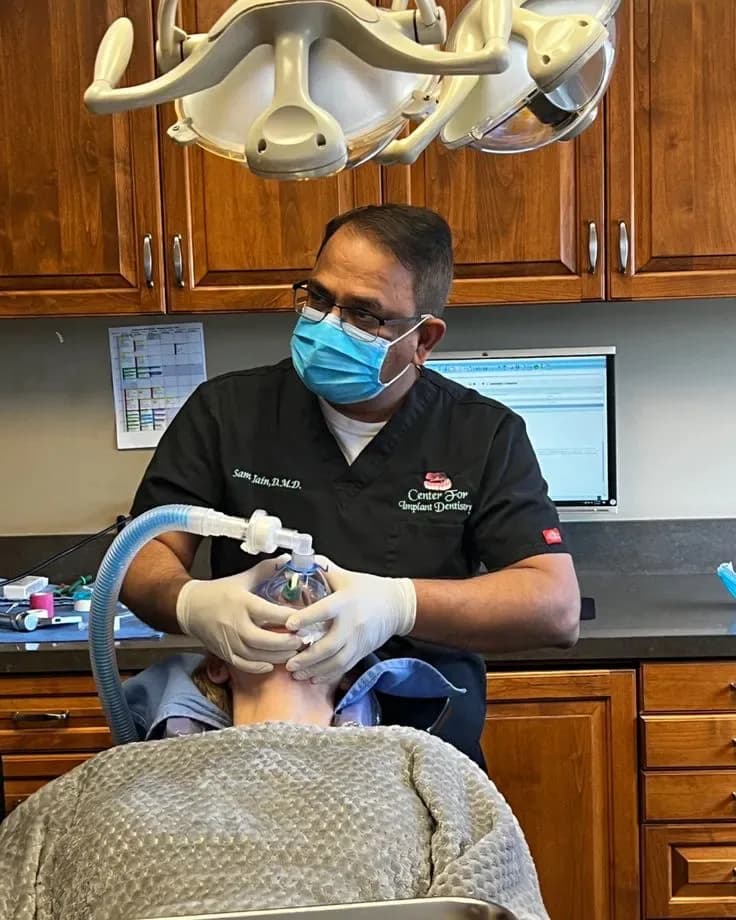
Dental anxiety is not a character flaw, and it's more common than people admit — plenty of otherwise unflappable adults dread the chair. The usual coping strategy is avoidance, and avoidance is exactly how a small problem becomes a full-arch problem. Sedation breaks that loop. With IV sedation, you settle into a deeply relaxed twilight state: you're breathing on your own and can respond to simple requests, but time compresses and most patients remember little to nothing afterward. The most common thing we hear is some version of, "I remember sitting down, and then everyone was congratulating me."
That matters beyond the appointment itself. When the memory of treatment isn't traumatic, patients actually come back for cleanings and follow-ups instead of vanishing until the next emergency. Ending the fear once tends to fix the avoidance that caused the damage in the first place.
2. It Makes a Strong Gag Reflex a Non-Issue
A hair-trigger gag reflex can turn even routine work into a fight — and it makes anything involving the back of the mouth genuinely difficult for both you and the surgeon. Oral or IV sedation quiets that reflex, so impressions, back-molar work, and implant placement can proceed calmly instead of in three-second bursts. If you've ever had a dentist give up mid-procedure because you couldn't tolerate the instruments, this is the fix. You're not "difficult" — your body just has a loud protective reflex, and sedation turns the volume down.

3. Big Cases Get Done in One Calm Visit
This is where sedation stops being a comfort nicety and becomes practical. Full-arch implant work — removing failing teeth, placing implants, sometimes grafting — is real surgery, and doing it awake over a long appointment is a lot to ask of anyone. Under IV sedation, a procedure that would otherwise be split into several tense visits can be completed in a single one, while you rest. For our full-arch patients, that's the norm rather than the exception. You can see how that same-day workflow comes together on our same-day dental implants page.
There's a compounding benefit here. Because we plan, place, restore, and mill everything under one roof — including an in-house zirconia mill that produces final custom teeth in roughly a day for single or multiple implants, or about 72 hours for a full arch — sedation lets us do more of the heavy lifting in fewer appointments. Fewer visits means fewer times you have to steel yourself for the chair. It's especially relevant for multiple implants and full-arch options like All-on-4 and the All-on-8 Robust protocol, where the surgery is more involved.
4. It's the Only Comfortable Path Through the Hard Cases
Some cases genuinely take longer and reach deeper — zygomatic implants anchored in the cheekbone for patients with almost no upper-jaw bone, extensive bone grafting, or rescuing failed implants placed at another office. These aren't procedures anyone wants to sit through wide awake. IV sedation is what makes complex, high-value work tolerable in a single sitting rather than a grueling marathon. If you were told elsewhere that your case was "too much," sedation is often part of what makes it doable here.
5. Time Compresses — a Long Appointment Feels Short
One of the strangest and most appreciated effects of sedation is what it does to time. Under IV sedation, a two-hour procedure can feel like fifteen minutes. There's no watching the clock, no bracing through each new step, no mounting fatigue from staying tense. You relax, and the appointment is simply over. For patients who dread the duration as much as the dentistry, that alone is the reason they choose it.

6. Safety Comes From Training, Not Just the Medication
The reasonable question anyone asks is whether sedation is safe. In trained hands, remarkably so — and the training is the whole story. Our doctors completed formal IV sedation training at the Medical College of Georgia and hold Advanced Cardiac Life Support (ACLS) certification from the American Heart Association, with additional coursework in emergency airway management and 12-lead EKG interpretation. You're continuously monitored throughout treatment, and the person watching those monitors is a doctor equipped for far more than dentistry ever requires. The doctors administer the sedation themselves and stay with you through treatment — nothing is handed off to a third-party service that bills you separately. That's a level of on-site medical oversight many implant offices simply don't have.
7 & 8: Options That Fit You, and a Team That Stays With You
Sedation isn't one thing. Local anesthesia alone suits patients who are comfortable in the chair for shorter visits. Oral sedation — a prescribed pill beforehand — takes the edge off moderate nerves while you stay awake. IV sedation is the choice for significant anxiety, strong gag reflexes, long or complex procedures, or anyone who simply prefers to be elsewhere mentally. The doctors review your health history and recommend honestly at your free consultation, and the decision stays yours. That's benefit seven: the level is matched to you, not sold to you.
Benefit eight is quieter but real. Dr. Sam Jain and Dr. Arpana Gupta — a married team of ICOI Masters — personally plan, place, and restore every case. There are no fly-in surgeons who sedate you, place an implant, and disappear. The same doctors who talk you through your options are the ones monitoring you during treatment and finishing your teeth afterward. Continuity like that is easy to overlook until you realize how often implant care is handed off between strangers.
One honest note on logistics: with oral or IV sedation, you'll need a trusted adult to drive you home and should take the rest of the day off from work decisions and anything requiring sharp judgment. You'll get exact, personalized instructions well before the appointment, so nothing about the day is a surprise. When you're ready to talk it through, the free consultation is the place to start.
Written and medically reviewed by Dr. Sam Jain, DMD, MS, and Dr. Arpana Gupta, DDS, MDS, who own this practice.
This article is patient education, reviewed by Dr. Sam Jain, DMD, MS, and Dr. Arpana Gupta, DDS, MDS, and is not a substitute for an exam. Treatment recommendations are made only after an in-person consultation and 3D imaging.