Overcoming Dental Anxiety: How Sedation Can Help
If the thought of the chair makes your stomach drop, you're not being dramatic and you're not alone — here's how sedation and a calmer approach actually break the fear, in plain terms.


Written and medically reviewed by Dr. Sam Jain, DMD, MS, and Dr. Arpana Gupta, DDS, MDS
Published · Updated

The Short Answer: Yes, You Can Get Through This Comfortably
If you've been putting off dental work because the fear is real — the sounds, the loss of control, a bad memory from years ago — the honest answer is that you can have implant treatment and feel almost none of it. With IV sedation, most patients are so relaxed they doze through the appointment and remember little to nothing of it afterward. You're not knocked fully out; you can still respond if spoken to, and your breathing is your own. But the anxious, white-knuckle version of the visit you're picturing largely doesn't happen. For a lot of people, that single fact is what finally gets them into the chair.
And you should know how ordinary this fear is. A U.S. survey published in the Journal of the American Dental Association found that roughly three in four adults report at least some dental fear, and about a fifth of Americans avoid the dentist because of it. Dentophobia — genuine, severe dental phobia — affects a real slice of the population, not a strange few. Naming it plainly matters, because avoidance is the trap: the longer a problem waits, the bigger the eventual fix, and the bigger the fix, the scarier it feels. Sedation is one of the tools that breaks that loop.
What Sedation Actually Does — and Doesn't Do
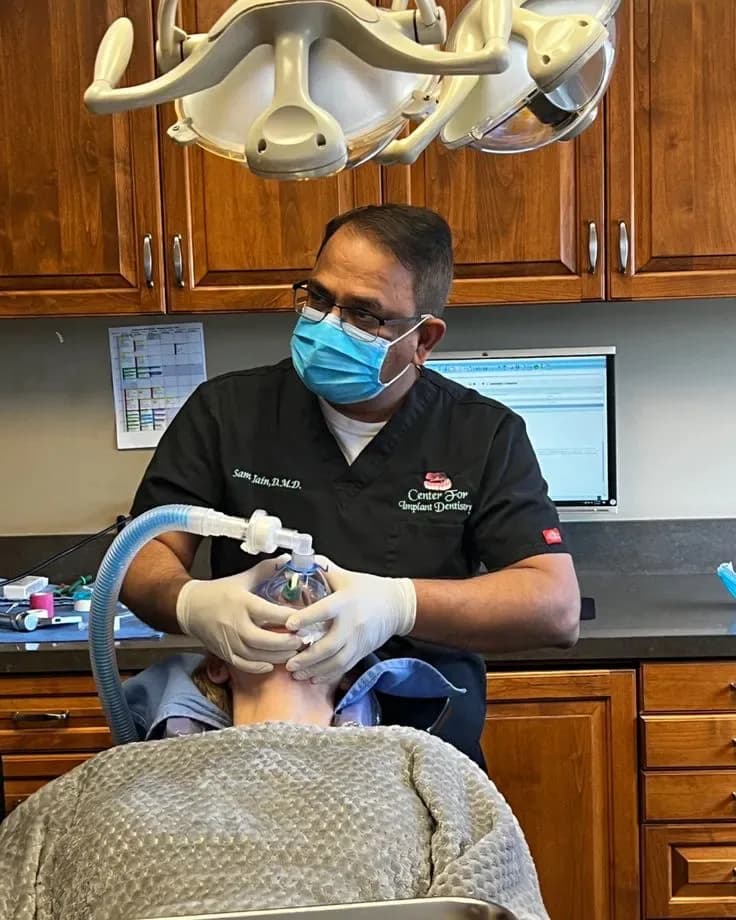
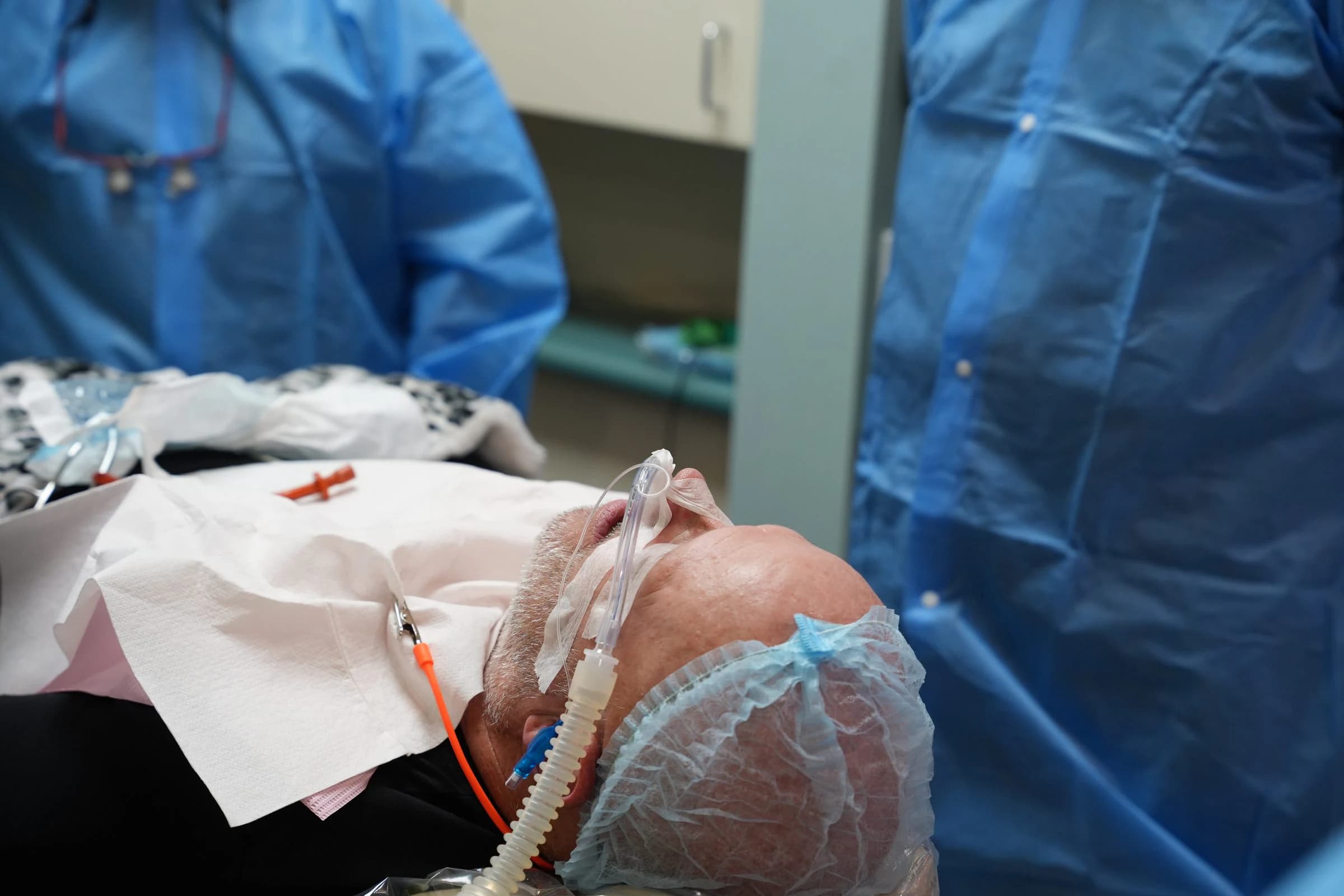
There's a range, and the right level depends on you. Lighter options like nitrous oxide ("laughing gas") take the edge off for a simple visit and wear off in minutes. At the deeper end, IV sedation — the same monitored anesthesia care used for many minor surgeries — is what most anxious implant patients choose. It's delivered through a small IV, it works fast, and it produces a calm, dreamy "twilight" state where time compresses and the appointment seems to pass in a blink. A common, welcome side effect is mild amnesia: you simply don't form sharp memories of the procedure, so there's no fresh bad experience to carry into the next visit.
What sedation doesn't do is leave you unmonitored. Throughout the appointment your pulse, blood pressure, and oxygen are watched continuously by trained staff — that monitoring is the whole point of doing it safely. It also doesn't replace numbing; you're still fully anesthetized where the work happens, so sedation handles the anxiety while local anesthetic handles the sensation. The honest caveats are the practical ones: you'll need someone to drive you home, you'll feel groggy for a few hours, and your medical history has to be reviewed first so the plan fits your body. Our sedation dentistry page walks through the options and who each one suits.
Why Fewer, Calmer Visits Beat White-Knuckling It Repeatedly
For someone with dental anxiety, the number of appointments is its own source of dread. This is where how a practice is built matters as much as the sedation itself. Because our planning, guided surgery, IV sedation, and an in-house zirconia mill all sit under one roof, a great deal of treatment that elsewhere is spread across many nervous visits gets compressed into far fewer. Failing teeth can come out, implants can go in, and a fixed set of teeth can be attached — often in a single sedated appointment. You can see that flow on the same-day dental implants page.
That compression is not just convenient; for an anxious patient it's therapeutic. Rather than months of temporary plastic and repeat trips, our CAD/CAM mill delivers final custom teeth in roughly a day for single or multiple implants, and about 72 hours for a full arch — so there are fewer chances for anxiety to rebuild between visits. Guided surgery with our X-Guide and Navident systems means placement is planned to the millimeter on your free 3D scan before we ever begin, which tends to make the actual procedure shorter and more predictable. And one detail quietly reassures nervous patients more than any brochure: the same two surgeons who plan your case, Dr. Sam Jain and Dr. Arpana Gupta, are the ones who place your implants and make your teeth. No fly-in surgeon you've never met is handling your care. If who does the work matters to you — and for the anxious, it usually does — our why choose us page lays it out.
Practical Ways to Walk In Calmer
Sedation does the heavy lifting, but small things stack up. Tell us you're anxious before anything else — it's the most useful sentence you can say, and it changes how the whole visit is paced. Book a morning slot so you're not spending the day dreading it. Bring headphones and your own music; ask about a signal (a raised hand) that means "pause," because knowing you can stop things restores the sense of control that fear steals. Some patients find it easier to start with just the consultation and 3D scan — no treatment, no commitment — simply to sit with the team, see the room, and get honest answers. That visit and scan are free, a $499 value, and for many people meeting the surgeons deflates half the fear on its own.
It also helps to know the after is manageable, because a lot of anxiety is really about the unknown. With implant treatment, the surgery is done under sedation, and afterward most patients handle soreness with prescription medication for a day or two and over-the-counter pain relievers after that — most tell us it was easier than they'd braced for. Our post-op instructions spell out exactly what the first week looks like, and our general FAQs answer the questions people are often too embarrassed to ask. If a past implant somewhere else failed and left you wary, that's a fixable situation we take on regularly — see implant complications and rescues. When you're ready, even just to talk, you can schedule a free consultation and start on your terms.
Written and medically reviewed by Dr. Sam Jain, DMD, MS, and Dr. Arpana Gupta, DDS, MDS, who own this practice.
This article is patient education, reviewed by Dr. Sam Jain, DMD, MS, and Dr. Arpana Gupta, DDS, MDS, and is not a substitute for an exam. Treatment recommendations are made only after an in-person consultation and 3D imaging.