
Titanium or zirconia? Choose the material that fits your case.
Titanium vs. Zirconia Implants: The Comparison Most Practices Can't Give You
Why we place both materials — and how we choose the right one for you
Schedule ConsultationA Material Choice, Made Honestly
Two Materials. One Honest Recommendation.
Here is something the glossy brochures rarely admit: most implant offices stock one material and recommend it to everyone. If a practice only buys titanium, titanium is always the answer. If it built its marketing around metal-free care, zirconia wins every consultation. The material gets chosen before you walk in — by the supply closet, not by your jaw.

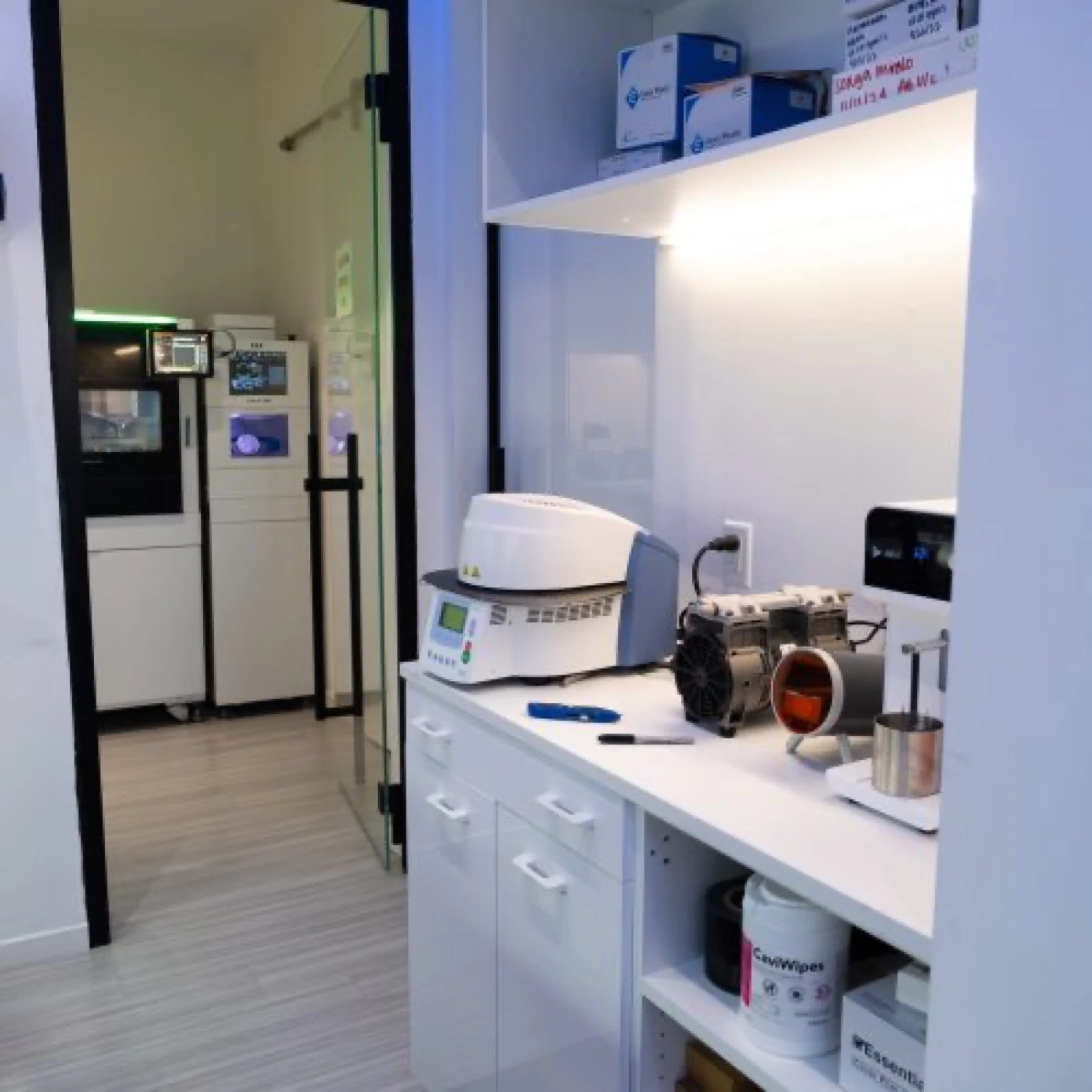
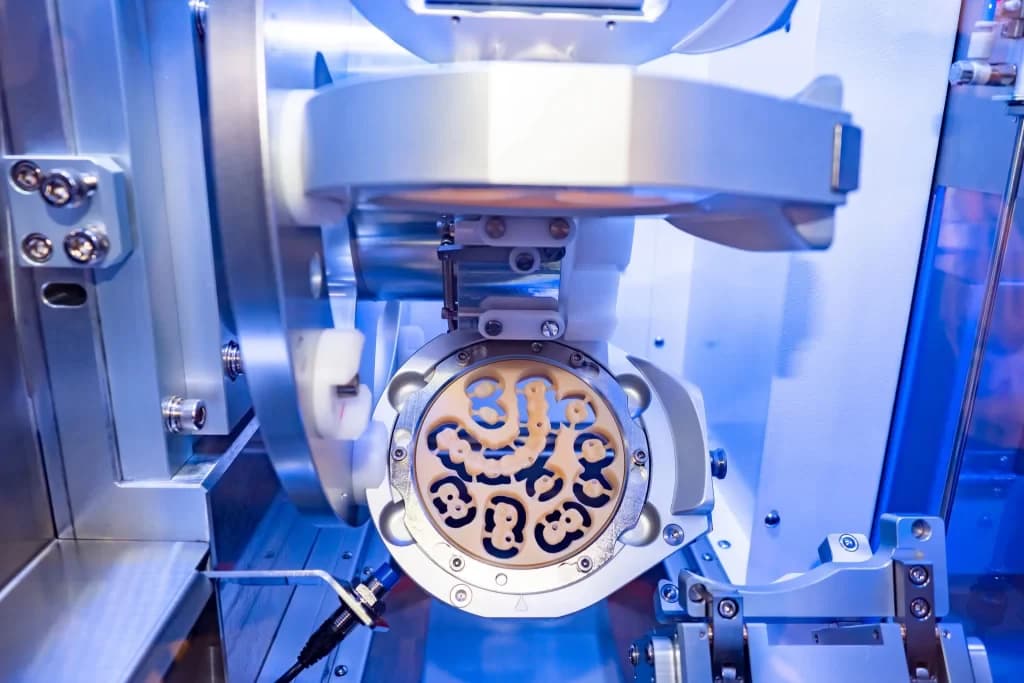
We do it the other way around. Dr. Sam Jain came to dentistry from mechanical engineering, and he mills zirconia in-house with our engineer, Andy Jain. We keep both titanium and zirconia on the shelf, place both every week, and let your anatomy and your goals decide. The material follows the patient — never the inventory.
Below is the same side-by-side we walk patients through in the consult room: strength, track record, biocompatibility, how each looks where your gum meets the crown, and what each costs. It's the ledger you'd want a family member to see. Look it over, then bring your questions to a free consultation with a 3D scan of your actual bone.
The Practice
This Practice, At A Glance
Figures reflect the practice's real numbers and general clinical ranges; your specifics are confirmed at a free consultation with 3D imaging. Individual results vary.
Titanium vs. Zirconia. The Ledger We Show In The Consult Room.
How the two implant materials actually compare — strength, track record, aesthetics, and cost — with nothing shaded to favor what happens to be in stock.
Track record
Titanium implants50+ years of documented use and the deepest long-term data in dentistry — long-term success commonly reported around 95% in healthy patients.
Zirconia (ceramic) implantsExcellent early and mid-term results, but a shorter clinical history — the decades-long arch data simply doesn't exist yet.
Strength & versatility
Titanium implantsExceptionally strong and slightly flexible; the two-piece design handles angled placement, full arches, and hard cases.
Zirconia (ceramic) implantsStrong and rigid, but more brittle; most designs are one-piece, which limits the surgeon's angles on complex cases.
Metal-free biocompatibility
Titanium implantsHighly biocompatible and rarely causes reactions, but it is a metal alloy — not an option for a fully metal-free mouth.
Zirconia (ceramic) implantsCompletely metal-free ceramic — the natural choice for patients with metal sensitivities or who simply want no metal at all.
Aesthetics at the gumline
Titanium implantsGray metal, usually hidden by healthy gums; can cast a faint shadow through thin or receding tissue on front teeth.
Zirconia (ceramic) implantsWhite throughout, so even thin gums stay natural-looking — a real advantage in the visible 'smile zone.'
One-piece vs. two-piece
Titanium implantsTwo-piece: anchor and abutment separate, so we can correct angulation and refine the final tooth after healing.
Zirconia (ceramic) implantsUsually one solid piece — clean and elegant, but it must be placed nearly perfectly the first time.
Cost
Titanium implantsTypically the more economical choice, with broader component availability and PPO coverage.
Zirconia (ceramic) implantsOften somewhat higher, reflecting the material and the specialized milling — worth it when aesthetics or metal-free care drive the case.
Comparisons are general guidance; your plan is confirmed after an exam and free 3D CBCT scan. Individual results vary.
Titanium's Track Record, Zirconia's Fresh Case
Titanium's Track Record,
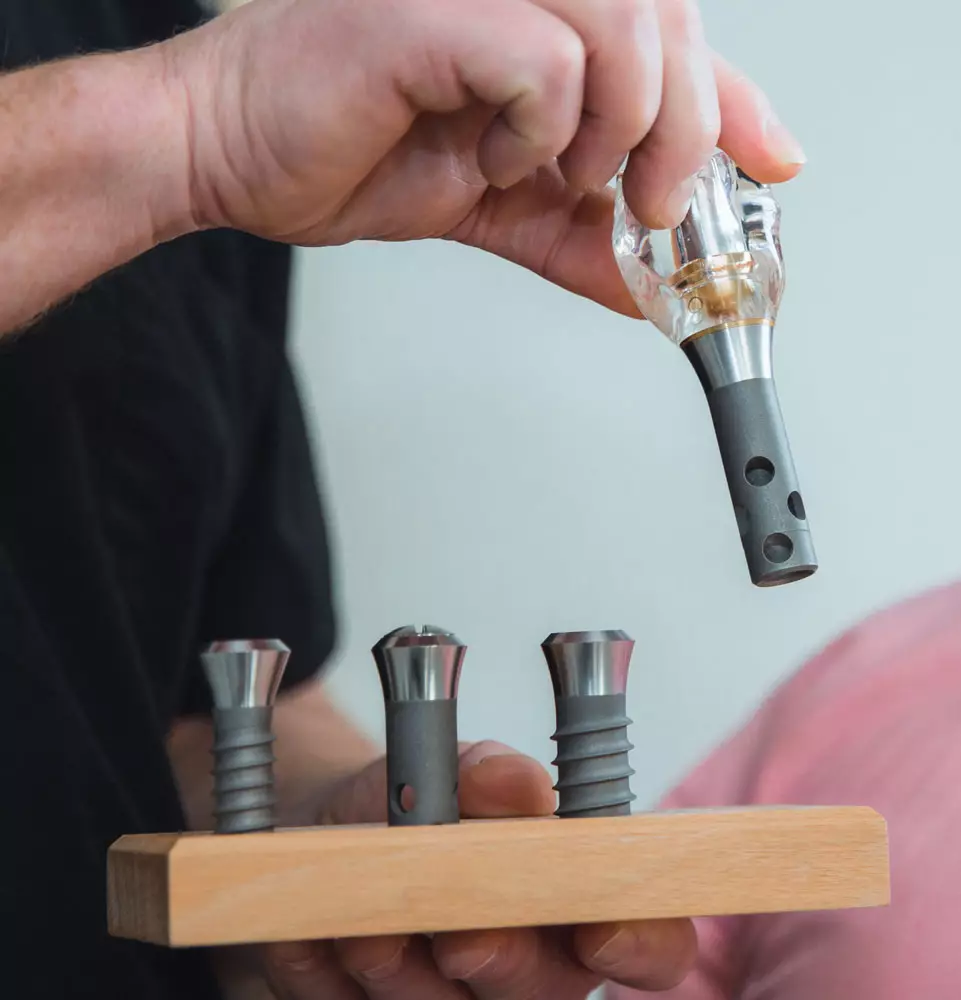
Titanium is the material the whole field was built on. It has more than fifty years of documented performance, long-term success rates commonly reported around 95 percent in healthy patients, and a small trick of chemistry that makes it hard to beat: bone doesn't just tolerate titanium, it grows onto it and locks it in place. When a surgeon needs to angle an implant past a nerve, anchor into thin bone, or split the load across a full arch, titanium's strength and its two-piece design give the flexibility hard cases demand. For our zygomatic and full-arch rescues, it is often the honest right answer.
Zirconia — the ceramic option — is the newer arrival, and its case is real. It's a tooth-colored ceramic with no metal at all, which matters to patients who want a completely metal-free mouth or who've reacted to metals before. Its shorter track record is a fact we say out loud, not a footnote we bury: the long-term arch data simply doesn't stretch back as far as titanium's. What zirconia already does well, it does beautifully — and for the right patient, that beauty is the whole point.
Neither material is 'better.' They're built for different problems. The engineering question — the one Dr. Jain actually enjoys — is matching the material to your bone volume, your bite forces, where the implant sits in your smile, and what you personally care about. That question can't be answered by a brochure. It's answered on your scan. And these two are just the headline acts — the full material menu, from titanium-zirconium alloys to coated surfaces for compromised bone, is stocked here for the cases that need it.
The Gumline Is Where The Choice Gets Personal
The Gumline Is Where
The most visible difference between these two materials shows up at a single millimeter of skin: the line where your gum meets the crown. Titanium is gray. In most mouths, healthy gum tissue hides it completely and no one ever knows. But if your gums are thin or they recede over the years, a titanium implant can cast a faint gray shadow through the tissue — usually invisible, occasionally not, and almost always only on the front teeth people actually see when you laugh.
Zirconia is white all the way through. There is no metal to shadow, so even thin or receding gums stay looking natural. For a front tooth in a patient with a high smile line and delicate tissue, that difference can be the whole decision — and we'll tell you plainly when it is, and when it genuinely doesn't matter for a back tooth no one will ever see.
This is also where the one-piece versus two-piece question lives. Most zirconia implants are one solid piece, which is elegant but gives the surgeon fewer angles to work with. Titanium's two-piece design separates the anchor from the abutment, so we can correct angulation and fine-tune the final tooth after healing. Because we plan, place, and restore every case ourselves — with guided surgery and our in-house zirconia mill under one roof — we can hand you a natural gumline in either material. The trade-offs are real, but they're ours to manage, not yours to worry about.
Metal Or Ceramic?The Questions That Decide It
Which is better — titanium or zirconia implants?
Neither, in the abstract. Titanium has the longer track record and more versatility for hard or angled cases; zirconia is metal-free and looks more natural at the gumline in thin tissue. The right choice depends on your bone volume, your bite, where the implant sits in your smile, and whether a fully metal-free mouth matters to you. Because we place both, we don't have to talk you into the one we happen to stock. We recommend the one your scan and your goals point to — and we'll explain exactly why.
Are zirconia implants truly metal-free?
Yes. Zirconia is a tooth-colored ceramic with no metal in it at all, which is why it appeals to patients who want a completely metal-free mouth or who've had reactions to metals before. Titanium is extraordinarily biocompatible and true allergic reactions to it are rare, but it is still a metal alloy. If metal-free care is your priority, zirconia is the straightforward answer — and we'll place it well rather than nudging you toward titanium.
Do titanium implants show a gray line at the gums?
Only sometimes, and usually not. In most mouths, healthy gum tissue covers the titanium completely and no one ever sees it. The exception is a front tooth in someone with naturally thin gums or gums that recede over the years, where the gray metal can cast a faint shadow through the tissue. That's precisely the situation where we'll often recommend zirconia instead. For back teeth no one sees when you laugh, it's a non-issue — and we'll say so.
Why does one-piece vs. two-piece matter?
It affects how much the surgeon can adjust after placement. Most zirconia implants are one solid piece — elegant, but they have to be positioned nearly perfectly the first time. Titanium's two-piece design separates the anchor from the abutment, so we can correct the angle and fine-tune the final tooth after your bone has healed around it. On complex or angled cases, that flexibility can be the deciding factor. It's one of several reasons titanium is still often the right call for full-arch and rescue work.
Do you actually offer both, or is this a sales page?
We stock and place both, every week. Dr. Sam Jain came to dentistry from mechanical engineering and mills zirconia in-house with our engineer, Andy Jain, so we have no supply-side reason to steer you one way. Since 2008 we've treated over 15,000 patients across Fremont and San Francisco, and our doctors plan, place, and restore every case themselves — no fly-in surgeons. You can see how we plan these decisions on our advanced technology page.
How do I find out which material is right for me?
Start with a free consultation and 3D CBCT scan — a $499 value at no cost. The scan shows your actual bone, and from there we can tell you honestly which material fits your anatomy, your bite, your smile line, and your priorities. You'll leave knowing the recommendation and the reasoning behind it, in writing, whether that's titanium, zirconia, or a case where either would serve you well. See the full picture on our dental implants overview.
Still weighing your options? Learn more about full mouth dental implants or schedule a free consultation.
Get The Right Material For Your Mouth, Not The One We Happen To Stock
Clinically reviewed by
Updated
 Dr. Sam Jain, DMD, MS
Implant Surgeon, Implantologist & Founder
 Dr. Arpana Gupta, DDS, MDS
Implant Surgeon & Implantologist
Their review covers the treatment description, candidacy, timelines, risks and aftercare.
- Treatment details change as our protocols and materials do.
- Your options can only be determined after an in-person examination and a 3D scan.