Titanium or zirconia? Choose based on your body, bite, and goals.
Dental Implant Materials — Zirconia, Ceramic, Titanium & More
Inside the lab where your teeth are actually made
Schedule ConsultationEvery Major Material · Milled Under One Roof
The Material Should Fit Your Mouth. Not The Office's Inventory.
Here's a quiet truth about implant dentistry: most offices carry one implant system and one lab relationship, so whatever your anatomy looks like, that's what gets recommended. The material conversation lasts thirty seconds because there's nothing to converse about. If you've been told "titanium, that's what we use" without anyone looking at your gum thickness on a scan, you've experienced it.

We built this practice the other way around. Medical-grade titanium and its alloys, titanium-zirconium, metal-free zirconia and ceramic systems, hydroxyapatite- and calcium-phosphate-coated surfaces for compromised bone — the major material families are all here, in some of the most-documented premium systems in implant dentistry: Nobel Biocare, Straumann, and Zimmer Biomet. Because the right implant is the one your bone, gums, and bite actually call for. And the teeth on top — monolithic zirconia, PMMA polymer, titanium hybrids — are designed and milled in our own lab, not ordered from a catalog.
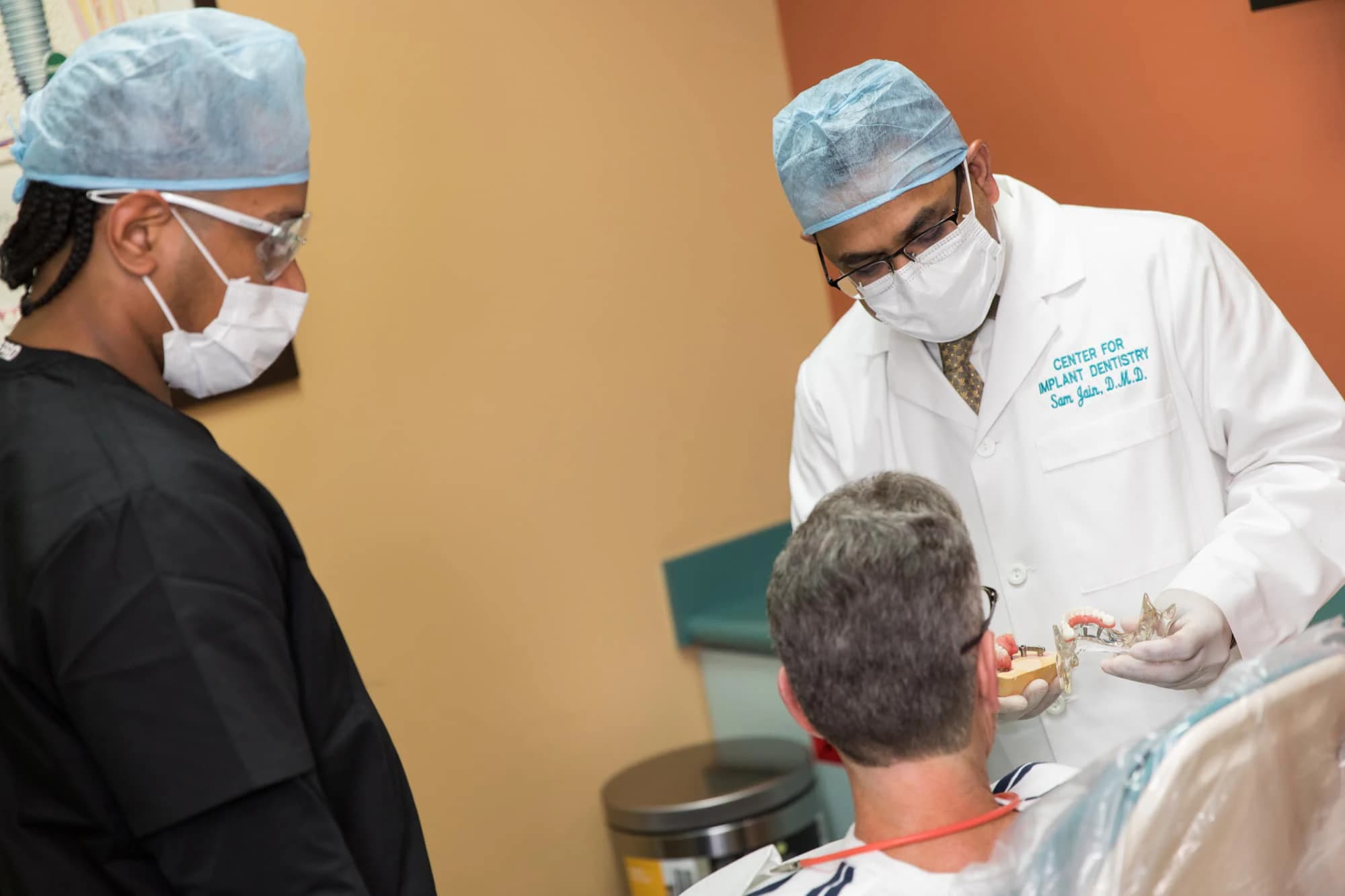
The person choosing your material is qualified to choose it. Dr. Sam Jain holds an MS in mechanical engineering alongside his dental degree — implantology is a biomechanical job, and material science is half of it. At your free consultation, the recommendation comes with the reasoning: this material, at this site, for this reason, at this price, in writing.
The Practice
This Practice, At A Glance
Material availability is matched to clinical suitability — the final recommendation always comes from your exam and 3D imaging, not from a menu. Individual results vary.
What Goes In The Bone: Titanium, Zirconia & The Honest Trade-Offs
What Goes In The Bone
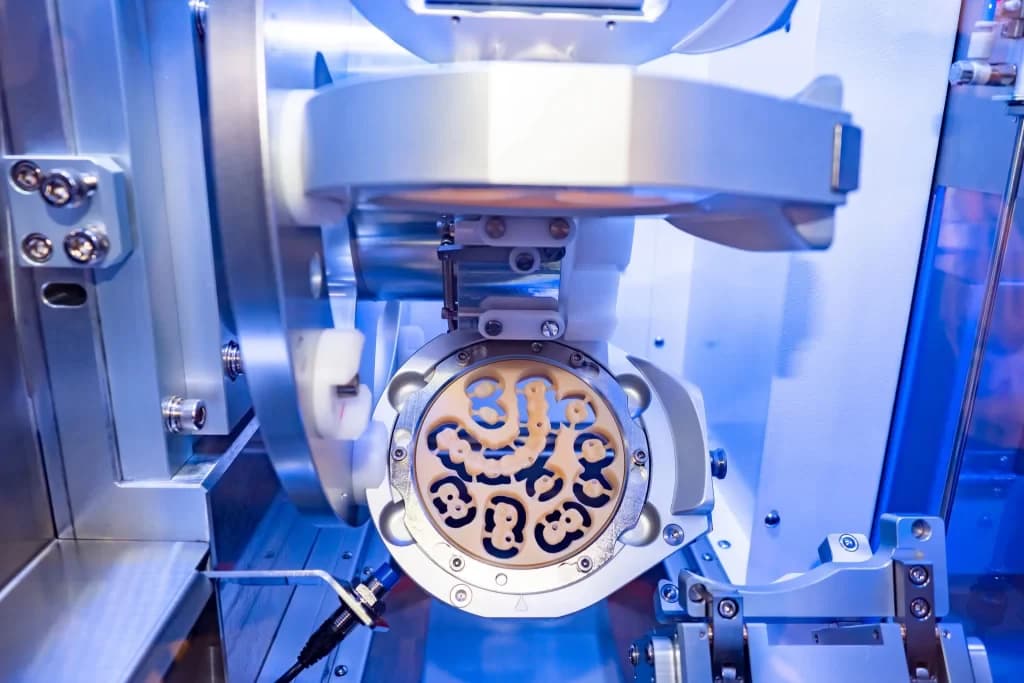
Start with the part nobody sees. Medical-grade titanium has six decades of evidence behind it: it fuses to bone reliably, its alloys take decades of chewing, and for most anatomies it remains the workhorse. Titanium-zirconium alloys push strength further for narrow sites. None of that makes it automatically right for you — it makes it the default at offices that only stock one system.
Zirconia — zirconium oxide ceramic — is the metal-free alternative, and it earns its place on merit, not marketing. It's white, so a thin or receding gumline never shows a gray shadow. It's metal-free, which matters to patients with sensitivities and to plenty who simply prefer it. Where bone quality is compromised, surface-treated options — hydroxyapatite and calcium-phosphate coatings — can improve how the implant and bone knit together. The full menu exists here for one reason: so the choice can be clinical instead of default. Our titanium vs. zirconia comparison goes deeper on that decision.
How we choose is the differentiator. Bone density, gum thickness, sinus position, and bite force get measured on a free 3D CBCT scan — then the material gets picked to match the measurements. It's the same engineering discipline behind All-on-8 Robust, the full-arch protocol Dr. Jain developed: work out the loads first, then build the structure that carries them.
What You Chew With: Zirconia, PMMA & Hybrid Teeth From Our Own Mill
What You Chew With
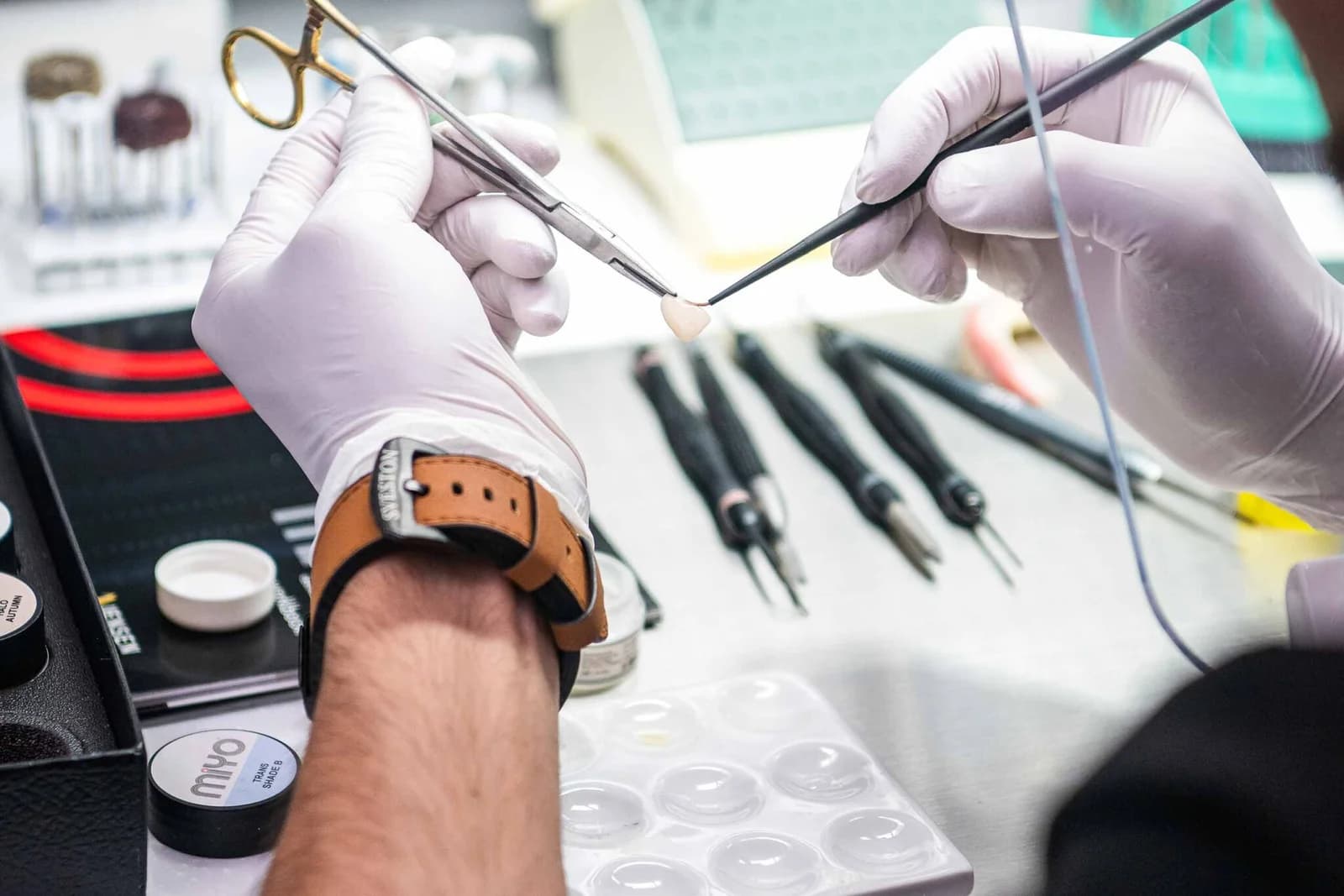
The teeth on top of the implants are a separate engineering decision, and it's the one most patients never get to make. Monolithic zirconia — milled from a single ultra-dense block on our own CNC machines — is the premium standard: stain-resistant, engineered for full bite force, built to look as good in year ten as on day one. PMMA, a high-grade dental polymer, is lighter on the budget and superb as a long-term provisional. Titanium-hybrid designs bond teeth to a milled titanium frame where a heavy bite demands it.
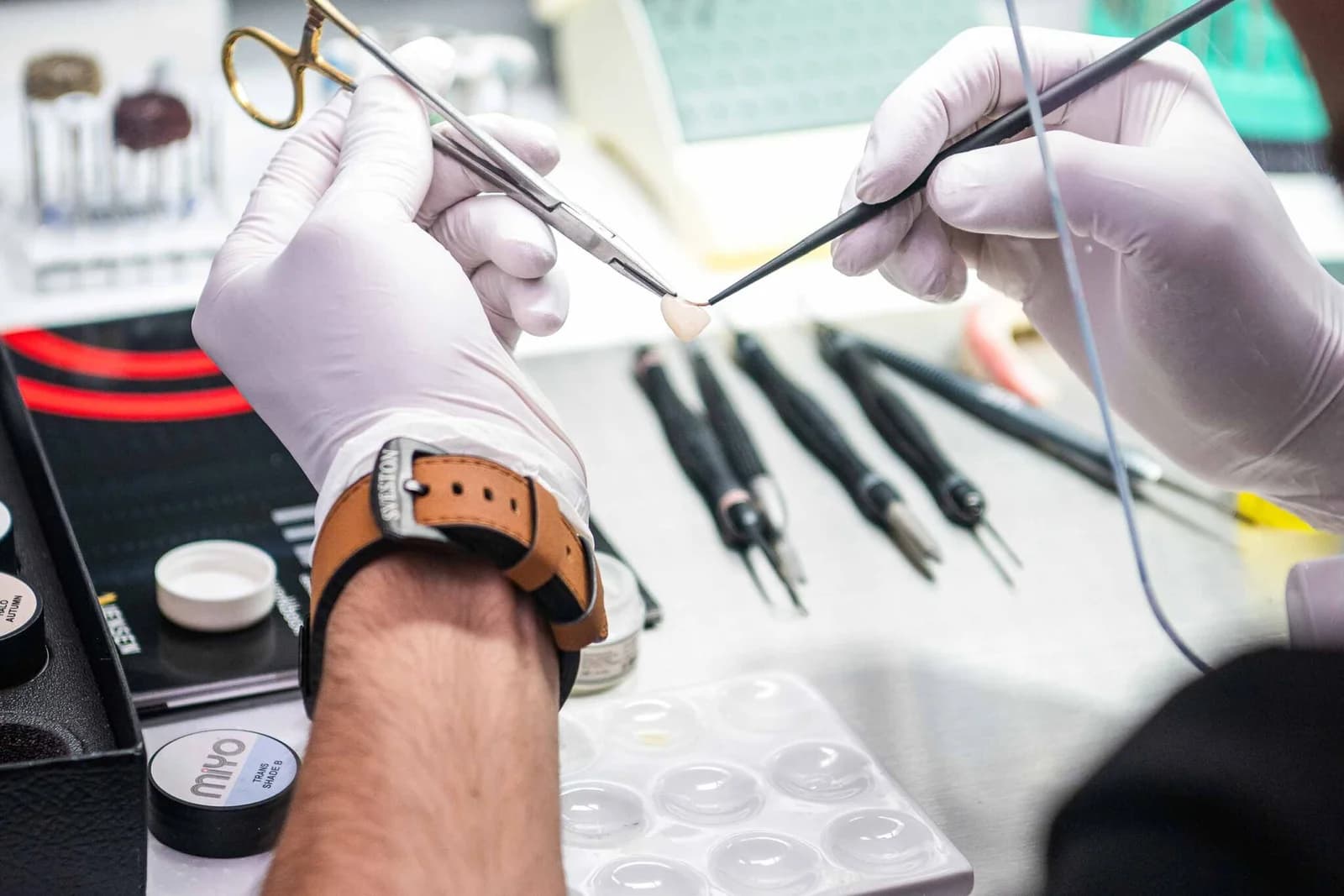
Here's why the in-house part isn't a brag but a mechanism. Zirconia's strength lives in its processing — milling precision and sintering control decide whether the material performs like ceramic armor or develops micro-fractures. Our manufacturing floor runs industrial CNC machines, 3D printing, and digital scanning, staffed by CAD designers, machinists, and ceramists, with a full-time lab engineer running R&D and quality control under Dr. Jain's direction. When your shade or a contact point needs a tweak, it happens down the hall — not in three weeks via a shipping label.
Materials are also a big part of why honest implant pricing is personal, not a sticker: outside the one fixed, all-included All-on-4 fee, what your case costs follows the material in the plan and the rebuilding your jaw needs. Your quote names every material in the plan, line by line, so you always know what you're paying for — and what's actually in your mouth.
Titanium Or Zirconia?The Questions Underneath That One
Which implant material is actually best — titanium or zirconia?
Neither, universally — and any office that answers this question before looking at your scan is selling you what they stock. Titanium has the longest track record, integrates with bone predictably, and its alloys handle heavy bite forces well. Zirconia is metal-free, white rather than gray, and shines where gums are thin or a metallic shadow could show through — and for patients who simply want no metal in their body. We place both, so the choice comes from your bone, your gumline, your bite, and your health history, read off a free 3D CBCT scan. Our side-by-side comparison page walks through the trade-offs in detail.
Do you offer metal-free dental implants?
Yes — zirconia (zirconium oxide) ceramic implants, which are fully metal-free and white in color. Patients choose them for thin or receding gums where gray metal could shadow through, for metal sensitivities, or simply for peace of mind. The honest caveat: metal-free is not automatically better. Zirconia implants behave differently under load than titanium, and case selection matters more, not less. Because we stock both systems and mill restorations in-house, the recommendation you get here is based on where each material genuinely performs best — not on which single system the office happens to carry.
What are the final teeth made of — and does it change the price?
The teeth on top of the implants matter as much as the implants themselves, and on most plans, yes, material moves the number — though not on All-on-4, whose one fixed, all-included fee of $14,999 per arch covers final teeth in acrylic (PMMA) or zirconia, your choice. Monolithic zirconia — dense, stain-resistant, milled from a single block — is our premium standard for permanent full-arch teeth. PMMA, a high-grade dental polymer, costs less and serves beautifully as a long-term provisional or a budget-conscious arch. Titanium-hybrid designs bond zirconia or polymer teeth to a milled titanium frame for heavy bites. That's part of why honest quotes range so widely — the material in the plan moves the number, alongside your anatomy and how much rebuilding your case needs. Your itemized quote shows exactly which material is where, and why.
Why does milling in-house matter for the material?
Because a material is only as good as its manufacturing. Zirconia's strength depends on how it's milled and sintered — get the process wrong and even premium material develops micro-fractures under bite force. Our arches are cut on our own industrial CNC machines, in our own building, by our own lab team, under Dr. Jain's direction — he holds an MS in mechanical engineering alongside his dental degree. No shipping to a lab you'll never see, no mystery about what's actually in your mouth, and when a shade or a contact point needs adjusting, it happens down the hall — often the same day.
Can I switch materials if I already have implants or temporary teeth?
Often, yes. The implants in your bone and the teeth on top of them are separate components. If you're wearing acrylic temporaries from another office and want final teeth, or your existing prosthesis keeps fracturing and needs a stronger material or more support, we can usually design new teeth on your existing implants — after verifying on a 3D scan that the implants themselves are sound and positioned well. Rescuing and upgrading other offices' work is a regular part of our week, not an exception.
How do I find out which material is right for my mouth?
One free visit answers it: a consultation with a 3D CBCT scan (together a $499 value) where Dr. Jain reads your bone density, gum thickness, sinus position, and bite forces — the four things that actually decide material selection. You leave with a recommendation, the reasoning behind it, and an itemized quote naming every material in the plan. No obligation, and the scan is yours either way.
Do you place zirconia implants, and who are they for?
Yes. Zirconia dental implants — metal-free, white ceramic implants — are one of the material families we keep in-house, alongside titanium and titanium-zirconium. They suit patients with a documented metal sensitivity, very thin or receding gums where a gray titanium collar could show through, and people who simply prefer a metal-free mouth. They are not automatically better: titanium has six decades of data behind it, zirconia's long-term record is shorter, and the two behave differently under heavy bites and in some full-arch designs. What the free 3D scan measures — bone density, gum thickness, bite force — decides which one we recommend, and the material is named on your written quote so you can see the reasoning. Titanium versus zirconia goes through the comparison in full.
Which implant brands do you use — Straumann, Nobel Biocare or something else?
The major documented systems: Nobel Biocare, Straumann and Zimmer Biomet are the implant lines we place most, chosen case by case for the bone, the position and the restoration planned on top. Brand matters less than people expect and more than a discount clinic will admit: a well-documented system means published survival data, parts that will still be available in twenty years, and a restorative platform any dentist can service if you move. Your written plan names the system, and if you were quoted a Straumann or Nobel implant elsewhere, bring the quote — we will show you where the same system sits in ours.
Still weighing your options? Learn more about full mouth dental implants or schedule a free consultation.
Find Out What Your Mouth Actually Calls For. Free Consultation & 3D Scan — The Material Decision, Made Properly
Clinically reviewed by
Updated
 Dr. Sam Jain, DMD, MS
Implant Surgeon, Implantologist & Founder
 Dr. Arpana Gupta, DDS, MDS
Implant Surgeon & Implantologist
Their review covers the treatment description, candidacy, timelines, risks and aftercare.
- Treatment details change as our protocols and materials do.
- Your options can only be determined after an in-person examination and a 3D scan.