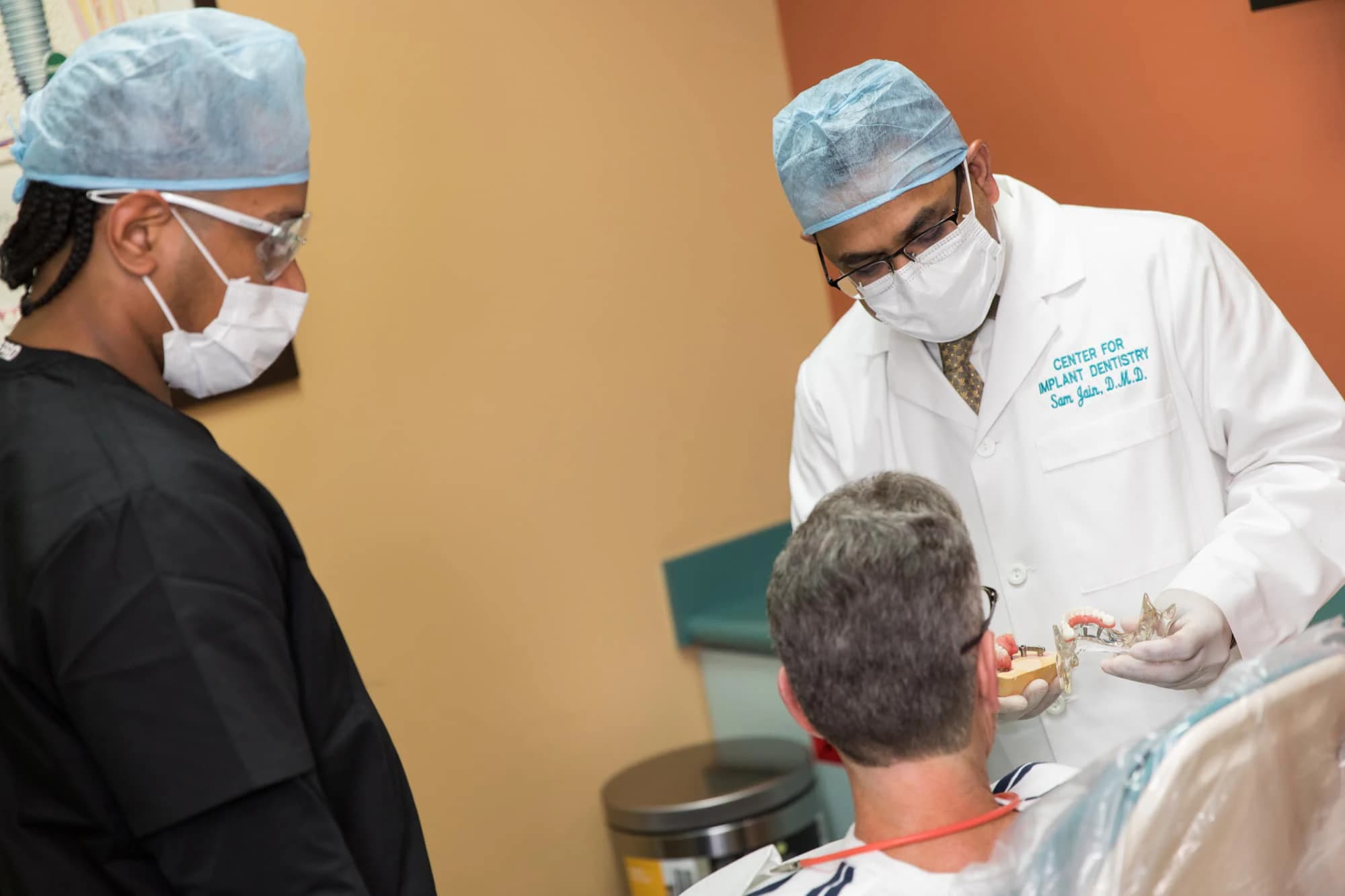
Four, six, or eight implants? Your mouth should decide.
All-on-4 vs All-on-6 vs All-on-8: How Many Implants Does One Jaw Actually Need?
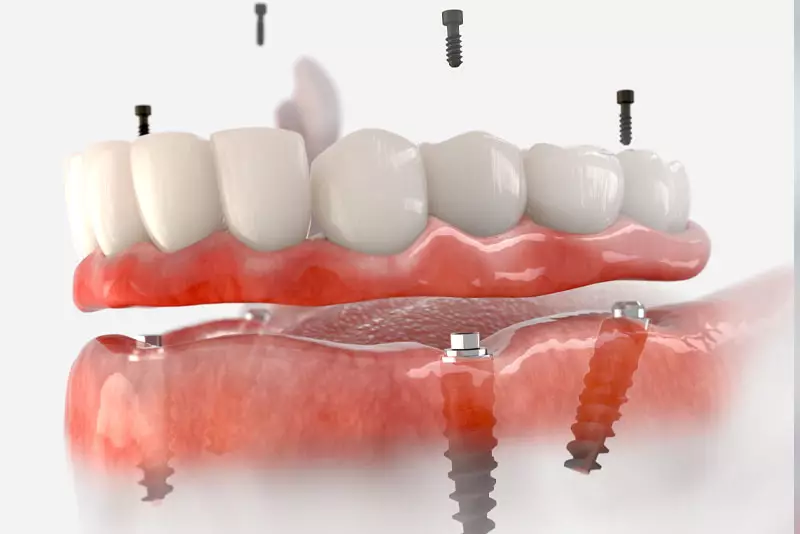
The full-arch comparison the surgery photos never show you
Schedule ConsultationFull-Arch Implants Compared · Fremont & San Francisco
Four, Six, Or Eight Implants? The Honest Answer Is Written In Your Bone.
You are not really choosing between three product names. You are deciding how much support sits under teeth you plan to chew steak, corn, and almonds with for the next thirty years. All-on-4, All-on-6, and All-on-8 all replace a full arch on the day of surgery. What separates them is what happens in year eight, year fifteen, and the afternoon one implant has a problem — because with four anchors, one problem is a much bigger problem.
Here is the physics in one sentence: more implants means the force of every bite is split more ways, the hanging sections of bridge (the cantilevers that act like crowbars on the screws) get shorter or disappear, and no single implant becomes the thing your whole smile depends on. That is why Dr. Sam Jain — a DMD who is also a mechanical engineer — developed All-on-8 Robust: eight implants, engineered to spread the load like a foundation, not balanced on the bare minimum.
We will not pretend four implants are never enough — sometimes they genuinely are, and we place them when the anatomy fits. The fee rises with the implant count — All-on-4 is one fixed, all-included fee of $14,999 per arch, and an arch that needs six or eight is quoted in writing — so your written quote shows the count your scan calls for, and the reason for it, before anything is scheduled. Below is the straight comparison: implants, load, cost, candidacy, longevity, and the one question most offices skip — what happens if an implant fails.
The Practice
This Practice, At A Glance
Figures reflect the practice's real numbers and general clinical ranges; your specifics are confirmed at a free consultation with 3D imaging. Individual results vary.
All-on-4 vs All-on-6 vs All-on-8: The Comparison Most Offices Won't Put In Writing.
All three replace a full arch. The differences below are the ones you live with long after the surgery photos are taken — read them before you choose a number.
Number of implants
All-on-8 Robust — our protocolEight implants per arch, restoring a generous share of your original natural root support — planned where your bone is strongest on a free 3D CBCT scan.
All-on-4 / All-on-6 — the leaner tiersFour (economical) or six (middle) implants per arch. Fewer anchors carrying the same full arch of teeth and the same daily bite force.
Load & cantilevers
All-on-8 Robust — our protocolBite force shared across eight anchors with little or no cantilever — the levering forces that pry on screws are engineered out from the start.
All-on-4 / All-on-6 — the leaner tiersLonger hanging bridge sections, especially with four implants, that act like crowbars on the screws and bone with every meal over the years.
If one implant fails
All-on-8 Robust — our protocolSeven remaining anchors keep the arch working while the single implant is addressed — redundancy is built in, not hoped for.
All-on-4 / All-on-6 — the leaner tiersLosing one of four takes out a quarter of your foundation and can put the whole arch at risk; one of six is serious but more recoverable.
Candidacy & bone
All-on-8 Robust — our protocolBest when bone can host eight positions — and where bone is thin, we graft during placement or use zygomatic implants so 'no bone' rarely means 'no teeth.'
All-on-4 / All-on-6 — the leaner tiersA strong fit when solid bone exists in fewer key sites; the leaner the plan, the more each implant and each site has to carry.
Longevity outlook
All-on-8 Robust — our protocolEngineered for decades — more support and spread-out chewing stimulation help protect the bone and your facial structure long-term.
All-on-4 / All-on-6 — the leaner tiersCan last many years with disciplined care, but higher per-implant load and cantilever stress give a thinner margin over time.
What it costs you here
All-on-8 Robust — our protocolAll-on-4 is one fixed, all-included fee of $14,999 per arch; an arch your bone says needs six or eight implants is quoted in writing, itemized, with financing available (~92% choose to finance).
All-on-4 / All-on-6 — the leaner tiersOften a fixed package, whatever the bone turns out to need. Here your 3D scan sets the implant count: four implants carry the fixed All-on-4 fee, and six or eight are quoted in writing.
Comparisons are general guidance; your plan is confirmed after an exam and free 3D CBCT scan. Individual results vary.
More Anchors, More Redundancy. Why The Number Of Implants Changes Everything.
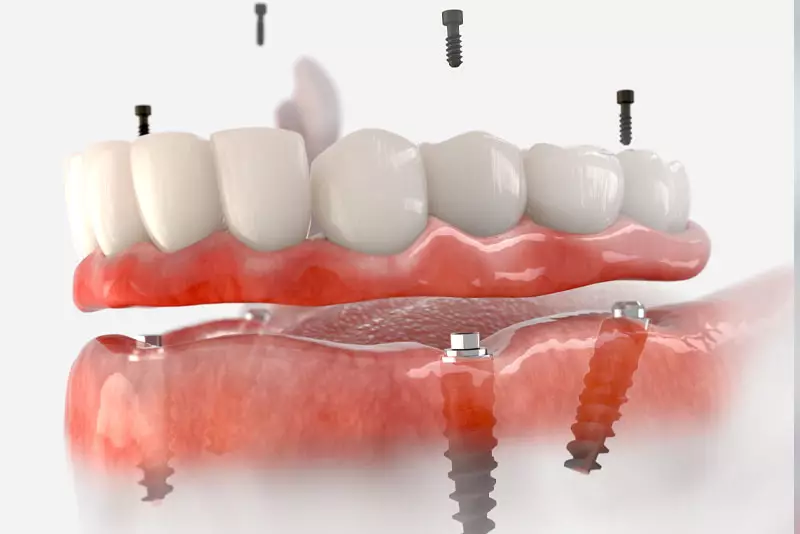
More Anchors, More Redundancy.
Think of your new arch as a bridge over a river. All-on-4 spans it on four pillars, which usually means the ends of the bridge hang past the last pillar — those overhangs are cantilevers, and every bite turns them into levers that pry on the implant screws. All-on-6 adds two pillars, shortening those overhangs and sharing the load. All-on-8 adds two more still, so the span is supported end to end with little or nothing hanging free. This is not marketing. It is why a structural engineer would never balance a long building on the fewest possible columns.
Redundancy is the part nobody advertises. A full arch of natural teeth is anchored by far more roots than four — molars carry two or three each — and rebuilding on eight well-placed implants restores a generous share of that original support and spreads chewing stimulation across more of your bone — which is what keeps the bone alive and keeps your lower face from caving inward over the years. Just as importantly, with eight anchors no single implant is a point of failure. Lose one out of four and a quarter of your foundation is gone; lose one out of eight and the arch keeps working while it is addressed.
This is exactly the reasoning behind All-on-8 Robust, planned by a surgeon who is also a mechanical engineer and built by an in-house team of CAD designers, machinists, and ceramists. They model your bite forces and implant angles like a structural project before a single implant goes in. If your anatomy is better served by four or six, our full-arch page walks through those options too — the plan follows your bone, never a franchise playbook.
Economical, Middle, Or Strongest. How To Read The Three Tiers Without The Sales Spin.
Economical, Middle, Or Strongest.
Here is the plain-language version. All-on-4 is the economical tier — the fewest implants, the lowest material cost, and a real, fixed set of teeth in a day. It shines when bone is solid in the right places and the bite forces are moderate. Its trade-off is those longer cantilevers and the fact that every implant is carrying more, so there is less margin for error if one has trouble.
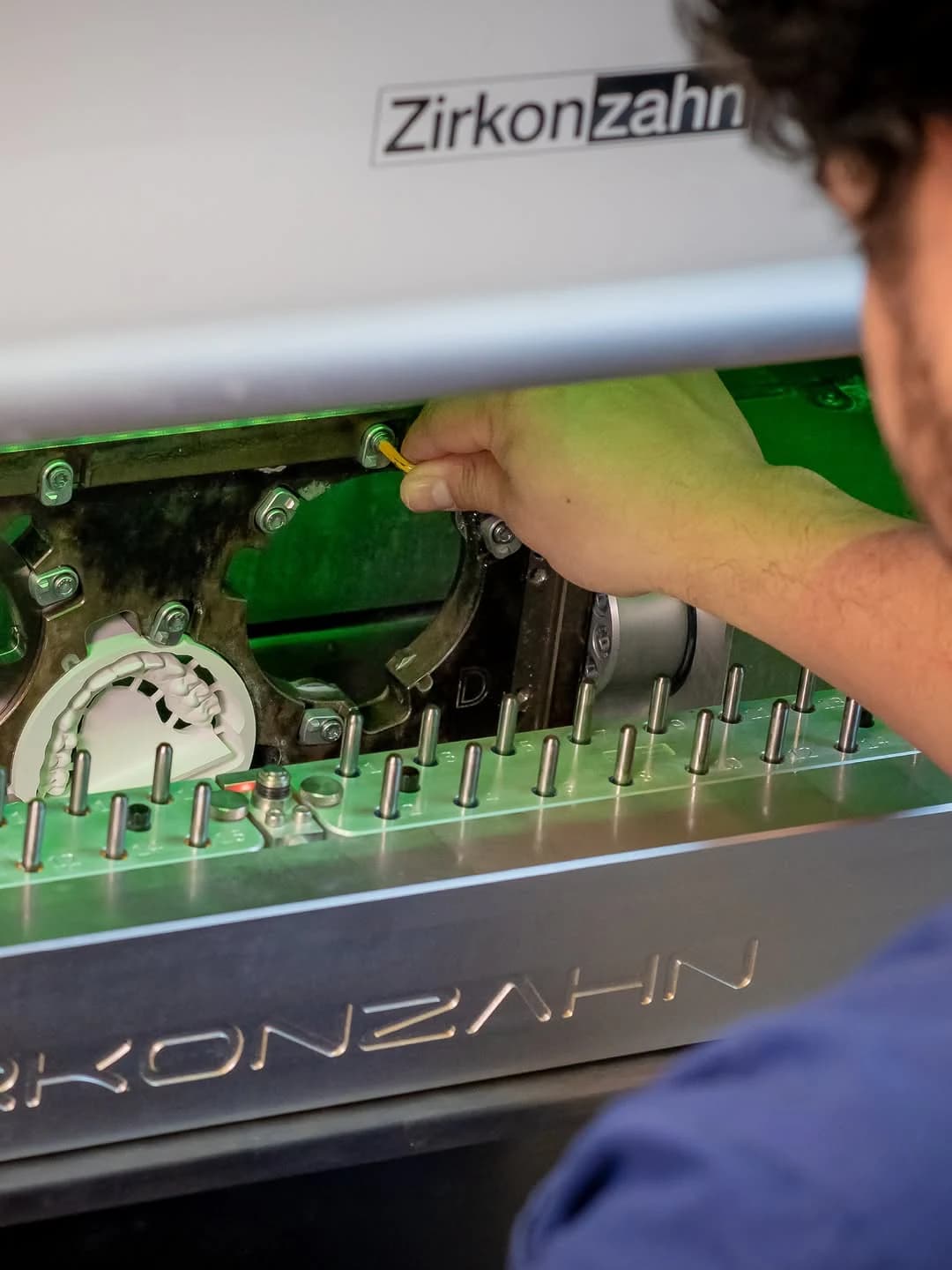
All-on-6 is the middle tier — two more implants shorten the overhangs, share the load, and add a measure of insurance. For many people it is the sensible balance between cost and support. All-on-8 Robust is the strongest tier — the most support, the shortest or non-existent cantilevers, the most redundancy, and the design Dr. Jain built specifically so the result is both mechanically robust (strong enough for decades of real chewing) and biologically robust (kind to the bone that holds it).
Two things stay the same across all three here, and they are the ones that quietly matter most. First, the same owner surgeons — Dr. Sam Jain and Dr. Arpana Gupta, both ICOI Masters — plan, place, AND restore your case; we never fly in a surgeon who operates and leaves. Second, your final teeth are milled in our own on-site lab in about 72 hours, not handed to you as fracture-prone plastic for six to eight months. The number of implants is a decision. That standard of care is not up for negotiation.
Four, Six, Or Eight?The Questions Behind The Number
All-on-4 vs All-on-6 vs All-on-8 — which is actually best for me?
Your jawbone decides, not a brochure. All three place a fixed, full arch of teeth in a day. All-on-4 is the economical tier and works well when bone is solid in the right spots; All-on-6 adds support and insurance in the middle; All-on-8 Robust is the strongest tier, with the most redundancy and the shortest cantilevers. At your free consultation we take an in-house 3D CBCT scan, and Dr. Jain shows you exactly how many implants your anatomy supports and why — no guesswork, no upsell.
How many implants does a full arch really need?
Enough to carry a lifetime of bite force without leaning on long cantilevers or turning any one implant into a single point of failure. Four can do it when bone and forces cooperate. Six shares the load better. Eight — the basis of our All-on-8 Robust protocol — comes closest to the natural root support a jaw was built around — a full arch of natural teeth is anchored by far more roots than four, with molars carrying two or three each — spreads chewing stimulation across more bone, and builds in redundancy. There is no universal number; there is the right number for your jaw, which the CBCT reveals.
Does All-on-8 cost more than All-on-4 or All-on-6?
Yes — each step up adds implants to place and restore, so a six-implant arch costs more than a four, and eight more than six. What that buys is support spread across more roots. About 92% of our full-arch patients choose to finance, and because our surgery, IV sedation, and CAD/CAM zirconia lab all live under one family-owned roof, there are no outside-lab markups on your bill.
What actually happens if one implant fails?
This is the question most comparisons skip, and it is the strongest argument for more anchors. With four implants, losing one removes a quarter of your foundation and can jeopardize the whole arch. With six, it is serious but more recoverable. With eight, the remaining seven keep your arch functioning while the single implant is treated. And failure has two timings: a small share of implants never bond in the first weeks, whatever the surgeon does, and an implant can lose bone years later to untreated gum disease. Eight anchors cover both without a second surgery or a second set of teeth. We also rescue failed implants placed at other offices — so if you have already been through this, you are exactly who we help.
How many chewing teeth do I actually get back with four, six, or eight?
This is the question the implant count really answers. Your front teeth bite; your molars chew, after your tongue moves the food back. Four implants sit toward the front of the jaw, so they support smiling and biting teeth well, with the back teeth hung behind them on a cantilever. Six implants carry the arch further back and support a first set of molars on each side. Eight carry it back far enough for a second set, which means every tooth except the wisdom teeth, each one standing over its own support. That is Dr. Jain's reasoning for All-on-8 Robust in one sentence: the younger you are and the more years of chewing ahead of you, the more the back of the arch matters.
I was told I don't have enough bone for implants. Which option is possible?
Often more than you were told. About 98% of the people we meet turn out to be candidates for some form of implant treatment. Where bone is thin, we graft at the time of placement, choose the sites where bone is strongest, or use zygomatic implants anchored in the cheekbone for the 'no bone' upper jaw. That is why 'you don't qualify' somewhere else is worth a second opinion here — we take the hard cases other offices turn away.
Will my final teeth take six to eight months like other places quote?
No. You leave your surgery chewing on fixed, non-removable teeth the same visit — never a removable denture resting on stitches. Then our on-site lab mills your final custom teeth, and your permanent full-arch set is fitted in about 72 hours, not months of temporary plastic. The same family that placed your implants handles your cleanings, adjustments, and emergencies for life, at the address we have occupied since 2008.
Still weighing your options? Learn more about full mouth dental implants or schedule a free consultation.
They Compared Too
Then Chose Here From People Who Weighed The Same Numbers
Our patients wrote these, and we cannot edit a word. The rating beside them counts every review on our Google profile — not only the five-star ones shown here.
Elisa Morris
Dr Jain is very professional. He’s perfectionist make sure your hap with the result
Marsh Fong
I had beautiful smile I like this place amazing they did my mouth implant treatment I am very happy feel confident my smile and they are amazing doctors very confident about work . I wish I give it 100 stars
prajwol Basnet
I recently had my 2 implant treatment here and I’m very happy with the results. Dr. Jain and Dr. Gupta are very experienced and explained everything clearly, which made me feel comfortable throughout the treatment. I was also really impressed that they have an in-house lab, so everything is done under one roof. A friend recommended this place to me, and I’m glad I came here. Everyone was welcoming and professional, and overall I had a very good experience. Definitely recommend!
Frank Chang
I did my implant they did same day I am very process very smooth and fast dr Jain and Dr Gupta has lot of experience very good and knowledgeable doctors I recommend this implant center I came with lot of pain yesterday they finish process same day
M Welch
⭐⭐⭐⭐⭐ I cannot say enough wonderful things about the Center for Implant Dentistry! From the moment I walked through the door until the moment I walked out with my beautiful new smile, I felt welcomed, cared for, and confident that I was in the right hands. I had All-on-6 full upper and lower implants. Dr. Jain and Dr. Gupta are incredibly talented at what they do. They didn’t just give me new teeth — they gave me a new lease on life. Seeing my new smile for the first time was emotional, and I honestly couldn’t be happier with the end result. The amount of skill, care, and attention to detail that went into my treatment was incredible. The entire staff was amazing from beginning to end. Everyone was welcoming, patient, kind, and made me feel comfortable throughout the whole process. Having major dental work done can be scary, but they took such great care of me every step of the way. I walked in hoping to get my smile back, and I walked out with more confidence than I could have imagined. I can smile again without trying to hide my teeth, and that means more to me than I can put into words. Thank you, Dr. Jain, Dr. Gupta, and the entire Center for Implant Dentistry team for giving me my smile and my confidence back. You truly changed my life, and I will forever be grateful. If you are considering dental implants and are nervous or unsure about taking that first step, I wholeheartedly recommend Center for Implant Dentistry. My only regret is that I didn’t do this sooner! ⭐⭐⭐⭐⭐ A truly life-changing experience.
Samyak Jain
I had been hiding my smile for a long time. Eating was difficult, smiling in photos felt uncomfortable, and little by little it started affecting my confidence in ways I did not even realize. Walking into Center for Implant Dentistry, I was hopeful, but also nervous. This was a big decision for me. Now, when I look in the mirror, I do not just see new teeth. I see my confidence coming back. I can smile freely again, eat comfortably, and feel like myself again. That is something I will always be grateful for. I highly recommend Center for Implant Dentistry to anyone thinking about dental implants. This place did not just change my smile. It changed how I feel about myself. I visited again this Implant Center for checkups and the whole staff is lovely.
mohammad omar mohammadi
I am very I came yesterday my missing teeth they did surgery immediately and I got my tooth immediately very profession I am very happy I am very scared before that because I have missing teeth in front but they fix it write away Thank you dr Jain and dr Gupta I recommend this implant center
Emerson Salvador
They did an amazing job with my dental implants and gave me a new smile that enhanced my confidence. They have great customer service and were really informative.
Lady Gemini
They did excellent work on my brother Bring your mother, your sister, your brother they do excellent work and they’re very patient and they make you look beautiful. There’s a picture.
Jessica To
Amazing center I did my full mouth dental implant treatment long time 8 year almost no problem I am very happy this implant center is amazing they have in-house the power of making teeth I very very happy . Highly recommend if somebody wants implant
james wells
I am very happy for this place I did my full mouth dental implant treatment from this place 5 year ago and result xame very good my teeth looks very natural I coming from all way from Sacramento the reason for choosing this place because they have everything under one roof every expertise under one roof engineering surgical experience manufacturing facility because this kind of treatment needs expertise who have good experience and dr jain and dr Gupta is amazing When I got my final teeth I feel like that moment is glimpse of eternity Very happy
Vincent Betar
The entire staff here are really amazing from the receptionist to the doctors who perform an amazing transformation of my teeth and my facial expressions. I feel very grateful for the work done and very satisfied. I highly recommend center for Implant dentistry sincerely. Vince Betar.





Reviews are individual patient experiences, shown as posted. Results vary from person to person.
Let Your CBCT Scan Settle The Four-Six-Eight Question For Good.
Clinically reviewed by
Updated
 Dr. Sam Jain, DMD, MS
Implant Surgeon, Implantologist & Founder
 Dr. Arpana Gupta, DDS, MDS
Implant Surgeon & Implantologist
Their review covers the treatment description, candidacy, timelines, risks and aftercare.
- Treatment details change as our protocols and materials do.
- Your options can only be determined after an in-person examination and a 3D scan.