Dental Bone Grafting: What to Expect & the Healing Process
A surgeon's plain-language walk-through of what happens after a dental bone graft — the recovery week by week, the healing stages underneath, and when your bone is finally ready for an implant.
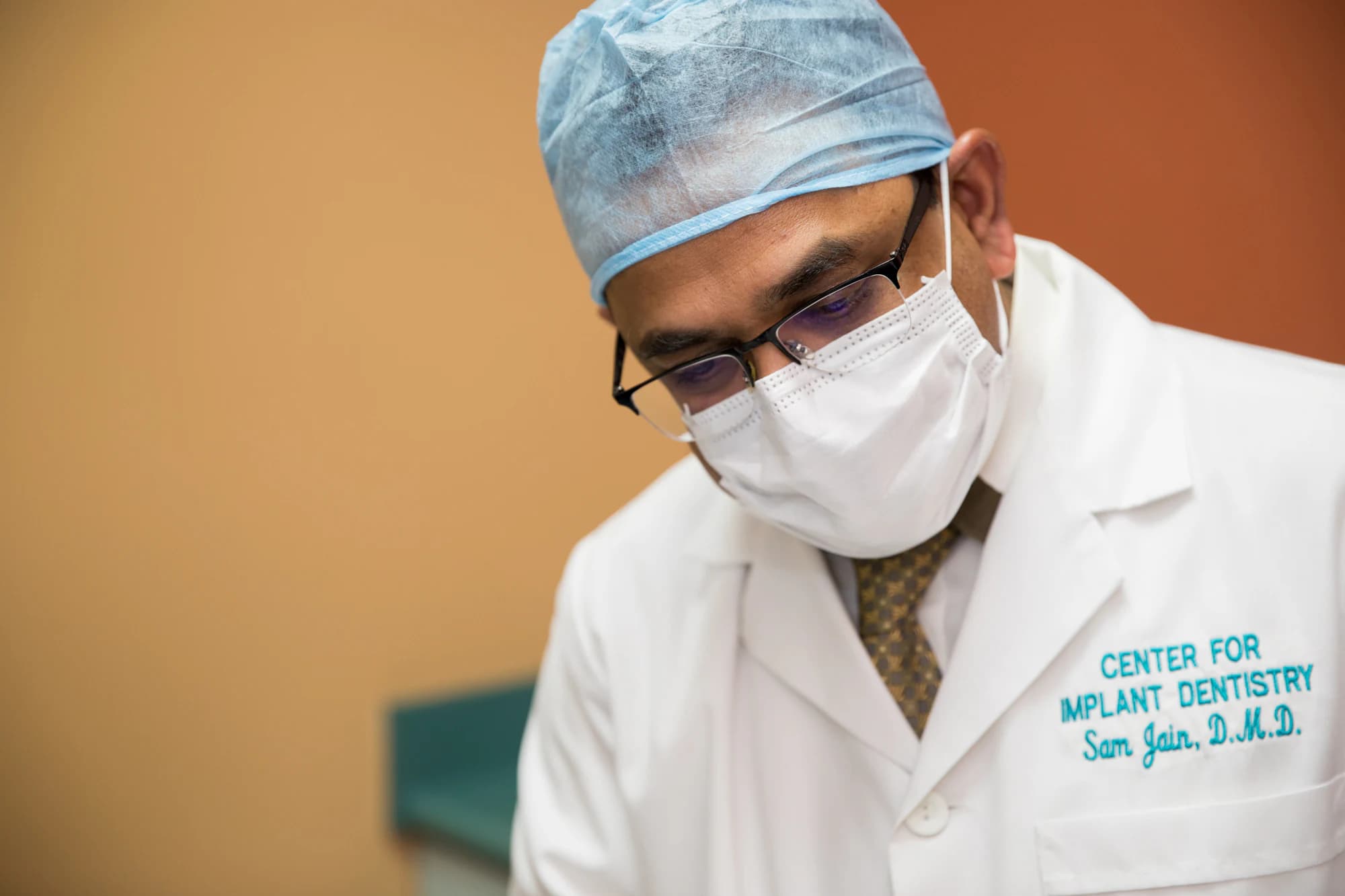

Written and medically reviewed by Dr. Sam Jain, DMD, MS, and Dr. Arpana Gupta, DDS, MDS
Published · Updated
How long does a dental bone graft take to heal?
Here's what most people come looking for first: you'll feel recovered in about a week, but the bone itself keeps rebuilding for several months. Those are two different clocks, and it helps to keep them separate in your head.
The surface healing — the sore gum, the mild swelling, the tenderness — usually settles within 5 to 10 days. The deeper healing, where the graft material gradually turns into your own solid bone, runs on a longer timeline. For a small socket-preservation graft (the kind often placed the same day a tooth comes out), that's frequently 3 to 4 months. For a larger ridge augmentation or a sinus lift, plan on roughly 6 to 9 months, and occasionally up to a year, before the site is ready to hold an implant. Your surgeon will confirm your own timeline from your scan — these are typical ranges, not promises.
Why the wait? Because a bone graft isn't a permanent filler you drop in and finish. It's a scaffold. The material simply holds the space and gives your own cells a framework to grow into. Rushing an implant into a graft that hasn't matured is one of the more common reasons implants fail, which is exactly why good practices refuse to skip the healing window even when a patient is eager.
The healing process, stage by stage
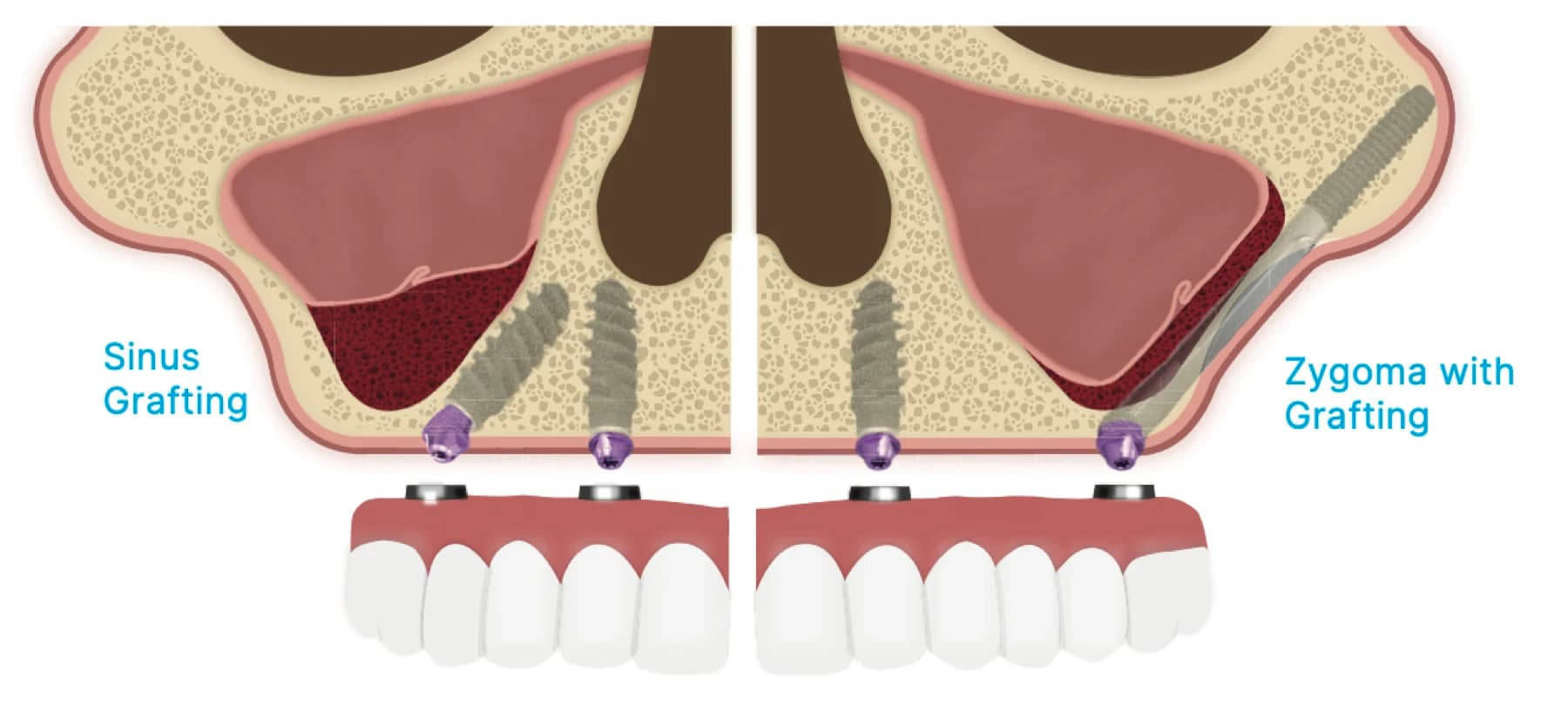
Underneath the gum, a graft heals in overlapping biological phases — the same repair cascade your body uses for any bone injury, just guided into a spot where bone was missing. Knowing the sequence makes the recovery far less mysterious.
First, in the opening hours and days, a blood clot forms over the graft and the site becomes inflamed. This inflammatory phase is normal and necessary — it recruits the cells that start the repair. This is when you'll notice the most swelling and soreness, usually peaking around day two or three, then easing off. Next comes bone formation: over the following weeks and months, specialized cells called osteoblasts move into the scaffold and lay down fresh, immature bone, slowly dissolving and replacing the graft material as they go. Finally, remodeling — the longest and quietest phase — reshapes that new bone into dense, load-ready structure that blends with the jaw around it. You feel none of this. It's happening silently while you go about your life.
The takeaway for a patient is simple: the week you can feel is the easy part, and the months you can't feel are the part that actually determines whether an implant will hold. That invisible remodeling is why the calendar matters and why your surgeon waits for it.
What recovery actually feels like — the first week and beyond
For the first 48 to 72 hours, expect some swelling, mild bruising, and a dull ache that responds well to over-the-counter pain relievers and an ice pack on the cheek. Most people describe it as more annoying than painful. If your graft was placed alongside an extraction or an implant, the recovery is largely the same as the extraction itself — the graft rarely adds meaningful discomfort on its own.
Your one job in those early days is leaving the site alone. Don't poke it with your tongue, don't rinse vigorously, and avoid anything that creates suction in your mouth — that means no straws and no smoking, both of which can dislodge the clot and stall the graft. Stick to soft, cool foods, chew on the other side, and follow the written post-op instructions you're sent home with; they're specific to your case for a reason. By the end of week one, most patients are eating fairly normally and have forgotten the graft is even there.
A few things are worth a call to your surgeon rather than waiting them out: swelling that worsens after day three instead of improving, a bad taste or discharge, a fever, or a feeling that graft granules are washing out. A little graininess in the mouth early on can be normal; a site that seems to be emptying is not. When in doubt, ask — that's what your team is for.
Where healing fits into the bigger implant plan
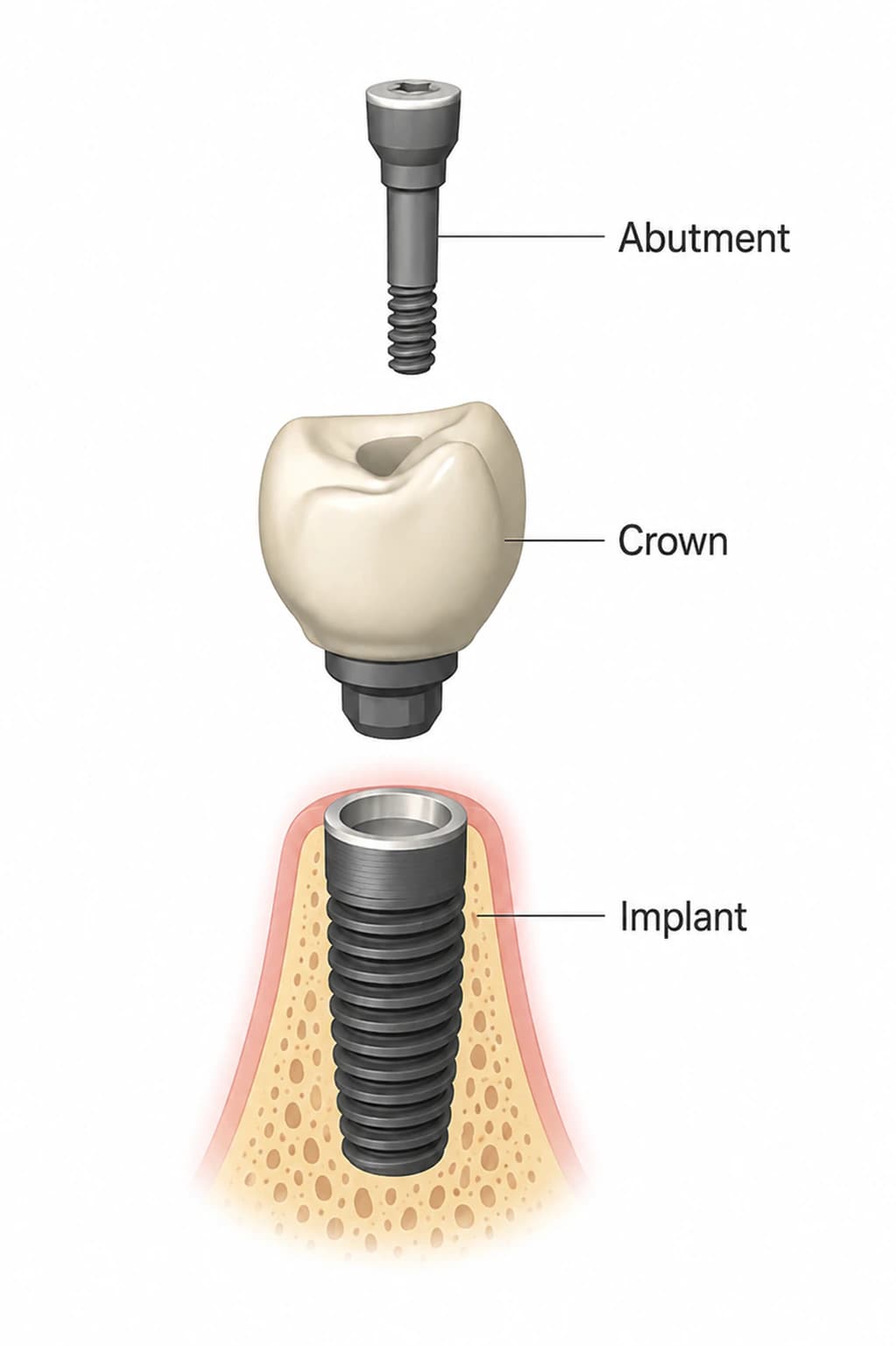
A graft is almost never the goal by itself — it's the foundation for what comes next. Sometimes the graft and the implant happen in the same appointment, when only a small amount of bone is being rebuilt. Other times the graft heals first and the implant follows months later. The right sequence depends entirely on how much bone you're rebuilding and where, which is why an honest, scan-based plan beats a one-size timeline. You can read more about the full picture in our guide to bone grafting for implants, and about the single-visit approach in extraction and immediate implant.
At the Center for Implant Dentistry, the same two surgeons — Dr. Sam Jain and Dr. Arpana Gupta — plan, place, and restore your case from start to finish, so nobody hands you off mid-healing. Your free 3D CBCT scan measures bone in three dimensions, which is what actually confirms a graft has matured, not the calendar alone. And because grafting is a tool rather than a requirement, some patients skip the long rebuild entirely: guided navigation can often reach dense bone that freehand surgery can't, and for a jaw with almost no usable bone, zygomatic implants anchor in the cheekbone and can support a full set of fixed teeth.
If you've been told you need grafting — or if a graft placed elsewhere failed and you're not sure what's next — the most useful step is a straight diagnosis from someone who does this every day. A free consultation and 3D scan will tell you what your bone actually needs, in writing, before anything begins. That's a far better starting point than a timeline pulled off the internet, including this one.
Written and medically reviewed by Dr. Sam Jain, DMD, MS, and Dr. Arpana Gupta, DDS, MDS, who own this practice.
This article is patient education, reviewed by Dr. Sam Jain, DMD, MS, and Dr. Arpana Gupta, DDS, MDS, and is not a substitute for an exam. Treatment recommendations are made only after an in-person consultation and 3D imaging.