Dentist vs Endodontist: What's the Difference?
A general dentist is the broad, all-purpose doctor for your mouth; an endodontist is the specialist for the inside of a tooth — here's how they differ, and how the rest of the dental specialties fit around them.
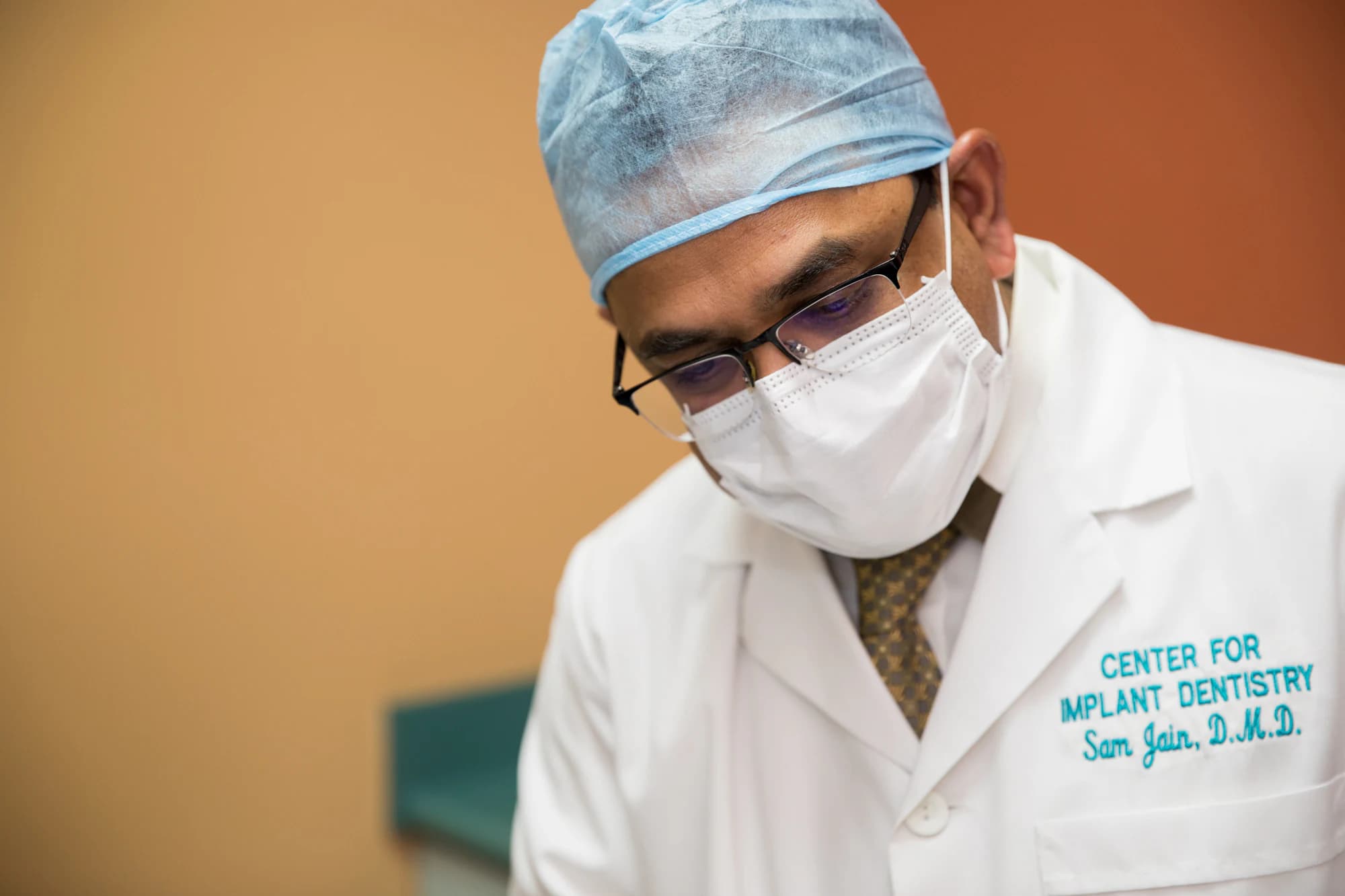

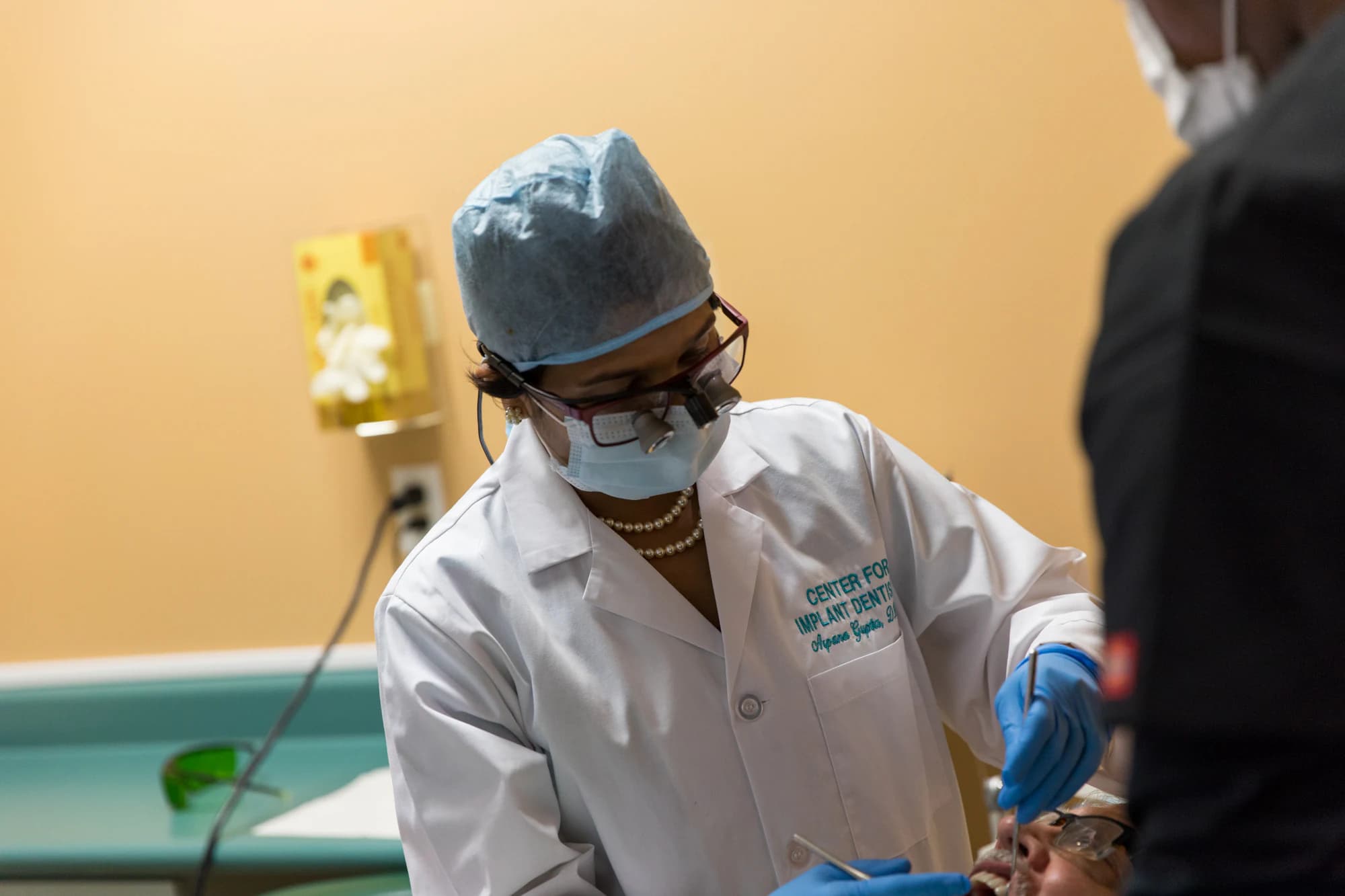
Written and medically reviewed by Dr. Sam Jain, DMD, MS, and Dr. Arpana Gupta, DDS, MDS
Published · Updated
The One-Paragraph Answer
A general dentist handles the wide range of everyday dental care — checkups, cleanings, fillings, crowns, extractions, and straightforward root canals. An endodontist is a dentist who did the same four years of dental school and then spent two to three more years training in one narrow, difficult thing: saving the inside of a tooth. Endodontics is the care of the dental pulp — the nerve and blood supply at the core of each tooth — and the root canals that run down into the jaw. So the plainest way to say it: your dentist is the generalist for your whole mouth; an endodontist is the specialist for the inside of a single tooth in trouble.
The everyday version of this shows up with root canals. A general dentist does root canals, and for a simple front tooth many do them well. But an endodontist performs them all day, every day — the profession's own figures put an endodontist at roughly 25 root canals a week against about two for a typical general dentist. That volume, plus tools built for the job, is why a dentist often refers the hard cases — a molar with curved or extra canals, a re-treatment, a tooth that's still hurting after one attempt — to an endodontist. It isn't that your dentist can't; it's that a specialist does that one thing more often and with more equipment.
What Each One Actually Does
A general dentist is the doctor you see most, and the reach is deliberately broad. They diagnose what's going on across your whole mouth, clean and check your teeth, fill cavities, fit crowns and bridges, treat gum problems early, take out teeth, make dentures, and coordinate everything else — including sending you to a specialist when a problem needs one. Think of them as the primary-care doctor for your mouth: the first stop, the one who sees the big picture, and the one who quarterbacks a plan when more than one kind of expertise is needed.
An endodontist works almost entirely inside the tooth. The core job is root canal treatment — removing infected or inflamed pulp, cleaning and shaping the canals, and sealing them so the natural tooth can stay in your mouth instead of coming out. Beyond first-time root canals, endodontists handle retreatment (redoing a root canal that failed or was left incomplete), apicoectomy (a small surgery at the very tip of the root when infection lingers), cracked teeth, and injuries that knock out or damage a tooth. They lean on tools a general office may not have on hand every day: dental operating microscopes to see canals thinner than a hair, and 3D imaging to map root anatomy before touching it. The whole specialty exists to answer one question — can this tooth be saved? — and to give it the best possible shot.
When to See a Specialist — and Who Does What
For routine care, your general dentist is the right and complete answer. You'd end up in front of an endodontist when a specific tooth is in trouble in a specific way: deep decay or infection reaching the pulp, a tooth that stays painful after a root canal elsewhere, a crack, or a knocked-out or dislodged tooth after an accident. In most cases your dentist spots the problem and refers you — that referral is a feature, not a failure. You can also self-refer if you're in pain and want the specialist first.
Endodontics is one of twelve dental specialties the American Dental Association's commission formally recognizes, and knowing a few of the others clears up a lot of confusion. A periodontist treats the gums and the bone that hold teeth in place. An oral surgeon handles extractions, jaw surgery, and facial procedures. A prosthodontist specializes in rebuilding and replacing teeth. An orthodontist moves teeth into alignment. The pattern is consistent: each specialist trained extra years in one region of the mouth or one kind of problem, and the general dentist ties it all together for you.
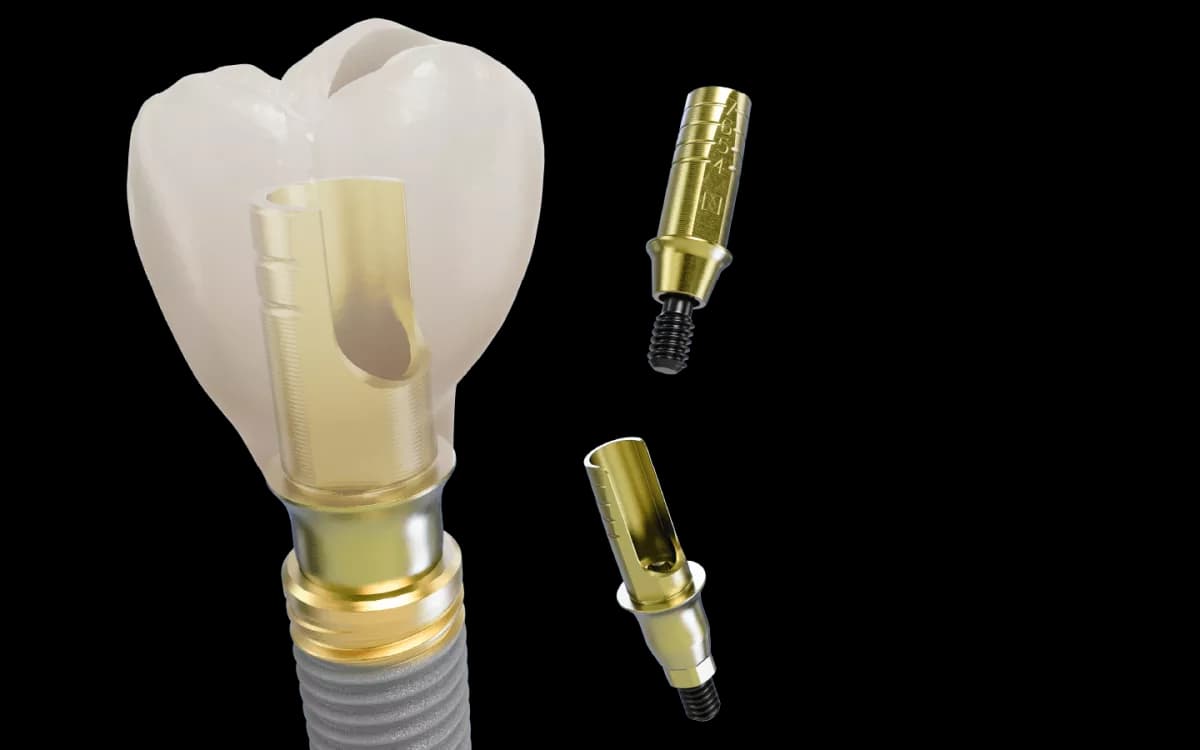
One point that trips people up: the endodontist's mission is to keep your natural tooth, while the implant world begins where a tooth truly can't be saved. Those aren't rivals — they're two ends of the same decision. A good specialist will tell you honestly when a root canal is the right call and when a tooth is too far gone to rescue. If a tooth genuinely can't be kept, a single dental implant replaces the root and the crown so the neighboring teeth are left untouched — often a better long-term answer than grinding down healthy teeth for a bridge. If you're weighing that fork, our comparison of implants versus dentures and our overview of what actually makes someone a candidate are useful next reads.

Where Our Center Fits In
We're a focused practice, and it's worth being clear about what that means. Center for Implant Dentistry is a dental implant center — we do implants, not general cleanings or ordinary fillings. So we're not a substitute for your family dentist, and we'll never pretend to be. What we are is the place people come when a tooth can't be saved and needs to be replaced, or when a full arch of failing teeth needs a fixed set of new ones. If you need a root canal to keep a tooth, an endodontist is your ally; if the tooth is past saving, that's our part of the map.
There's a nice symmetry in how our team is built, and it speaks directly to this topic. The two surgeons who plan, place, and restore every case are a married pair of ICOI Masters: Dr. Sam Jain (a DMD who also holds a master's in mechanical engineering and developed the All-on-8 Robust protocol) and Dr. Arpana Gupta, who holds an MDS in endodontics from her training in India and practices in California as a general dentist — the very field this article is about is where she trained. That endodontic depth matters when we're deciding whether a struggling tooth should be rescued or removed, because the person making the call has spent years inside the roots of teeth. We take the hard cases other offices turn away, including rescuing failed implants placed elsewhere and treating jaws written off as having 'no bone' with zygomatic implants or bone grafting.
Everything a replacement case needs sits under one roof: a free 3D CBCT scan, guided surgery, IV sedation, and an in-house zirconia mill that turns out final, custom-milled teeth in roughly a day for a single implant or a few — not months in temporary plastic. If you have a tooth in trouble and aren't sure whether it's a save-it or replace-it situation, the honest first step is to see clinicians who'll be straight with you either way. Our consultation and 3D scan are free (a $499 value); you can schedule one here, and our general FAQs answer more of the practical questions before you come in.
Written and medically reviewed by Dr. Sam Jain, DMD, MS, and Dr. Arpana Gupta, DDS, MDS, who own this practice.
This article is patient education, reviewed by Dr. Sam Jain, DMD, MS, and Dr. Arpana Gupta, DDS, MDS, and is not a substitute for an exam. Treatment recommendations are made only after an in-person consultation and 3D imaging.