Post-Operative Care After a Hybrid Bridge
A fixed hybrid bridge is screwed to your implants and never comes out — which changes both how you heal in the first week and how you keep it clean for the next twenty years.
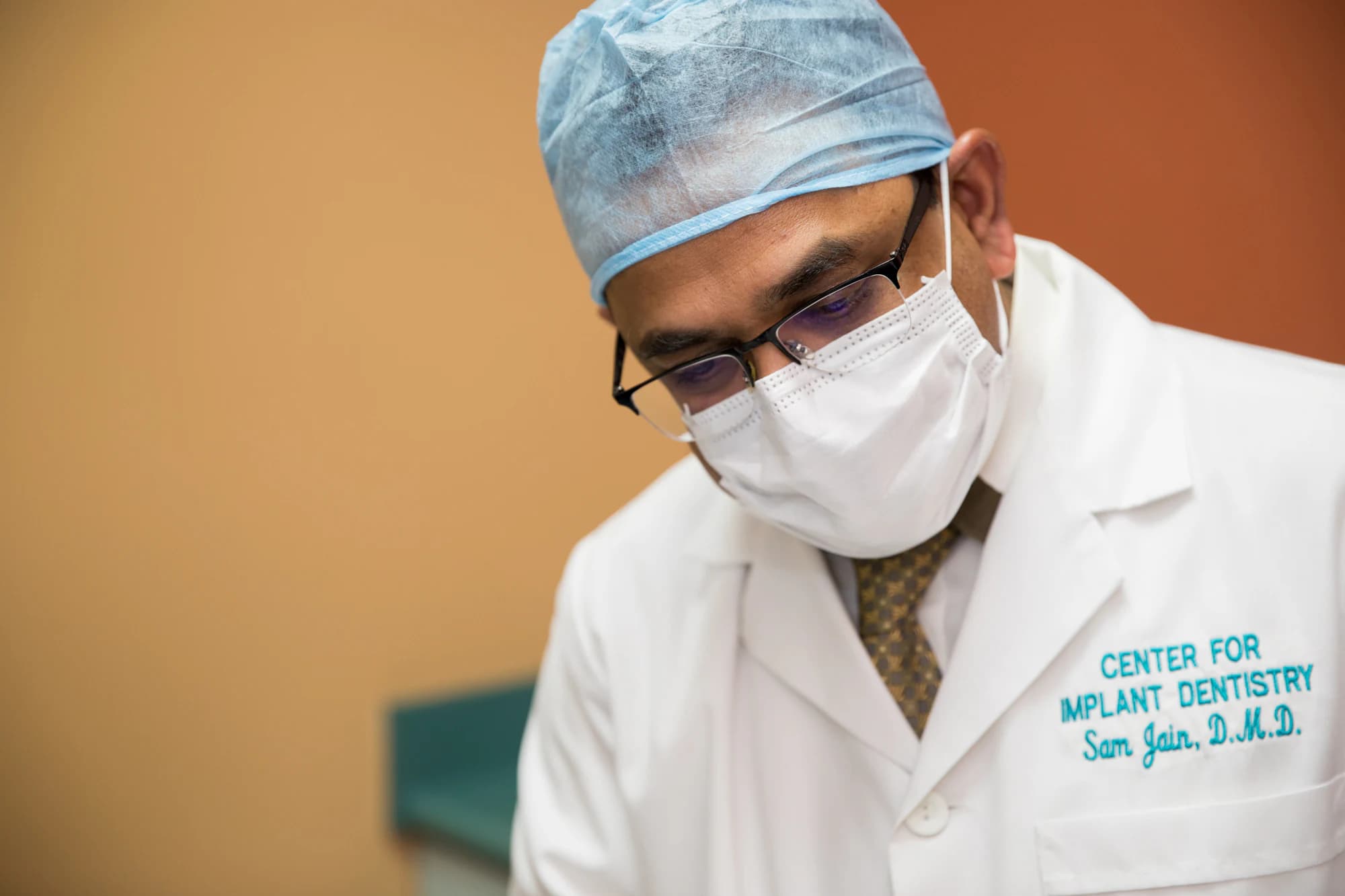

Written and medically reviewed by Dr. Sam Jain, DMD, MS, and Dr. Arpana Gupta, DDS, MDS
Published · Updated
Two Jobs, Two Timelines
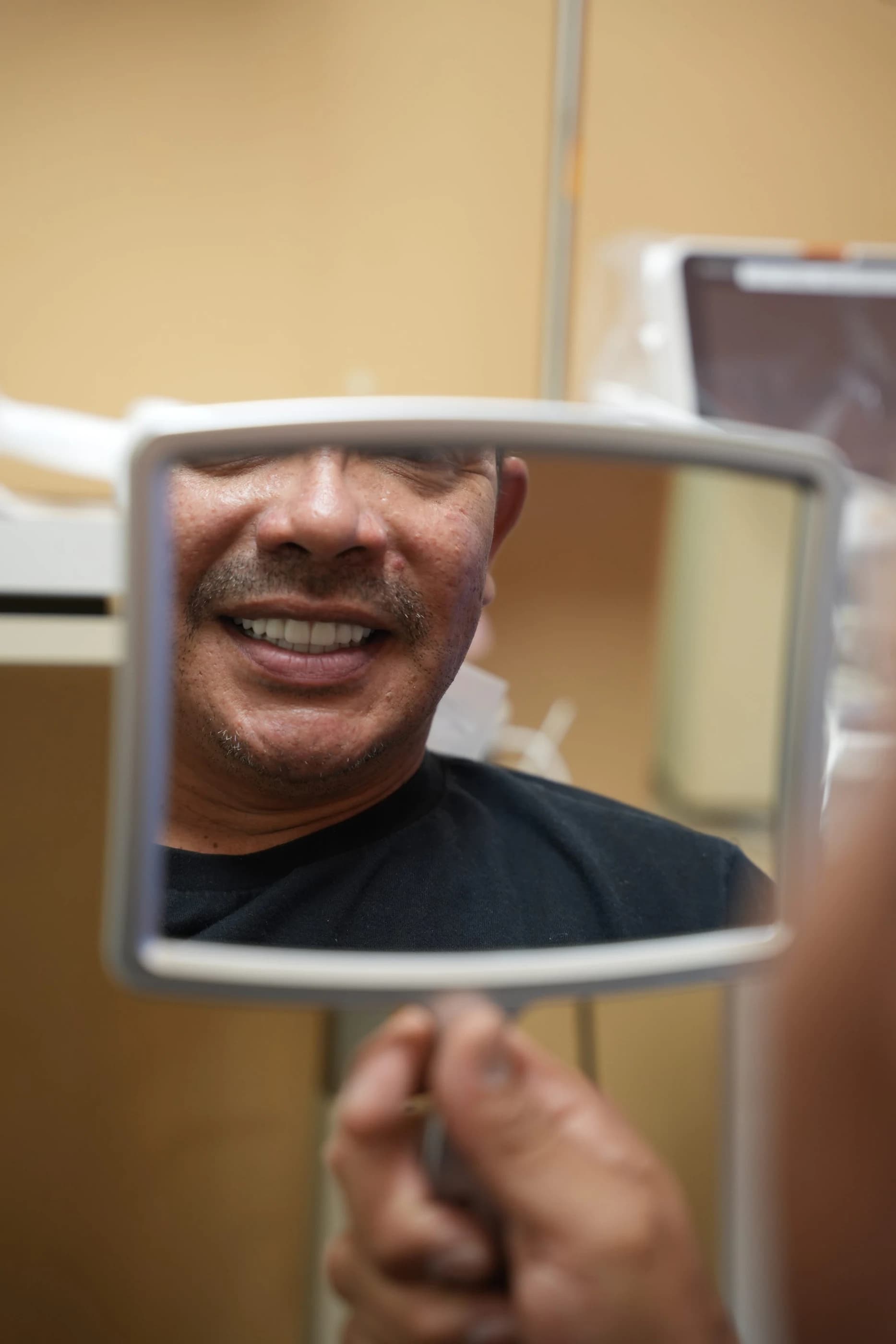
Aftercare for a hybrid bridge splits into two distinct jobs. The first is short-term: getting through the early healing while your implants fuse to bone, which mostly means soft food, gentle rinsing, and not disturbing the surgical sites. The second is long-term and specific to this restoration: because a hybrid bridge is one solid piece of teeth screwed to your implants and never removed at home, you have to learn to clean underneath it. That second job is where most people who lose a well-made bridge years later actually go wrong — not from the surgery, from the maintenance.
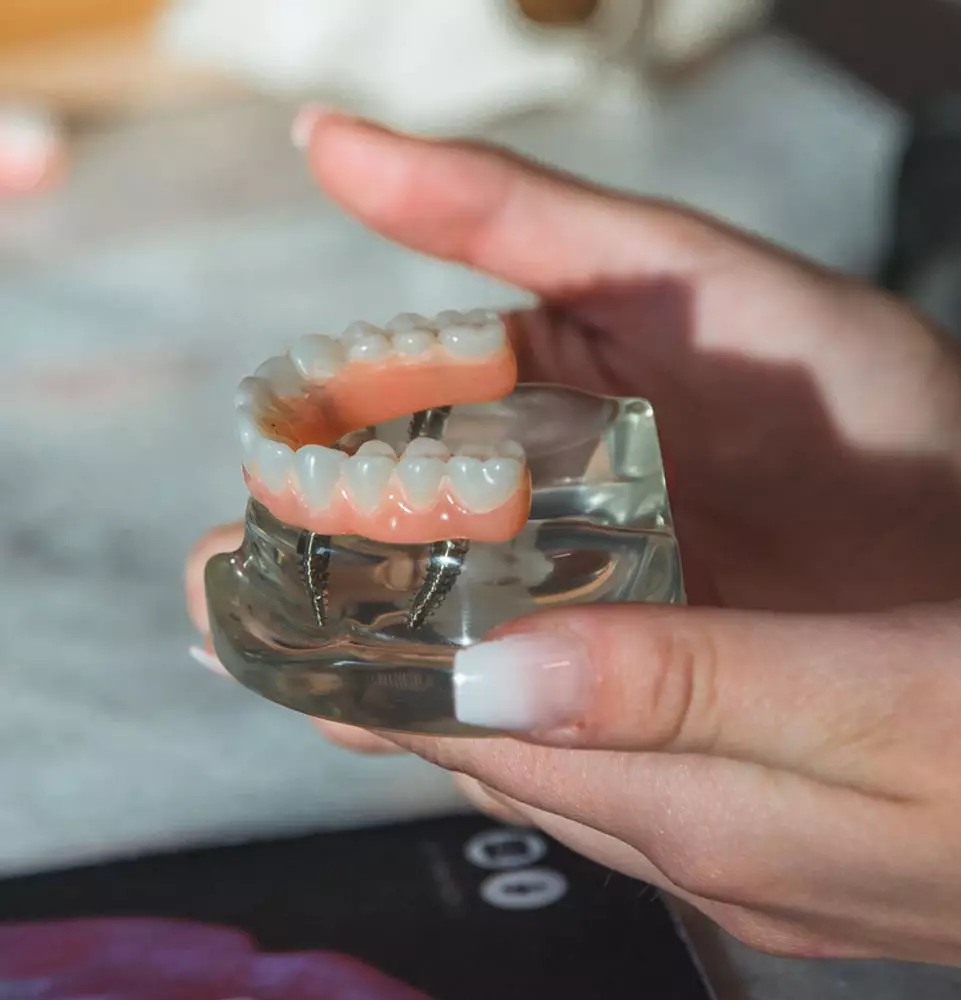
A hybrid bridge (sometimes called a fixed hybrid prosthesis, or the arch in an All-on-4 or All-on-6 case) sits slightly above your gum, bridging over the tissue on a handful of implants. That small gap underneath is deliberate — it lets you clean the space — but it also means food and plaque can collect there if you ignore it. So the honest headline is this: the surgery heals in a few weeks, but the habit that protects it is daily, and it's a habit worth building from the first week.
Everything below walks through both timelines: what the first days and weeks feel like, then the underneath-the-bridge routine that keeps the whole thing healthy for decades. Your surgeon will give you a plan built around your specific case, but the shape of it is the same for almost everyone.
The First Week: Swelling, Soft Food, and Protecting the Fusion
Expect some swelling and soreness for the first two to three days — it's real surgery, and often several teeth came out the same day the implants went in. Most patients manage it with the medication your surgeon prescribes for the first day or two, then over-the-counter pain relievers after that. Ice on the outside of the face in the first 24 hours helps with swelling; after that, gentle warmth is more comfortable. A little oozing or pinkish saliva on the first day is normal. Sleeping with your head slightly elevated for the first few nights takes pressure off the area and cuts down morning puffiness.
Eat soft, and take this seriously, because it's not just about comfort. Your implants are fusing to bone (osseointegration), and that bond is what your bridge stands on. Chewing hard or crunchy food too early puts force through implants that haven't finished anchoring — the exact thing you're trying to avoid. Think smoothies, eggs, yogurt, well-cooked fish, soft pasta, and mashed vegetables for the first several weeks. Skip straws in the first days, since suction can disturb clots, and avoid alcohol while you're on medication. If you had IV sedation, you'll need someone to drive you home and you should rest for the remainder of that day.
Cleaning in that first week is deliberately gentle. Most surgeons have you start with warm salt-water rinses (about half a teaspoon of salt in a cup of warm water) a few times a day, especially after meals, to keep the area clean without scrubbing it. Don't attack the surgical sites with a toothbrush yet. Our full recovery playbook breaks the first week down day by day, and one of the real advantages of having the same team that placed your implants a phone call away is that a question at day three gets answered by the person who did the surgery — not a call center.
Cleaning Under Your Bridge — The Part That's Different
Here's what makes hybrid bridge aftercare its own topic. A single crown you floss like a tooth. A hybrid bridge you can't floss the normal way, because there are no gaps between the teeth to floss through — it's one connected arch. Instead, the plaque collects in the channel underneath, where the bridge arches over your gum and around each implant. If that channel isn't cleaned, the gum around the implants can get inflamed, and left long enough that inflammation reaches bone (peri-implantitis), which is the leading reason a healthy arch eventually runs into trouble. The teeth can't decay; the tissue holding them absolutely can.
Once your surgeon clears you to start (usually after the initial soft-tissue healing settles), a water flosser becomes the tool most hybrid bridge patients rely on. It flushes debris out from under the arch where nothing else easily reaches. Early on, use warm water on a low setting and aim the tip along the gumline and up under the bridge, sweeping from the cheek side and the tongue side — high pressure on still-healing tissue is worth avoiding. Alongside it, a floss threader or superfloss lets you pass floss under the bridge and shimmy it against each implant, and a small interdental brush cleans the spots the water misses. Twice a day is the target. It sounds like a lot the first week and takes about two minutes once it's habit.
This is also where the material your bridge is made of quietly matters. Some offices deliver a hybrid made of acrylic teeth on a metal bar — cheaper to produce, but the acrylic stains, wears, and harbors more plaque over the years. We mill our final bridges from solid zirconia in-house on our own CAD/CAM system, run by our engineer Andy Jain, which gives a smoother, denser surface that's easier to keep clean and far more durable — and it's ready in about 72 hours for a full arch instead of six to eight months in temporary plastic. You can see that workflow on our same-day dental implants page. Whatever you're given, ask your hygienist to size your interdental brush and show you the water-flosser angle on your actual arch; the right technique is not a guess.
Warning Signs, Professional Upkeep, and Habits That Wear a Bridge
Know what healthy feels like so you notice a change. In the first week, call your surgeon if bleeding doesn't settle, swelling worsens after day three instead of improving, pain climbs rather than fades, or you run a fever — those are the signs of a problem, not normal healing. Longer term, watch for gums that bleed or look puffy around the implants, a persistent bad taste or odor localized to one spot, or any new looseness or clicking in the bridge. A bridge that feels like it's shifting is worth a prompt call — usually it's a retaining screw that needs re-tightening, a quick fix, but not something to ride out. Our guide to implant complications and rescues covers what actually goes wrong and how it's repaired.
Home care handles the daily plaque; professional visits handle what it misses. A hybrid bridge gets maintained differently from natural teeth — periodically the bridge is unscrewed in the office, cleaned thoroughly underneath, and the implants checked with implant-safe instruments, then reseated. Most patients keep a roughly six-month schedule; if you smoke or have diabetes, more often is usually wiser, since both raise the risk of peri-implant bone loss. Because the surgeons who placed your implants also restore and maintain them here, nobody's guessing about the hardware under your gum — it's been on our 3D scans since day one.
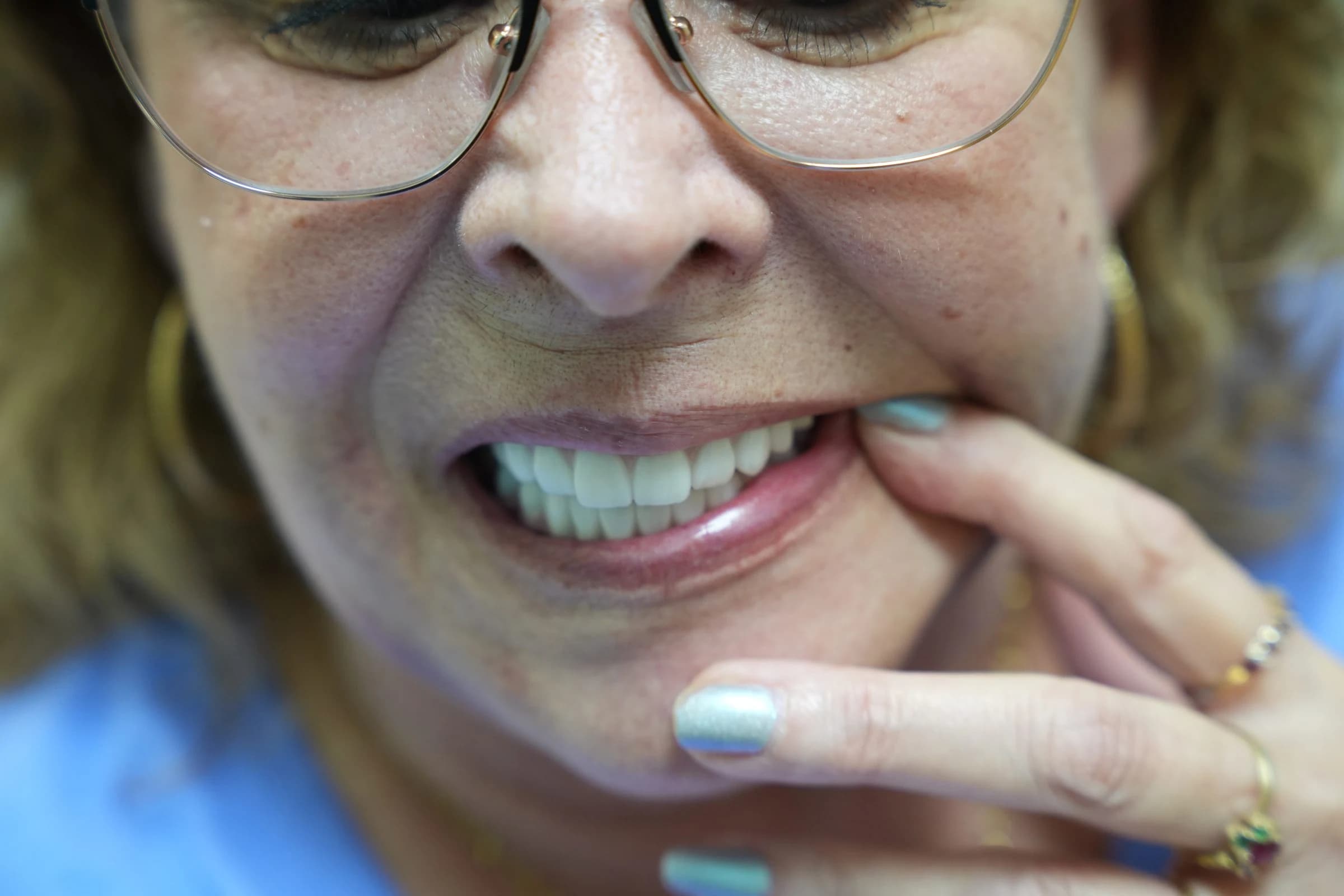
Two everyday habits do slow damage worth naming. A hybrid bridge doesn't have the natural cushion of a tooth's ligament, so grinding or clenching sends that force straight into the implants and the zirconia — if you grind, a custom nightguard is cheap insurance for a five-figure restoration. And don't use your teeth as tools; a milled zirconia arch is strong, but cracking ice and opening packaging is how a chip starts. Protect the fusion early, clean underneath it daily, keep your checkups, and a well-planned hybrid bridge is built to serve you for decades — implant survival commonly runs around 95% at ten years, and good maintenance is a real part of landing on the right side of that number.
Written and medically reviewed by Dr. Sam Jain, DMD, MS, and Dr. Arpana Gupta, DDS, MDS, who own this practice.
This article is patient education, reviewed by Dr. Sam Jain, DMD, MS, and Dr. Arpana Gupta, DDS, MDS, and is not a substitute for an exam. Treatment recommendations are made only after an in-person consultation and 3D imaging.