What Is A Sedation Dentistry?

Tips for recovering from Wisdom Teeth Extraction

What Is A Sedation Dentistry?

Does getting your teeth cleaned make your entire body tense? Would you instead suffer through the pain of a toothache than visit a dentist? You are not the only one who feels the same way. Reportedly people are so afraid of going to the dentist that they would not get any treatmen

Patients who hate dentists And fear getting the dental treatment done may benefit from sedation dentistry. Sedation can be utilized for various treatments, from invasive surgeries to routine dental cleanings.

What Is It?

Sedation dentistry specializes in using sedation to alleviate tension and discomfort. Laughing gas, oral sedation dentistry, and IV sedation dentistry are the three forms of sedation dentistry.

Within the field of sedation dentistry, all three approaches have a role. Your medical history and other factors will assist you in making the most acceptable option.

Laughing Gas

Laughing gas is entirely harmless to both children and adults. It is because you are awake and aware throughout the operation.

Your dentist may offer laughing gas to help you feel better in the chair if you have dental anxiety. We’ll put a mask over your nose and advise you to take deep breaths. The laughing gas takes only a few seconds to start operating.

When compared to other sedative treatments, laughing gas is the safest with minimal side effects. Any adverse effects will vanish as we remove the mask.

Laughing gas can be used for various procedures, including tooth cleaning and root canals. On the other hand, Operational and other intensive procedures may require more medication in addition to laughing gas to alleviate discomfort. A local anesthetic, for example, is required to numb a tooth that requires filling.

IV Sedation Dentistry

In this process, first, an IV line is directly inserted into a vein in your arm. This IV line makes sure that you have a constant supply of drugs. That way, you’ll be knocked out for the duration of the process.

While in the dentist’s chair, you may relax and feel protected, knowing that you’re getting professional dental treatment without the worry and agony. We keep a close eye on your vital signs and use an oxygen mask to make sure you’re breathing appropriately.

Oral Sedation Dentistry

Your dentist will give you soothing medicine approximately an hour before your treatment begins using oral conscious sedation. Most dentists prescribe triazolam, a diazepam derivative. Other drugs, such as zaleplon and lorazepam, may be used by your dentist. In pediatric dentistry, liquid sedation.

Oral sedation makes you feel tired and sleepy. However, you will be able to interact with your dentist if required, and you will be gently nudged awake. You’ll need someone from your family or friends to drive you home following your treatment since oral sedation temporarily impairs your memory and motor abilities.

To Sum Up

Regardless of the sort of sedation you receive, you’ll almost always require a local anesthetic to alleviate pain if the treatment is painful.
Tips for recovering from Wisdom Teeth Extraction

Tips for recovering from Wisdom Teeth Extraction

Introduction

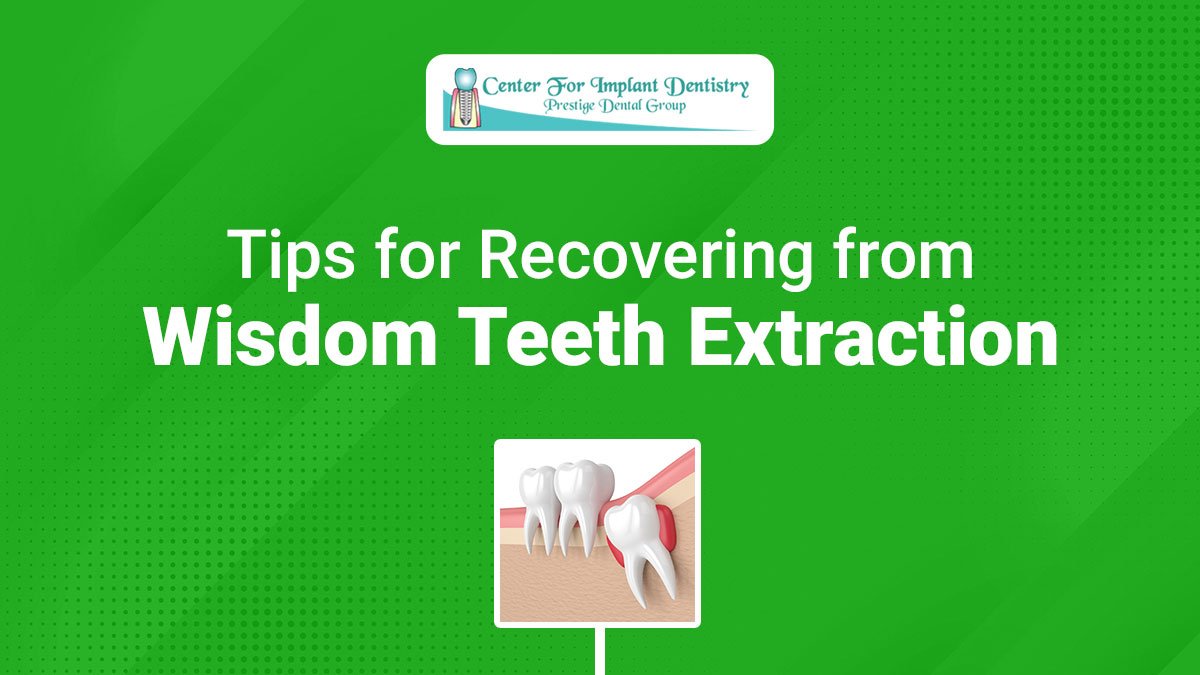
Wisdom teeth try to erupt into the mouth between 17 and 21. If they are Malpositioned or embedded in the jaw bone, we may propose extraction at that time or even before they reach the age of 17. Common reasons which may require extraction of wisdom teeth are:

  • They are partially or completely embedded inside the bone and impacted.
  • Infectious, swollen, cystic, or painful
  • Detonate at an inopportune moment

Many people, unfortunately, avoid having their wisdom teeth removed. However, keep in mind that the roots of your wisdom teeth become longer and tighten in the jaw as you get older. This makes the extraction more complex, and the healing process may take longer. As a result, it is generally suggested that wisdom teeth be extracted before 25.

  • Keep your head raised during the first three days.

When you lie flat, blood vessel tone and blood volume near the wound rise, causing it to throb. As a result, sleep with your head raised to prevent swelling and speed recovery.

  • Place an ice pack against your cheeks.

Applying an ice pack on your cheeks for the first 36 hours following surgery (20 minutes on, 20 minutes off) will help reduce pain, swelling, and inflammation.

  • Avoid Dry Sockets

When the blood clot that forms on the extraction site is released, it causes a dry socket. This occurs due to dislodgement of the clot by various reasons like improper oral hygiene, vigorous spitting or coughing, smoking. A dry socket can be painful and annoying, and this usually occurs in the first 48 hours of extraction.

Your mouth is held wide open for a lengthy period during the process of wisdom tooth extraction, which may result in a condition known as transient trismus or lockjaw, which causes strained or aching muscles and myofascial pain. After surgery, the masseter, one of the muscles that help you chew, is prone to pain. The stress in your jaw will be relieved by massaging this muscle, allowing you to recuperate faster.

  • Inflammation should be reduced.

The key to controlling discomfort at the extraction site is to avoid inflammation. Because inflammation may worsen beyond 48 hours, make sure you take the anti-inflammatory medications prescribed by your doctor.

Is it necessary to extract wisdom teeth?

If your wisdom teeth aren’t bothering you, they don’t need to be extracted. They must be removed if they are affecting or causing crowding. If it is not removed, the wisdom tooth will become impacted. Because there isn’t enough room in your mouth for it to erupt correctly, it will come out at a wrong angle, perhaps injuring the tooth next to it.

Your dentist may urge you to get your third molar removed as soon as possible since the bones in your mouth become more brutal as you get older, making it more difficult to remove. Delaying treatment can result in significant operations and excessive bleeding, as well as a bit of loss of jaw movement.

Symptoms that you should get your wisdom teeth removed

  • Pain behind the molars worsens with time; redness, swelling, and tenderness can lead to infection.
  • Poor breath and a bad taste can be observed due to wisdom teeth.
  • Jaw stiffness and pain

Extraction of wisdom teeth costs

The tooth’s location determines the cost of wisdom teeth extraction, the degree of impaction, the need for anesthetic, sutures, and other factors. Always discuss these considerations with your dentist, as they may impact the procedure’s cost.

All-On-4 Dental Implants Benefits

All-On-4 Dental Implants Benefits

Introduction

All 4 dental implants have the following advantages:

  1. Get a fully functional new tooth in a short time
  2. Improve your appearance
  3. Eat freely
  4. Get a long-lasting smile
  5. Collapse teeth
  6. Easy to care for your teeth

With only four dental implants, you can replace your denture and get a permanent bridge supported by the implant in a day.

Get immediate results

Immediately experience dramatic improvements in masticatory ability, tooth stability, and overall comfort.

Improve appearance

All on four dental implants can affect appearance for up to 20 years. This procedure helps protect the jawbone and prevent further deterioration of the facial structures associated with the missing teeth and the root system that supports them. Dental implants reduce wrinkles caused by lack of bone and tooth structure and help look younger.

Eat what you want, when and where you want.

The All on 4 processes improves your overall diet. Instead of avoiding it in public or at home, you can re-enjoy your favorite food.

 Get a long-lasting smile.

The all on 4 dental implant procedure creates a permanent dentition with a non-removable implant support bridge. There is no need to remove the dental implant, and the tooth can last a lifetime.

 Improves overall quality of life

 With All on 4 Dental Implants, new teeth feel and function like natural teeth. You will be confident in your smile, how you speak, and how you eat. Overall, you will look better, feel better, and take a new look at life. 

 Eliminates health problems associated with tooth rot and loss

All on 4 Dental Implant Treatment contributes to oral and physical health by reducing the risk of periodontitis, chronic infections, and bacterial inflammatory diseases. Periodontal disease is associated with heart attack, stroke, Alzheimer’s disease, diabetes, and other chronic illnesses. Dental implants restore your mouth to a more natural state, so they can help prevent periodontal disease. 

Easy Tooth Care Another advantage of the 

 All on 4 implants is that it is easy to care for. Daily brushing and dental floss, and regular visits to Dental Associates, hygienists, and dentists will help keep your new teeth clean and healthy for the next few years. 

 All on 4 Dental Implant Solution 

 All on 4 Dental Implant Solution was developed to simplify the treatment of people suffering from tooth loss, periodontitis, and/or bone atrophy and resorption (natural jawbone dissolution). Low self-esteem and quality of life issues. All on 4 dental solutions improve oral health and overall health. 

 All on 4 Dental Implants: Attractive and Affordable 

 Traditional dental implants require at least six implants to be placed per arch. Those who choose to do nothing about missing, missing, or loose dentures often experience pain, embarrassment, messy denture glue, and poor overall health. The All on 4 dental implant procedure saves time and money, shortens healing times, and relieves the emotional stress of lacking healthy teeth. 

The All on 4 Dental Implant procedure is intended for individuals with toothless or toothless jaws, who are currently wearing dentures, and those who require complete upper and/or lower restoration. This procedure saves time and money by using only four implants per arch and a complete set of new implant-supporting replacement teeth.

SHOULD YOU GET ALL-ON-4 IMPLANTS?

All on 4 dental implants

Over your lifetime, your teeth will go through extensive wear and tear. They are constantly battling the environment in terms of eating and drinking. So, losing your teeth is normal. It can be uncomfortable to speak or eat, or even smile, but you shouldn’t be embarrassed. It is common, and it will end up happening to everyone. 

There are several alternatives you can consider should you choose to replace your teeth. One of these options is All-on-4 dental implants. 

All-on-4 implants are becoming more common these days as it helps people to regain full functionality. 

Are you considering all-on-4 implants? Do you want to get it but don’t know enough about it to make a decision? Well, here is some useful information to help you out. 

How Do All-on-4 Dental Implants Work?

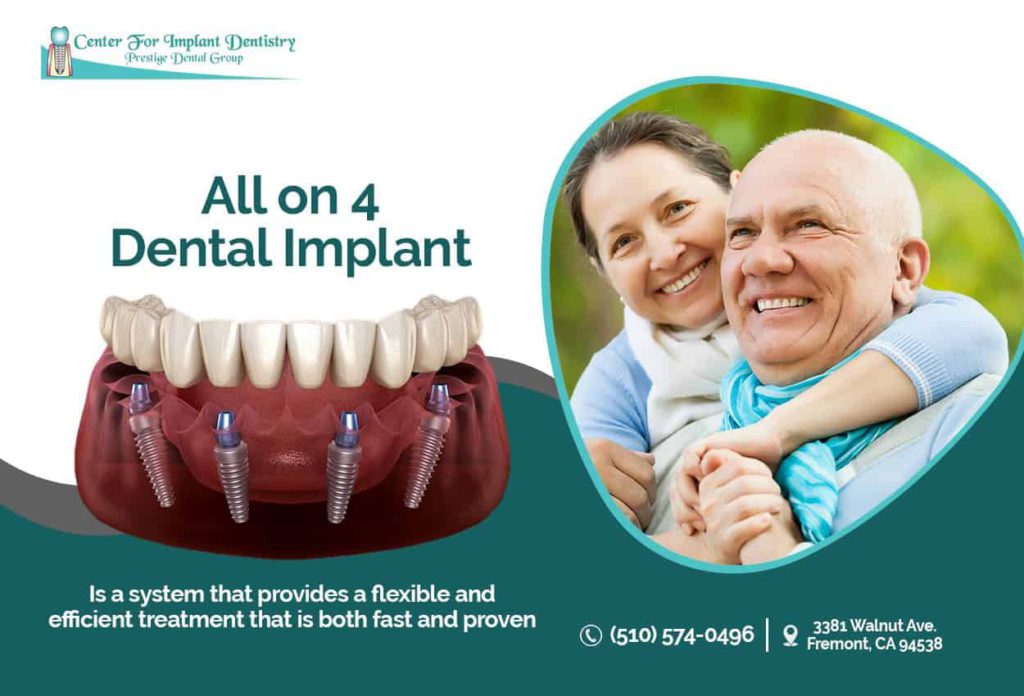
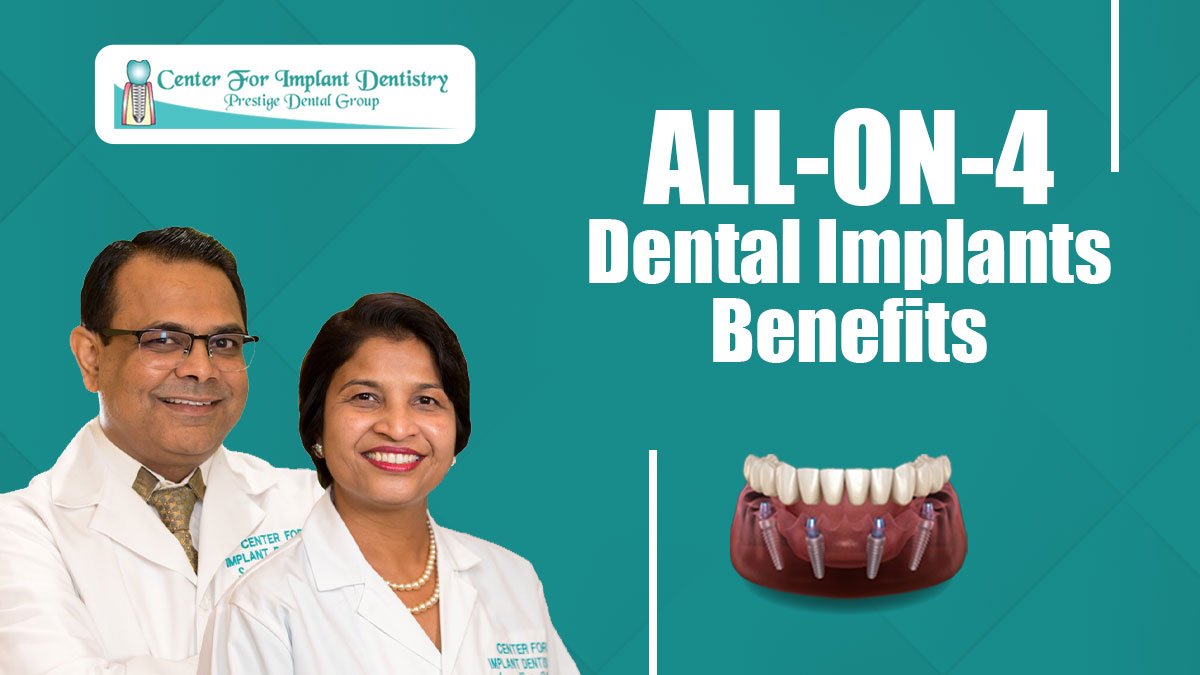
All-on-4 dental implants are a full set of four implants that replace the entire upper and/or lower teeth. They are the permanent alternative to dentures and are more natural in appearance than the latter. Each implant has a titanium screw which is surgically inserted into the jawbone  which works as a tooth root. a connector , known as abutment is placed on the implant and finally a crown is custom fabricated and fixed. 

What Are Its Advantages? 

The procedure is a simple one-day process that costs less than replacing each tooth separately. These implants will not loosen or shift as dentures do; instead, they are attached to your mouth securely. It also helps people gain confidence in their appearance, allowing them to smile and express themselves more easily and without any insecurity. 

These implants also last upwards of 20 years with proper maintenance and care. It has an excellent success rate. Taking care of these implants is also hassle-free—you would treat them as you treat your natural teeth. 

However, to be eligible for these implants, you will need to have a high volume of bone available. 

Does all this information have you leaning towards getting these implants? Then, you should find a dentist for all-on-4 dental implants in Fremont with a great success rate and reputation who is confident in their abilities to perform this procedure for you. 

Cleaning All on 4 Dental Implants

Like natural teeth, cleaning All On 4 dental implants ensures that you can keep your teeth or dentures for the longest time possible. Normally, after meals, the food debris on or under the dentures decomposes through bacterial action. If you do not make it your habit to do a regular mouth cleaning, the bacteria will breed and could have a destructive impact on your dental implants.

Implanted teeth are prone to bacterial destruction and infections just the same way natural teeth are. Cleaning the dental implants after every meal ensures that you can dislodge the implants’ debris before they stick to your dentures and become a breeding ground for bacteria. The following are methods that you can use to clean dental implants: 

  • Flossing your bridge after every meal to remove the food debris that might be stuck under the bridge 
  • Using a water pik, ¾ water and ¼ antibacterial mouth rinse, to loosen debris and clean the hard to reach areas
  • Rinsing your mouth with water and an antibacterial mouth rinse, the one we prescribe you at our office will suffice. The mouth rinse should not be alcohol-based! 
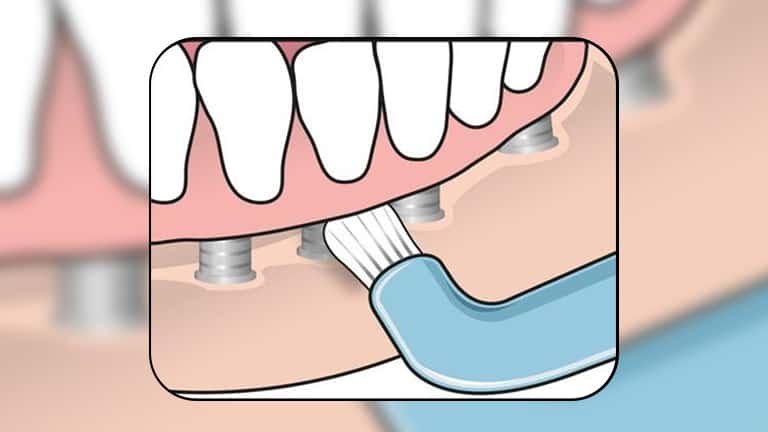
  • Clean your dentures with an angled Tepe toothbrush. This gets hard to reach areas effectively. 
  • Clean the top of your tongue and the insides of your cheeks to ensure that there are no bacteria left in your mouth. You can use a toothbrush to brush off the debris that gets stuck on your tongue during eating. 

Develop the habit of visiting your dentist for professional cleaning at a frequency of 3-6 months to prevent issues.

What should you know about dental implants cost?

Do you have missing teeth? An unfortunate yet common reality for many. 

Earlier dentures were the only option to replace missing teeth. But, they were a hassle for many due to their discomfort and pain. 

Thankfully we have dental implants now! 

Before we think of dental implants cost, let’s know whether we are an ideal candidate to get them. 

Who is qualified to get dental implants? 

Anyone who has a missing tooth or several missing teeth due to tooth decay, accident or illness can get dental implants. 

However, they must exhibit sound oral health apart from the missing tooth and have sufficient bones to accommodate implants. 

Once we are qualified to get implants, one question strikes our mind, “will the treatment be affordable for me?” 

What are the factors that determine the cost of dental implants? 

Generally, dental implants are a little expensive and comprehensive oral treatment. 

The cost of dental implants vary depending on various factors, as given below:

  • The type of dental implant procedure is performed on whether the implant is regular or mini. Additionally, the type of teeth to be replaced.
  • The dentist’s credentials and reputation. For a fact, a “famous dentist” will be more expensive than a “local dentist.” 
  • The place where your treatment is performed. For instance, a well-known medical center will charge more than a small dental office. 
  • The expense of the materials used to perform the procedure. Today, dental science has advanced to a level with the latest equipment and technology to perform implant treatment.
  • Some dental clinics offer implants at an affordable rate by keeping their costs low. For instance, they purchase their supplies and equipment in bulk. 

Have you missed most of your teeth and are thinking about all-on-4 dental implant costs? 

Get excellent implant dentistry services at an affordable price range at the Center for Implant Dentistry. We keep the all-on-4 implants cost affordable for patients to receive the treatment.

Contact us today and schedule your appointment with us.