The Benefits of Dental Implants: Health, Confidence & Long-Term Value
A single implant replaces a tooth's root, not just its crown — and that one difference is what drives every benefit that follows, from a stronger bite to a jaw that keeps its shape.
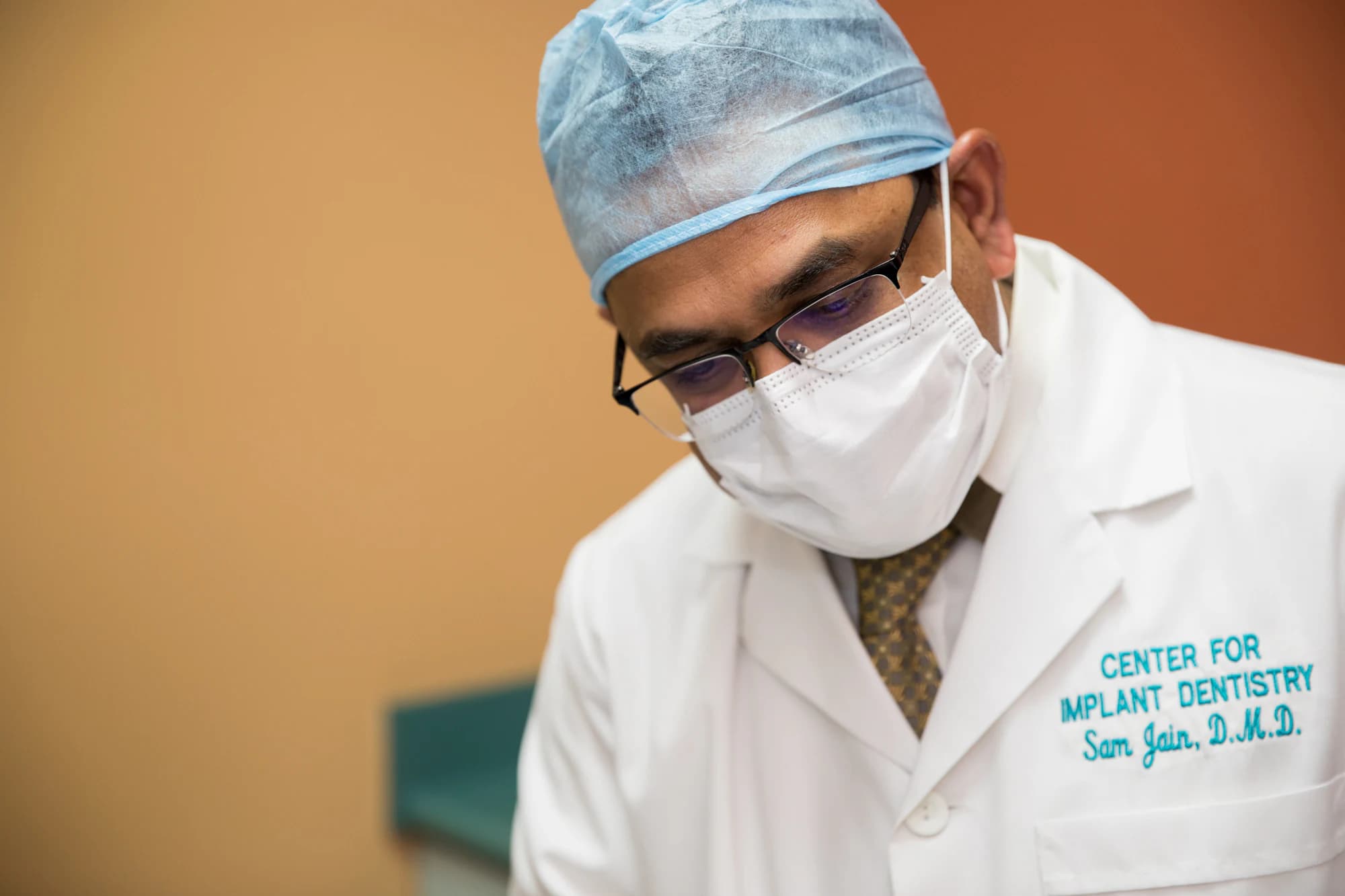

Written and medically reviewed by Dr. Sam Jain, DMD, MS, and Dr. Arpana Gupta, DDS, MDS
Published · Updated
Why People Choose Implants
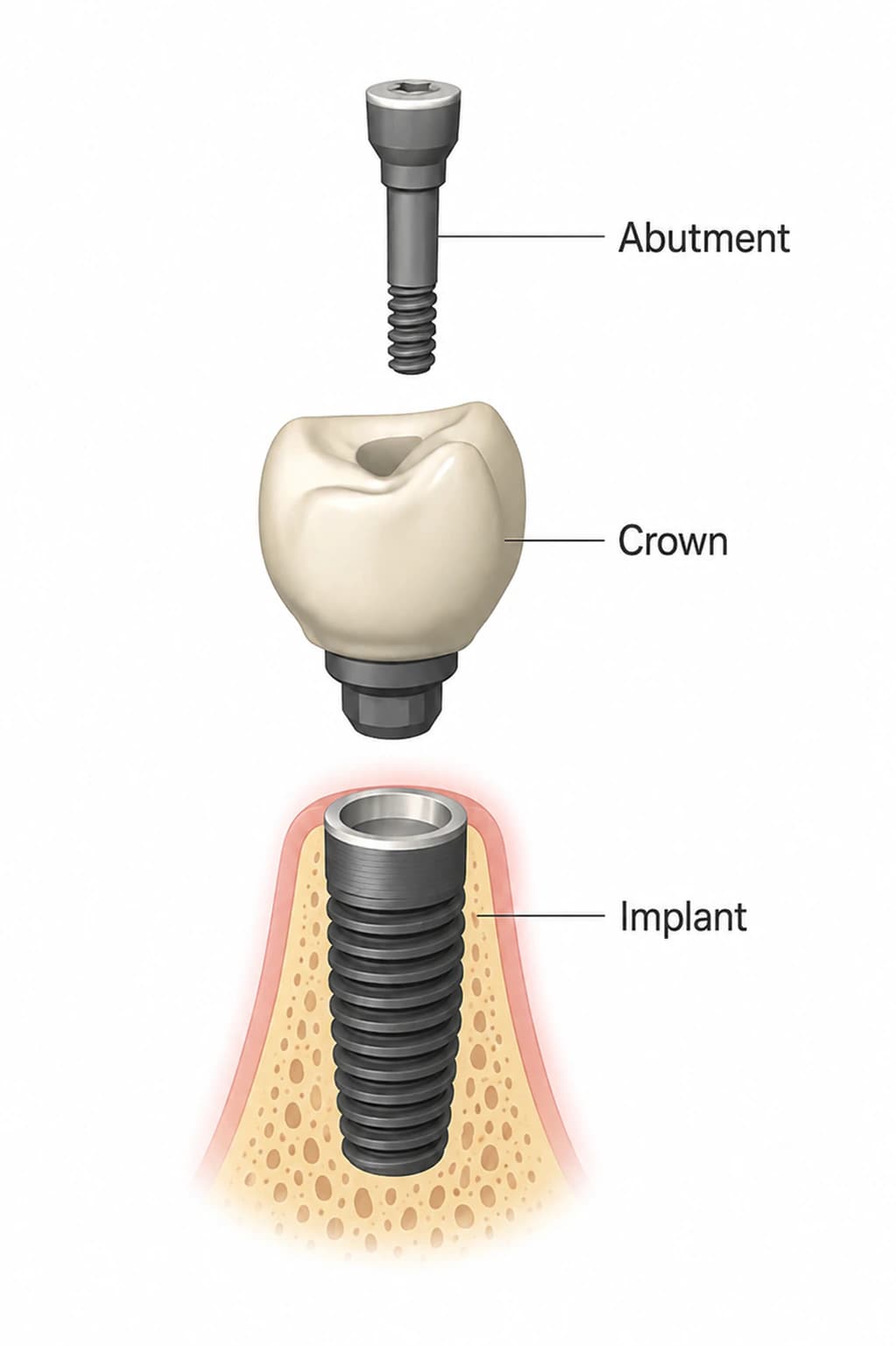
Most patients ask us the same thing on day one: is an implant really worth it over a bridge or a denture? For a large share of people, yes — and the reason is structural. A dental implant is a titanium post that takes over the job of a natural tooth root. Nothing else on the menu does that. A bridge grinds down the healthy teeth on either side to anchor itself; a denture sits on the gums and rocks. An implant stands on its own in the bone, which is why it feels, chews, and lasts more like the tooth you lost than any removable option.
The benefits fall into four buckets that we'll walk through: your health (bone, bite, and neighboring teeth), your confidence (how you look, speak, and eat in front of other people), the long-term value (what it actually costs you over ten or twenty years), and the aesthetics of the final tooth itself. None of these are marketing abstractions — each one traces back to that same root-replacement fact. Whether a single implant or a full arch is right for you is a separate question your surgeon confirms with a 3D scan, but the underlying advantages hold across the board.
The Health Benefits: Bone, Bite, and Your Other Teeth
The one most people underestimate is bone. When a tooth comes out, the jawbone underneath it stops getting the daily pressure of chewing, and it slowly shrinks — the reason long-term denture wearers get that collapsed, aged look around the mouth. An implant sends chewing force back into the bone the way a real root does, which helps preserve the ridge and the shape of your face. Your surgeon can't promise a specific millimeter of bone saved, but the mechanism is well established, and it's a benefit no bridge or removable denture provides.
There's also what an implant doesn't do to your other teeth. A traditional bridge only works by shaving down the two adjacent teeth — often perfectly healthy ones — into posts. An implant stands alone, so your neighboring teeth are left untouched. And because it's anchored, you get real bite force back: most people return to eating steak, apples, and nuts rather than avoiding them, which matters for nutrition, not just enjoyment.
Implants are also predictable over the long haul. Peer-reviewed studies commonly report around 95% survival at ten years, which is high for any medical device. That figure isn't a guarantee for every mouth — smoking, uncontrolled diabetes, and hygiene all move the odds — but it's why implants are considered the closest thing dentistry has to a permanent tooth replacement. If an implant placed elsewhere ever does run into trouble, that's a fixable problem too; our page on implant complications covers what actually goes wrong and how it's rescued.
Confidence and the Look of the Final Tooth
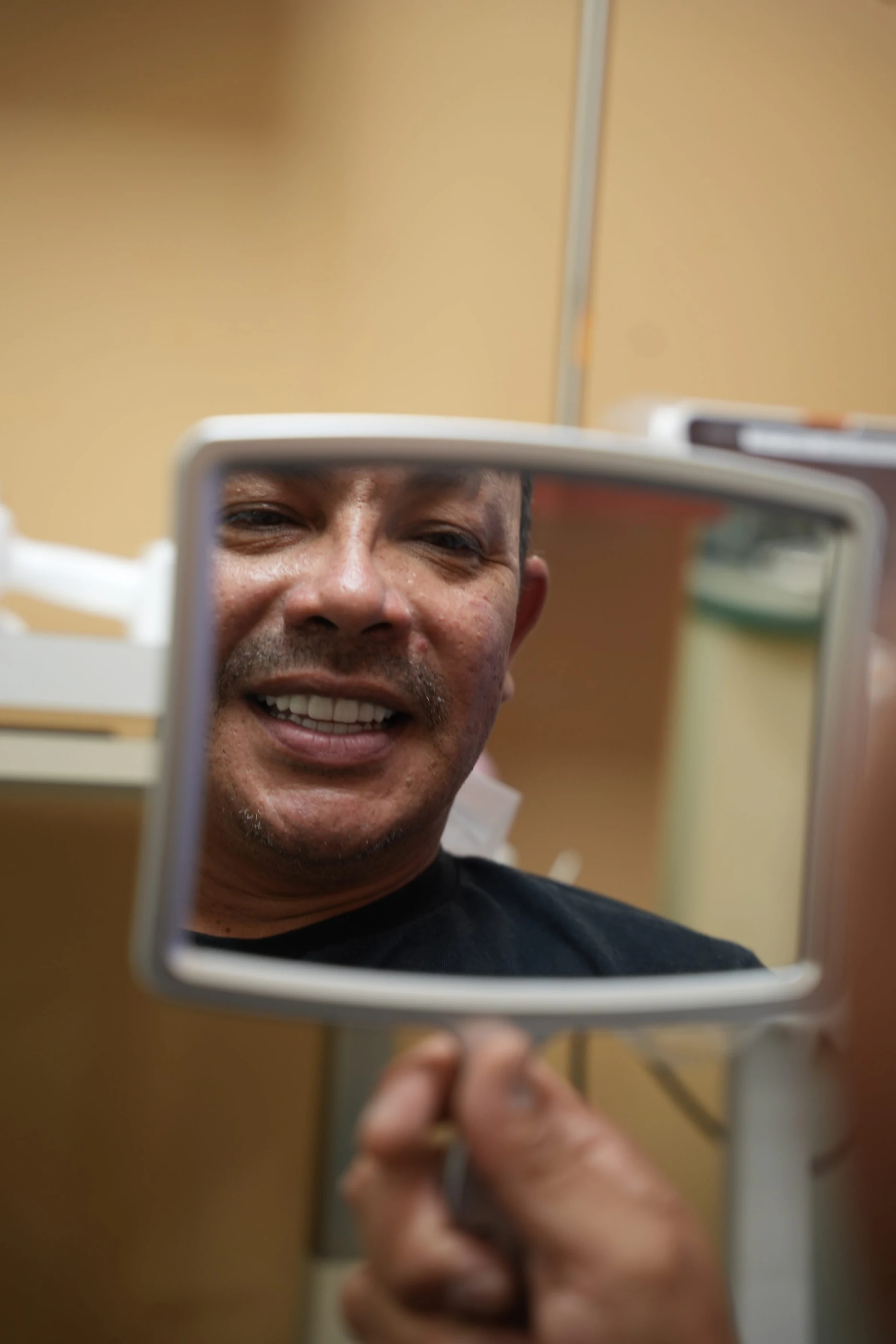
Denture wearers will tell you the hardest part isn't the eating — it's the worrying. Wondering whether the plate will click loose during a laugh, whether a word will slip, whether you can bite into something at dinner without planning around it. Because an implant is fixed in bone, that entire category of anxiety mostly disappears. You brush it, floss around it, and largely forget it's there. For many patients that's the single biggest change they report, ahead of anything clinical.
The aesthetics come down to the crown on top, and this is where the lab matters as much as the surgery. A well-made implant tooth is built to match the shade, shape, and translucency of the teeth around it — no metal line at the gum, no obvious "fake tooth." We mill our final crowns and bridges from zirconia in-house on a CAD/CAM system run by our engineer, Andy Jain, so the tooth is designed against your actual bite rather than shipped to an outside lab and guessed at. For single and multiple teeth, that means a final custom-milled tooth in roughly 24 hours instead of months in a temporary; you can see how that works on our same-day dental implants page.

The Long-Term Value: What It Actually Costs You
An implant usually costs more upfront than a bridge or denture, and it's fair to weigh that honestly. But value isn't the sticker price — it's the price over time. A bridge typically needs replacing every 10 to 15 years, and each replacement can mean more drilling on the anchor teeth. Dentures get relined and remade as the jawbone shrinks beneath them. An implant, cared for properly, is often a one-time investment: the post itself is designed to be permanent, and only the crown on top may need attention down the road. Run the math across two decades and the "expensive" option frequently comes out even or ahead.
The other half of value is how you pay for it. At our center the consultation and 3D CBCT scan are free — a $499 value — so you get real numbers before committing to anything. Roughly 92% of our full-arch patients spread the cost out through financing partners like Cherry, CareCredit, Proceed, and Happen Bank. We're also in-network with many PPO plans — Delta, Aetna, Cigna, MetLife, Guardian, UnitedHealthcare, Anthem Blue Cross, and Blue Shield of California among them (we do not take Medicare, Medi-Cal, or HMO plans). The full breakdown of what moves your number lives on the dental implant cost page, and if you're still comparing paths, our implants vs. dentures rundown is a useful next read.
One thing that quietly protects your investment is who does the work. At Center for Implant Dentistry, Dr. Sam Jain — who holds an MS in mechanical engineering alongside his dental degree and is an ICOI Master — and Dr. Arpana Gupta personally plan, place, and restore every case. No fly-in surgeon places your implant and hands your bite to someone else. That same team takes the cases other offices turn away, including patients told they have "no bone" who qualify through zygomatic implants or bone grafting. If you want to know whether you're a candidate at all, start with our candidacy page — the list of things that rule people out is shorter than most expect — or just book the free consultation and see your own scan.
Written and medically reviewed by Dr. Sam Jain, DMD, MS, and Dr. Arpana Gupta, DDS, MDS, who own this practice.
This article is patient education, reviewed by Dr. Sam Jain, DMD, MS, and Dr. Arpana Gupta, DDS, MDS, and is not a substitute for an exam. Treatment recommendations are made only after an in-person consultation and 3D imaging.